You're a grand old flag,
You're a high flying flag
And forever in peace may you wave.
You're the emblem of
The land I love.
The home of the free and the brave.
Every heart beats true
'Neath the Red, White and Blue,
Where there's never a boast or brag.
Should all acquaintance be forgot,
Keep your eye on the grand old flag.
-George M Cohan, composer
Composer George M Cohan wrote these lyrics more than a century ago, at a time when the United States flag was a rallying symbol for a nation of “Americans” formed out of immigrants. Over millennia, flags have been the banners under which people have rallied to wars of liberation and independence, as well as peaceful demonstrations for equality. Some deliberately provoke anger as their banners recall times of injustice or genocide. Though any student of history can dwell on the sins of a nation, the United States being no exception, the advances in medicine, agriculture, industrial output, other sciences, in education and literacy, in the United States made our national ensign a symbol well known in every part of the world. As a veteran and history buff, the history of the American flag is interesting and remains a symbol of pride. How did our national ensign emerge?
St Andrews cross
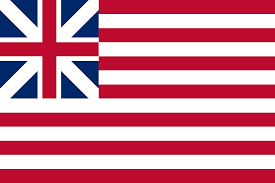
Grand Union Flag (pre-revolution)
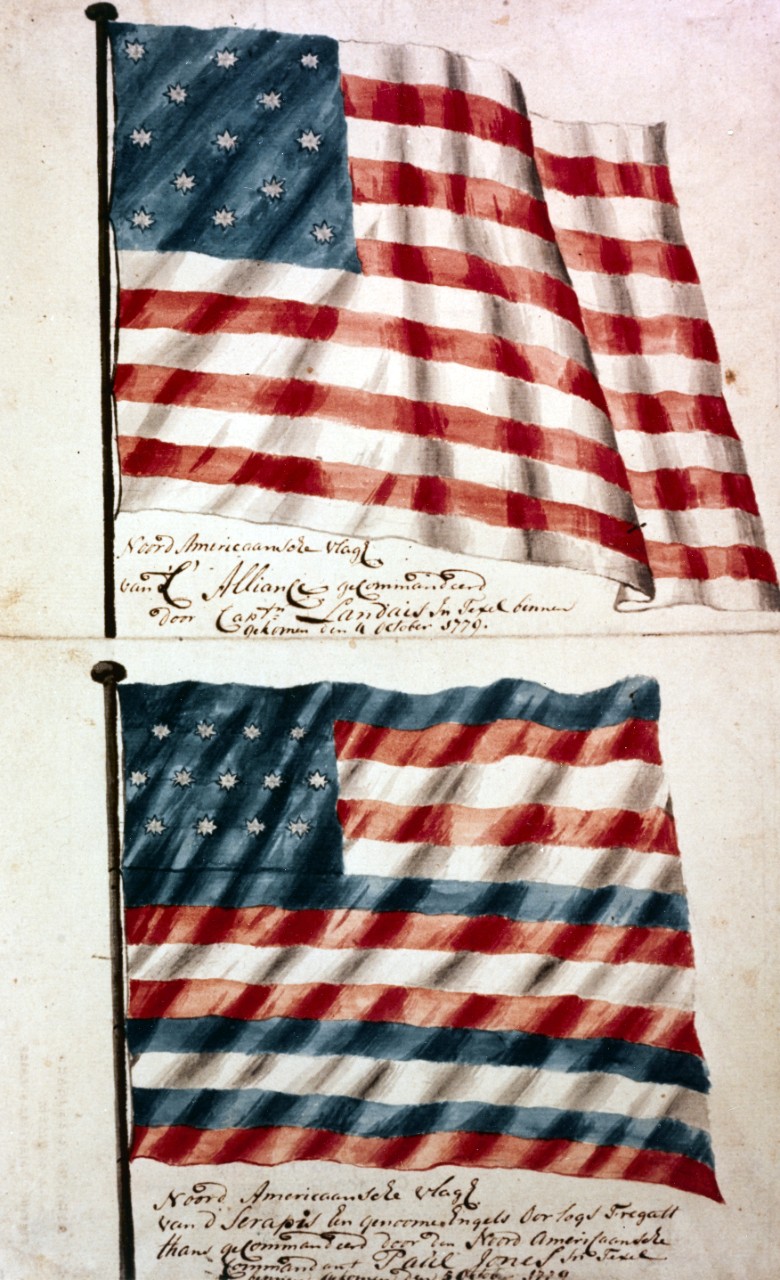
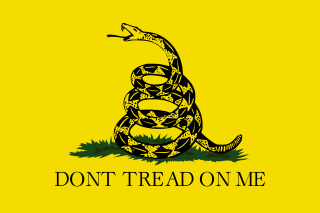
For a century prior to the Revolutionary War, the American colonist flew a derivation of the ensign of Great Britain with various symbols that were historically significant in Britain, such as the cross of St. Andrews or the cross of Saint George. The Union flag, which first flew on British naval ships in 1634. With several changes instituted and then reverted by monarchs for the next century, the colonist adopted flags with these designs and colors, until the unrest prior to the revolution, variations on merchant ships and to rally the colonists to their aims for independence carried mottos in Latin such as “conquer or die” or other provoking mottos (p. 135, Naval Ceremonies, Customs and Traditions, Naval Institute Press, 2004) and designs such as the Pine Tree. The Philadelphia Troop of Light Horse when it escorted General Washington to New York to take command of the Continental Army was first to bear thirteen stripes, representing the original colonies, in alternating blue and silver stripes. Commodore Hopkins raised a “Don’t Tread on Me” flag with thirteen stripes, a rattlesnake, and this motto on his ship the Alfred on 5 December 1775. During the bicentennial Independence year in 1976, it flew again as the jack on all Navy ships. In 2002, in response to the War on Terror, the “Don’t Tread on Me” jack was again flown. John Paul Jones, of whom so much of early American naval tradition rests, was commissioned a First Lieutenant in the new American Navy on 22 December 1775. From commissioning, in the company of Thomas Jefferson and John Hancock, he went aboard Commodore Hopkin’s flagship, the Alfred. Directed by John Hancock, with the Commodore and ship’s captain ashore, as senior officer John Paul Jones directed the first “American” flag, be hoisted from the mainmast. This is significant as the first American flag flying from a warship. From historical accounts, this ensign was likely the same flag raised by Washington’s troops in Boston a couple weeks later. The adoption of the national ensign, with the 13 alternating red and white stripes, with stars in a blue field representing the union occurred on 4 June 1777. As for John Paul Jones, he received orders to command the Ranger the same day, and afterward he always believed his future and that of the new national ensign were linked. In the sea battle with the HMS Serapis, both ships were severely damaged. As he transferred with surviving crew to the captured British vessel, the last view of sinking Bon Homme Richard was the “defiant waving of her unconquered and unstrucken (sic) flag as she went down” (report of John Paul Jones, ibid, p143).
Flag (top): flown from the Bon Homme Richard during battle. (bottom): the “Serapis” flag, when Jones sailed the captured ship from the Netherlands after the battle
With the admission of new states into the ‘united states’ in the last years of the Eighteenth Century, the design of the nation’s flag was subject to some controversy, over the number of stripes and stars. The final design was established by Congress and signed into law in 1818 by President Monroe. From that time forth, the stripes remained fixed as they appear today, but an additional star would be added to the blue field for every new state admitted.
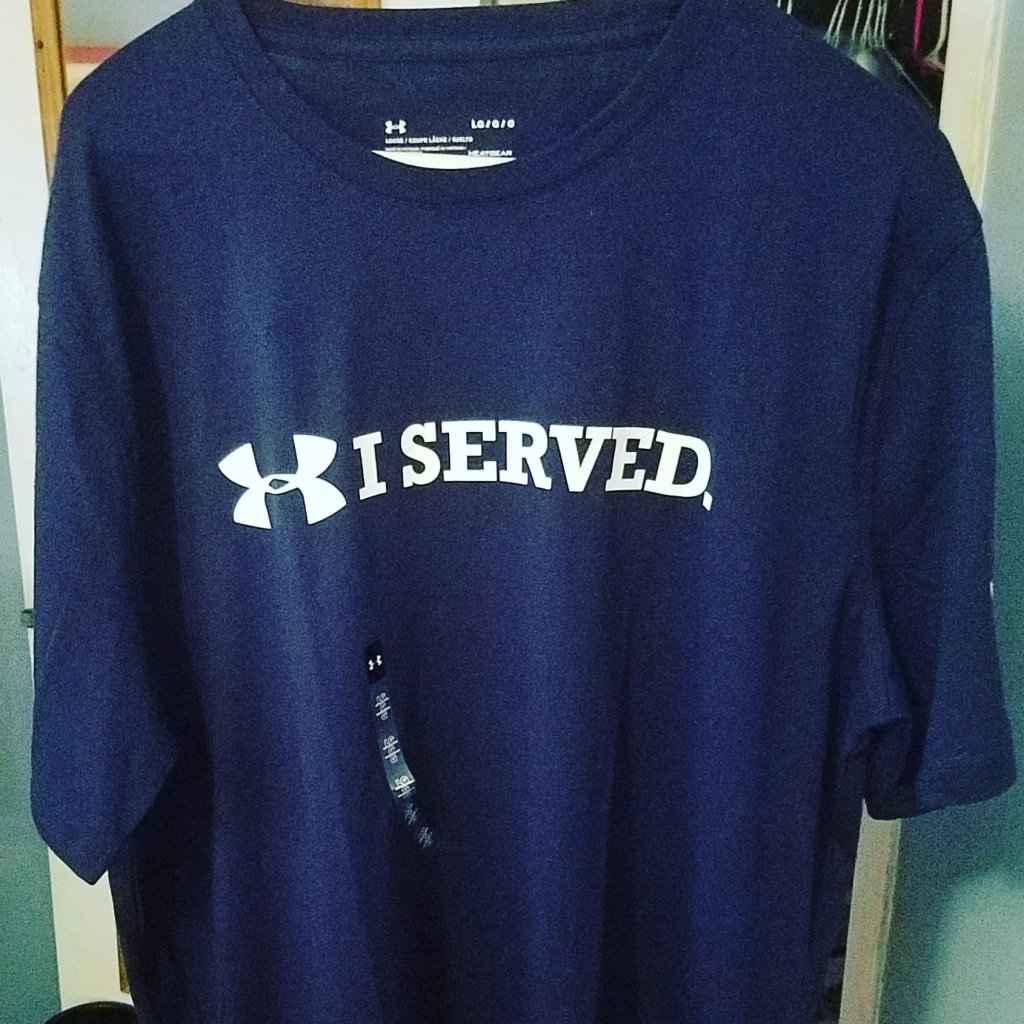
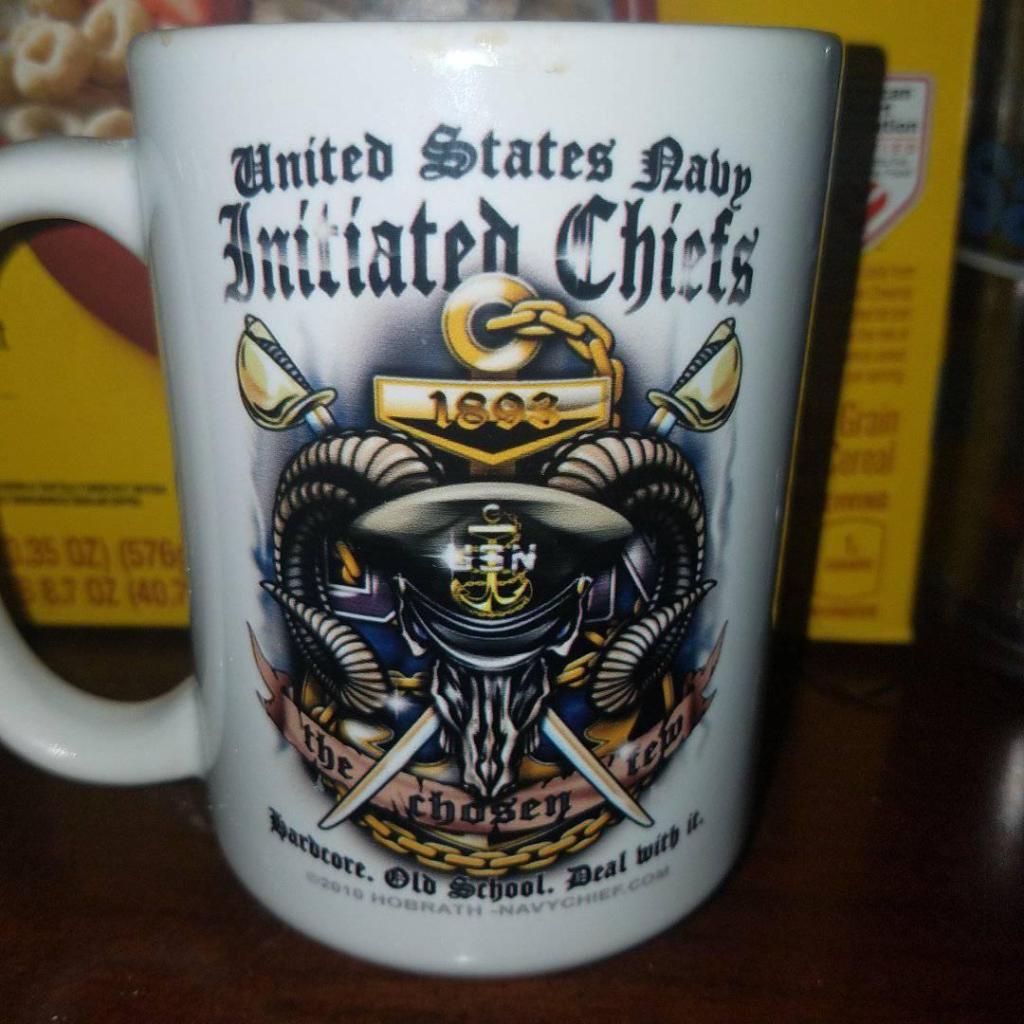
I, like most veterans I know frequently wear at least one article of pride to commemorate our prior military service. Some wear articles that support a veterans’ organization, or something with embroidered patches that convey their affiliation. Some like me wear a t-shirt with a bald eagle and “veteran” statement. Others may display a seal for their particular branch of service and “Retired”, or the service mascot and commentary. A veteran’s favorite may sometimes take a good-natured jab at a rival service. We have bumper stickers, license plate frames, or a coffee mug with something that tells others we were in the military. Most veterans I know rarely go anywhere uncovered, which for the uninitiated means we wear a ballcap (or other head covering) we first adopted in the military as part of the uniform. And at least once a day in my travels around San Diego, I will see and acknowledge another veteran wearing a “Desert Storm” or “Vietnam” or “Afghanistan” service commemorative cap or window sticker on their vehicle.
What is your favorite way to commemorate your service, or for that of a family member?
A Change of Command ceremony is one of the major ceremonies in the life of a naval ship. It continues the line of authority from commissioning to decommissioning. The level of detail for each ceremony is such that it preserves the level of respect for authority. Rehearsal instills all parts of the ceremony are conducted in an orderly fashion. The crew, in full dress uniform is assembled in ranks, enlisted, Chief Petty Officers and Officers. Side boys, an honor guard, color guard and as available, bands are paraded. Once visiting guests and dignitaries are seated, the official party arrives, to the accompaniment of proper honors. After invocation, the Senior-in-Command, whether Commodore, Station or Fleet Commander will make some remarks and then the officer being relieved will speak. After some presentation of awards, the new Commanding officer will state “I relieve you, sir.” and the outgoing, “I stand relieved”. Each officer reports to their senior officer. of the transfer of authority. The incoming Commanding Officer will read his (her) orders, and then ceremony concludes with the departure of the official party.
Decommissioning
The least of ceremonies in the life of a naval ship is decommissioning. The Commanding Officer makes some brief remarks, and the flag and commissioning pennant are lowered. There may be some awards, brief remarks from the authority- such as the naval shipyard – accepting the vessel.
Under a lifelong commitment to protect national security of the United States, describing what my military peers and I did for a living was often reduced to generalizations and debunking some misconceptions that Hollywood movies make about protecting national security. Though there were some 1960’s-era generals at the time unopposed to being ordered to use nuclear weapons, the satire Dr Strangelove, lampoons that a rogue can instigate WWIII. Or at the dawn of the Computer Age, that a young civilian might connect to a DOD system, as in War Games, discounts that computers even then were isolated in secure networks. (However, a spy on the inside remains a hazard.) While thrilling, that rogue cells within the Intelligence bureaucracy could operate with efficiency and lethality outside of oversight, as in the Bourne films, seems too incredible. (However, the efficiency which the Russian security apparatus can eliminate political enemies highlights what sanctioned operations can achieve.) In Crimson Tide, a nuclear submarine commander (with a dog aboard(!) and officers might be near mutiny over whether to launch nukes is horrifying, but the crew selection and training process, security protocols and backup systems exist to prevent that. On the other hand, a glimpse into a typical mission day in the life of a nuclear-armed B-52 bomber is interesting in that it seems routine. For the last thirty years, nuclear war has seemed to be an artifact of history, but during the Cold War, military professionals conducted their duties in their flying “office”, preparing for a very real potential between nuclear-armed adversaries.
By accident, today I found a short film posted to YouTube, narrated by James Stewart, the renowned actor and WWII bomber pilot (and a Brigadier General in the Air Force Reserve) from 1959- the year I was born. For the last sixty-plus years, training has continued in that deterring war is most effective by trained and equally-lethal forces. With tensions rising again, with Russian aggression against Ukraine and China’s military reach growing, training will continue. Just as this short film depicts, each military professional does his or her duty hoping to go home at the conclusion of the “work day’.
A fisherman, a boat captain, and me put out from Dana Landing just before first light on a gray Saturday morning. The fisherman was experienced, the boat’s owner, a former Navy man but not a fisherman, was hoping for a large catch and me, a retired Navy Senior Chief, neither boat owner nor fisherman, was keeping a weather eye on the horizon. With choppy seas ahead, the fisherman brought along Dramamine. (We all took it.) Had I brought along any bananas? To the fisherman’s question, I responded none.
luck and bananas
Apparently, sailors should not bring bananas on a voyage if we wanted fishing luck. With eight years at sea in the Navy, the thought crosses my mind, had I “ever” seen bananas in the fresh fruit available on the mess decks? Apples and oranges, I remember, but never bananas. Sailing superstition links bananas to lost ships and cargoes. (I looked it up online.) I heard that overcast days are pretty good days for fishing. Our companion, a passionate fisherman, who knows where he has had success and what signs might mean good fishing, provided me a rod and reel. He also showed me how to properly tie a weight and hooks. The rest was left for me to figure out. Fish are not waiting for the unsuspecting fisherman to drop his line and jump on the hook.
seabirds and dolphins
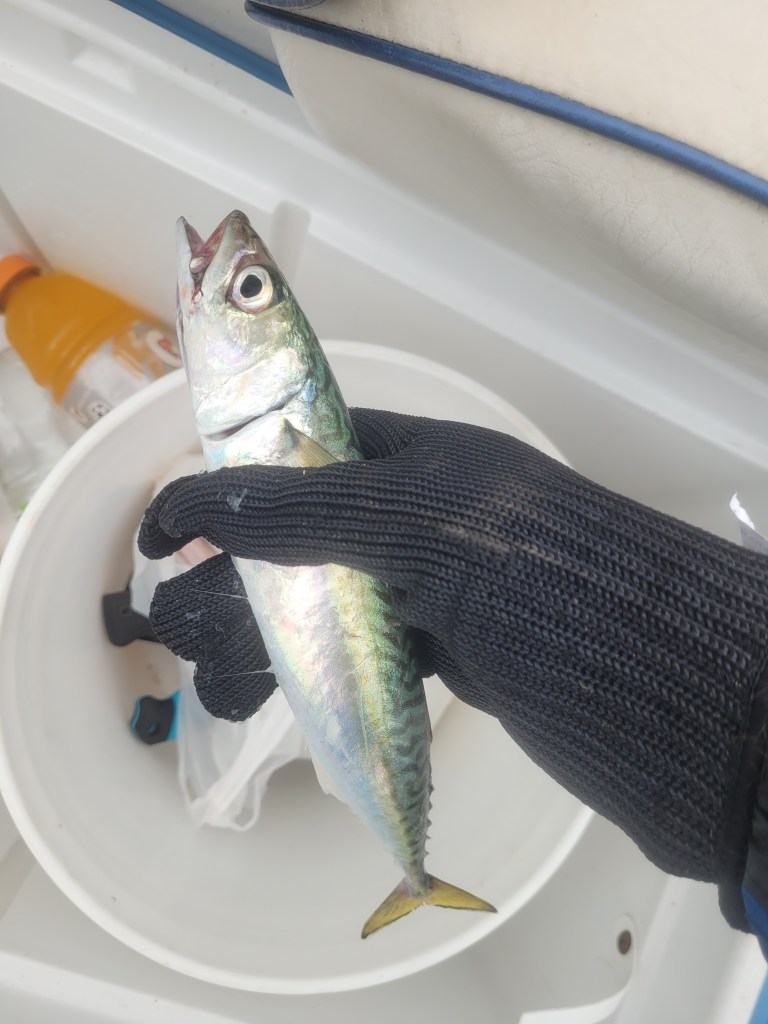
Nine miles off Pacific Beach at mid-morning, the swells were past tolerable, and the overcast remained. With a couple larger boats in the distance, and seabirds, pelicans and dolphins for company, we found some floating kelp and put down our lines again. We took it for a good sign when the captain caught a seabass and the fisherman brought up a rock cod a little later. We decided against going farther out. (One of us admitted to being queasy.) We put down our lines again off Sunset Cliffs and determined the fish finder was not malfunctioning; it had not detected fish all morning. (The seabirds told us as much as neither tern, gull nor pelican were seen retrieving fish from the water at any point.) Back in the channel leading to Dana Point Landing that afternoon, I snagged two mackerel. No fish were worth keeping.
I learned a few things from our adventure. Overcast days do not suggest good fishing weather. The lack of bananas does not conversely bring good luck. Neither does bringing a large cooler. Dolphins do not mean lots of fish are about. And a bad day fishing is better than a good day working. Twelve hours after suggesting to our wives we’d be fishing “three or four (hours)” we got home. The fisherman is one I admire. He intended to play softball all the next day. I slept for ten straight hours. And might go to bed early tonight. But I have Craigslist and OfferUp dialed in; I’m looking for a rod and reel at the right price.


 Truths, Half-truths, and Sea Stories