Ask the Chief: a necessary skill for the self-employed

A skill that anyone with something to protect, whether consumer or a business owner, is developing shrewd thinking. Most understand that identity or intellectual property theft occurs through phishing in email and hidden code in compromised websites. However, old fashioned schemes to separate the unwary from their income, disguised as personal or business “services”, are no less successful a lot of the time.

An emailed newsletter from the California Office of Attorney General this week reported charges being filed against a man who defrauded veterans’ families with false college tuition waivers, for which he charged $500, netting him about $500,000. But this is far from the only scam that victimizes veteran and non-veteran alike. This afternoon, my mom n’ pop small business received a fairly sophisticated mailing (arriving by Postal Service) that wanted to assist my business with filing a California form – for $150 – that I have routinely filed, free of charge, with the state. This scam sends an official-looking form warning of the consequences of not filing required documentation, and is populated with the publicly-available information on your business, to confuse a novice business owner. Of course, this scammer assumes that small business people would react without having the experience to know that these things do not require a third-party’s assistance. But then the scammer knows that he or she only needs a few among thousands of new business owners to send them the fee, to enrich themselves.

The State of California’s OAG has been prosecuting perpetrators of this sort of scam for more than a decade. Apparently, this is some sort of mass mailing. However, any criminal who intends to defraud a military veteran should be forewarned. We have all been subject to the just-off-base” hucksters who have sold our young military men and women everything from revolving contract gym memberships, multi-level marketing schemes, herbal remedies, and vehicle-service contracts. A year or more into our enlistment, we all become a bit more shrewd in discerning what we are getting for our hard-earned pay. Most veterans have various sage wisdom (or cynicism) that all come down to “I may have been born at night, but not last night. Get lost!”

Keeping your identity, finances, and personal information secure, and especially when you are in business for yourself (and cannot afford Wall Street attorneys). It is a full-time occupation. While I would toss this obvious nonsense in the trash, I will instead forward this to the Attorney General as the website indicated. I’m perhaps too cynical about taxes, fees, and business. While this is California, I will imagine that there are thousand of other mailings in mailboxes or en route at this time..


seewater** lawyer

“water water everywhere but not a drop to drink”

“Rime of the Ancient Mariner”, Samuel Coleridge, poet, ca 1798

Among humans, particularly those living on the North American continent, the prudent planning and mobilizing a coordinated effort to prepare for difficult times, is most often too little, too late. However, individuals who are a bit more cynical about large bureaucracies’ promises and are more self-reliant as a result (terms which often describes military veterans), often see future hardships and prepare accordingly. We have stories passed down to us: all of Noah’s countrymen mocking his family’s construction of a boat in the desert; the mockers all drowned. An ancient Egyptian Pharaoh’s governor, Jacob, filled storehouses way ahead of a famine that lasted for years; he supplied the nations around them (and incidentally enjoyed a “family reunion” as a result). In the present day, “preppers” are mocked for assembling food, having power generators, accumulating stores and being prepared for defense in the event of pandemics, supply disruptions, and famine. Truthfully, with evidence of civilizations collapsing from these things, human beings are rarely capable of acting together in crisis.

One crisis that gets a lot of discussion, but sees little to no actual action, is the lack of water. On on hand, the reality that the poles are melting – storehouses of trillions upon trillions of gallons of water – has generated a lot of governments to generate taxes, declare fines upon “offending industries”, and incur restrictions and rationing; few places are constructing defenses against rising oceans or storage capacity for rainwater. According to most experts, even an unimaginable immediate end to all global human activity “linked” to the warming of the planet will not reduce the effect for hundreds of years. If the oceans rise for the next 300 years, beachfront may be a few miles to ten of miles farther inland. Agriculture in the western States supplying much of the globe will not be supportable without other sources of water. Ideas are periodically “floated” to capture annual rainfall; these include storing “Monsoonal” summer rains in Arizona and other western deserts or piping westward floodwaters of north-central river systems which overrun their banks in Spring. Piping water over the Rocky Mountains from Minnesota to the West, however, is probably never going to be affordable. Thousands or even hundreds of desalinization plants ringing the continental coastlines might help relieve desertification, but the regulations, cost, and delivery is draconian. In California, one county, San Diego, took a dozen years or so, to approve, construct and operate ONE ocean desalinization plant. It supplies a little of San Diego’s needs.

** A play on “sea lawyer”, a pejorative used to describe someone who believes himself to be an authority, but is generally inexperienced with Navy practices and regulations. As a retired Navy Senior Chief Petty Officer, I am well aware that I am neither an expert on climate, a hydrologist nor bureaucrat specializing in water policies, but have some experience as a consumer as well as having observed naval desalinization practices to create potable water.

Photo by Pixabay on Pexels.com

Ask the Chief: is public health, like national security, a responsibility of Government?

It is the summer of 2022 and our household managed to stave off COVID until early July. In spite of the furor of a pandemic since late 2019, we maintained a ‘common sense’ approach to wearing masks and being vaccinated. Small measures to mitigate the effect to our business, employees and clients. Since we perform services for a large number of people, requiring all parties to wear masks has also helped us dodge cold and flu viruses. But not entirely safe. Catching the latest strain of COVID was both annoying and caused breathing difficulty that lingered long after we tested negative for COVID. Were we not vaccinated I can only imagine how severe it might have been?

Whether the issues are public safety, the economy, food and product safety, or infrastructure (transportation, roads, etc), most citizens and most consumers are supportive of oversight that leads to “life, liberty and the pursuit of happiness”. But are government mandates to mitigate the spread of a virulent disease appropriate? Is public health in the purview of a constitutional government? And if so, which is the most appropriate agent – each local community, county, state or federal? Volumes could and have been written on these topics. Social media is overflowing with commentary on rights, wrongs, opinions, and conspiracies on these things.

As a military veteran, we were required to submit to vaccinations for everything from tuberculosis to anthrax. This was one of the measures to maintain a disease-resistant fighting force in areas our forces operated. And our nation was a party to international agreements on a whole host of topics that benefited one another. More than seventy years ago, the international community made health one of its responsibilities. Every few years a disease like the Swine Flu or Bird Flu, Ebola or SARS COVID-II, and infestations of insects, parasites, plants and animals are transmitted globally through international travelers and trade. Without governmental oversight, the response to an outbreak of disease, parasites, or organisms affecting local populations would neither have the resources nor experience to respond appropriately.

The Battle of Boston Harbor

In maritime warfare, has there been a case where a United States Navy Midshipman was promoted to commanding officer? And then, upon losing a battle, was court-martialed? The answer is yes to both questions.

It was the War of 1812. The battle itself was very short and resulted in the deaths of many of the American crew and capture of the American vessel. Captain Philip Broke, commander of HMS Shannon challenged Captain James Lawrence of the Chesapeake – he had been her commander less that 2 weeks. The Chesapeake got underway to meet the Shannon and in the short conflict her masts and steering were damaged by the British warship and became inoperable. Two hundred-fifty of her crew were killed. Captain Lawrence was mortally wounded, and as he was taken below, he promoted the only surviving officer, midshipman William S. Cox to the rank of Third Lieutenant. Though ordered to continue the fight until sunk, she was captured, and the Chesapeake‘s remaining crew were imprisoned in Nova Scotia. After the war, a court martial found Third Lieutenant Cox guilty of briefly leaving his post during the engagement. He was stripped of rank and discharged. William Cox died in 1874, but 75 years after his death, in August 1952, President Truman signed a legislation posthumously restoring Cox’s rank of Third Lieutenant.

Camp feathers

A veteran friend of mine sent me the link to an article on the military use of pigeons back before Marconi’s invention revolutionized communications. The Navy employed pigeons to courier messages, even developing a Navy Rating with special training to care for and train the birds. If the world goes to seed, I may have some recruits for a new pigeon command here.

Doves at camp

I may not have been a Navy Pigeoneer in my career (I was a guy who maintained the electronics), though I am getting more into birds at home. With the change to some waterwise shrubs, my wife wanted to put seeds and sunflowers to bring them back. Recruitment seems to be working. Finches, hummingbirds, California Towhees, and mourning doves are again welcome guests at Camp Feathers. I had originally wanted to attract some nearby raptors, but these are perhaps following the gophers which have gone elsewhere in the neighborhood.

Ask the Chief: discipline for a lifetime

Asking civilians or military recruits what discipline means and most think of a response to their improper behavior. Though misbehavior as a child may have resulted in a paddling, the intended lessons ideally instill self as well as interpersonal responsibilities and life skills. A dictionary defines discipline as “the practice of training people to obey rules or a code of behavior, using punishment to correct disobedience; (2) activity or experience that provides mental or physical training“. Military recruits are taught obedience to orders, attention to detail, and military-purposed routine from their first moment of bootcamp. Drill instructors shout instructions, demand pushups for inattentiveness, toss trashcans in barracks and rouse sleepers at “o-dark thirty”, to create responsive servicemen and women out of “undisciplined” civilians. Training includes the smallest details like folding underwear, cleaning surfaces by removing the least individual dustball, paint chip or strand of pubic hair, or repeating memorized creeds and military orders. Infractions are dealt in a number of ways individually but also as a unit. With the goal of developing a soldier, apprentice or disciple out of a layman, punishment can be misinterpreted. Unless it is associated to a lesson or skill, temporary acceptance can be due to fear and not an individual’s commitment. One such goal of recruit training is to create interdependence. Individually or in a group, people who wholeheartedly commit, imitating to the smallest detail an expert in karate, a multi-millionaire businessman, or a United States Marine, will change positively. And those positive changes may still be seen 20, 30 or 40 years later in one’s life.

Memorial Day history

Honoring the soldiers, sailors, Marines and airmen who died in defense of the United States is why Monday, May 30th, is special. Honoring our dead has nothing to do with the commercialism and nonchalant ‘day off’ that has co-opted so many ‘holy-days’. And it is not to honor living service members nor veterans whom we thank on Veterans Day, though as a veteran I do remember both living and the dead. As the years pass, the sacrifice of many lives in past conflicts is no less a time to remember than for the generation coming of age today. More than fifteen thousand American military and contractors (many of whom were former military) were killed in conflicts in Afghanistan, Iraq, Pakistan, and elsewhere in the Middle East between 9/11 and 2021’s exit from Afghanistan.

From an article published on Snopes.com, and sourced from historian research, the earliest remembrance day for war dead was held on May 1, 1865 when former slaves in Charleston, SC reburied 257 Union soldiers who had been interred in a mass grave at the former Confederate prison camp. They gave them all proper burial and then held a parade in gratitude for their service. In 1868, the head of the Grand Army of the Republic, an organization of Union veterans, designated May 30th as Decoration Day, placing flowers on the graves of war dead. In the 1960s, the governor of New York state, followed by President Johnson proclaimed Waterloo, New York as the original founder of Memorial day. (Whom and where the original day of remembrance began in the US is still debated.) Waterloo had been honoring war dead annually since 1866. Scholars can debate where and when Memorial Day began – there are accounts from groups in the old South that honored both Union and Confederate war dead since the 1860s, but the Federal Government established Memorial Day, with a holiday in 1971. As we in the United States enjoy gatherings or time to relax during the Memorial Day weekend, please pause to reflect on those military members who gave their all for us.

Chaos as American family brings unexploded shell to Israel airport

https://www.cnn.com/travel/article/israel-airport-unexploded-shell-american-tourists/index.html

Sometimes a man wants to be stupid if it lets him do a thing his cleverness forbids.

John Steinbeck, novelist, East of Eden

There’s not much a veteran can say about the limits of human irrationality. This story makes me glad these Americans are not my neighbors.

Grand Old Flag

You're a grand old flag,
You're a high flying flag
And forever in peace may you wave.
You're the emblem of
The land I love.
The home of the free and the brave.
Every heart beats true
'Neath the Red, White and Blue,
Where there's never a boast or brag.
Should all acquaintance be forgot,
Keep your eye on the grand old flag. 
-George M Cohan, composer

Composer George M Cohan wrote these lyrics more than a century ago, at a time when the United States flag was a rallying symbol for a nation of “Americans” formed out of immigrants.  Over millennia, flags have been the banners under which people have rallied to wars of liberation and independence, as well as peaceful demonstrations for equality. Some deliberately provoke anger as their banners recall times of injustice or genocide. Though any student of history can dwell on the sins of a nation, the United States being no exception, the advances in medicine, agriculture, industrial output, other sciences, in education and literacy, in the United States made our national ensign a symbol well known in every part of the world. As a veteran and history buff, the history of the American flag is interesting and remains a symbol of pride. How did our national ensign emerge?

St Andrews cross
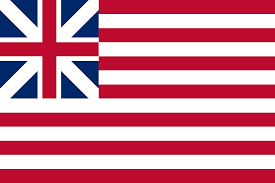
Grand Union Flag (pre-revolution)

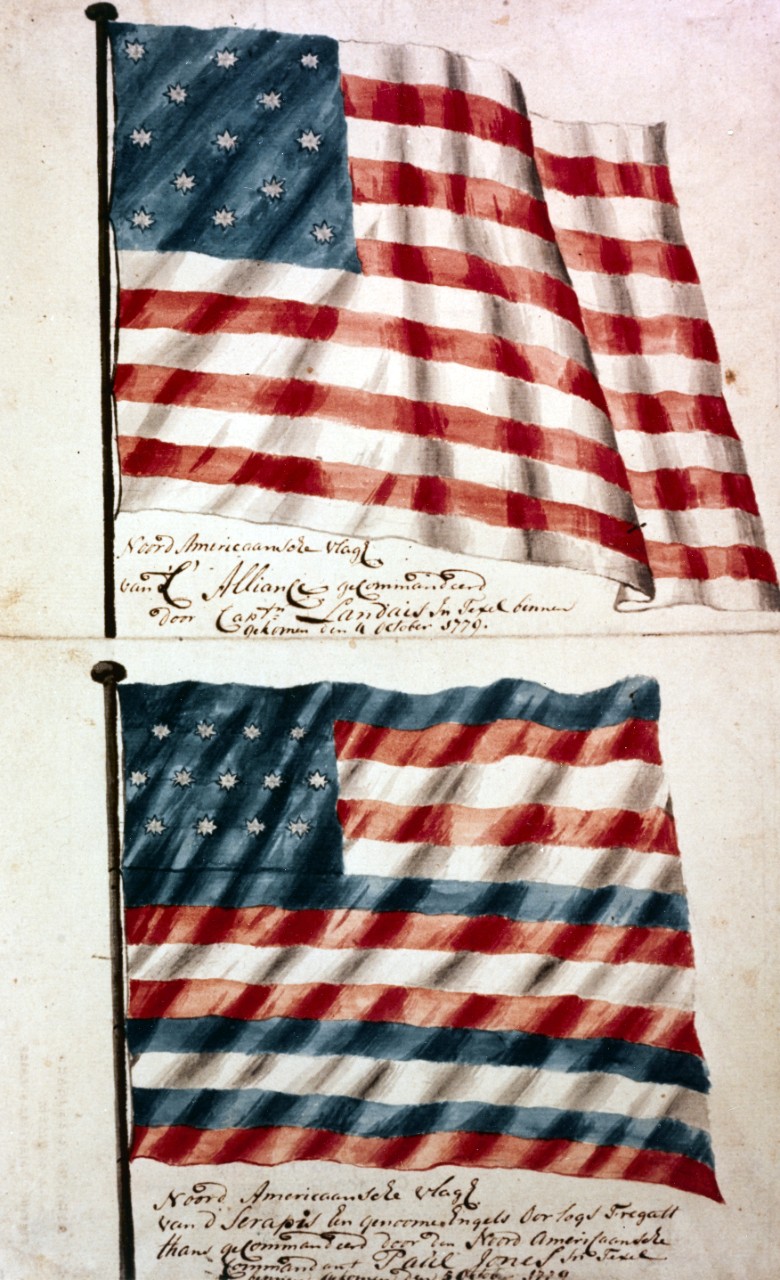
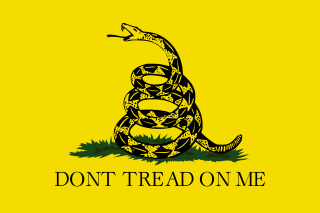
For a century prior to the Revolutionary War, the American colonist flew a derivation of the ensign of Great Britain with various symbols that were historically significant in Britain, such as the cross of St. Andrews or the cross of Saint George.  The Union flag, which first flew on British naval ships in 1634. With several changes instituted and then reverted by monarchs for the next century, the colonist adopted flags with these designs and colors, until the unrest prior to the revolution, variations on merchant ships and to rally the colonists to their aims for independence carried mottos in Latin such as “conquer or die” or other provoking mottos (p. 135, Naval Ceremonies, Customs and Traditions, Naval Institute Press, 2004) and designs such as the Pine Tree. The Philadelphia Troop of Light Horse when it escorted General Washington to New York to take command of the Continental Army was first to bear thirteen stripes, representing the original colonies, in alternating blue and silver stripes. Commodore Hopkins raised a “Don’t Tread on Me” flag with thirteen stripes, a rattlesnake, and this motto on his ship the Alfred on 5 December 1775. During the bicentennial Independence year in 1976, it flew again as the jack on all Navy ships. In 2002, in response to the War on Terror, the “Don’t Tread on Me” jack was again flown. John Paul Jones, of whom so much of early American naval tradition rests, was commissioned a First Lieutenant in the new American Navy on 22 December 1775. From commissioning, in the company of Thomas Jefferson and John Hancock, he went aboard Commodore Hopkin’s flagship, the Alfred. Directed by John Hancock, with the Commodore and ship’s captain ashore, as senior officer John Paul Jones directed the first “American” flag, be hoisted from the mainmast. This is significant as the first American flag flying from a warship. From historical accounts, this ensign was likely the same flag raised by Washington’s troops in Boston a couple weeks later. The adoption of the national ensign, with the 13 alternating red and white stripes, with stars in a blue field representing the union occurred on 4 June 1777.  As for John Paul Jones, he received orders to command the Ranger the same day, and afterward he always believed his future and that of the new national ensign were linked. In the sea battle with the HMS Serapis, both ships were severely damaged.  As he transferred with surviving crew to the captured British vessel, the last view of sinking Bon Homme Richard was the “defiant waving of her unconquered and unstrucken (sic) flag as she went down” (report of John Paul Jones, ibid, p143).

Flag (top): flown from the Bon Homme Richard during battle. (bottom): the “Serapis” flag, when Jones sailed the captured ship from the Netherlands after the battle

With the admission of new states into the ‘united states’ in the last years of the Eighteenth Century, the design of the nation’s flag was subject to some controversy, over the number of stripes and stars.  The final design was established by Congress and signed into law in 1818 by President Monroe.  From that time forth, the stripes remained fixed as they appear today, but an additional star would be added to the blue field for every new state admitted.  

Ask the Chief: Ceremonies in the Life of a naval ship, part 3

Change of Command

A Change of Command ceremony is one of the major ceremonies in the life of a naval ship. It continues the line of authority from commissioning to decommissioning. The level of detail for each ceremony is such that it preserves the level of respect for authority. Rehearsal instills all parts of the ceremony are conducted in an orderly fashion. The crew, in full dress uniform is assembled in ranks, enlisted, Chief Petty Officers and Officers. Side boys, an honor guard, color guard and as available, bands are paraded. Once visiting guests and dignitaries are seated, the official party arrives, to the accompaniment of proper honors. After invocation, the Senior-in-Command, whether Commodore, Station or Fleet Commander will make some remarks and then the officer being relieved will speak. After some presentation of awards, the new Commanding officer will state “I relieve you, sir.” and the outgoing, “I stand relieved”. Each officer reports to their senior officer. of the transfer of authority. The incoming Commanding Officer will read his (her) orders, and then ceremony concludes with the departure of the official party.

Decommissioning

The least of ceremonies in the life of a naval ship is decommissioning. The Commanding Officer makes some brief remarks, and the flag and commissioning pennant are lowered. There may be some awards, brief remarks from the authority- such as the naval shipyard – accepting the vessel.

flying cowboys in 1959

Under a lifelong commitment to protect national security of the United States, describing what my military peers and I did for a living was often reduced to generalizations and debunking some misconceptions that Hollywood movies make about protecting national security. Though there were some 1960’s-era generals at the time unopposed to being ordered to use nuclear weapons, the satire Dr Strangelove, lampoons that a rogue can instigate WWIII. Or at the dawn of the Computer Age, that a young civilian might connect to a DOD system, as in War Games, discounts that computers even then were isolated in secure networks. (However, a spy on the inside remains a hazard.) While thrilling, that rogue cells within the Intelligence bureaucracy could operate with efficiency and lethality outside of oversight, as in the Bourne films, seems too incredible. (However, the efficiency which the Russian security apparatus can eliminate political enemies highlights what sanctioned operations can achieve.) In Crimson Tide, a nuclear submarine commander (with a dog aboard(!) and officers might be near mutiny over whether to launch nukes is horrifying, but the crew selection and training process, security protocols and backup systems exist to prevent that. On the other hand, a glimpse into a typical mission day in the life of a nuclear-armed B-52 bomber is interesting in that it seems routine. For the last thirty years, nuclear war has seemed to be an artifact of history, but during the Cold War, military professionals conducted their duties in their flying “office”, preparing for a very real potential between nuclear-armed adversaries.

By accident, today I found a short film posted to YouTube, narrated by James Stewart, the renowned actor and WWII bomber pilot (and a Brigadier General in the Air Force Reserve) from 1959- the year I was born. For the last sixty-plus years, training has continued in that deterring war is most effective by trained and equally-lethal forces. With tensions rising again, with Russian aggression against Ukraine and China’s military reach growing, training will continue. Just as this short film depicts, each military professional does his or her duty hoping to go home at the conclusion of the “work day’.

‘White Phosphorus’ Claimed To Be Used In Ukraine May Really Be Russian Napalm Weapon

https://www.forbes.com/sites/davidhambling/2022/03/25/white-phosphorus-may-really-be-soviet-napalm-weapon/

Use of white phosphorus is horrendously evil even for an enemy combatant. Use of napalm is only slightly less evil. When a regime has little regard for the suffering it causes, the ends justify the means. Only if the regime is not held to account, that is. When a modern military like Russia’s is deployed against Ukraine, a neighboring country under a pretext that nobody believed, and their expected quick occupation turns into an implacable David against a Goliath, weapons are turned against civilians even more readily.