A Military War Dog, or Military Working Dog, (MWD), is a canine that has been trained to protect humans in dangerous situations,
Source: K9 Veterans Day
A Military War Dog, or Military Working Dog, (MWD), is a canine that has been trained to protect humans in dangerous situations,
Source: K9 Veterans Day
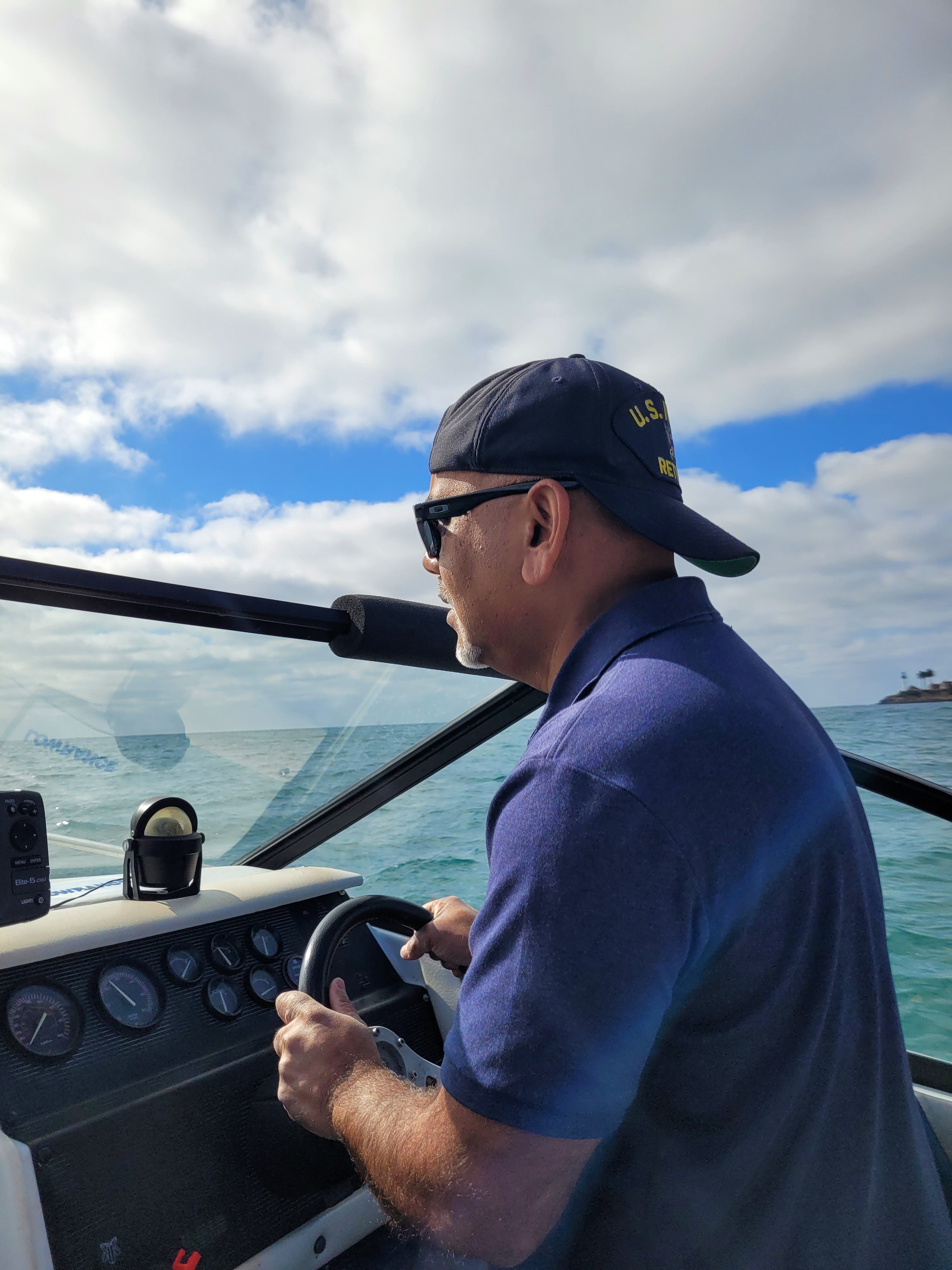
Our plans for an after-church lunch with friends at our house was almost cancelled today. “Almost”, in that the guest list coming for lunch, as well as one of the hosts (me) changed. Friends who were planning to come felt ill this morning and asked for a raincheck. With no plan, or so I thought, just as church concluded, another Navyman like me, invited me to come out on his boat that afternoon.
I immediately accepted. I hadn’t spent a lot of time in recent years with Mike other than at church. Plus, he said, getting a little “sea” time, for me, a retired Navy Chief, would put a little saltwater back into my veins. Another of our friends, also a Navy veteran, was supposed to be joining us. However, calling to verify he was on his way, we learned his spouse had also made lunch plans. Her guests were at their house.
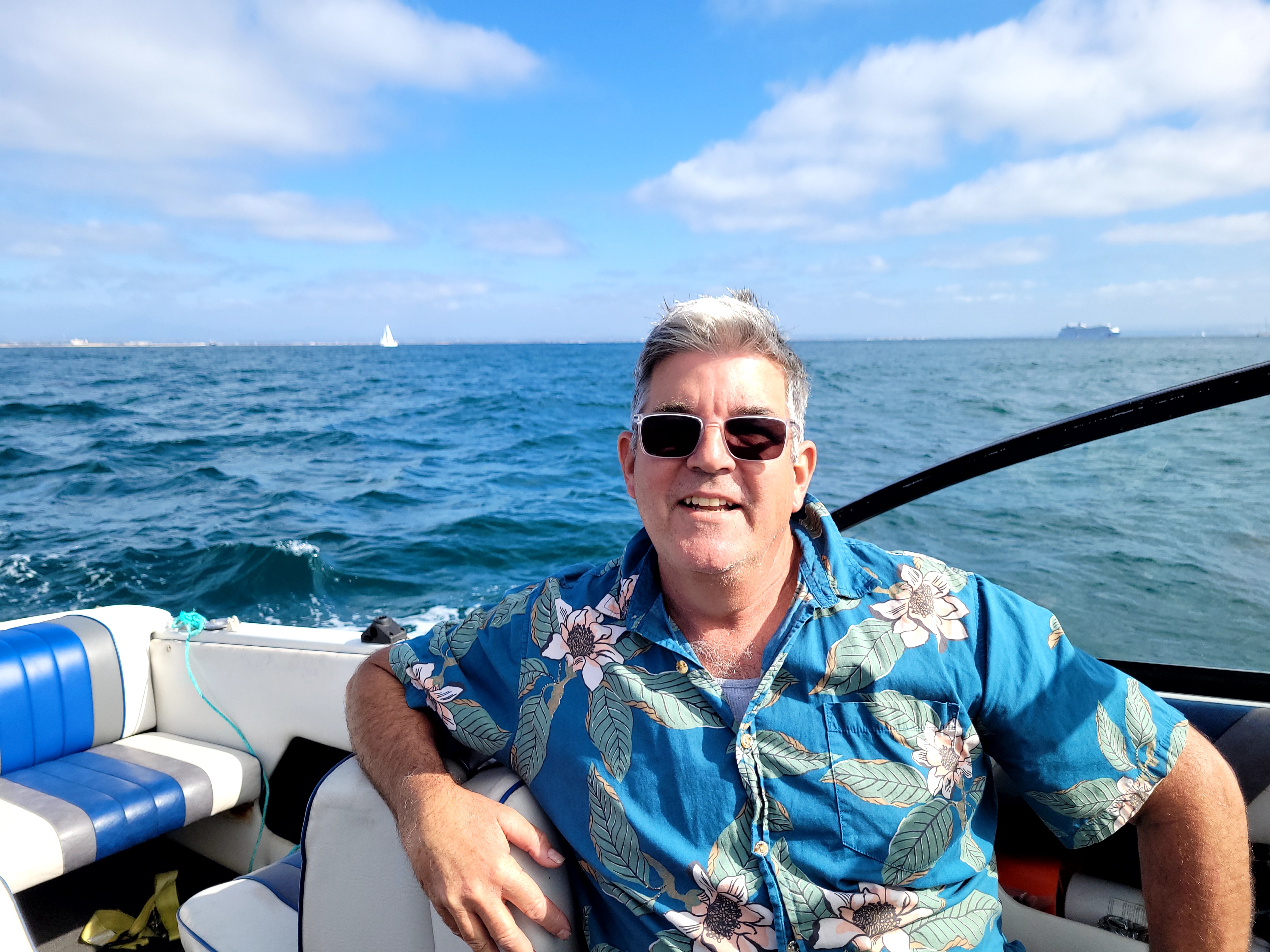
This Senior Chief and “Cap’n” Mike went bouncing across San Diego Bay in the powerboat and getting some needed fellowship. The time put much needed salt spray back in this Old Salt.
The Department of Veterans Affairs publishes a weekly newsletter that I receive in my email. I noted this week, some information that may not be widely known by spouses of deceased military veterans. Depending on the veteran’s time on Active Duty, a surviving spouse facing financial hardship may apply for a VA pension based on certain criteria. One such is whether the veteran served before or after September 7th, 1980, and whether at least one day was in “wartime”. A YouTube video provides an overview.
Continued from Part 1:
After christening and launching of a naval ship, commissioning is the next major ceremony in its life. The builders turn over the ship to the Navy, to an authority who will bear responsibility until the ship is commissioned. Prior to commissioning, no pennant, jack nor ensign is flown from the ship and no honors are rendered, other than courtesies upon his or her arrival. Honors are rendered at his departure. The ship is turned over to the commanding officer who accepts her and assumes command. Invitations reflect the host of the ceremony, including the crew among the hosts. Invitations are issued in the form, “Commanding Officer and Ship’s Company” or “Commanding Officer, Officers and Crew”. This is the first time that the title “USS” or United States Ship may be used as it is a commissioning ceremony. Established practice is to have a basic, official ceremony and when the ship is officially in commission, to continue with official speeches, personal remarks, and presentations. It is during this latter part of the ceremony that officers and crew are on duty and manning their station as in-port watches. This process adheres to Navy Regulations regarding commissioning. Officers fall in aft by dress parade stations on the quarterdeck or at the fantail, and the crew is marched aft, by division, to assigned stations. The ceremony begins with an invocation by a chaplain. The executive officer reports to the prospective commanding officer that the officers and crew are at their stations and everything is ready for the commissioning ceremony. By seniority, the official party, the admiral or designated representative and the prospective commanding officer arrive at their places on the ceremony platform. The officer conducting the transfer reads the orders delivering the ship and the orders to commission the ship are relayed from the commanding officer to executive officer to the navigator. At the “attention” signal, the national anthem plays, and ensign, commissioning pennant, and jack are hoisted at the same time. The commanding officer reads orders to assume command and orders to set the watch. The Officer of the Deck takes his (her) station and makes the first entry in the ship’s log: ” The ship is now officially commissioned.” Speeches, addresses and presentations by the official guests continue; the ceremony concludes and the official party departs. A reception usually follows.
IMAGE CREDIT: US Navy photo by MS1 Ernesto Bonilla, USS Daniel INOUYE, DDG-113 (navy.mil)

Over the last year and a half, record-low interest rates have left many people wondering whether or not it’s time to buy a home. However, interest rates are only part of the picture. With many buyers on the market – and in most areas, limited housing inventory – prices are rising fast almost everywhere. Buyers need to have competitive offers in order to have a chance at getting the property they’re hoping for.
Many veterans might think that they can’t compete in this market, but you may be surprised. You don’t have to have a massive down payment saved up to make a move on a house right now – and indeed, there are VA-backed options that may require no down payment at all. Finding a home might be easier than you think, especially with a real estate agent on your side. Here’s a look at what veterans need to know when entering the housing market right now, presented by Truths-Half-truths, and Sea Stories.
Investigate Your Housing Market
The first step you need to take in any house hunt is researching what’s happening in your local housing market. Remember, listing prices can be deceiving. It’s relatively common for homes to actually sell for substantially less – or, in this market, often more – than the original listing price. Sort homes by “sold” to get a better sense for how much properties are actually going for in your market.
This process will help you get a good sense of your foundational options. You can start to build a rough budget based on the prices you can expect for properties that fit your wants and needs. It’s also a good way to start narrowing your search down to the neighborhoods that best fit your price range.
Get Finances in Order
Once you have some basic housing market research under your belt, you can start looking into getting preapproved for a mortgage. As a veteran, you have more options to choose from than the average civilian. In addition to the conventional and FHA loan options, you can also investigate VA-backed loans.
These loans, offered by private lenders, can help you to get into a nicer home with a lower – or in some cases, zero – down payment. Most low- or no-down-payment plans come with private mortgage insurance or PMI. This increases your monthly rate without contributing to paying back your loan or interest, so it’s just money lost. VA-backed loans, however, don’t have PMI, so your monthly payment all goes toward your investment. Also, research VA interest rates today before you decide this is the route you want to take.
Start House Hunting
Once you’re pre-approved for your mortgage, you can start looking for a home in earnest. As we said above, markets are highly competitive right now, so you’ll need to be prepared to make quick decisions. Create a “wants and needs” list you can use to quickly and consistently evaluate homes you tour. If they don’t cross off all the needs, you can move on. If they meet “needs”, but offer very little in the way of “wants,” you should probably pass as well. High scores in both categories, however, signal a winner.
This part of your search is going to be far easier with a trustworthy real estate agent on your side. The right housing professional can make finding properties, scheduling tours, and making offers a breeze. Local experience is a must, but you should also prioritize finding an agent you get along with. Although you don’t need to be best friends, you’ll work one-on-one with your agent a lot through your house hunt, and it’s best to have a good rapport.
These steps should be plenty enough to get you started on your house hunt. Owning a home is one of the most exciting steps you can take in life, and we hope this article inspires you to explore your options and get started. Soon, you might be holding the key to the home of your dreams!
Photo Credit: Pexels
Editor’s Note: Cody is an IT professional by trade. He reached out to me last year about submitting a Guest post. One thing lead to another, schedules got mired in events. With all the COVID issues mostly behind me and excuses run through – I am belatedly publishing his submission. Good advice for anyone seeking to get into the home market, particularly now that prices are not exploding upward daily. You can read more about all thing’s tech – how to keep up with your Iphone -savvy pre-teen and other wisdom at Cody’s site Tech Deck – The Internet’s Tech Experts
Even with all our technology and the inventions that make modern life so much easier than it once was, it takes just one big natural disaster to wipe all that away and remind us that, here on Earth, we’re still at the mercy of nature.
Neil deGrasse Tyson
An undersea volcano near Tonga in the south Pacific Ocean created tsunamis that flooded the nearest islands and were measurable five thousand miles away in North America. An undersea earthquake off northern Japan was so violent it disturbed the Earth’s axis, and the tsunamis caused the Fukushima reactor to break down and release radiation. Tsunamis created by an undersea earthquake in Indonesia caused a quarter-million deaths along the coastline of Indian Ocean and Java Sea. On an island near New Zealand, tourists were killed in an eruption when the tour operators were ignorant of or ignored warnings of the impending threat. All over the world, millions of people live along the tectonic boundaries where continents bump against each other, ocean floors spread apart, or dive one under the other. Though weather and movement in the earth are rigorously monitored by technology and experts all over the globe, a pyroclastic cloud obliterating a Latin American community, or a tsunami that washes away homes and livelihoods in Indonesia may strike the vulnerable before the warnings can be acted upon.
As much as the global community is compelled to act to counter Climate Change, tangible support and actionable assistance or infrastructure, in regions where earthquakes, tsunamis and volcanic activity damage and kill or injure tens of thousands is warranted now more than political activism and questionable initiatives. Would collective action to install better warning systems, engineer stronger buildings, or investigate “flood-control” measures be useful to counter natural disasters that are happening now?
Garbage is humanity’s biggest problem. Specifically, “what to do” with garbage we humans generate. It is a way more immediate a problem than the ice caps melting as my neighborhood is not expected to be waterfront property even in my grandson’s lifetime. When populations numbered from dozens in an area to a few million across a continent, garbage was not contemplated for the problems it generates today. But nine billion people on Earth generate a lot of waste. Communities in major cities around the world live in garbage dumps. Burning trash, tires and chemical spills make large swaths of the planet barely livable. Plastics and other toxics are collecting in thousand square mile ‘rafts’ in all of earth’s oceans. While I may empathize with global authorities who want to reduce human influence on changing global climate, and where to dump what and recycle other materials, the immediacy of the problem about garbage, for me, is collection.
I live in southern California, and this past December, the company whose trash service I contracted for the last dozen years became embroiled in a labor dispute with its employees. Without weekly collection, residences, businesses and even cities have been overwhelmed with trash. The company quietly noted that subscribers could dump in the company-run landfills without additional cost- but that requires the means to bring it to the landfill which I did not have. A week ago, I paid for a private company to take it all away. Republic Services only yesterday ran a garbage truck down my street. It was almost insulting. They had brought other employees in from other regions to mitigate a potential dispute with the largest municipal contract. Those of us in the unincorporated county had staged our bins each week in hope of being served. After four weeks without further notice from the company, neither of my neighbors had left their bins for collection on the curb! That probably was the emptiest garbage truck moving through our community that morning.
Not mentioned in this whole affair is the new legislation enacted by ‘our’ representatives in Sacramento. California has mandated that food waste as well as other decomposable matter now has to be screened into “green” bins, separating ‘greenhouse-gas’-generating waste, recyclable waste, and landfill -acceptable waste by all residents and businesses. At least, that latest maneuver was anticipated by me late last year. I began a compost program to create fertilizer for my home-grown fruit and vegetables. As for what to do with animal bones – the beef, chicken, pork and fish we eat? I am now supposed to put them in the Green collection. I could crush and burn them at home, as one website advises about minimizing landfill gases, but then the fuel to burn them and the smoke that will generate might get me cited. I am already frivolously barbecuing and smoking away on the pellet smoker Santa brought me for Christmas.
Hopefully, the new service (the one with green, methane-run trucks) I engaged at the end of the year will deliver the means for me to separate my trash today (as promised). At the very least, even if our food waste requires some extra effort to dispose, one effect of the legislation enacted on January 1 will be to minimize burying food that goes unsold in groceries and restaurants in California. Saving the additional space in landfills while feeding people struggling, is noble. What California does to enforce the new environmental rules among the tens of thousands living on the street, whom they were supposed to house by prior legislative initiatives, as they do not subscribe to a waste removal service.
Let us table that discussion. I have trash to dump. Regulations to read. And the environment to save.
Image (Christening), DD-462, FITCH, from US Naval History and Heritage Command
There are four traditional ceremonies in the life of a naval ship: the keel-laying, christening and launching, commissioning, and the decommissioning. The keel-laying ceremony is relatively simple, with formal invitations made to interested parties for the “laying of the keel of Name or designator and hull number (e.g. DD-123), if not yet named. Notably, prior to commissioning, “USS” is not used in conjunction with the ship name. At the shipyard, after invocation, an official such as the shipyard president welcomes guests and introduces a guest speaker. After remarks, the speaker may direct or affix a nameplate or weld his or her initials on the keel. Finally, the keel is moved into position by shipyard workers, and it is announced that “the keel has been truly and fairly laid.”
When a ship is christened today, the event continues the long history in maritime cultures of ceremony. Originally a dedication to maritime deities, the ancient Greeks and Romans, Chinese and Polynesian cultures used water or wine or blood (Polynesia) in the ceremony honoring the gods. In France, sea-going vessels were blessed by Catholic priests; wine was not splashed against the ship but was reserved for the guests! Beginning in the early Nineteenth Century Europe and America, with Queen Victoria in Britain, naval ships’ sponsors increasingly became women. US Navy ships were initially christened with water though wine or champagne has christened ships for almost two hundred years except for the period of Prohibition in the United States. Interestingly, Naval Ceremonies, Customs and Traditions, Sixth Edition, (Naval Institute Press) recalls a story where USS Constitution (“Old Ironsides”) failed to launch when water was used, twice. It only slipped down into the Boston harbor when a bottle of choice Madeira wine was splashed against it. The ceremony itself is a dedication and named, involving speakers who will relate historical or other association with the person, place or event for which the ship is named. The sponsor is introduced and then the actual christening occurs. And again, until the ship is in commission, “USS” is not associated with its name.
For 2022, I wanted to introduce readers (and recall or reinvigorate in my case) terms, acronyms and abbreviations used in the Navy. Earlier today I was reminded of the times I used to talk on the phone with our son while he was serving in the Army, and how his mother found Army jargon unintelligible. However, I would run everything he said through a translator in my head. After a quarter-century of serving with or working with other service veterans, I put others’ jargon into Navy-speak, and pretty much follow along.
The United States Navy has a tradition and a future. We look with pride and confidence in both directions
Admiral Chester Nimitz, USN
Aboard a naval vessel, an officer serving as the Officer of the Deck (OOD) must ensure that all proper traditions, courtesies and ceremonies are observed. The overall effect of these properly executed conveys discipline and close attention to detail of that military unit. Some of these courtesies and honors the OOD is aware, by current instruction, instructs the rendering proper honors by signalmen. Additionally, the OOD ensures lookouts observe, and pass to the Officer of the Deck, approaching dignitaries and senior officers; and acknowledges senior (command) authority aboard passing vessels through use of “attention” and “carry on” signals.
Sailors in today’s Navy should still be aware of the history of customs and traditions that are part of their “DNA”. A book I have had on my shelf for the last fifteen years is Naval Ceremonies, Customs, and Traditions, Sixth Edition, written by CDR Royal Connell, USN (Ret) and VADM William Mack, USN, (Ret), published by Naval Institute Press (2004). One of the introductory passages in this edition speaks to the evolving history of the United States Navy. The Navy today has, in the last fifty years, experienced two of the pivotal transition periods, namely, the post-Vietnam era and the Global War on Terror – from first Gulf War, piracy in the Horn of Africa, and the wars in Afghanistan and Iraq following the attacks on September 11, 2001.
In 1998 or perhaps 1999, when Commander, US THIRD Fleet, Vice Admiral Herb Brown was embarked on the USS CORONADO (AGF-11) we had the first and only Halloween that the embarked Staff celebrated underway. Or I should clarify, that the enlisted members of the Staff celebrated underway. It might have been a first-ever “trick or treat” that was robustly and enthusiastically celebrated in an underway Navy vessel.
Several of my peers in the Petty Officer First Class Mess had the idea, with us underway to Anchorage during Halloween, to make unfinished compartments in the aft part of the ship a “haunted house”. We had made a port visit to Pearl Harbor earlier in October, where we picked up supplies. My “partner-in-crime”, Storekeeper First Class, aka “SK One” decided that we would add a little to evening by going around-in costume – Trick or Treating – but handing out candy to various members of the Staff and crew. I wore a Frankenstein mask and an old suit bought at a Honolulu thrift store, and my partner, the Grim Reaper (complete with a rubber sickle). The most memorable door we knocked on was the Admiral’s cabin. He was traveling with the ship up to Anchorage and had a family member with him at the time. I think the sight bowled him over with laughter. We bestowed a couple pieces of candy and a toy “Death Star” ornament.
Meanwhile, for members of the crew off-duty we had a great time with our “haunted house” – complete with ghouls, Davy Jones, and a booty chest. Since that part of the ship was still under construction, glo-sticks provided the only light, adding to the spookiness. For days afterward, there was a lot of scuttlebutt going around about who might have dared to go trick or treating the Admiral, the ship’s Commanding Officer, and others aboard. I don’t think we admitted to it, but the Supply Department Head I think figured out SK1 had to be involved. (I was suspected also, as I had made a remark to my Intel officer a week or so earlier.)
Twenty-five years later, and retired eleven years now, each Halloween has become an opportunity to be a little creative, to entertain the neighborhood children and our grandchildren. Tonight was no exception. But that particular Halloween nearly 25 years ago, was memorable, such that it still makes me chuckle when I put up the inflatable Frankenstein yard decoration.
NOTE: While the AGF-11 has been decommissioned and scrapped a long time, the communications call sign for this command and control ship, during my assignment on her, was re-designated “Death Star” in response to a quip by an enlisted member of the crew published in the NAVY TIMES. The CORONADO was a SPAWARS (now NAVWAR) testbed for all sorts of new bleeding-edge technology during my time aboard – and was pretty amazing for a renovated old LPD. As for the gifts we gave out to certain senior officers? During a port visit in Seattle, after the “Death Star” designator made the rounds among the Staff, SK1 and I found a memorabilia store in Pikes Market where we bought several Star Wars “Death Star” ornaments. Oh, that remark I mentioned earlier? “Wasn’t the Death Star, the ship in Star Wars that was blown up…. TWICE?”
 Truths, Half-truths, and Sea Stories