it is all Turkish to me

Word of the day, in Turkish:  hamur işi    (ha’ -moor i-shi).  Pastry.

the-kordon-prominade-the-best-things-to-do-in-izmir-turkey-dp
A modern view of Izmir, Turkey

How many times have you thought about places and people you have not seen in twenty-five years?  As we get older,  do you, like me, reminisce about the adventures of your youth.   Or has the worries of life crowded out the faces, names and places?  Perhaps it is due to long-dormant memories that are triggered by seeing one of the random bits I have collected an carried with me over the decades.  Or, in not thinking every single day about work,  a calmer mind has time to reflect.

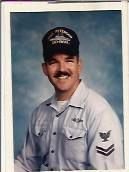
As Sailors, most of us looked forward to foreign ports of call.  (I say “most of us” as I knew some shipmates who wanted nothing to do with anywhere that was not the the USA.) But  I was interested and excited to get off the ship.   I have always been a people person.   Probably why I was so interested in learning foreign languages.  A conversation might only take using (badly) the six or so words.  Some might even have a couple phrases learned prior to visiting Egypt or Turkey.  With a “hello” or “how do you do”, in Arabic -I purchased a cassette tape introductory lesson before leaving the American base –  it was a good thing that most spoke some English.

I am thinking about that first visit to Hurghada, Egypt, when I had a conversation with a young Egyptian dock worker while I was waiting for my ship to come in.  I had just flown seventeen hours from the U.S. to board the ship that was in mid-deployment.   I still have the papyrus bookmark and a photograph in my random collected “stuff”.   Or talking with the merchant while we drank tea, who hoped one day to get to America so his young daughter might get needed surgery.   Or riding with my buddies in a cab, at night, while the cabbie raced along, no headlights (to preserve the battery, he said) honking and dodging people and animals in the street.  Completely unperturbed (the cabbie, not us).

Once when I traveled to New York City, and hailed a cab, the driver was “middle eastern”?   Then as now, I think about the gentleman  near the Grand Bazaar in Istanbul wanting me to buy some gold jewelry.   “How did you learn to speak English so well?”,  I kidded.

“I was a cab driver, New York.   Two years.” he replied.

“I think I have ridden in your cab!” I said.

For a brief time ashore in Turkey I was a millionaire.  Well,  it was when I exchanged my U.S. currency for Turkish Lira, at a time before the currency was revalued by their government to track with other world currencies.  With all my new “wealth”, what would be my most prized purchase? a book.   A bilingual dictionary.  Twenty-five years ago, with no Google and no Amazon to browse and shop, a book – in a stall in an open-air Izmir market –  a  sözlük (pronounced sooze’ luke) was my Rosetta stone.

With that dictionary, I met Hikmet and his brother during our Izmir port call.  They were  entrepreneurs in international  business of shipping and receiving (they owned and operated a MAILBOX, ETC store).  I was their opportunity to practice “american”.   Over tea, we “conversed” in their broken English and my crash-course (on the fly) in Turkish.

20180414_211609844128671.jpg
teacup 

In 2018,  Sailors do not appear to be deploying to the Middle Eastern waters any less than their predecessors.  For thousands of years, armies and navies have been making port calls.  Greeks, Romans, Byzantines,  Ottomans, Western Europeans, Americans, and now Russians,  So I am sure that vendors, street hawkers, and students will know  “my friend”, “how much?” and “I’ll give you a good deal!” in everything from ancient Greek to Chinese.  But what of the millennial generation? I hope they  find an Internet connection for their smartphone translator app.   As for me,  I still have my bilingual dictionary.


misanthropic callers

“He loved the people just as much as he feared and detested persons.”
― Sinclair LewisIt Can’t Happen Here

Once I was accused of loving people that I came to know individually, but detested people in groups.   And then I came to a spiritual renovation which, painfully at first, changed my whole worldview of humanity.   There are bad people. There are people striving to help others.  And the whole of humanity in between.

20171217_102102.jpgFor twenty-five years in the online world,  I have been fairly well isolated from the dregs of humanity that poison your computers with viruses, and ploys to get sensitive information.  And yet we all – hundreds of millions of us – have been exposed to scams,  theft, and fraud by failures of government and commercial companies to protect our finances and our personal information.

In forty years, I have had bank accounts drained twice.  Family and friends have had credit maligned for items purchased in places we never visited nor lived.   Or received email from Nigeria, or China,  or your sister-in-law, with pictures and links we should never click.   Then Facebook and Russians or other ne’er do wells started to manipulate the public, through data analytics  of our habits and friends.   Trading a Windows-based computer for an Apple or a Linux one only slowed the criminals for a time.

censorship-limitations-freedom-of-expression-restricted-39584.jpegOnce my father-in-law got calls on his cell phone reportedly from my son needing money, and apparently gleaning details by way of social engineering,  I knew the scams were getting more sophisticated.   And then my son, on his work phone, got called to extort his emotions by false claims of an injured family member.  And I have had, on the very phone I was holding, a call incoming supposedly from me.

The milk of human kindness, and positivity for fellow man was in danger of being soured.  But the God whom I serve, I have faith will burn the dross of humanity, whether emailing, calling, or manipulating software from Alabama, Mumbai,  Mexico or the Baltic.   The times of testing have always been upon us.  And for this old Sailor,  I don’t have the means or the heart to launch Tomahawk missiles.  4347_1153409602051_4092653_n

But I do have the means to needle, cajole, inspire and support family and friends by getting the message out through a blog.  Report and record, where possible, these frauds.

And should they be politicians pestering you for your vote,  persistent contact to insist on protecting us from technology abuse should help.  After all,  weren’t the Russians able to cajole you in the voting booth?

Humble is not a pie sold at Costco

On the way home from lunch with friends today,  we stopped at COSTCO to pick up a few things.  While I enjoy our Sunday routine,  it is often at odds with how I spend the first part of my day.    As you may know, if you have followed either of my blogs for any length of time,  my wife and I are active members of our church.  For the last decade at least, one  or both of us serve as ushers for our worship service.   For the last five years,  I have been leading the ushers every Sunday for four to six months every year.  And that has helped me to overlook in others the shortcomings we all share.  In biblical parlance – sin.   Greed. Pride. Lust.  Et cetera.  On display at Costco.

“True humility is not thinking less of yourself; it is thinking of yourself less.”
― Rick WarrenThe Purpose Driven Life: What on Earth Am I Here for?

Not that I am immune to “human weakness” by any means.   It’s why I go to church, why I pray and why I depend on the divine to help me when I’m weak.    See if my observations sound like anything you have seen:

  1. The bored clerk helping at checkout who seems genuinely irritated that a customer wants a box to carry out their purchases.
  2. The seven customers waiting in the parking lot behind the man waiting for a particular spot though there are two people pulling out a hundred feet away.
  3. The line of customers congregating around one of the sample stations – sausage, I think – blocking all but the most determined customers from going down the aisle.
  4. A wife berating a husband because he wants to buy some pickles  while she has a month-supply of chocolate in the cart.
  5. Several customers who found a deal – and are buying several bottles of Margarita (premixed) each – though the checkout clerk chuckled to me that Cinco de Mayo is still a month or more off.
  6. The woman who blatantly, if smugly sly, gets in front of me – two inches behind the man in line in front of her – and then motions her gal-pal to pull their nearly empty cart in front of us – three bottles of margarita, two of wine and cheese puffs or whatnot.

These are not representative of all, but a sample of people I’ve encountered.   For myself,  I have to hustle past the stadium-sized televisions positioned at the front of the store,  the random trinkets, and past the alcohol, to the steak and roasts.   I love to barbecue, and could easily spend my week with the smoker or barbecue going daily.

I would love to stuff my face with beef jerky, baked goods or those Salted Caramel chocolates, but that’s what I am declaring war on these days. On my new lifestyle- cutting out carbohydrates – I’m 22 pounds less than I weighed at the beginning of January.  And I intend to be twenty-five pounds lighter by the end of the summer.

Please God, help me love people.  Give me humility.  Help me say “no” to the gallon jug of BBQ Sauce to go with the steaks.   And help me with my own weaknesses!

fiddling around

Sometimes you get assistance and support from your elected representative.  Sometimes you get a letter where they have miss the point the constituent was making entirely.

Thank you for your letter regarding your concerns about unsolicited calls and the enforcement of the Do Not Call Registry rules.  I appreciate hearing from you, and I welcome the opportunity to respond.

I understand that you have registered your number with the National Do Not Call Registry, but that you have continued to receive telemarketing calls with disguised identities and phone numbers.  In your letter, you expressed your support for stronger penalties against companies that violate the Registry rules. …”

I actually studied Political Science at the university ages ago, as I had some fantasy about going into government service.   But that was before most colleges became a breeding ground of Orwellian thought control.    These days I think back to the movie and musical, Fiddler on the Roof.   Living  as best one can apart from the Government bureaucracy.

Tevye: And in the circle of our little village, We’ve always had our special types. For instance, Yente the matchmaker, Reb Nachum the beggar… And most important of all, our beloved Rabbi.

Leibesh: Rabbi! May I ask you a question?

Rabbi: Certainly, Lebisch!

Leibesh: Is there a proper blessing… for the Tsar?

Rabbi: A blessing for the Tsar? Of course! May God bless and keep the Tsar… far away from us!

I actually reached out to Senator Feinstein to demand that the perpetrators of cell phone abuse: spammers, hackers (who masquerade as someone in your contact list — or when you receive a call from your own number! – and malcontents be the focus of more intensive prosecution and penalties.  I acted after my son received a call at his work number claiming that his mother had been injured in a traffic accident.  It was b.s.

So all my friends and family who truly believe that the proper political party leading the country will make the roads efficient, the cell phones free from telemarketers, and the social media free of Russian meddling have great faith.   Me,  I will continue to be

Tevye: A fiddler on the roof. Sounds crazy, no? But here, in our little village of Anatevka, you might say every one of us is a fiddler on the roof trying to scratch out a pleasant, simple tune without breaking his neck. It isn’t easy. You may ask ‘Why do we stay up there if it’s so dangerous?’ Well, we stay because Anatevka is our home. And how do we keep our balance? That I can tell you in one word: tradition!


Please be assured that I will keep your concerns in mind should the “Help Americans Never Get Unwanted Phone Calls (HANGUP) Act” come before me for consideration in the Senate.


destroyermen tell no tales

4347_1153409202041_3983536_nOn a warship there are few times that anything without a strict mission-related purpose is permitted aboard ship.  Of course,  this does not necessarily mean trinkets  the crew buys in a foreign port of call have to be shipped home.   After a visit to Turkey,  there were many nooks and crannies aboard the Proud Pete that were stuffed with oriental carpets, leather goods and other swag. Another time, after a port visit in the Caribbean, many crewmen had Cuban cigars.  And all sorts of goods from stops in the Mediterranean.

The oddest thing to be brought aboard the PETERSON were the temporary port-a-potties welded to the forecastle.  But none of the crew wanted “that”.  It was ordered from the naval authorities during staging for our Haitian interdiction operation which might result in taking aboard refugees.  However is was my tenure’s last Commanding Officer who introduced something I could only guess was some private joke with those who knew him when he was an Ensign – aboard the PETERSON – fifteen years earlier.   It may now sit at the bottom of the Atlantic.

DD969“It” was a park bench the my Commanding Officer, CAPT. Edward Zurey authorized to be installed (welded) in the athwartships passageway near the Ship’s Store.  A corner that during his tenure became known as “Broadway and Main” (for the Main Deck).


bench

walls, poets, and strategy

Good fences make good neighbors…  -Mending Wall, Robert Frost

Walls keep some things in and some things out.  While rivers, oceans, mountains and forests are natural boundaries, it is the inventiveness of men to construct un-natural boundaries declaring to all “this is MINE”.  Trust and brotherly love seems to have been lost with Cain setting out after killing Abel.  Fear and desire for control supplanted harmony.  Men created walls.

The Great Wall of China

Originally started in the Third Century BC, by Emperor Qin Shi Huang, this series of walls and fortifications was started with labor comprised of soldiers and convicts.  In the interest of security,  that labor had a terrible cost in lives.  History.com  states that perhaps 400,000 died during the construction.  Over the last millennium, a series of sometimes parallel walls fifteen to thirty feet in height and up to fifty feet thick at its base, the Wall was not really keeping anyone out.  Though often stated that is was intended to keep the barbarians – Mongols and foreigners  – out, it served mostly as a symbol.  Ironically, the Mongol rulers of China manned the wall to protect commerce along the trade routes of the Chinese empire.  It’s the only tourist attraction of the 21st Century visible from space.

The Maginot Line

Following the horrific casualties,  mustard gas, trench warfare and devastation of the First World War,  leaders in France, in the 1930s decided to build fortifications on the French-Germany border to prevent future incursion by Germany into France.  Part of the wall was not a wall at all, but a series of fortresses and used the natural steep terrain  thought to hinder the advancement of an enemy force.  Part relied on the thick Ardenne forests and did not wall off the complete border.   While the German army did penetrate the Ardenne forest and circumvented the Maginot Line,  the French also failed to seal the border with other nations.  Ironically, from the French side of the fortified line,  the Allied troops found that the defenses were difficult to penetrate as they advanced toward Germany in 1944.

Macnamara’s Line

President Trump’s insistence on a wall is another in a series of fence strategies – Russians partitioning Germany, the French in Algeria, and even during the Vietnam conflict.   On September 7, 1967 then Secretary of Defense Robert McNamara  announced that an electronic barrier would be constructed to signal our forces when the North Vietnamese Army infiltrated south of the Demilitarized Zone (DMZ) along the South Vietnam border with North Vietnam.  It was the second attempt in Vietnamese history to separate political entities of rival factions, for political and economic reasons.  Each faction was supported by a European power, one Dutch and the other Portuguese, seeking to expand their economic interest in the region.  That was in the 17th Century.

By the time the French were losing their colonies in Indochina to the Communist forces under Ho Chi Minh, they had successfully re-deployed their forces to their Algerian colony and were implementing a wall there that combined a lethal electric fence with anti-personnel mines.  It was a very successful effort, but the cost in personnel and public sentiment in France to the conflict resulted in the French withdrawing.   In Vietnam, by the mid-1960s, the United States strategy to oppose the infiltration of South Vietnam through troop deployment was not working.  And so an idea germinated to build a wall. While the military supported expanding the war into the countries bordering South Vietnam and the North, another group supported deploying technological means along with huge numbers of mines , against personnel and vehicle traffic, to impede the infiltration of troops into South Vietnam.  Through surveillance and aerial bombardment, the US attempted to thwart the use of the Ho Chi Minh trail.  Considering the issues that impeded the surveillance, detection, collection and dissemination of the intelligence gathered,  and the war’s huge cost in personnel, and political unrest at home, it was a failure.

Mexico’s  “wall”

Mexico -Guatemala

Studies  do not get a lot of attention in the media when they do not enhance the current pro-immigration ( in Orwellian newspeak, illegal is blotted out by those who ignore law that does not suit them)  sentiment about a border wall along the southern US border,  cite the abuses that tens of thousands of migrants passing through the border with Guatemala and Belize. Drug traffickers, criminals, migration officials and corrupt local police are chiefly responsible.  Workers are exploited at very poor wages from the migrant population at the border.

For any worker who complains to the government about the exploitation,  the process is  typical of bureaucracy – requiring paperwork, a series of hearings attended by the complainant, and any finding in favor of the worker,  put responsibility on him to report the findings to the employer.   As for the Mexican government response,  they deport illegals or arrest them.  In the article this information was described, then -President Vicente Fox – seventeen years ago – stated how he was implementing a development corridor and better conditions including amnesty for illegals working in Mexico with forged documents.  For a government and its proxies, the lobbying groups in the United States,  to hold America accountable for trying to stop illegal migration,  a metaphor of dwellers in glass houses throwing stones at the United States is readily apparent.

Lost in all these historical perspectives of walls and borders are the people who suffer from the criminals, profiteers, corruption, unkept promises, fear and cynicism.  And that is from those who are living legally within a nation.  Walls have rarely been effective for very long in the history of civilization.  And the political systems that rely on walls, when everyone else is trying to dig under them, bribe the guardians at the gates, go around them, go through or encourage rebellion within the walls will not have security.

While politicians debate walls,  consider Robert Frost, neither political nor a polemic, on the nature of walls:

Mending Wall

Something there is that doesn’t love a wall,
That sends the frozen-ground-swell under it,
And spills the upper boulders in the sun;
And makes gaps even two can pass abreast.
The work of hunters is another thing:
I have come after them and made repair
Where they have left not one stone on a stone,
But they would have the rabbit out of hiding,
To please the yelping dogs. The gaps I mean,
No one has seen them made or heard them made,
But at spring mending-time we find them there.
I let my neighbour know beyond the hill;
And on a day we meet to walk the line
And set the wall between us once again.
We keep the wall between us as we go.
To each the boulders that have fallen to each.
And some are loaves and some so nearly balls
We have to use a spell to make them balance:
“Stay where you are until our backs are turned!”
We wear our fingers rough with handling them.
Oh, just another kind of out-door game,
One on a side. It comes to little more:
There where it is we do not need the wall:
He is all pine and I am apple orchard.
My apple trees will never get across
And eat the cones under his pines, I tell him.
He only says, “Good fences make good neighbours.”
Spring is the mischief in me, and I wonder
If I could put a notion in his head:
“Why do they make good neighbours? Isn’t it
Where there are cows? But here there are no cows.
Before I built a wall I’d ask to know
What I was walling in or walling out,
And to whom I was like to give offence.
Something there is that doesn’t love a wall,
That wants it down.” I could say “Elves” to him,
But it’s not elves exactly, and I’d rather
He said it for himself. I see him there
Bringing a stone grasped firmly by the top
In each hand, like an old-stone savage armed.
He moves in darkness as it seems to me,
Not of woods only and the shade of trees.
He will not go behind his father’s saying,
And he likes having thought of it so well
He says again, “Good fences make good neighbours.”

Early to rise

With all due respect to Benjamin Franklin,  I have to say rising early for the past forty years has not been due to my body-clock eager to start the day.  It was a habit that I developed before age 18 as I had responsibilities ( I worked before school at a ranch which required me to start there at 5 AM).    I am healthier now due to good eating habits,  wealthier due to a skill that is specialized and in demand -but more likely that I am much less given to the wild living of youth – and possibly wiser because I read a lot  – starting with scripture.  Work stimulates a lot of brain activity because something I build and test at work rarely just functions as designed. And I need to determine why – or correct it.  Participating in discussions with friends, peers, educators, and fellow bloggers across the world stimulates curiosity.

To say that this writer’s mind is a cauldron of seething ideas is not entirely accurate at 5 AM on a Saturday.  By sitting on an idea till it hatches, more fully formed, requires patience, time to actually write, a critical editing process, a lot of coffee,  and   Voila!

And then the dogs realize I am up.  Ideas sometimes come during a dog walk, but more often I am focused on them not peeing on mailboxes, a neighbor’s roses or my not stumbling.

honorable service

The current President of the United States pardoned a sailor this week who had been convicted and sent to prison for violating regulations protecting national security. , He took pictures of his submarine’s propulsion compartment which is a classified area.   Without knowing the particulars, it seemed to the President that the punishment of imprisonment and a discharge,  in light of other government employees who also had taken an oath to support and defend the Constitution and nation, was  – in this current climate – oppressive.  In the last several decades, access to classified information and equipment  was granted to personnel specific to their position and job; it required thorough training, a thorough personal investigation, and continued exemplary conduct.  Individuals in the military who deviated from this lost their access, were subject to punishment, and in extreme cases, based on a courts martial, sentenced to prison.

Perhaps the President was taking issue with the previous Administration’s handling of cases in this regard.  As we all are aware there was a former candidate for President who had a non-government server with classified information (hacked?),  lied about it, and influenced those charged with investigating this breach of national security.    A member of the military who intentionally broke the law by transferring secret information to Wikileaks was imprisoned, but also was given ‘transgender’ treatment,  had his (her) sentence commuted and was released.  An earlier contractor employee, Edward Snowden,  who transferred classified information and fled to Russia, is still lauded by those who have questionable “honor”.

In 2014,  both the then-President of the United States and his National Security Advisor declared a soldier returned from Taliban custody, served with “honor”.  Bowe Bergdahl, was later convicted by courts martial for desertion, by walking away from his unit in Afghanistan willingly.  He was given a dishonorable discharge.  In these prior cases, the climate that was established by those critical of the United States and set about ‘radically transforming” the culture and laws, rewriting history,  only served to embolden adversaries and weaken American respect in the world.

From the bruhaha over the prior Administration’s FBI dossiers and NSA surveillance of  private citizens (then-candidate Trump’s staff),  backroom deals with cash for Iranian mullahs, to the still-implausible blame game for the murder of an ambassador and security staff  in Libya after Gaddafi’s overthrow, the term “honor” is not very apparent.   Career service members of the United States armed forces understand it.

If we as Americans can respect each other, resolve our differences through the ballot box and offer a hand up, it can change.    No human being has risen above the temptations of power, greed, lust, or other “sins”, but what is corrupting this generation is the added ambivalence to what served this nation’s unity for two centuries – family, a common language, common ideals, and a positive view of the future.

dont-tread-300

So what does “serving with honor” mean in 2018?   Those of us who have served honorably know what it means.   If you perform your job to the best of your ability.  take care of those in your unit,  treat people with respect,  understand and follow authority,  practice self-control, and represent the best of an American (speaking to Americans) , a person can say they “served with honor”.  Those who have the added spiritual values, understand that theirs is a higher commitment but the same understanding of honor.   We have raised our families to know what it means.  Not everyone who has served  or continues today to serve the nation, in the armed forces, law enforcement, fire and rescue services, or in the spiritual “front lines” has the same understanding, when it comes to politics, economics, or community,  but those values that we trained to in the uniform of the United States still have meaning: Honor, Courage, and Commitment.

party animal

The first thing I noticed about my wife’s choice of venue for her former nursing student-graduates  gathering, was how loud and crowded it got after 6:30PM on Friday.  First, it was surprising to me that “loud” was something I would be annoyed with.   And second, I am also annoyed at thinking it a “crowded” venue which the over-forty crowd seemed to enjoy.  While I have been in Navy CPO clubs and Navy aviator officer’s clubs in San Diego,  this was my first time in the  94th Aero Squadron,  a public restaurant with an a military and aviation theme.

Friday evening commutes in San Diego are typically one that I will stop to have a cigar at a favorite lounge on the way home from work.  However, this past Friday, my wife invited me to join her while she waited for a couple nurses to join her at the restaurant and bar that borders Montgomery Field municipal airport.   With the tri-winged red airplane out front,  reminiscent of the Red Baron, I would not be mocked too much if I asked where was Snoopy in his Sopwith Camel doghouse.

While they reminisced about their time at the school (my wife’s employer) and chatted about kids,  medicine and the training, I drifted off.   And then I needed a second glass of something to ward off the chill.   While San Diego rarely gets weather  that has anyone scurrying for jackets, wool caps or gloves,   this was one of those cool weeks.   Part of this restaurant was open air, looking out on the airfield, which on any other week of the year, would have been very pleasant.  The cool evening also spurred me to risk ( my Keto diet regimen) two glasses of merlot.

I thought it was a great place for a happy hour.  The service and the appetizers were – on my carefully chosen sampling – quite good.  But as the happy hour crowd left and the evening crowd of forty-somethings started partying, the loud music,  the cool, and the 8 o’clock hour on Friday night is about all the partying my wife and I can handle.

If a sloth is the new image of cool,  then I am still a “party animal”


culturally irrelevant?

it’s the kiss of death for a celebrity that is long past her or his prime: being ignored, or worse,  being mocked.

Madonna,   now 59-year old,  is that embarrassing icon of 80s music that lost her relevance twenty years ago, but refused to go quietly into producing other artists or cultivating wine on a French estate, etc.   She tried to drum up support for Hillary Clinton’s Presidential bid.  She was quoted saying some incredibly stupid, sexually explicit things.  She has been mocked for at least three years by radio stations in the U.K.  and their music awards.   Do the Millennials even know who she was?  And apparently this week she put herself out on Twitter in a bid that she may regret more than being forgotten, being mercilessly mocked.  

Nicholas Cage.   I generally watched his movies for the co-stars’ performances.  Even the cars were more watchable.

Mel Gibson.  Memorable movies. Memorable characters.  And then …. in person, a drunk,  a bigot,  given to tirades, abuse …..

Lindsay Lohan.  Mostly a celebrity for being such a human trainwreck.

For musicians ever since the music video fame is measured in months it seems.  A casual search on the internet revealed a whole lot of “irrelevant” performers who apparently rose and then flamed out in the last five or ten years.  Rita Ora is one according to one critic.  I never heard of any of them.

And of course, my “fan fave”,  William Hung, the rejected American Idol of 2004 who became an internet sensation for his lack of singing talent.  But he’s a successful motivational speaker now

from sails to “the Force”

Any sufficiently advanced technology is indistinguishable from magic.
-Arthur C. Clarke,  via brainyquote.com

Today I went to see the latest Star Wars movie, The Last Jedi.  But this is not intended as a review of a movie that has been seen and reviewed by others.  My thoughts run to (technological) life imitating (science fiction) art.   Here’s what I will say about the movie: I enjoyed it.  Humor, blasters,  evil empires, love and courage.  Okay, so some of the plot does mimic a progression that I saw in the original trilogy.  And the feel is different from those original Star Wars  (non-remastered, CGI -modified rework by Lucas) films I saw in the 1970s  and 1980s.

I started thinking how science fiction,  particularly Star Trek and then Star Wars, have given us a world where we have satellite-beamed entertainment,  video-communicators in everyone’s pocket (Iphone and android),  and space travel that is so routine, few are awed anymore.  Yet we all yearn to visit other planets, other stars and engage with whomever is “out there”.  How many were fascinated by the flyby of Pluto, and the still-communicating Voyager satellites entering interstellar space.  We have started to change our view of aliens from those wanting to eat us to visitors.

What lists can you come up with of the science fiction later becoming science fact?   Mine starts with writings from a hundred-fifty years ago.

  • From the Earth to the Moon,  Jules Verne (1865) a vessel in which men travel to the moon.

Science: Sputnik, Soviet launch a man-made satellite into orbit.

  • 2001: A Space Odyssey. Arthur C. Clarke (1951)  Origins of man. Finding alien technology and a depiction of space travel (10 years before it became reality) with a supercomputer pilot to Jupiter

Science: NASA space program ( Project Apollo, 1963 -1972) overcoming technical hurdles and developing tools and systems to travel to the Moon, land and then safely return to earth.

  • Star Trek  ( TV series, 1966 -1969) Drama and adventure at faster than light-speed. Stories on the difficulty of maintaining unity in the galaxy.  Racial diversity, Love, loss, greed, lust, and alien civilizations.

Science: Apollo – Soyuz, Skylab (1973 –  1979)  Initial efforts at cooperation in space,  long-term habitation in space orbit, and coexistence on Earth.

  •  Star Wars  (1977).   This story of good versus evil,  love, journey to discover one’s identity and high-tech shoot ’em ups, started what became one of the world’s top-earning movie franchises in history.  Planet-vaporizing weapons and plasma-laser light-sabers.

Science:  the Strategic Defense Initiative in 1983 (called mockingly, Star Wars).  Intent was to develop – particle beams, lasers and  missile defense systems

  • Star Wars movie trilogy  and Star Trek movie/ television  franchises, (1980s -2009)  Food synthesizers, medical diagnostics, hibernation, and transporter “beaming”

Science:   naval electromagnetic rail gun, launching projectiles at supersonic speeds  (since 2007)

Science:  quantum teleportation experiments and transporting particles in 2017 (“beam me up, Scotty!”) With quadrillions of calculations needed to beam Kirk about,  the technology is still in a galaxy, far, far away.