Red Sky in the morning….

There’s an ancient mariner’s rhyme that says, “Red sky at night, Sailors’ delight; red sky at morning, Sailors take warning”.  From Wikipedia,

It is based on the reddish glow of the morning or evening sky, caused by haze or clouds related to storms in the region.[2][3][5] If the morning skies are red, it is because clear skies over the horizon to the east permit the sun to light the undersides of moisture-bearing clouds. The saying assumes that more such clouds are coming in from the west. Conversely, in order to see red clouds in the evening, sunlight must have a clear path from the west, so therefore the prevailing westerly wind must be bringing clear skies.

Talking with a elder friend and mentor this morning,  Jack related a story how, as a Navy man fifty or more years ago, he had been a Tin Can Sailor ( alternately known as a destroyerman)  on a World War II-era ship.  He had been a yeoman and the Captain’s bridge talker.   Jack relished telling me how he had been selected for that job by the CO as he could translate the southern drawl of the Engineering crew muddled by ship’s intercom system.  And he loved to share with me the story of his ship taking 40 to 50 degree rolls in a Pacific storm they rode out for a week.

1944_12_17_unk_dd_700x
A ship of Task Force 38

I too, was blessed with a strong constitution, riding out a few violent Atlantic storms in the destroyer PETERSON, ( launched in the 1970s) where most personnel not on the binnacle list,  were at their positions with barf bags at the ready.   I do recall the one or two times I foolishly ventured on the upper deck by our workspace – the “Oh- three”  (03) Level, to witness the power of the wind and the waves.  Metal bent or was torn away by the power of the sea.   Fortunately with modern navigation, we did not ride through the center of these storms where the waves were reportedly fifty feet high from trough to crest.

typhoon20cobra
Typhoon Cobra

I started to think what the Sailors of WWII dealt with – battling the Japanese in the Western Pacific and typhoons.   On a website this morning,  I discovered that an error underestimating the weather put a heavily armed Task Force, with some top-heavy ships directly through a violent typhoon – Typhoon Cobra –  with fatal results.   Ships were heavily damaged, some capsized and sank with hundreds of men lost,  and generally raised more havoc than the enemy they were to battle.
 

Veterans or prospective veterans: Get Hired!


My employer is GROWING and looking to hire veterans of the U.S. Armed Forces.  Locations across the United States and overseas.   Job Fair information:

ViaSat is hosting a free transition workshop for veterans and their spouses from 8 a.m.-5 p.m. on June 14. The event will assist those moving from the military to the civilian workforce.

Hands-on sessions include compensation and benefits, LinkedIn tutorial, resume building, StrengthFinder assessment, interview skills and more.

Lunch is included for all participants. RSVP by June 10 at www.surveymonkey.com/r/ViaSatTransitionWorkshop.

For more information, contact Adrian Haskamp at veterans@viasat.com or call (760) 476-2200.

a sentry’s recollections

In the Navy I stood a lot of watches.  For those not familiar with our terminology,  “watchstanding” is an assignment for a specified number of hours, to monitor area security, equipment performance, duties according to one’s training and seniority,  or other duties “as assigned”.

As a young Sailor (I capitalize the “S” following a Navy custom),  my first watches were patrols of the recruit barracks I was assigned from the first days in the Navy forty years ago.  We patrolled for safety mostly, but it was also to train us to be light sleepers, and accustomed to getting up within moments to carry out duties.

Later assignments, once I had been in uniform for a year or so, was assignment to the base gatehouses, sometimes the Main Gate but more often the mostly deserted back gate.  Watches – as a student during that time – were mostly starting at midnight, “balls to four” or 4 AM, because I had a class schedule that ran two sessions until early evening.   One night, I was assigned to be a floor watch,  sitting at a desk in a quiet corner of one of the middle floors – decks, we called them – and with the lack of air, humidity, and heat -in a Florida summer,  I dozed off.  A thump in the back of the head and a shout in my ear – the Base Duty Officer that evening was an old Senior Chief – and I was wide awake.  Never dozed off again – ever – while on watch.

Ten years later ( I had left and then gone back into the service) , on my first shipboard ‘tour’,  I was a Petty Officer of the Watch, in port.  Every Navy ship, while moored has a security station, at the brow -entry gangway- to provide protection, announce visitors, note the commanding officer’s arrival and departure, and check for authorized ship’s company to depart or return.   As a Third Class Petty Officer, I was limited in the scope of my assignments, but once I earned my next rank, Second Class Petty Officer,  I sought to train and qualified as the Officer of the Deck (in port).  The OOD is responsible to that day’s Command Duty Officer (CDO) who monitors compliance to the commander’s orders while in port.  On a subsequent ship, I again performed that OOD role until as a Chief Petty Officer, I had oversight of the shore enlisted personnel in my capacity as the unit’s Senior Enlisted Leader.

I was fortunate that during my tenure aboard the various ships I served to have few altercations but for a couple inebriated Sailors.  My watchstanding duties which normally required me to be armed, including at various times carbines or shotguns as well as a 45-caliber semi-automatic pistol, were mostly routine.  But failure of security cannot be allowed. A case, where failure of security personnel at the Norfolk Naval Base a few years ago, allowed a deranged civilian truck driver onto the base and onto a pier, ultimately resulted in the death of a Sailor – and the assailant.   That Sailor gave his life defending his shipmate, a POOW who was attacked and disarmed. Another Sailor performed his duty to eliminate the threat.  Particularly in the post-September 11th world,  there are more random dangers, criminals, mentally unstable people, and web-enabled terrorists on friendly shores.  Being wary of the threats in foreign ports,  assignments for the 18- to 38 year old Sailors ( and Marines, Soldiers and Airmen) who stand watch at their posts are now a matter of serious professionalism.

As a result of being in that environment, witnessing a lot and fortunately only hearing some of the stories,  I have a lot of respect for law enforcement officers today.  The job of securing your assigned watch can be routine, dull, aggravating and demanding.  And there aren’t a lot of second-chances to get it right when dealing with a dangerous world.  To protect us they stand the watch.

Never quit on yourself

“I’ve missed more than 9000 shots in my career. I’ve lost almost 300 games. Twenty-six times I’ve been trusted to take the game winning shot and missed. I’ve failed over and over and over again in my life. And that is why I succeed.” – Michael Jordan,

I read this quote tonight, while browsing a blog post with 20 inspirational quotes and accompanying pictures, in themselves, very moving.  A family member in the service is weighing the possibility that he may be discharged for not maintaining the demanding physical standards of that service. (Even athletes get runners knee and shin splints.)

It is news that I know all too well.   As a younger man than he is now,  I also faced the same exhausting bureaucracy of my service branch,  weighing whether or not I would be medically discharged a couple years into my enlistment.  “Hurry up and wait”,  is the operational tempo of everything non-combat-related in the military.  But a determined mind, sharpened by knowledge of your adversary, bureaucracy, and equipped to respectfully and yet, unyieldingly, play ball is honored whether it leads to a win or loss.

Michael Jordan is a legend in the sports world for work ethic and results.  To win a lot, you risk a lot and lose a lot.  But every failure is a lesson in NEVER QUIT.  An opportunity to learn and improve.    I am glad that my wife and kids never quit  under adversity.  When I was young I was tempted several times.   Bouts of self-pity a few times.  Illegitimi Non Carborundum was my dad’s advice to me.    I finished my race by completing a career and retiring as a Navy Senior Chief.   So my son,  whether you serve 20 years or 6 more months,  I will not be prouder of you for never saying “I quit”.  You will always be ARMY STRONG to me.

if Jonah had a Spanish accent

15 Then they took Jonah and threw him overboard, and the raging sea grew calm. – Jonah 1:15 (NIV)

At sea,  even on a Navy warship, when the storm is raging, you feel very small and vulnerable.  In eight years, on three different ships,  I have been through squalls, gales, and hurricanes.  It is truly awe-inspiring – and foolhardy – to venture out on the upper weatherdeck when a destroyer is rolling 30 – 35 degrees port and starboard.   The churning, foamy grey and black sea is so different from the steel blue calm water of several hours earlier.   The power of the sea to bash in metal plates is also that same ocean that can leave sailboats without a breath of wind to move them.   In either condition,  I never want to be at the mercy of the ocean.

If one is to be stranded at sea, there are some more preferable spots than others.   Shipping lanes are well-traveled and charted,  like marked highways around the globe.   And then there are those when outside those lanes, who if they become stranded, rely on the grace of God,  or Neptune,  or  whales, dolphins or whatnot will send help their way.   The ocean, out of sight of land is a very lonely place, even in a part of the ocean that is well-traveled.

I was aboard the TEXAS, one of the last great nuclear-powered cruisers  about eight hours southwest of the Panama Canal  on a bright, sunny day.   I was performing some routine maintenance near the forecastle ( pronounced foc’sill”) when an announcement over the ship’s 1MC,  its intercom, that we were rendering aid to a small boat off our starboard bow.

“Boat” was an approximation as I recall.  It was more like a dugout, with two Panamanian men, and a couple of chickens – roosters, actually, in small cages in between the two men.  In the first minutes,   I was the only person on the deck who spoke Spanish and the deck officer asked me to translate some questions and directions for them to be brought aboard.    Apparently,  they were traveling from one of the islands off Panama to another – the birds were to be in a contest – and the motor started to have problems.   In starting to work on it – the motor clamp dislodged and motor and all fell into the depths.  They had been drifting with the currents for a day.

We were fortunate to be at that place and time to rescue the men and return them  to Panama with only a delay in our schedule.   Oh,  as for schedules,  sometimes they can be a pain in the neck with military precision.   At the moment we had the small boat along side,  and were preparing to bring them aboard, they happened to be under a bilge valve.  Yes.  Engineering began pumping waste overboard at that exact moment.  Furious calls over the radio,  straining on ropes and a few dozen choice expletives succeeded in halting the pumps, getting the men – and roosters, and their boat on board.

I wonder if those men recall the day the “americanos” rescued them.  And do they tell their children, when you are going to a cock-fight, be sure to bring a lot of rope for lashing,  maybe have all your shots updated, and most importantly, get a bigger boat.

night at the museum

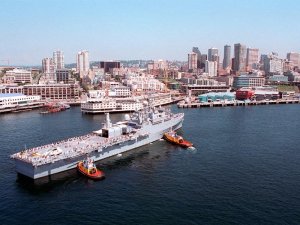
USS_Coronado_04AUG1999
USS CORONADO, AGF-11

Looking at old mementos this evening,  of my days in the Navy makes me feel, well “Well-seasoned”.  As I look back,  the ships where I was a crewmember are all now dismantled,  and sunk to the depths of the ocean.

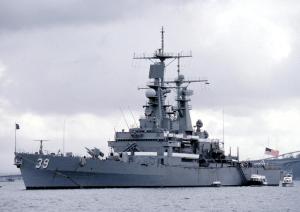
CGN-39
USS TEXAS, CGN-39

The USS TEXAS, a nuclear -powered missile cruiser was several firsts for me: first year at sea; designation as an Enlisted Surface Warfare Specialist (in 1991);  and Shellback.   I did enjoy living near Seattle for nearly a year – the ship was in drydock – before I was transferred at its decommissioning.  It was decommissioned,  dismantled and scrapped at the Puget Sound Naval Shipyard in the late 1990s.

I first fell in love with Canada – Esquimalt,  B.C,  and Vancouver aboard the TEXAS.  I visited, Ecuador,  Panama and cruised through the Panama Canal on that ship.

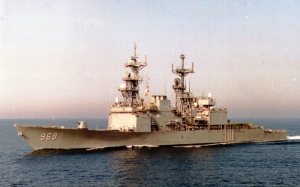
The  USS PETERSON, a Spruance-class Guided Missile Destroyer,  where I made friendships still strong twenty five years later, was decommissioned and sunk in the Atlantic.  But that’s the ship where I got the opportunity to visit Europe – Spain, France, Italy, Greece,  and Turkey, Bulgaria, Israel, Egypt, and island nations of Crete and Cyprus.  On the USS PETERSON,  I visited Panama and Ecuador a second time – was based out of the East Coast. (That has to be a first two-coast, two ship and back-to-back visits for any Sailor since that time!)    On another PETERSON deployment, we visited Nova Scotia.   Halifax has a friendliness towards seafarers of all sorts.

And from San Diego, the USS CORONADO, a special projects testbed, and command ship for the U.S. THIRD FLEET, took me to Japan, Korea and Alaska ( and Honolulu a number of times)  was decommissioned and sunk in the western Pacific.

DD969
USS PETERSON, DD-969

Equipment I used to maintain I found in a museum a decade ago.   Uniforms I wore when I first enlisted and then subsequently through 3 uniform changes have been sent to resale and thrift stores.  Occasionally,  I see a homeless person with one of the old pattern utilities and foul weather gear.

Memories are now appearing regularly on EBAY and other second-hand online stores.  But I have a few things that are still worth keeping.   shopping One of the last USS TEXAS calendars, postcards issued by the USS PETERSON, and pictures and challenge coins given to me by CINCPACFLT for earning Sailor of the Year for THIRD FLEET in 1998.  And my retirement shadow box lists installations that have either disappeared or been revamped, remodeled, and redesignated.
So in some future yard sale, should you, dear reader, happen upon a bunch of trinkets from an old Sailor’s box of mementos, enjoy them.  We can now Pinterest and Twitter and Facebook around the whole world.  But, trinkets, salt air and ocean waves are still analog.

Treading water

dont-tread-300
Gadsden flag, 1775


As I get older,  I wonder what has become of my military-physique – the early one, not the rounder one of my last year – and what became of the ‘forego the mission, clean the position!” fanatical routine with cleanliness.   Not that I don’t love the smell of PINESOL in the morning,  but leaving the house all day with two big hair-shedding dogs results in a truce between the advance of dirt and actual boot-camp standards of clean.

Attitudes that once were socially and fiscally conservative,  I generally vote in every election, hold ‘personal responsibility’ in high esteem — welfare is for the most-desperate and least able to work,  and believe military service is beneficial to everyone between 18 and 50 years old.    Now, I hold fast to my church family, my spouse, and keep my personal values fairly close to the chest — outside the street I live on.  Fortunately, I have neighbors who were also military or police, and are now retired.  A neighbor on a street where I walk the dogs has a “DON’T TREAD ON ME” flag above his door.  Another proudly has a TRUMP sign.   Both have pickup trucks with Marine and Army stickers on the former.   Then again,  I wear “VFW Life Member” and Navy Chief t-shirts to work.   But I am mellowed with aging.

I have YOSEMITE, bicycling, and Grand Canyon hiking stickers on my car, a VFW license frame and a Nature Conservancy brochure on my car seat – I contribute to purchasing wildland around San Diego to preserve it.   What happened to the guy who owned firearms, enjoyed target plinking,  and was a fan of talk radio?  Gone.

I need to get out of California.  I’m starting to love it here.


http://www.gadsden.info/history.html

Burial at sea


One of the privileges that a Navy man can request,  when the end time comes, is to be buried at sea. While I was on board the USS PETERSON in the mid-1990’s,  I was on the honor detail when we performed the last rites for (ashes of) a veteran of World War II. The ceremony was a solemn, set on the fantail of the destroyer.  Taps was rendered.  The Navy Hymn was played ( we had a boom box with a recording).  An officer, selected by the duty roster, read some words about the veteran and the tradition.  And everything was recorded on videotape for the deceased’s relatives. This was 1994 or 1995, so there was nothing like today’s live streaming technology.   When the time came to commit our Shipmate into the deep,  the wind shifted.   Our brother went partly into the briny — and also across the fantail.  A little splicing that evening in the Media center edited the re-shot final images of the burial at sea.   No need to stress the family with the ‘Sweepers’ call that was mustered up.

A burial — and a rebirth at sea, was exactly what occurred for me personally when I spent eight years on sea duty assignments with three different ships.   As I continue to read letters written in my first two years in the Navy, and from time when I went back into the Navy seven years later, I see a person that I no longer recognize.  I had tackled one of the most-rigorous technical skills the Navy offered,  but it took trial, error, failure, and opportunity that unexpectedly resulted in a review that medically discharged me.   At that time  I was an introverted teenager trying to escape Arizona and a negative self-image by joining the Navy;  in the Eighties, as a twenty-something stuck in a rut, with a challenging relationship, and poor job outlook,  I was able to re-enter the Navy, but only in that same field that had so challenged me previously.   The grass, or rather the salt air was beckoning me and I chose selfishly.   As my letters from this period show, I markedly changed as I matured.  When my personal life fell apart- my then wife took up with someone else,  I became more callous, even cynical at times, and a workaholic.    The go-to guy if something needed to be done.

However , San Diego changed all that.   I, metaphorically, died again, and was reborn –while I was still on active duty and assigned sea duty.   My new spiritual chain of command started with God and Jesus.  You listen when your ISIC (Immediate Superior in Command)  wears actual stars on his uniform. As stuck as  I had been in my past lives and self-interests,  I enjoy now a real freedom with my wife, family and church.  My skills, passions, and commitment is focused positively.   For almost twenty years, I have found that a burial at sea, and resurrection into a new life is truly freeing.  Thank God.

armed with coffee, savvy, and “can-do”

When I was in the military, my role -besides ALL the other roles that I was given, was to maintain electronic communication equipment.  Really, this was an ironic career choice.   I should have gone into the social sciences and language.  The irony is that,  for more than 30 years,  I have been very capable in problem-solving.  When I lack the specific skills I am not afraid to ask questions – usually over strong coffee.

for veteran success

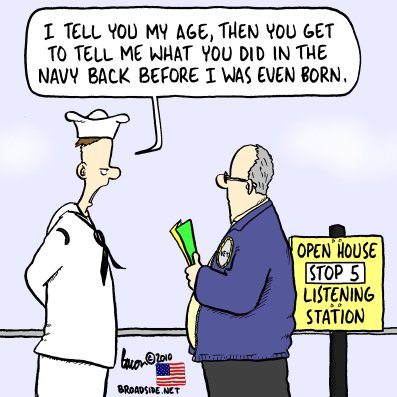
In the military and in an industry, to be effective, a person has to be capable in the role they were hired to do; possess attitude and work ethic for team success, do more than what is necessary and to be creative in problem solving.  At times, it is knowing the proper department person to contact for a quick -turn shipment,  a service request,  or  who stocked a particular adhesive for a repair done outside of the production chain of command.   To advance personally and professionally, a veteran often stands out by mentoring new employees and providing a team manager a “go-to” person.  In the workplace today, there are so many social contracts, sensitive subjects,  and human factors which are at odds with the department production goals and veterans “can-do”, get-the-job-done expertise.  While almost every enterprise challenges workers to do more with less, a veteran generally wants a product that a military end-user would have perform flawlessly when needed.  It might take more veterans in each business unit to overcome some individuals who do not challenge plans, goals, and promises made by leadership,  and to challenge those peers who do only what is necessary to maintain their position.  b3882-10051720openhousecolor397

Problem-solving skills include experiences in a military career to develop civilians into capable specialists.   Raised in an environment that does not cater to individual wants,  does demand personal sacrifice,  and teaches attention to detail,   a veteran is unfazed by office politics,  used to changing priorities from managers and figures out what gets the job done.  Sometimes the response is a cheery dose of salty language.   Circumventing the labor to schedule, exchange email, and discuss tools and equipment needed is a skill many military veterans are well-versed.   The veteran has frequently used a barter program, the unofficial currency in the military, to accomplish a task.  At other times,  it means having the confidence to draw a stopping point and get more hands on deck to troubleshoot a complex set of issues.

working smarter

Once upon a time, I would work myself into burn-out.  I no longer set impossibly-challenging goals and am able to call in reinforcements without hesitation.     Being creative in solving issues, and not volunteering but being assigned, may get a  ‘hanger queens’ successfully leaving my test station.  I leave it to others to foul it up.

Go far in life by going far (away)

When I initially joined the Navy in the late 70s, I  had already travelled to both coasts of the United States and to Great Britain – Northern Ireland, Scotland and London, England. But as a kid traveling with your parents or with a grandmother,  it doesn’t really make for an adventure.

I joined the Navy to see the world.  For nearly three years, I trained at various bases – in San Diego, at the Great Lakes Naval Training Center north of Chicago, in Pensacola, Florida and in Georgia.   And then I returned to Arizona.    I still wanted to see the world.  So in between university semesters, paid in part by my military service, I spent several weeks each summer on the eastern shore of the Sea of Cortez,  Mexico with a group of scuba divers from Arizona.

I joined the Navy again in 1987 for the adventure – and spent the next three and a half years near Washington, D.C. working as an electronics technician ( a Cryptologic Maintenance Technician specifically).  I travelled all over the region from the shores of Lake Erie in the northwest to New York City, and all the historical places from Philadelphia to Annapolis, and then spent some vacation time as far south as Daytona Beach.   But it was my decision to specifically request a sea-duty assignment, rare for those in my job specialty, when my world travel really took off.

After training, my orders sent me to San Francisco to board a cruiser, the USS TEXAS.   Panama, Ecuador, and then north to and through the Panama Canal to the western Caribbean.  I’ve ordered red snapper dinners in Panama,  cigars and hotel rooms in Ecuador, and taken pictures of the Galapagos Islands as we sailed past.   I’ve lived in the Kitsap peninsula opposite Seattle for a year,  travelled to Esquimalt, British Columbia and Vancouver, Canada.  (it is where I first learned about micro-brew beer and ales).  On different ships and at different times,  I enjoyed visiting countries around the Mediterranean, and one of the first American Navy ships to visit Bulgaria in 50 years.

As a kid who joined the Navy out of high school,  I had been itching to get away from the desert.  I never understood why my old Navy mentors, WWII sailors would have settled in Arizona and not near the sea. “We have had plenty of ocean.  I am here because it is all beach”.   After eight years of sea-duty, I understood that comment.   And I was glad that I had a love of history and foreign languages to complement my technical profession.  I’ve met and hung out with Spaniards in Cartagena, Spain.  Enjoyed smoky jazz and partying with the French in Toulon and Paris,   and sipped cappuccino in Catania, Sicily, Naples and Trieste.  By the way,  Trieste was also the place I was cussed out, in German, by a shopkeeper with he presumed, a German tourist and his lousy italian!

Whether visiting the historical sites of the Minoan civilization – and a 4000 year old queen’s working toilet,  or seeing the Wailing Wall in Jerusalem,  I was grateful for my teachers from high school and college for fostering my interests.

In wartime,  there are often too little focus on the wonder of travel and the opportunities to get to know people.  The world is still full of wonderful places and people, but also dangers that sobers an American’s optimism at times.  In an age when political forces are talking walls and not tackling the forces that cause people to come to the United States,  we have put bandages and temporary dams up.   There are forces also that want there to be no restrictions, and yet are unwilling to discuss the restrictions existing in the travelers own countries.  And language and education advocates want to change history and eliminate a common language.  All of these are just as ignorant as those who have never travelled to faraway places.   America used to lead the world in the post-WWII years not solely out of the hubris of a few, but because it defied the hatreds, disunity, and class struggles of ninety percent of the world’s population.    When Americans travelled to places outside the US, whether in the military or for other purposes, they would get assurances that we had it pretty wonderful.

Reading Mark Twain’s Innocence Abroad, I would love for us to have some of that innocence again.

Patton can’t wallop away “fatigue”

An article I read online about veterans who are suing the military to upgrade their discharges, indicates an ignored mitigating factor was their Post-Traumatic Stress Disorder.  It was a stigma for soldiers in many conflicts to suffer ‘combat fatigue’ and the military did not have any mental health programs to help their suffering.  World War II’s most infamous case of a leader who abused soldiers suffering what we know today as PTSD, was General Patton.

I do know what it is like to live with someone who suffered with Post-Traumatic Stress Disorder.  Thirty years ago, I was in a relationship with a woman whom I came to learn was not schizophrenic but rather suffering from PTSD.  In the course of dealing with her middle of the night terror attacks, suspicious looks, angry stares, horrible accusations and anorexia,  I was not trained, nor was I sufficiently mature enough, emotionally, to help.   At the time I was in the Navy, stationed at an installation outside Washington, D.C.   Over a period of several weeks everything came into the light.   My job performance started to suffer badly.  I was exhausted;  one Monday,  I failed to go to work at all.   And then,  banging on my door, my supervisor, a Chief Petty Officer in whom I confided my struggles,  had come to check on us.

Instead of being brought before NJP – nonjudicial punishment,  my supervisor verbally reprimanded me, and took charge- giving me direction about how I should lead my household.   In the late 1980s,  mental health, counseling – family or marital, and the host of ills that military members succumb to in combat  was still in its infancy.  And if PTSD was hardly recognized in the civilian population, how much less so for our veterans.   I found resources for us to attend counseling.  I would love to say that everything turned around and became goodness and light.  It did not.  Less than ten years later, I learned that she had succumbed to her health problems.   For those suffering mental health issues,  it is always continuing steps in recovery.  But the sufferer has to be as engaged in getting healthy as those around him or her remain committed to helping.  It is time for the military – and the VA – to make every effort to alleviate the mental health issues that were aggravated or incurred as a result of military service.   It is only right to help warriors with tools and understanding who are suffering.