NCO Club Memories: Celebrating a Life of Service and Friendship

Our neighborhood “NCO club” has ushered my comrade onto his next and final assignment. I am hoping that Valhalla receives him warmly. Sergeant John Norman, US Army veteran, 72 years old, died in the morning of October 19th at his home in El Cajon, California. He leaves behind his wife of 50 years, daughters and grandchildren, friends, golfing buddies and many members of his union retiree club. Though I neither golfed, nor was a truck driver, and our wives only knew one another generally, John and I could say we were as close as two veterans might be.

Origin of the NCO Club

We were neighbors for almost 24 years, and almost weekly over that time we shared several beers, sometimes good bourbon, and small talk. We would reminisce about our military experiences, family, and the state of the country and world. He enjoyed recalling his late mother-in-law, a female Marine, which always seemed odd in that her daughter, his wife, was quiet and reserved whenever I met him for a drink in his garage – our clubhouse. He could remember names of those he went to basic training while I struggle, though our similar experiences were only separated by five years. One story, he particularly enjoyed retelling, concerned a recruit who had money stolen, and the drill sergeant giving the offender time to place the money at night in an office drawer. Apparently, the guilty party did not return the stolen goods; the company then threw the thief a “blanket party”. Team reunified, justice dispensed, and funds recovered.

He served during the later years of the Vietnam War, in a medical compound next to the Korean Demilitarized Zone (DMZ). The stories he recalled treating soldiers’ indiscretions – drunkenness and for things that penicillin cured, never got old. As a truck driver delivering to military installations in San Diego, he would often tell a story of a delivery when a Navy supply sailor would not receive his shipment because he was playing games on a computer. Returning to the freight company, and behind schedule, a senior officer called John’s company to ask why needed equipment was not delivered. The story apparently did not paint the lazy sailor in a good light. As John told it, that officer subsequently reassigned the individual to the point farthest away from his home in the south of San Diego County, to Camp Pendleton 50 miles away. And one of the stories that I particularly recall had to do with his long-unused medical training. Though John never continued working in healthcare after his Army service, like some former Army medics and Navy Corpsmen I knew, I believe a cabinet installer owes his present use of fingers to John’s quick thinking. Some eight or ten years ago, in a brief lack of focus, the man installing cabinets for John’s kitchen strayed too close to his table saw. John packed the wounds and bundled the amputated fingers in ice, and got him to the ER.

Roses are not only red

We all benefitted from Sergeant Norman’s many talents. His passion was growing roses and he was a dedicated member of the San Diego Rose Society. He would show me many different varieties he tended, recognizing all by name. For several years, he would help me tend to roses I had grown under his mentorship. This continued until I could no longer hide that I was absolutely horrible at keeping them alive. His prowess as a gardener, though compromised years ago by a war with gophers (still ongoing), was unmatched. For 2 decades, the neighbors in our little block were recipients of delicious oranges and grapefruit, squash, tomatoes and peppers, which he distributed over his wife’s protests all year long. When he brought these gifts to my wife, she would generally nod in my direction, and say I should go over to have a beer (or 3 or 4 or 5!) with him. These were the best times for the “NCO Club”. Each Christmas, we traded gifts – my wife’s peanut butter chocolates were exchanged with his homemade cheesecakes. Sometimes these individual cheesecakes, gifts to neighbors, family and friends, might include an additional gift as an incentive for a little NCO Club time – a Bloody Mary he concocted for my wife. (I am allergic to spicy peppers but that’s another story.) Though we had conflicting New Years Day festivities, he would always subsequently invite us to enjoy a lavish spread for a Superbowl party at his home.

His talent thus extended to more than roses, vegetable gardening, golfing, or consuming Coors Light. Using skills I assume developed in his formative years of the 1960s and 70’s in carpentry, welding, plumbing and auto mechanics, he lent expertise to others. Those were great times to recall during our “NCO Club”. Though we served in different eras, and different branches of the military, we were able to see eye-to-eye on many issues. We routinely talked politics, gardening, social issues and married life. He was never concerned with spiritual things – rejecting me politely but brusquely or lecherously off-putting the infrequent door knocking parishioners of a local church. He knew I practiced my faith and would tease me to have a beer with him before going to my evening church meetings.

Neighborhood watch

In the early 2000’s, John would dutifully text or call to report at 10pm to his newly-married neighbor, “neighborhood watch: your garage door (or car door or trunk) is still open”. He kept an eye on things when my family traveled out of town. Over a quarter-century, we only had a few incidents that gave us reason to lock our doors at night and install security cameras. Before COVID, a lost, drunken sailor crashed into a neighbor’s home. On a street that boasted 3 veterans, a retired federal agent and a retired cop as longtime residents, thieves broke into my car and one night, sawed off the catalytic converter from John’s 1992 Ford F250. But John’s watchful eye kept wanderers out of the area. We often joked of protecting our street with sandbags and a 50 caliber gun emplacement. Instead, we had the watchful John Norman.

He used to encourage me after I retired as Navy reservist, that we would have more time to defend our homes once I retired from the job I commuted to for another eight years. Whether it was someone recently licensed speeding up the street, or learning that the long-parked car beside the overgrown pepper tree at the boundary of his front yard belonged to my middle son, things did not escape him. Through and after COVID, we never needed to defend ourselves from the Zombie Apocalypse but with age came more challenges to health. We all endured small bouts of COVID, and survived. We attributed our longevity to all the exposure we had in the service – everything from malaria pills and flu vaccines to anthrax shots and chemicals we worked around. As other neighbors and I joined him in retirement, while I and others endure age-related heath problems, John was the enigma. He worked in his yard constantly, tending to dozens of roses, vegetables and harvesting fruit from lemon, lime and grapefruit trees. He volunteered every year at the county Fair Rose garden. Every Thursday, he was part of a foursome playing golf all over the county. He liked his beer and Crown Royal. He boasted but for his neck and his waistline and overall health defied doctors expectations. When his wife’s medication no longer let her eat grapefruit, the harvest would be distributed to me. Then I went on the same medication. For the last ten years, John changed his eating habits to cooking mostly vegetarian meals to support his wife’s health. I assume those habits kept him going right until Sunday morning.

I shall miss you my friend. Until we all meet in that next realm, rest easy. We will stand the watch.
Treasure Hunting: Memories Behind Every Item

One of our family’s traditions every January (besides my spouse searching for, and acquiring outdoor Christmas decorations at a discount) is taking several boxes of used clothing, housewares, exercise equipment, and knickknacks to Goodwill or other donation center. The only things I do not part with are contained in 3 black and yellow tubs stacked in the garage. Some of these I acquired during several moves around the country as a child and then later, during 30 years of a Navy career.

Everyone has a sea story to tell

Often, I bring back interesting stories when talking with volunteers at the donation center. This week, I chatted with a guy who had been ‘mentored’ by Frank Zappa in his youth while a musician in a recording studio. “It is so amazing that records (we called them LPs) have outlasted cassettes and CDs. I still have several thousand albums in my collection.” Working at the Goodwill, the option to find unusual items related to his history is probably a perk.

Reading a story online about the making of the second “Top Gun” movie, it remarked about the original movie’s technical advisor Pete “Viper” Pettigrew, an original Top Gun instructor. I was fortunate to meet him several years ago aboard the Midway museum in San Diego. “You should consider being a docent here, Chief”, he told me. ” You can tell (the same) sea stories to visitors every day.” While my wife has heard or lived many of my stories, I have yet to tell them to our adult children and grandchildren. Still, when our eldest son spent four years in the Army, he would call home to talk Army jargon to his mom; she would hand the phone to me and we would converse using the “army-navy jargon” translator all veterans know instinctively.

As I go through my collected mementos, decades-old memories come back vividly. And it is for this reason, I have a difficult time parting with even ticket stubs. (I still have, somewhere, ticket stubs from the 1980 Los Angeles Pink Floyd “Wall” concert.)

One man’s trash is another’s treasure

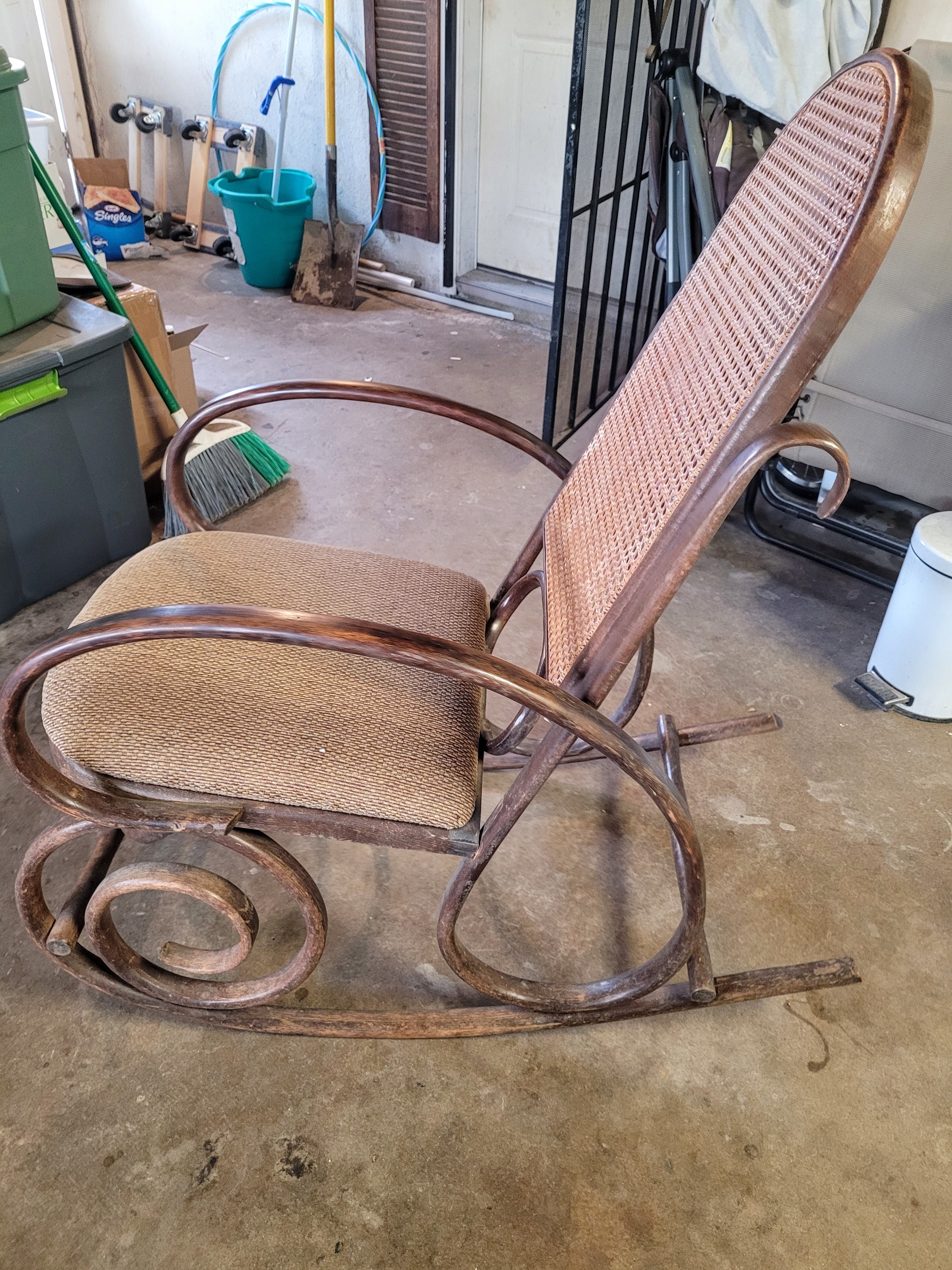
Every January, as I toss out old appliances, irrelevant papers and tools from work my wife and I no longer have need, and things neither of us remember buying, I take some time to look through my “memorabilia”. When I rotate through the bric-a-brac, displayed in a cabinet by my writing desk, I remember the places and people I met when I acquired them. Unfortunately, some break into pieces while using them over the years (mugs and glassware from my travels); some have gotten lost (letters I wrote my late mother during various deployments), and the rest I rediscover in random corners around the house. Other items I know to be fragile antiques, but “heirloom” is a far-fetched label for a fragile Bentwood rocking chair, old monogrammed silverware, military badges, Egyptian papyrus, or Irish wool blankets.

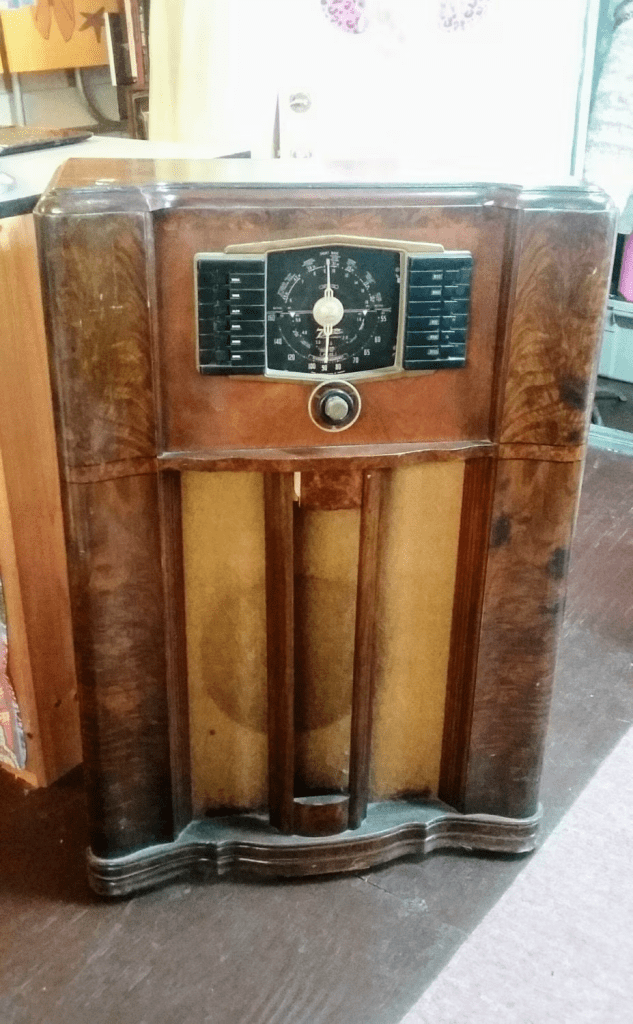
The Bentwood rocker, a butter churn, iron tools, glass medicinal bottles and scraps of a charcoal drawing have come to me after my mother passed. Some fifty years ago, when my parents divorced, I was moved from California to Cape Cod, Massachusetts. The home my mother bought together was originally built in 1745, and later became the studio for a famous muralist of the late 19th Century, Edwin H Blashfield. Predating Indiana Jones by ten years, I became an amateur archaeologist, uncovering odd items buried in the soil under a centuries-old barn. When we moved yet again, after my Sophomore year of high school, to Arizona, I convinced my mother to moved a 1930’s era Zenith radio with us. While it worked for a time on the Cape, finding vacuum tubes became difficult. I did not know then how to repair electronics or rewind coils. That was one of the influences that lead me to a Navy career in electronics after high school. Unfortunately, long before my mother passed, the radio innards and the cabinet disappeared.

image of a similar model to what I once had

Heirlooms only have value if there are interesting stories attached to them. At the moment, our grandchildren are more focused building things with magnetic tiles, splattering paint on bits of cardboard, and enjoying snacks at Pop-pop’s house.

After a year sabbatical, I am committing this year to putting memories online, so my children and grandchildren can look at images and stories and if interested, keep a few items out of the January trips to the Goodwill store – or the trashcan. If you have not given up on an old Chief, I hope the readers of this blog will stay with me.

Ask the Chief: barter economy

Ask any Navy veteran about the barter economy, and most of us have engaged in it. We knew it as “comshaw”, which was anything we obtained outside of official channels, generally by bartering items we may have more abundantly, or obtained as something we might use to trade with another division, department, station or military branch for an item we needed. I experienced this firsthand when I was authorized by my department to shop at the DOD/ GSA store at the shipyard for items we needed before deploying. A fellow Petty Officer on a ship across the pier needed an item we were authorized to purchase, but his shopping manifest did not authorize it. We managed to do a little third party transfers with other shoppers to trade up to what he needed. And it came with a guarantee to provide me with something when needed in return. Sometimes, a supply Petty Officer must use forward thinking to anticipate what is a good trade and whom to count on to return a favor.

What brings this to mind many years later is the current state of our economy. It seems that just about everything that homeowners and entrepreneurs may find necessary (or effective) is either prohibited by the State, too costly, or comes with excessive taxes, permits or other fees. A solvent for a barbecue grill, legal in many states, was returned to the shipper, and my purchase rescinded (Amazon). Or another example, a preservative that is effective for concrete in extreme environments is not legal here; however, a less-effective preservative with many of the same “aerosols”, is legal, but requires double or triple applications during the same multi-year effectiveness of the former single application. Sometimes it is just a little difficult to obtain something – the toilet paper or meat and egg supply issues in recent years come to mind- while others may have a sufficiency. Perhaps they might be willing to trade these for another item or service of value? It was not all that long ago that I read about a champion of barter, who had started with an older but valuable item (I think it was a musical instrument) and successively traded up to obtain real estate.

Many years ago, our accommodations in the seaside Mexican town where my buddies and I went scuba diving were paid for with equipment and other goods from the United States that then were difficult to obtain in Mexico. Today, as the cost of maintenance and repair for household or mechanical items escalate, and the government continues to find additional ways to collect sales and income taxes from the middle class, I wonder whether a barter system that circumvents cash and credit transactions will become more popular.

Comshaw may be the way of the future.

on safari liberty

It does not take much to get old Salts, or two military veterans chatting like old friends. As a perk of his new job at the San DIego Zoo and Wild Animal Park, our son and his co-workers invited parents to go on a “safari” with them yesterday. Seeing giraffes, buffalo, zebras and gazelles in a more natural environment of several hundred acres, from the inside, was awesome.

In the course of getting to know our fellow travelers, I met Dave whom I instantly recognized shared a Navy connection with me. Though a submariner, a “bubblehead”, his quip “I could tell you what I did but I’d have to kill you,” is humorous code for those of us who performed duties that are still governed by national security regulations. As “spooks”, intelligence and cryptologist specialties, we just shared some laughs about those times over lunch after the tour.

Why have a Preventative Maintenance System?

CINCHOUSE (for those unfamiliar with military acronyms, this means Commander-In-Chief, House), otherwise known as my wife, has been very gracious throughout the last 72 hours without the use of a tactically significant piece of home equipment: our clothes dryer. After many thousands of loads over the last 7 or 8 years, the dryer failed to turn on, and I was asked to perform corrective maintenance. I am the command Maintenance Chief as well as the Supply Chief, which can range from scheduling a Maintenance Availability with a contractor, or restoring operation myself with the assistance of Amazon or other parts supplier. Without a backup system onsite, the Laundry Officer took the towels to a laundromat the first night.

Troubleshooting: Fault analysis & Symptom Elaboration

The process was fairly straightforward even without having a repair manual or parts list on hand. After three decades expertise, proper tools and following normal safety precautions, I expected to have the unit fixed. I was able to retrieve a parts list, and have the most likely replacement part shipped to me. It arrived this morning. Fortunately, I did not need the EMO’s signature on a tag-out log, but disconnected the dryer plug from the 240VAC line.

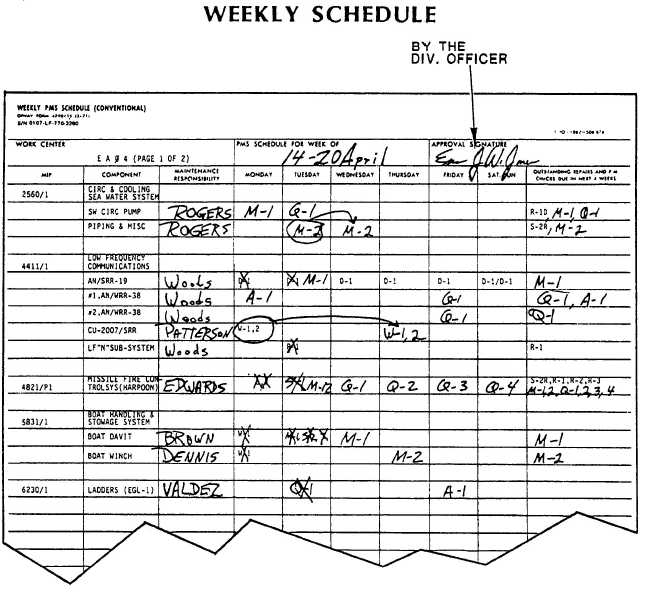
Upon disassembly to gain access to the electrical part, the first thing I noted was gundecked PMS. A Preventative Maintenance System is only effective in maintaining equipment at optimum working efficiency when followed precisely. That, of course was my problem. The electric dryer was not on any schedule for periodic maintenance and only received cursory vacuuming every few months by the MATMAN, when he remembered. With the thousands of hours of use in the last decade, the vent /lint trap port within the system and the exhaust to vent the dryer resembled the clogged arteries of a hear attack victim – with dust, dirt, hair, coins and even a man’s ring (!) almost completely clogging it.

There is a time when the OPTEMPO is such that waiting for a repair contractor, that the priority becomes replacement and not repair. After following online instructions, I was no closer to determining the broken component. Fortunately, the Supply Officer, my wife, and whom incidentally, is the Immediate Senior in Command, approved the purchase order for a new dryer. It gets delivered the day after Christmas. But the more serious issue is the ignored PMS. Were it not for the reasons that the dryer was never added to the Equipment List, and there was no PMS card detailing scheduled maintenance, the responsible Sailor should have scheduled, at a minimum, annual maintenance with a civilian contractor. As both the Maintenance and Training Senior Chief, I need to review, or create, a program for the new dryer that was ordered for delivery on Monday. It may be the end of year “holiday routine” but like military operations, washing and drying clothes and towels occurs 365 days a year.

The reasons for having a Preventative Maintenance System, or PMS, for equipment and systems that are relied upon for national defense is actually one of common sense. OPNAV Instruction series 4700.7() provides the guidance for all Navy systems maintenance. Up through the new millennium, paper schedules and “hard card” maintenance requirements were used by all Surface,Air, Shore, and Submarine forces. During the past two decades, online software, such as SKED (2022) has replaced the system the author used during his days as a “blueshirt”.

Military systems are designed generally for harsh conditions and use occurring in combat. While some are specific to the equipment operating environment, dust, dirt and other particles are generally everywhere. Aboard ship, a closed system like a ship at sea, with dozens or thousands of human beings aboard create a lot of dust, hair, dander that must be removed every few hours. The same can be said for residential living.

*gundecked – Navy slang for falsified or sloppily performed, which the responsible party, when identified, receives punitive measures to prevent a recurrence.

These illustrations were originally published on navyaviation.tpub.com

Ask the Chief: if it didn’t come in your seabag you won’t need it

I still remember a young sailor reporting aboard our ship who had been in the Navy about six months. A member assigned to our division, he was assigned a bunk in our berthing compartment. Aboard any vessel, but particularly a warship, space is at a premium and quarters for the crew are no exception. In the Navy, a crewmember has a very limited amount of space in which to store his or her belongings, and are designed to hold the contents of one’s seabag plus a small amount of toiletries we fit into a “ditty bag”. In this compartment, the three tiered bunks (“racks”) doubled also as lockers for each member’s gear. There were exactly the same ratio of racks to crew in every compartment aboard ship. (Only the Executive Officer, Commanding Officer and any visiting Flag Officer or dignitary had individual quarters.)

It was the second or perhaps, third garment bag he started to unpack, in addition to his seabag’s contents that drew the loudest “WTF!” from his immediate supervisor getting him settled in the berthing, No less than three color-coordinated suits – 1 green, 1 red and 1 yellow, came out of those garment bags. That he assumed that he would store them in adjacent lockers became a training opportunity. Thirty years ago, we were not as progressive in our attitude nor counseling methods as in 2022; in hindsight, we might not today be forgiven for thinking Gary (Indiana) was missing a pimp. He was advised to remove from the ship every item of civilian clothing that did not fit in his own bunk, after having stowed everything prescribed by Navy regulations for shipboard use.

Not that he was the only person to have belongings in excess of places to put them. Officers, Chiefs and blueshirts (junior enlisted sailors) having accumulated a few bulky items (Turkish and Persian rugs) when on liberty overseas, were known to conduct a lot of horsetrading with Supply, Medical, cooks, and Engineering peers to find cubbyholes when returning to the USA from deployment to the Mediterranean and Suez.


From the current Uniform Requirements for Men, in Paygrades E-1 to E-6, the following items are issued as regular uniform items and when precisely folded, will fit within a standard issue seabag. Some of the items are rank and other insignia which are affixed to uniforms in a prescribed manner. :

  • All-Weather Coat, Blue 1
  • Bag, Duffel 1
  • Belt, Web, Black, W/Silver Clip 2
  • Belt, Web, White, W/Silver Clip 1
  • Blousing, Straps 2
  • Boots, 9″ 1
  • Buckle, Silver 2
  • Cap, Ball 2
  • Cap, Garrison 1
  • Cap, Knit 1
  • Cap, 8-Point, with ACE logo 2
  • Cold Weather Parka 1
  • Coveralls (Navy), Blue 1
  • Gloves, Leather, Black 1 pr.
  • Group Rate Mark, Black 1
  • Group Rate Mark, White 1
  • Hat, White 2
  • Insignia, NWU (E4 – E6) 1
  • Insignia, Service Uniform Collar (E2 – E6) 1
  • Jumper, Blue Dress 1
  • Jumper, White Dress 1
  • Liner, Fleece 1
  • Mock “T” Neck 1
  • Neckerchief 1
  • Parka, NWU 1
  • Peacoat 1
  • Shirt, Khaki 2
  • Shirt, NWU 3
  • Shirt, PTU 2
  • Shoes, Athletic 1 pr.
  • Shoes, Dress Black 1 pr.
  • Shorts, PTU 2
  • Socks, Cotton/Nylon, Black 3 pr.
  • Socks, Cushion Sole, Boots 5
  • Towel, Bath1 4
  • Trouser, Broadfall, Blue 1 pr.
  • Trousers, NWU 3 pr.
  • Trousers, Poly/Wool, SU 1 pr.
  • Trousers, White Jumper 1 pr.
  • Undergarments As Needed
  • Undershirts, White 4
  • Undershirts, Brown 4

To my shame, now retired a dozen years, and more than fifteen since I last got underway on a Navy warship, I no longer practice the rigorous methods to stow my belongings. Then, neither do I have to stencil my clothes and underwear with my last name so they will return to the rightful owner from the laundry.

Mermaid of Mission Bay

I thought it might portend good fortune yesterday morning when my companions and I departed Mission Bay (San Diego) for a couple hours of fishing. A mermaid was taking in some pleasant weather in the middle of the channel. She hadn’t much to say as to where to find hungry fish. Perhaps she was just dreaming of our region’s famous fish tacos; the boats all sitting off La Jolla didn’t seem to have any better luck. (A mutual friend of ours once reminded me that the hobby was not called “catching” as it takes skill and proper timing.) But i will still go as often as I’m invited. A career Navy man, I need to put to sea every so often to refresh my retired Sailor “Saltiness”. And seeing a mermaid, gives me another sea story to share with my readers.

fishing tales

A fisherman, a boat captain, and me put out from Dana Landing just before first light on a gray Saturday morning. The fisherman was experienced, the boat’s owner, a former Navy man but not a fisherman, was hoping for a large catch and me, a retired Navy Senior Chief, neither boat owner nor fisherman, was keeping a weather eye on the horizon. With choppy seas ahead, the fisherman brought along Dramamine. (We all took it.) Had I brought along any bananas? To the fisherman’s question, I responded none.

luck and bananas

Apparently, sailors should not bring bananas on a voyage if we wanted fishing luck. With eight years at sea in the Navy, the thought crosses my mind, had I “ever” seen bananas in the fresh fruit available on the mess decks? Apples and oranges, I remember, but never bananas. Sailing superstition links bananas to lost ships and cargoes. (I looked it up online.) I heard that overcast days are pretty good days for fishing. Our companion, a passionate fisherman, who knows where he has had success and what signs might mean good fishing, provided me a rod and reel. He also showed me how to properly tie a weight and hooks. The rest was left for me to figure out. Fish are not waiting for the unsuspecting fisherman to drop his line and jump on the hook.

seabirds and dolphins

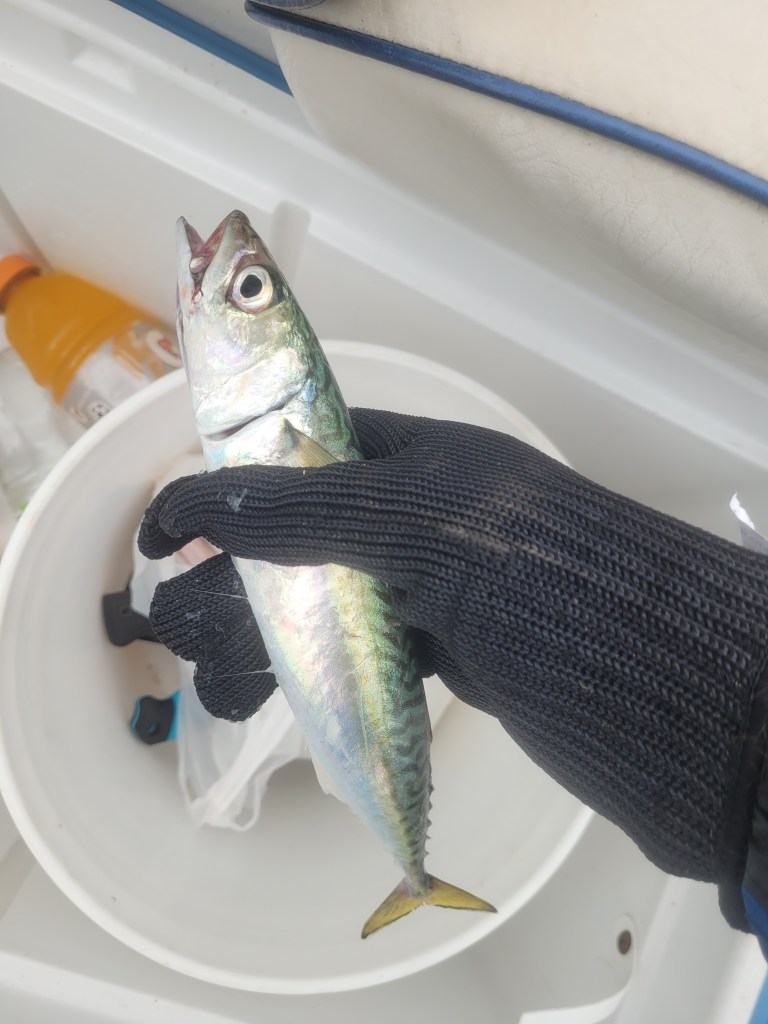
Nine miles off Pacific Beach at mid-morning, the swells were past tolerable, and the overcast remained. With a couple larger boats in the distance, and seabirds, pelicans and dolphins for company, we found some floating kelp and put down our lines again. We took it for a good sign when the captain caught a seabass and the fisherman brought up a rock cod a little later. We decided against going farther out. (One of us admitted to being queasy.) We put down our lines again off Sunset Cliffs and determined the fish finder was not malfunctioning; it had not detected fish all morning. (The seabirds told us as much as neither tern, gull nor pelican were seen retrieving fish from the water at any point.) Back in the channel leading to Dana Point Landing that afternoon, I snagged two mackerel. No fish were worth keeping.

I learned a few things from our adventure. Overcast days do not suggest good fishing weather. The lack of bananas does not conversely bring good luck. Neither does bringing a large cooler. Dolphins do not mean lots of fish are about. And a bad day fishing is better than a good day working. Twelve hours after suggesting to our wives we’d be fishing “three or four (hours)” we got home. The fisherman is one I admire. He intended to play softball all the next day. I slept for ten straight hours. And might go to bed early tonight. But I have Craigslist and OfferUp dialed in; I’m looking for a rod and reel at the right price.

no waiting for paper to update

Bill Gates invented digital irritation. Most of the world, at one time or another, is irritated, exasperated, or flummoxed by Microsoft computer software. Actually, had it not been for Microsoft Corporation creating and then dominating the commercial operating system (OS) market decades ago, the world would likely be exasperated with Linux or Unix software today. Of course, the issues that exasperate Microsoft users periodically are due both to humans and to technology. Users want simplicity of use; more criminally- or espionage-minded want to exploit holes in security; and the software developers for the Windows OS are trying to manage thousands of user applications from thousands of sources. When the engineers cannot keep up support for ancient Windows as newer are more efficient, they ‘end-of-life’ older versions of OS. With changes in technology rapidly occurring, operating system need regular patches to evolve. If you are in business, you understand the battle between “bleeding edge” state of the art, and a “good enough” state to retain or grow market share.

Having been caught more than once by a software or firmware update that was lurking, waiting to install on my Dell laptop I found the setting that pauses updates until a time that I set as “non-working hours”. As the responsible IT “department” in my own business, I thought I had management of updates and security patches well in hand. With the ‘expertise’ as a one-time test engineer, I confused an expertise with certain systems and tools in a “information security” company with the work that the IT Department (note the capital “D”) of my onetime employer routinely did.

There is a certain nostalgia, after a morning like this past one, with a desire to return to paper files, filing cabinets, and forms in triplicate. Sending things off to others via the Postal Service. Every update of documentation being very slow, labor-intensive and requiring large volumes of storage space. As a young man I welcomed the dawn of the “paperless” Age, but the ever-aggravating requirement to stay ahead of technology and hackers, is at odds with the ease-of-use. Up until forty years ago, millions of paper files stored away in vaults and filing cabinets was security. A thief from outside that office or company would be as unlikely to track down something useful in a short amount of time, as would an office worker find a customer’s medical record from 1987. Having become accustomed to nearly instantaneous Internet response to an information request, this may be one reason I am not overly exasperated with a request for a military medical records -likely still on paper – in the bowels of some government installation.

Perhaps while I am waiting still for this morning’s system updates to complete, I will have time to pen an apology to my client expecting me to have all my systems “GO”. It will probably take another hour.

craigslist and sea stories

It was the tone of the ad on craigslist that caught my wife’s attention. We were looking for a used filing cabinet for our business and personal files.

“Text or call”, the ad said. “I don’t do email”.

It said to contact the seller between “0800 and 2200, that’s between 8 AM and 10PM for you landlubbers”. The number was phonetically spelled to frustrate scammers and telemarketers. The ad continued that the seller did not want payment in anything other than cash. When I read the ad on craigslist, I “knew” this was another old Salt.

In the manner of two old shipmates, though meeting for the first time, it was typical Navy. He challenged, “You got your shots?” (Meaning of course, the COVID vaccine.)

I replied. “Which ones? Hepatitis? Anthrax, Cholera, Typhoid? – I’m a Sailor- had ’em all”

Laughing, he retorts, “No the one that hurts like hell!” The mystical shot with square needle story, I winked knowingly.

His wife gave the two old Salts a smile and went inside the house. “She’s heard it all before”, he chuckled. We swapped stories on the places and ships we had both seen. And that was thirty minutes after we traded greenbacks for the cabinet we put in my SUV. And that is no bull**. (Comments edited for you landlubbers out there.)

You have two basic rights

I am dusting off and republishing a few of my oldest efforts blogging. Rough around the edges. Originally published in July, 2009.

My old Senior Chief back in the days before political correctness blanched most of the testosterone from the military, used to introduce himself to his charges, “You have two rights in this world, one, to live, and another, to die. Gentlemen, when you f*** up, I will take one of them away from you!” I was the Petty Officer assigned to escort restricted and brig confinement -bound men at the NTC San Diego Correctional Custody unit, when the Navy Training Center and not an artsy community/ civic center.

It was his responsibility – and by delegation, mine as well, to attempt through proper application of discipline and hard work to turn last-chance misfits – clowns, chronic whiners, and immature boy-sailors into rule-followers, and rehabilitated men. There were of course, two alternatives that several ended finding – discharge at the convenience of the government, or hard time at the Navy Brig – and then discharge.

After those formative days of my youth, I see my responsibility as training young people in my charge, Sailors in my Reserve unit, recent graduate-engineers at work, and especially my sons, to help them develop along the right course. There is a culture in the military that juniors respect the senior enlisted mentors, as this is how the former progress to becoming the latter. In the civilian workforce, particularly in companies which nurture and reward excellence among all employees, there is a lot of the same cameraderie, cross-training, and shared purpose.

As a parent, though, raising boys who were as independent-minded and stubborn as mules, was work! These teens were self-disciplined only to the extent of things which held their interest – guitars, skateboards, and motocross bikes. Perhaps memory of similar behavior in those young men from the Correctional Custody days, urged me to impart some cautionary pearl of wisdom. Often the effect was wrath and counter-accusation, and exasperated red-faces. It would have been so much easier to find “a fan room”. (a Fan Room is a noisy air handling compartment where 2 could a disagreement with a few fists, without a public display). But political correctness has broken down all the means to apply discipline at any age.
Too much is thought of individual liberties, psyches, and others well-being, to the detriment of everyone from classroom pupil, to those helmsmen of a warship or even public transport operators. Policy which prohibits certain behavior (texting on cell phones while operating a train) is only effective when the individual has ingrained self-discipline.

Were it within my ability, I would like to see a return to the days of the old Senior Chief at NTC. A good butt-kicking would nip a lot of these problem behaviors.

raining conspiracies


Seems it never rains in southern California
Seems I've often heard that kind of talk before
It never rains in California, but girl, don't they warn ya?
It pours, man, it pours

I think the rain we have been seeing from multiple storms since the Governor of California required our state to deal with catastrophic drought, at the beginning of 2019, is part of a secret conspiracy to ship the melting polar caps- Arctic and Antarctic to California. While I do not believe in secret Governments, a vast global conspiracy to fool people about a pandemic, or the right-wing movement to control women’s uteruses, I am beginning to suspect that all the rain we have been getting is meant to shove the illegal succulent trade in Southern California back across the Arizona border.

At least, the rain is giving a big boost to my fruiting stone-fruit trees: Apricots, peaches and nectarines. And all the other ornamental bushes are flowering. This is also a treat for my roses. But “April showers bring May flowers” was never a rhyme we knew in California before now.