Mid-rats

Saturday morning, 3 AM,  and I am awake.  I really do not want to be; when I was in my twenties and thirties,  I was able to be very productive on four hours sleep.  Six hours would have been “vacation mode”.    For some reason I am reminded of many times I stood watch on the Quarterdeck in the middle of the night while our ship was in port.  Whether aboard the USS TEXAS – the cruiser,  not the present submarine, on the West Coast; or in Norfolk, Virginia aboard the USS PETERSON, a Spruance-Class Destroyer,  it was often very cold standing watch at this time of the morning.

I still remember the sound of the exhaust fans, the deafening, steel rattling as warm air was blown out onto the weatherdeck from the ship’s interior.   Standing at a podium, partly exposed to the wind,  I remember on more than one occasion wrapping my peacoat tighter around me, and sending the Messenger to get me more hot, very black coffee.  The “balls to four” watch,  midnight till 4 AM,  is one of the more difficult watches  since there are few comings and goings, the ship’s commander is either ashore or asleep since getting his last passdown report.   It was a good time to quiz ourselves and study for qualification tests.  At that time,  the ESWS qualification was a big boost to a junior Sailor seeking advancement.  The landline rarely rang at that time unless it was to report a member of ship’s company going on or off- leave.   Sometimes it was the base security reporting a member was being written up for being intoxicated and belligerent or trying to drive onto the base.  We would have to rouse a master-at-arms to go retrieve him.  Normally, unless we were in a period called a Intermediate Maintenance AVailablity ( IMAV) when welders and other contractors were coming and going all night, it was often a dull period of duty.   This was in the decade before 9/11, so the occasional drunk Sailor returning from Liberty and a visit by the base Command Duty Officer might be our only interruption on the Quarterdeck.

Overseas in the Mediterranean in the period following the Gulf War and Bosnian conflict,  the middle of the night was a time we did not have security forces in heightened vigilance as we had once on the other side of the Suez Canal.  On a six-month deployment, our ship might spend a month patrolling in the Med with several port visits. It was often a blessing to be on duty in port.  One of my shipmates was never interested in going out on liberty – he had been to these same ports several times.   He bankrolled a lot of money on these cruises.

Saving money when overseas was never a strong skill of mine.   Had I not stood midwatch overseas though,  I might never have believed stories I read about mariners, ships, and rats.   When I was standing the Quarterdeck midwatch in Trieste, Italy in the early 1990s,  I remember looking down to the head of the pier at some dog rooting around the dumpster just off the pier.  It was dark, foggy, and things illuminated by the yellow lamps of the pier were not distinct.  But I realized that dog was not a dog.  What would a dog be doing here anyway?  It was a wharf rat,  about the size of a terrier – the largest rat I have ever seen.    And now I know why ships mooring lines have “rat guards” on them.   For good reason.
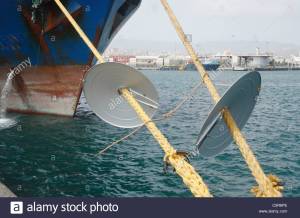
rat-guards-on-ship-mooring-ropes-to-prevent-rats-getting-aboard-c5r6pe

For those who might be amused, or assume I was exaggerating,  I found an article online of a rat that obviously was well-fed up until his untimely end.

1  mid-rats is the term we use in the Navy for the late night meal prepared for the watchstanders.  RATs is short for “rations”, not an item on the menu.


Pirates

“I’m cap’n here by ‘lection. I’m cap’n here because I’m the best man by a long sea-mile. You won’t fight, as gentlemen o’ fortune should; then, by thunder, you’ll obey, and you may lay to it! I like that boy, now; I never seen a better boy than that. He’s more a man than any pair of rats of you in this here house, and what I say is this: let me see him that’ll lay a hand on him–that’s what I say, and you may lay to it.”

― Robert Louis StevensonTreasure Island

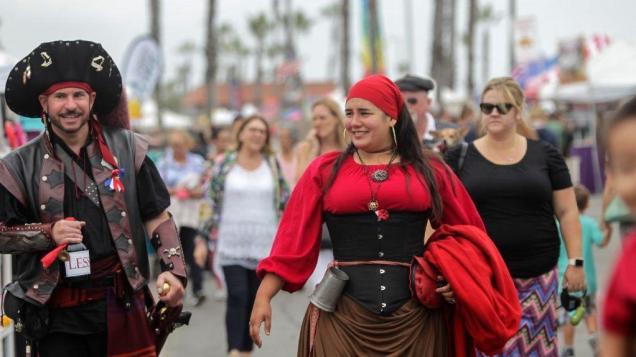
Some days I feel like I’m walking the plank.   Willingly.    And sometimes I wish I was a pirate.    Like my co-worker.  The one dressed here like Long John Silver.   Technologist during the week.   Pirate on weekends.   Better than being a superhero.  No tights.

sd-1505698271-ydu1of5308-snap-image
from San Diego Union-Tribune 

(ball) bearings, mil

0326cyn65135
image, doncio.navy.mil

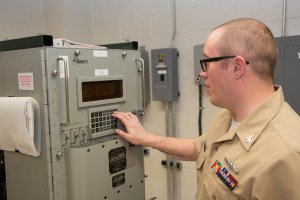
As a Navy technician, a graduate of electronic schools where I learned the theory of operation, maintenance and repair of digital and analog (vacuum tubes and relays) equipment, I also had experience in the maintenance of diesel-power emergency generators and battery backup systems.   I’ve crawled under raised flooring ( computer -decking) to run bundled cables from a telephone cabinet, when cables were wire-wrapped in large panels, to equipment in vault-like enclosed rooms.   In my off-time,  I helped fellow trainees swap big block V-8 engines from an 1973 El Camino into a 1970 Chevelle.   But I will always remember one Spring at a base near Washington, D.C. when I got the military to fund my repair of a golf cart.

ez_pre_86
a 1980’s era golf cart

There was a golf cart with a  broken axle and missing  (scavenged) parts rusting away in the back lot behind my building.  It was forgotten.  I was motivated by an idea, that a running cart might serve me and my shopmates travel between one end of the base to the other; however, we had weekly tasks in several buildings at that facility.   Every week we had to bring equipment to take measurements and perform maintenance, and it was annoying to hand-carry everything between the two. It was a ten-minute walk each way lugging gear in a hand-cart.

That particular model of golf cart was no longer being serviced by any company in the metro area.  And parts were difficult to come by.  This was more than a decade before the Internet was available so no Ebay nor Amazon was around to query.    And finding a catalog was impossible.   I called machine shops until I found one that would build the parts to repair the axle and a bearing manufacturer that would take my measurements to make a wheel bearing.   I became a skilled negotiator with the finance office lady in charge of petty funds.   After some weeks of dealing,  I was able to get these items approved.

Two months later we rolled out the now -running golf cart, and was set to do the next round of maintenance at the far  end of the base.  My workcenter supervisor was pleased.   My fellow technicians who earlier thought me crazy,  were also looking forward to using the “shop cart”.   But no good deed goes unpunished.

My shop Chief announced the repaired vehicle was needed by the Department Head.  My Chief also intended to use it to perform audits of the maintenance checks in all the buildings we serviced.   I never used it after that.    I spent the next year working at the Pentagon communications center, so the “Golf Cart Bravo Zulu” was actually my opportunity to support the Director of Naval Intelligence and stepping stone to the next adventure in my Navy career.

What is the most unusual thing you have repaired while in the military?

Thermite games

Among my peers in the world of Navy cryptologic operations,  we enjoyed a sense of humor that few civilians might understand.  To this very day,  when friends or family ask me about my work, I will likely smile, then say, “I could tell you, but then I’d have to kill you.”    I do not get asked very much about my work.

Today,  when recalcitrant equipment that I either test or provide customer with needed support and repair,   I always have a smart-aleck response as my double-secret probation/ inside-voice, final debug plan.   Put it in a barrel and light off some Thermite.   But then, I am hired to fix it;  it is up to my bosses to determine when the expense outweighs the continued troubleshooting.

Very early in the 1990’s, particularly as some hotspots in the world – where intelligence-gathering was not collected from 60,000 feet or a hundred miles in altitude as it may be today, but on the ground – my unit held a demonstration of classified material emergency disposal.   This was the chemical destruction capability of THERMITE.   Given a few minutes to dispose of the contents of a large safe,  personnel might not have time to shred documents;   some equipment that shouldn’t fall into the wrong hands could not be physically destroyed by physical effort.  Ergo,  a thermite grenade could be ignited, placed in or on it, and the object would be reduced to ash and molten slag.

However, history taught me that this material might have been more for show than practical use.   When the U.S. Embassy in Tehran was seized in 1979,  if some stories are to be believed,  shredded documents were reassembled  by people working furiously over months.  When the Iranians again seized our personnel during the Obama Presidency,  was there Thermite to obliterate our crypto gear on board? was it destroyed?  If jettisoned overboard, was it recovered?

And in the digital world of  identity theft,  credit reporting thefts, and hacking,  there’s nothing to render data irretrievable but for military-grade encryption.  And yet it often depends on human beings to practice security.   Of course my mind runs to a different form of “thermite”, but if we cannot find the provocateurs, cannot render them sanitized.

Here’s one video demonstration of this material:

http://www.military.com/video/ammunition-and-explosives/grenades/the-thermite-grenade/983538042001

Elder Marine

I’m having trouble sleeping a few nights in recent weeks.  My go-to on those nights was a night-cap of a little bourbon, or perhaps a beer, or a nip of scotch.  But too much of a good thing can affect the waistline – and have the opposite effect on me: keeping me awake and wanting to write late at night.    I was going to a Bible study tonight, so I neither feel like a nightcap afterward nor do I want to toss and turn again tonight thinking about Work.   It was so much easier twenty (or more) years ago when I could sleep in rotating snatches of a few hours, work or train for several, then snooze a few hours again, and then back at my Navy duties.

Heading to my church group this evening, I stopped at the pharmacy for some sleep-aid liquid – the drowsy cough medicine without the medicine.   Just then I recognize the manner and buzz haircut of an elder military vet walking ahead of me into the store.  Marine.  Pretty solid shape still for I presume his late sixties.  He resembled my old family doc – a Vietnam Vet who sported the same “look”.  (Poor Doc. He’d been diagnosed with cancer and one day wandered off by himself  – with a pistol – into the mountains.)

I’m fairly certain  that both this Marine and my old Doc would guffaw seeing me there to get Zquil.    I imagine either one providing me with the Corps’ helpful remedy for insomnia.   A hundred -twenty push-ups, and then a little double-time marching not walking  – the dogs.  Perhaps include a mile swim ( the base and the local gym have a pool)  to tucker out a young guy like me.

Exiting the store with my purple medication,  I see a white minivan parked in the one space, next to, but not in, the handicap spot between me and my car.   I instantly know its owner.   A little faded, somewhat banged up, dependable-looking,  with a weathered U.S. Marine Corps emblem, meticulously centered, on the driver’s door.

Just like the elder Devil Dog I saw inside.   I straighten up. Suck my gut in a little.

2105111852-b952f8859053a4130cea5b6309c3f340
via clipartpig.com

When these States were United

statue-of-liberty-tear-swscan04051
from  envisioningtheamericandream.com

There were three sucker punches the United States of America suffered – within her borders – in history.  August 24, 1814, when the British burned the White House during the War of 1812.   The attack on Pearl Harbor, Hawaii on December 7, 1941.  And within the lifetime of most Americans now living,  New York’s World Trade Center, the Pentagon and the thwarted attack, probably destined for the White House, on September 11, 2001.

America will never be destroyed from the outside. If we falter and lose our freedoms, it will be because we destroyed ourselves. Abraham Lincoln

brainyquote.com

Out of World War II, one-time enemies became friends and Allies.  From the early Nineteenth Century, the world entered the Modern Era, mostly due to the inventiveness and creativity of people coming to these United States.  From turbines and cotton gins, to aircraft and space exploration,  ideas germinated here or were improved on and flourished, the gift of immigrants who were united in pride for this nation.

Blood has been shed defending a free people.  Ideas that flourished here have gone out into the rest of the world.  From medicine to Microsoft,  a melting -pot in America fostered new ideas and directions in the world.   Freedoms that had not been prevalent to societies in the Old World worked here.

But in the late 1940s and continuing through today, three forces have gathered in opposition to Americanism.   Socialism, atheism, and equivocation.    A failed idea of mid-19th century European intellectuals that the Industrial Revolution created oppression was embraced first by Russia, China, and imposed or embraced by nations in Europe, Asia, and some Latin American states.  It resulted in a mediocre existence, little pride in workmanship, and ironically, a small elite oppressing a majority.   It continues today due to control of information, education, and government services by an elite over a majority.  Atheism, fostered by the same socialist elites, highlights the weaknesses of mankind as being the result of and not a remedy through the Christian faith.  All the other religious orders are unopposed, generally,  by the elites – for whom, power is religion- to confound and isolate people into manageable groups.

And  from dictionary. com,

equivocation: “the use of ambiguous language to conceal the truth or to avoid committing oneself; prevarication.”

Leaders formerly stood upon principles,   Washington,  Jefferson,  Lincoln;  Martin Luther King,  Winston Churchill and Nelson Mandela.    Today,  masses follow sound bites,  imagery, and shed blood based on half-truths,  lies and backroom deals.  And in the U.S.,  most politicians have only one purpose – to gain and remain in power.

On this 16th anniversary of the murder of 3,000 people, at the hands of fanatics -propelled by a  religion where the very mention of their prophet’s name can instigate murder – I pray for everyone here to embrace unity, discourse,  freedom, and respect for law and for the Constitution.

A house divided cannot stand.

Set condition Zebra

In a matter of hours, an awesome and terrifying force of Nature,   Hurricane “Irma”  will batter Florida.  Like another deadly storm twenty-five years earlier,  Andrew, this one has a bead on southern Florida – yet the entire Atlantic coastline and perhaps some of the Gulf along the Panhandle may suffer.  This storm has already obliterated some of the eastern Caribbean islands including Barbuda, and damaged Puerto Rico and is heading toward the mainland.   Potentially, a large swath of human activity will be reduced to rubble and debris.   A week earlier Hurricane Harvey churned into the Gulf Coast of Texas and Louisiana and dumped a record four feet of rain, flooding  cities and towns and creating tens of thousands of people needing shelter.   With Irma yet to make landfall in the continental U.S.,  the toll in property and on lives is not yet known.   And then there is a third storm, Jose,  which may follow his siblings from the western Atlantic and into the Caribbean behind Irma and Harvey.

With the passage of millennia,  the ability to prepare for the predictable storm season, and to track storms through technology has saved countless lives.  And if not able to accurately predict when or where an earthquake will strike,  systems are being improved to give adequate warning – and to survive.   One thing is certain,  in times of crisis,  our community of nations does manage to put aside animosities and rivalries and provide assistance to those in need.

Except some Hollywood actors.   I heard today that actress Jennifer Lawrence thinks hurricanes are the byproduct of Donald Trump’s election.    Sounds a bit like some movie she might have acted in – man-made natural forces controlled by a dictator.    Perhaps Hollywood can offer a virgin for sacrifice – which is how some ancient cultures attempted to appease the Natural forces threatening them.  However, it wouldn’t work with these bloviating types – no virgins to be found.

The world should join in prayer to protect and to relieve those now suffering and for those in harm’s way.


Impossible to implement

All this hulabaloo over DACA, immigration, and healthcare.  Most of us are very charitable and supportive people.  Our blood has been shed the world over to help unfortunate peoples have a chance to improve their lot.   But some here go too far.  The noisiest protests come from noise-makers: media, celebrities, lobbyists, and unemployable hangers-on; from the insincere: the uber-wealthy political-influence peddlers who may send a few shoes but  demand “action” from Government (while they profit from their pocket-politicians) ;  and the machiavellian: professional politicians who manipulate the public and government for their own purposes.

A simple proposition.  Everyone (including the influence-peddler and politician alike) who opposes American nationalism, opposes U.S. state and national laws being enforced, and opposes citizens’ -only rights for citizens – our citizens and not contrived citizenship,  I would ask YOU to (contractually) sponsor one or more “guests” within our borders. In perpetuity.

Exchange your citizenship for your sponsorship of an illegal guest.  If they act criminally, you take their punishment.  If they are illiterate or unskilled, you teach them.  If they have medical conditions, you pay for their care.  Do not demand that others who are already charitable to the less-fortunate, be forced to support the non-citizen and the civilly disobedient, demand we comply when you change the rules of the game, and demand the lawful bend to the unlawful.  Otherwise, the hell you create here is no better than the purported hell our “guests” left.

Scoundrels, Sailors, and even a spy

Only in America would circumstances bring a first generation Polish-American Jew and a Scot-Irish Protestant together, fall in love and marry.   My parents met in New York City; I was born in San Jose, California. What little I knew of my father’s family, particularly my grandfather’s story,  began with his fondness for fisherman style caps, and a Russian phrase I later learned was a soldier’s response to orders given.   Only from clues from my aunt and searching the internet, was I able to tie a few of them together.

Since my Polish grandfather and his betrothed came to the United States through Canada in the early 1920s,  I can only imagine he learned the Russian if conscripted by the Bolshevik Army after the Revolution. They occupied part of Poland in those days.  He obviously escaped and made it to New York City becoming a U.S. citizen and finding work as a shipfitter at the Brooklyn Navy Yard.    I am particularly grateful, as I might have been Italian-American and an Army veteran, as my mother was previously very smitten with an Italian-American soldier,  given several pages of photographs and a few old letters I found after her death.   Then how would I have ever obtained the wife I have and become a retired crusty Senior Chief?   Like my eldest son today,  I am not great at marching nor am I particularly suited to running miles in combat boots.

My mother’s ancestors in Northern Ireland were mainly merchants and businessmen in the flax or finished linen industry.  In Scotland, some were town leaders (burgesses), maintained order, were metal workers, or were in the ministry.  However, in almost every generation going back to the early Sixteenth Century an ancestor served in the military, was involved in combat or insurrection, or had some colorful story that was almost lost to history.  One fought the British Army in a late-Eighteenth Century uprising in Ireland.   Some forebears served in the British Army,  some died in Colonial America, and some went to Australia.   While the British Empire exiled folks there centuries ago, it probably was due to military service or to seek one’s fortune.  And some others went to sea.  There is a story of  James Blaw,  a ship’s surgeon,  who was shipwrecked in the South Pacific and subsequently rescued, whom I identified from accounts digitized and made available online.

While my mother’s family line spent three hundred years in Ireland, they came from  Culross and Dunfermline, Scotland.    It was only due to the second son emigrating to Ulster in the 1600s  (and changing the spelling of his surname)  since it was his elder brother who inherited property.    But James Blow, as Scottish printer’s apprentice and then in Belfast, partner, who was to make the greater mark in family history.   It was his firm that printed one of the very first English Bibles in Ireland.

But our family is not without its scoundrels – or spies.  While descendents of the Ulster Blow  family pursued careers in the military, or life at sea, or emigrated to other lands of the British Empire,  a Scottish curmudgeon,  the printer’s elder brother,  John Blaw, was a courier and spy for Bonnie Prince Charlie, who at that time was exiled in France.

After that attempt to mount a return of the Jacobites failed, it seems Blaw, who never was the businessman his brother was, ended his days as a mean drunk.  After a bar fight -he was in his sixties at the time – he was imprisoned and tried for murder of another pub patron.   He apparently was also a horrible provider for his family.   After his conviction and execution,  his widow sold much of the family possessions.   And his granddaughter and her husband – a descendent of the trial prosecutor – sold the family estate.

Another ancestor of my mother,  sent out to live with a relative, settled in the early Nineteenth Century South, eventually founding banks and railroads.  Even after the Civil War and ReConstruction,  he died a millionaire.   However, his Scotch-Irish relations from Ulster swooped in and “appropriated” investments.  News clippings detailed scandal, the deceased’s questionable marriage, and a missing will.  In hindsight some of my forebears were indeed scoundrels.   But others served honorably. There is one commemorated on a wall in the Belfast City Hall,  to those who died in combat.  Flanders, Belgium during World War I.

Other family branches came to America.  Two from different families served with distinction during the Second World War.  One’s service was shrouded in secrecy- probably in Army Intelligence – he is buried in Arlington National Cemetery.  Another relation, serving in the Merchant Marine, was awarded for gallantry during a fierce battle of Malta.   I never met him in person, but he wrote me a recommendation to attend the U.S. Naval Academy.  He is commemorated at the U.S. Merchant Marine Academy in New York.

My father was never in uniform, but he was a defense contract engineer on integral projects for the U.S. Air Force, Navy and Department of Defense.  He helped design the C-5A Galaxy aircraft in the 1960s and submarine-launched ballistic missiles.   I may have found it easier to enter the Navy field that subsequently has given me a lifelong career due to a long family history of service.

Examining Collisions at Sea, Part II

via U.S. Naval Institute, Proceedings Magazine 

CAPT. Eyer’s (USN, Retired) insight is recommended reading for Navy veterans and military professionals about failures throughout the organizational structure.   It is not the “stand-down”  and the bandaid as the Navy rushes in to fix this that is required.  It should be long-term, lasting institutional changes.  How many times will the services go through loss of life, damage and loss of equipment, scandals and loss of prestige?   When politicians and bureaucrats at the highest levels wanted to adapt corporate practices, social experimentation, and project power with unclear objectives, the military culture suffers.

Examining Collisions at Sea

Via the Naval Institute’s Proceedings. Article by Capt. Kevin Eyer, U.S. Navy (Retired)

In the past two months, two major U.S. warships have collided with merchant vessels. In both cases, lives were lost; personnel were injured; and ships sustained major damages. In both cases, the Navy assigned teams to determine the causes of the accidents.

In theory, these investigations are undertaken to determine what errors were made, by whom, and whether any conclusions or lessons learned might be drawn that would allow for similar disasters to be avoided in the future. While the intent of these investigations is plain—determining the raw material of facts and recommending the assignments of guilt—the question is whether they will produce anything else useful

Part I.   Recommended reading for Navy veterans and military professionals about failures throughout the organizational structure.   It is not the “stand-down”  and the bandaid the Navy rushes in to fix this.  It is long-term, lasting changes.  How many times will the services go through loss of life, damage and loss of equipment, scandals and loss of prestige.   When politicians and bureaucrats at the highest levels wanted to adapt corporate practices, social experimentation, and project power with unclear objectives, the military culture suffers.

In the Navy, anything that causes loss of life, damage or destruction of multi-million dollar systems, or negative public opinion will get reviewed by a Board of Inquiry.  This is a first part of a sobering view of military culture, scandals, and the nature of the bureaucracy to not examine too deeply for root causes.