https://www.kqed.org/news/12022479/why-are-there-so-many-abandoned-military-bases-in-the-bay-area
history
Treasure Hunting: Memories Behind Every Item
One of our family’s traditions every January (besides my spouse searching for, and acquiring outdoor Christmas decorations at a discount) is taking several boxes of used clothing, housewares, exercise equipment, and knickknacks to Goodwill or other donation center. The only things I do not part with are contained in 3 black and yellow tubs stacked in the garage. Some of these I acquired during several moves around the country as a child and then later, during 30 years of a Navy career.
Everyone has a sea story to tell
Often, I bring back interesting stories when talking with volunteers at the donation center. This week, I chatted with a guy who had been ‘mentored’ by Frank Zappa in his youth while a musician in a recording studio. “It is so amazing that records (we called them LPs) have outlasted cassettes and CDs. I still have several thousand albums in my collection.” Working at the Goodwill, the option to find unusual items related to his history is probably a perk.
Reading a story online about the making of the second “Top Gun” movie, it remarked about the original movie’s technical advisor Pete “Viper” Pettigrew, an original Top Gun instructor. I was fortunate to meet him several years ago aboard the Midway museum in San Diego. “You should consider being a docent here, Chief”, he told me. ” You can tell (the same) sea stories to visitors every day.” While my wife has heard or lived many of my stories, I have yet to tell them to our adult children and grandchildren. Still, when our eldest son spent four years in the Army, he would call home to talk Army jargon to his mom; she would hand the phone to me and we would converse using the “army-navy jargon” translator all veterans know instinctively.
As I go through my collected mementos, decades-old memories come back vividly. And it is for this reason, I have a difficult time parting with even ticket stubs. (I still have, somewhere, ticket stubs from the 1980 Los Angeles Pink Floyd “Wall” concert.)
One man’s trash is another’s treasure
Every January, as I toss out old appliances, irrelevant papers and tools from work my wife and I no longer have need, and things neither of us remember buying, I take some time to look through my “memorabilia”. When I rotate through the bric-a-brac, displayed in a cabinet by my writing desk, I remember the places and people I met when I acquired them. Unfortunately, some break into pieces while using them over the years (mugs and glassware from my travels); some have gotten lost (letters I wrote my late mother during various deployments), and the rest I rediscover in random corners around the house. Other items I know to be fragile antiques, but “heirloom” is a far-fetched label for a fragile Bentwood rocking chair, old monogrammed silverware, military badges, Egyptian papyrus, or Irish wool blankets.
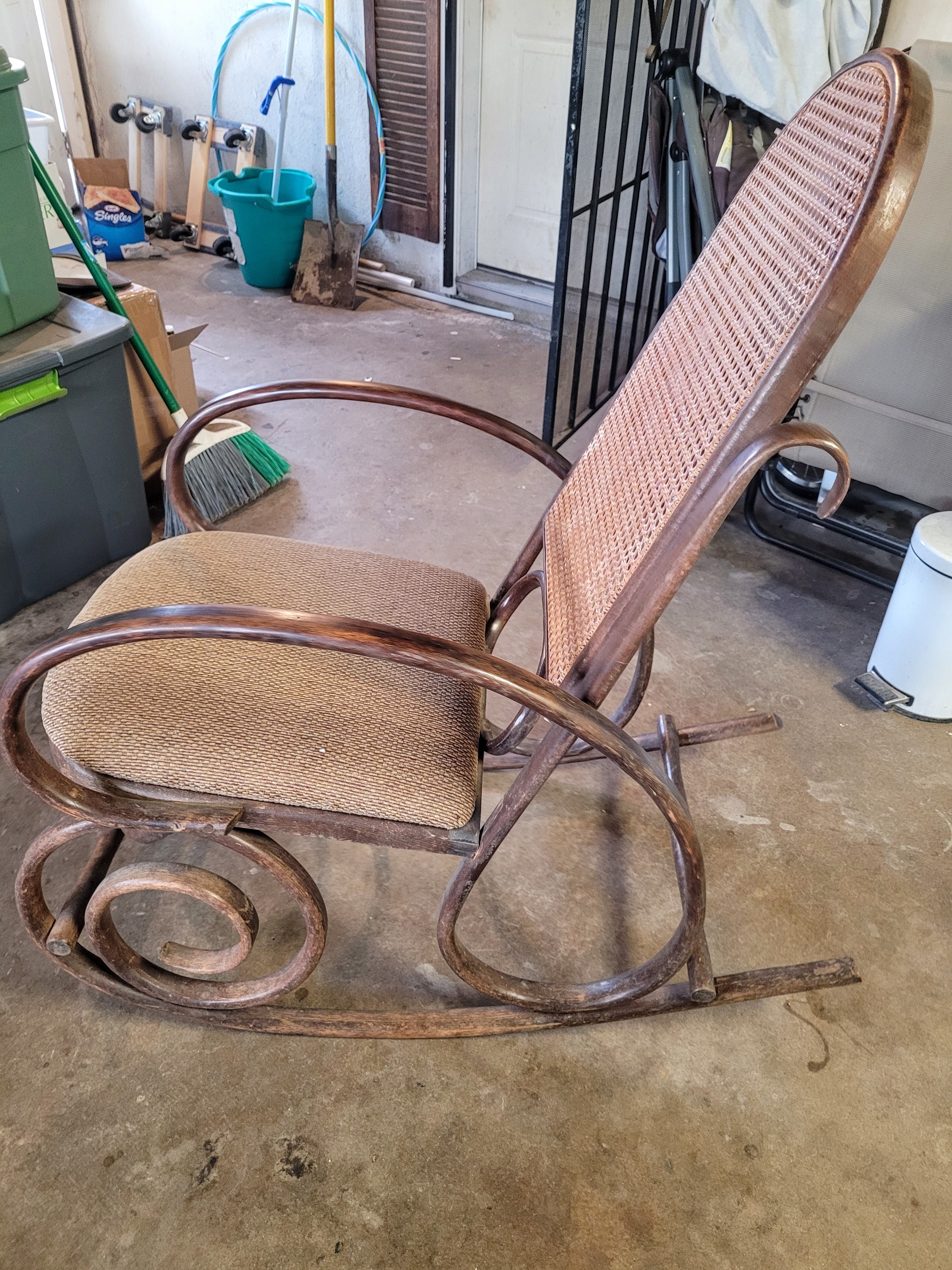
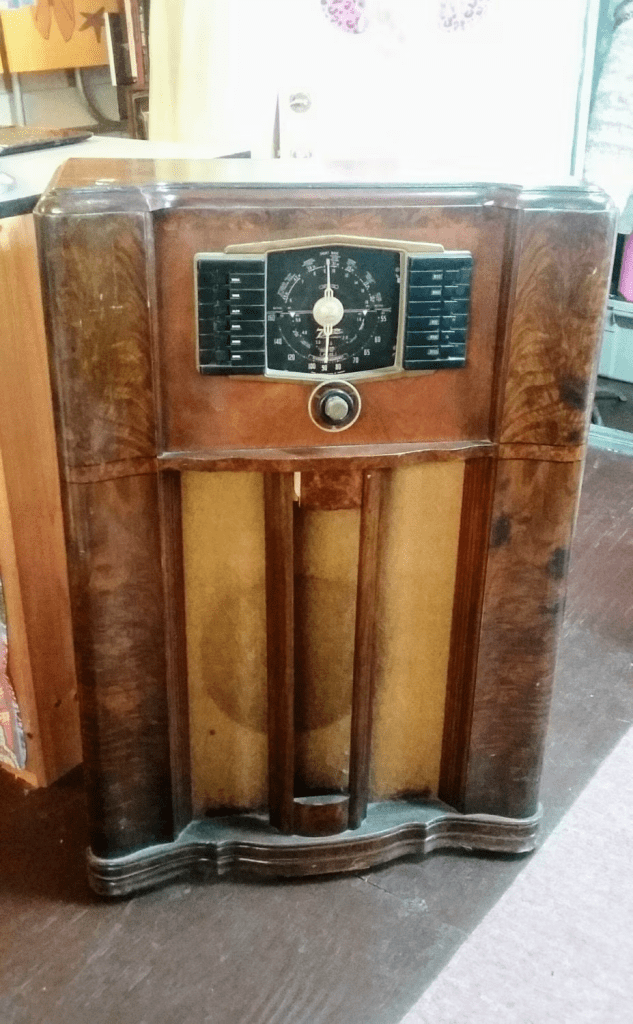
The Bentwood rocker, a butter churn, iron tools, glass medicinal bottles and scraps of a charcoal drawing have come to me after my mother passed. Some fifty years ago, when my parents divorced, I was moved from California to Cape Cod, Massachusetts. The home my mother bought together was originally built in 1745, and later became the studio for a famous muralist of the late 19th Century, Edwin H Blashfield. Predating Indiana Jones by ten years, I became an amateur archaeologist, uncovering odd items buried in the soil under a centuries-old barn. When we moved yet again, after my Sophomore year of high school, to Arizona, I convinced my mother to moved a 1930’s era Zenith radio with us. While it worked for a time on the Cape, finding vacuum tubes became difficult. I did not know then how to repair electronics or rewind coils. That was one of the influences that lead me to a Navy career in electronics after high school. Unfortunately, long before my mother passed, the radio innards and the cabinet disappeared.
Heirlooms only have value if there are interesting stories attached to them. At the moment, our grandchildren are more focused building things with magnetic tiles, splattering paint on bits of cardboard, and enjoying snacks at Pop-pop’s house.
After a year sabbatical, I am committing this year to putting memories online, so my children and grandchildren can look at images and stories and if interested, keep a few items out of the January trips to the Goodwill store – or the trashcan. If you have not given up on an old Chief, I hope the readers of this blog will stay with me.
help, Mr. Peabody!
In many television shows and movies during my childhood, the idea of using a time machine to travel backward was a solution to many problems and answered many questions. The cartoon “Peabody’s Improbable History” featured the adventures of a genius, Mr. Peabody, and his boy, Sherman. They travelled back in history to visit various people who, but for Mr. Peabody, might not have been immortalized for developing inventions or theories. Did Mr. Peabody visit Pythagoras? A true story about translating a Babylonian clay tablet, discovered a hundred years ago, indicates the “Pythagorean Theorem” and trigonometry were used fifteen hundred years earlier than the Greek we credit.
A movie and several television episodes of Star Trek featured time travel, but one (All Our Yesterdays), has Captain Kirk and crew investigate a planet whose population has vanished ahead of their star about to go nova. In the episode, a timekeeper sent everyone backward in time to live out their lives and avoid obliteration. In our history, myths of ancient civilizations like Atlantis or Homeric tales that proved later to be true, indicates history repeats itself. With nations today always on the verge of destroying one another, nuclear war is more real than our Sun going nova- at least for the next 4 billion years. However, we have just reached the milestone sending human-made inventions beyond our solar system’s limits (Voyager 1 and 2). An achievement a half-million years in the making.
Paleontology and genetic research suggest that modern homo sapiens might have out-competed homo Neanderthalis to inherit the world. In recent years, the discovered remnants of presupposed modern construction techniques nearly a half-million years old suggest we may repeat history over and over again. Discoveries of enormous cities reclaimed by the Amazonian jungles, Bronze Age religious sites drowned by the sea, and Roman roads and aqueducts demonstrate a modern knowledge of science (astronomy) and construction techniques. Perhaps, like the conquering Spanish conquistadors in the Americas, or the Near East Babylonians, Assyrians, Persians, Greeks and Ottomans, might humans repeatedly destroy libraries that housed knowledge it then takes millennia to relearn?
Mr. Peabody, we need you.
Leave No one Behind
Reprinted, with permission, from Lt Col. (Ret) Scott Mann’s post on LinkedIn, 22 August 2023
In the fall of 2004, a handful of Green Berets volunteered to risk their lives and recover an Army Air Crew that had crashed their small aircraft in the Hindu Kush. Pushing the chopper to its altitude threshold envelope, they landed near the crash site well above 13,000 feet.
Sadly, the crew had succumbed to the elements and didn’t survive.
Storms started to roll in. The SF team stayed on station and battled severe altitude sickness. They extracted every single crew member and their personal effects so that they could be returned to their families for closure.
It mattered.

Our men and women warriors deserve to be remembered. Teach these stories of courage and sacrifice to those too young to remember. And teach them to every generation who come afterwards, that we are a people willing to help the vulnerable against the oppressor. -Editor
Lt. Col. (Ret) Scott Mann, U.S. Army Green Beret, served multiple tours in Afghanistan. Author, veterans advocate, keynote speaker, and leadership coach, has testified before Congress on behalf of our combat veterans, Afghan coalition partners and their families. Author of the play Last Out: Elegy of a Green Beret, is helping to heal the moral injury to thousands of veterans inflicted on them by 20 years of war and America’s ignominious withdrawal at the end of August, 2021.
Lessons from Manzanar, part 2
Human Rights and the public good
At the visitor center at Manzanar National Monument, my wife and I spoke with a docent about a book of images available at their store There were images that Ansel Adams, the famous photographer of landscapes, had taken of internees over the years. Apparently, another famous portraitist, Dorothea Lange, also had taken a series of images that captured the human pain more succinctly (only such images that reflected positively were published; the others, subsequently, were not released publicly by the Government). Forty years later, after incremental policy reversals and President Ronald Reagan publicly apologizing to survivors and descendants, these sites were turned into monuments to make future Americans remember. However, racism finds other targets.
“After the attacks of 9/11, when people angrily singled out people wearing Muslim headscarf”, she said, “it was the Nisei – the children of those who had been in the relocation camps, who defended Americans of Mid-eastern decent.” They did not want the painful lessons of the past to be repeated. She identified a child’s photograph on display there in the center, from the Manzanar camp, as one who defended a Muslim woman after September 11th. Like the refugees of the last few years who fled civil wars in Libya, from ISIS in Syria, crossing the Mediterranean and interdicted in Greece and Italy, Ukrainian women and children fled the Russian invasion there. With these emigrants joining those who have been resettled in several countries including the United States, the competition for services only gets more competitive. However, these recent immigrants are learning valuable skills to support themselves, notably in healthcare, which after the global COVID pandemic have seen a large need but few new workers among the native born. In the fifty years since Vietnam, Americans of Vietnamese ancestry hold public office. Americans of Philippine ancestry serve in the military and in public services. Americans of Middle Eastern ancestry hold public office. Americans have elected and reelected a black President, Vice President, congressmen and mayors. However, the public is still being persuaded through government institutions and media conglomerates that racism is the single most prevalent problem in America.
Lessons from Manzanar
For what they “might do”
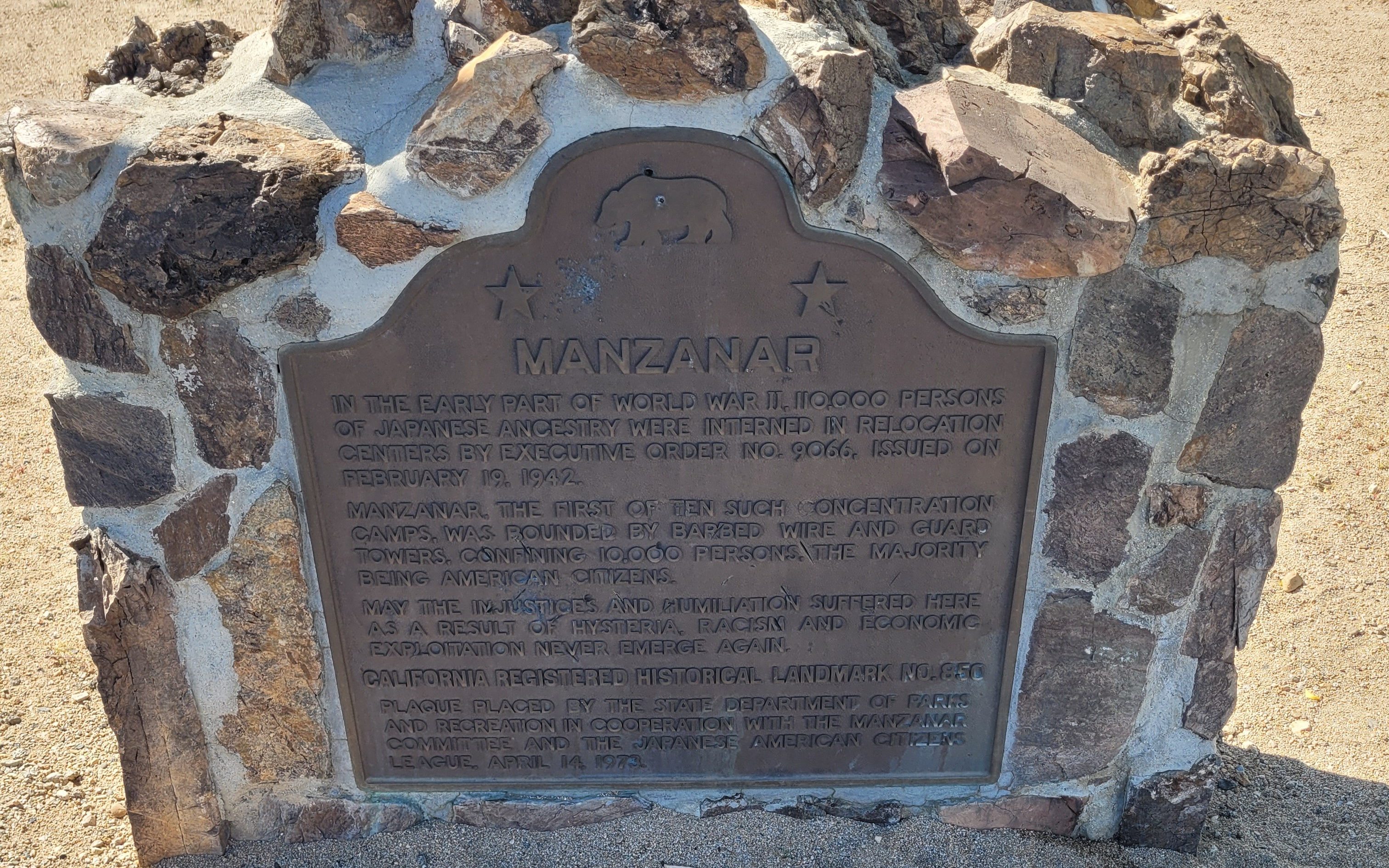
A road trip north of Los Angeles on Highway 395 went past a monument to one of the ugly chapters in Twentieth Century history: the Manzanar War Relocation Camp where eleven thousand Americans were imprisoned during World War II for what they ‘might do’. It was one of ten such concentration camps in the American West incarcerating 110,000 men, women and children. Here, in the Owens Valley of California, the Eastern Sierra Nevada mountains present a stark contrast of geologic beauty and human shamefulness. The United States Government, abetted by local politicians and the media, unconstitutionally deprived Americans of their rights without due process. With racist laws in western states, particularly in California, people of Asian ancestry were prohibited from owning real estate or businesses. While incarcerated in these camps, these men, women and children were publicly humiliated, lost property (through unpaid leases and property taxes), and forced to live in dusty, cheaply constructed conditions. During the war, these people were subjected to “loyalty interviews” and eligible men were expected to accept being enlisted in the military to prove themselves. Once FDR realized that the Supreme Court was going to hear a case that would publicly shame him and the policy of internment, the Government initiated a plan to release the internees, comprising $25 payment and a bus ticket to another inner part of the country.
To be continued


Port o’ Call: Cape Canaveral, Florida
Performing a maintenance routine for equipment topside on the USS PETERSON as it arrived in port on a sunny Spring morning thirty years ago was actually fortunate timing. We were just tying up at the naval pier not far from the launch site where NASA’s missions to the moon had flown. But that morning was an unexpected treat. At nearly the same time as we moored, a Space Shuttle roared off the launch pad.
I had been a fan of space flight ever since I the middle Sixties when I had watched the Gemini and Apollo launches on a television wheeled into our elementary school classroom. In the 1980s, I had been with a group of college students touring the Johnson Spaceflight Center near Houston during a national convention of the Theta Tau engineering fraternity. Living in Tucson, Arizona in the early Eighties, I also saw an early Shuttle (the Enterprise(?)) being flown piggyback on its modified 747 airline as it routed through Davis-Monthan AFB on the way back to the Cape. And in four years prior to my assignment aboard the PETERSON, I was stationed in the Washington DC area, where one of the tasks our department performed was to install a mobile van with equipment to communicate with the Shuttle as it orbited the Earth during a particular mission. Being in the Capitol region also gave me opportunities to visit the Air and Space Museum where visitors could walk into a mockup of the first orbiting space station, SkyLab, and to see many exhibits, including items returned from the Apollo Moon missions.
With my grandchildren not yet old enough to appreciate the excitement I felt watching spacecraft launching toward the Moon, I am glad that the first ARTEMIS mission to the Moon is still a few years away. Perhaps when they are my age, they will not have thirty- or fifty-year old memories to recall when we reached for space.
Ask the Chief: balloon hullabaloo
A Chinese high altitude balloon carrying equipment has been carried along in the atmosphere over the United States this past week causing all sorts of ruckus. Their government has responded to United States that it was accidental, and not intentional, violation of our national sovereignty. While the balloon has maneuvering capability and seems to possess a sophisticated payload, the Chinese government claim, that it is an off-course weather balloon, is laughable. It would have been more credible had they claimed it was high altitude survey of their investments in the United States (the Chinese have invested some $200 Billion in the past quarter-century in US businesses and real estate). Though the U.S. Defense Department says the balloon has not ventured over sensitive military installations, and the Government has not ordered it to be shot down, one wonders whom is leading who on. At a time when the Chinese government has trillions of dollars at their disposal, building aircraft carriers, orbiting space platforms, and conducts espionage via HUMINT (spying on government officials, theft of intellectual property and technology by foreign agents) and COMINT (intercepting radio transmissions and hacking into computer networks), this balloon seems to be very low tech espionage for an adversary.
To gain military or economic advantage, nations have engaged in surveillance or intelligence gathering of their rivals for millennia. With the invention of radio communications, ELINT (electronic intelligence) grew exponentially as each nation devised more sophisticated means to mask their operations. With the satellite era, FISINT (foreign signal intelligence) was developed to intercept and analyze telemetry, determining a potential adversary’s capabilities and intentions. All of these have prompted increasingly sophisticated means of securing them from observers.

Determined adversaries view the long game to achieve their objectives. Years before the Second World War, Imperial Japan was sizing up the military capabilities of the United States to thwart their territorial ambitions. The US was then also decrypting their communications, which facilitated the Allies in reversing their early military successes and shortened the war in the Pacific. Since the end of World War II, the Cold War competition between two nuclear-armed adversaries seemed only to conclude when the economic cost to the Soviet Union became unsupportable. At the same time, China has also developed nuclear weapons, and provided enormous support to North Korea and North Vietnam militarily and economically, in two conflicts with the United States. In negotiations beginning with the Nixon Administration in the early 1970s, the economic benefit of a global market open to China has created their global power.
China is a different economic competitor and adversary. More students in China pursue engineering and science training than in the US or in Europe. International corporations with offices in the PRC have nationals working around the globe. With wealth from international consumers, the PRC has provided foreign aid to build (Chinese) militarily and politically-useful seaports, industrial capacity, and resource development around the globe. A balloon floating over the United States might be calculated to test our response, as a metric to China’s long-term foreign policy objectives. Two years of a global pandemic that originated in the PRC due to a failure at a government virology lab, and subsequent obfuscation by their government and officials in foreign nations (with ties to the PRC), lend themselves to being tools of future conflict. Another balloon carrying a biological agent does not seem farfetched.
The PRC has conducted increasingly bold military maneuvers near Taiwan, and is likely monitoring regional powers’ response to its client, North Korea’s, missile tests. However preoccupied the United States is with domestic problem, overt military action against Taiwan in the coming year may be a last option in their Party chambers. Through a century of international agreements, should an adversary attack a treaty partner (Taiwan), the United States will enter the fray. A surveillance balloon over the United States might be a metric to gauge whether the United States populace would be prepared to support that.
After this was published, it appears that the United States did shoot down the balloon as it crossed over into the Atlantic airspace. -February 4,2023. We know it had no civilian-use payload, as it would otherwise have been launched from a Walmart or an Amazon facility – the route most Chinese products go through.
Building boats in the desert and the Rillito river fleet
Long before the “sand Navy” was an actual thing – those Navy servicemembers who did a tour in Afghanistan or Iraq during the war- I remember a man who was building a boat in the Arizona desert in the 1980s. While the region is still subject to monsoon flooding (late summer thundershowers that over centuries carved riverbeds flowing west and north from Tucson and elsewhere), I think the builder was overly optimistic. Until I saw what I presume was the same boat launched from the bay in San Diego some twenty years ago. There are other latter-day Noahs still building boats in a parched land. Yet, owning a boat seems to be a short-lived experience for most would-be mariners. While there are many sailing and power boats moored in marina slips all along the San Diego bays, I have seen many hundreds high and dry in storage yards far from the sea. And I live the experience through others. One of my friends, a Navy veteran, invited me out on his boat. Though I enjoyed the experience, I have not had the urge to buy one myself. It would also be another frequent chore to master; between financial and maintenance needs of boats, or cars, or homes, there are rare times to enjoy one. Perhaps, it is why I remember movies where a boat owner was spending an afternoon drinking beer, in his boat while it was stored in his driveway. But having a boat sitting in my driveway in El Cajon most of the year would remind me of one of my running jokes from long ago.
What still causes me to chuckle forty years later is my years spent at the University of Arizona when I would frequently tease a former submariner and fellow student about his participation in the “Rillito River fleet”. The Rillito is, and has been for most of the last several decades, dry but for the previously mentioned “monsoons”. Also, it was the closest non-body of water near both of our homes during that period. That he was a drilling Navy Reservist at the center located on the Davis Monthan Air Force Base at the southern end of Tucson, was amusing to me then. However, the “bubblehead” may have had the last laugh, as I too, became a Reservist there. Within less than I year, I submitted a request to return to Active Duty and subsequently spent the next twenty-three years on ships, and shore sites, from Middle East desert to tropical jungle. From performing observation and interdiction of narco-traffickers in Latin American waters, seizing smuggler’s vessels during a Haitian revolution, supporting Allied efforts in the Serbian – Croatian war, supporting no-fly zones over Kurdish Iraq, I fulfilled my promise to get back out of Arizona and go to sea.
These days I do not make light of any veteran’s membership in the “sand Navy”. They have seen and done some stuff. Whether Reservist or Active Duty Sailor, female or male, if they would have me, I would be willing to crew with them even in the dry washes of southern Arizona.
Veteran stories: a soldiers service to God and humanity
The Nuremberg trials concluded 75 years ago, obtaining convictions for Nazi officials, commanders and death camp overseers, those who orchestrated and committed genocide in World War II. World War II veteran Ben Ferencz prosecuted 22 Nazi death squad leaders for their role in murdering a million Jews. During his life he helped create the International Criminal Court in the Hague, and secure compensation for the survivors and families of Holocaust victims. At nearly 103, he is still dedicated to making the world better. Read his fascinating story, published by NBCNews January 15, 2023, here.
civilizations, past and present owe sailors a debt
As a Christmas gift, one of our sons gave me a book, The Sea & Civilization: a Maritime History of the World, (2013) by Lincoln Paine. I have always been interested in history, and yet I never had a concise history describing the rise of civilizations around the globe. From Lincoln Paine’s Introduction and into the first chapter, Sailors have played a major role in enabling the rise of cultures across Oceania (across the Pacific Ocean), North and South America, and the Caribbean islands, and elsewhere. For most of us, the history we were taught, particularly in North America and western Europe, focused solely on how Europeans explored the world, encountering mostly primitive peoples. In recent decades, new research into those explorers who chronicled their voyages, and new archaeological discoveries reveal that people thousands of years earlier than either Greeks or western Europeans had fairly advanced maritime cultures, navigated great distances and established wide trade networks. I will repost with observations of what was learned that challenges my previous notions in maritime history.
Perhaps as my readers encounter well written and thoughtful books of interest to the Maritime-minded, you will take the opportunity to share these with me and others. I hope to develop a reading list early this year on maritime history, leadership, storytelling, boatbuilding, science, and biographies of some notable men and women who have dared to put to sea and returned victorious.
the storytelling of art
In middle school, the subject of history was neither dry nor boring as I spent a few years living in New England and for a time in a pre-French & Indian Wars-era colonial home. Browsing through antique shops and flea markets in the 1970s, my family had a penchant for collecting random things that were interesting. Whether it was sifting through dirt to recover old medicine bottles and inkwells, engaging with an old Scout master (one of the founders of Scouting in New England) who started me collecting postage stamps, or discussing for hours, gems and minerals an older lady had retrieved on her travels (she started my interest in rocks and minerals), each had engaged me with stories. Years listening to my grandmother and great aunts family history, seeing some of their heirlooms, and then having the opportunity to see actual records, that matched their stories, and visit the places they described added context. In the Navy, I deployed all over the world. But as the years pass turn into decades, from time to time it is valuable (to aid my recollection) to look at them again.
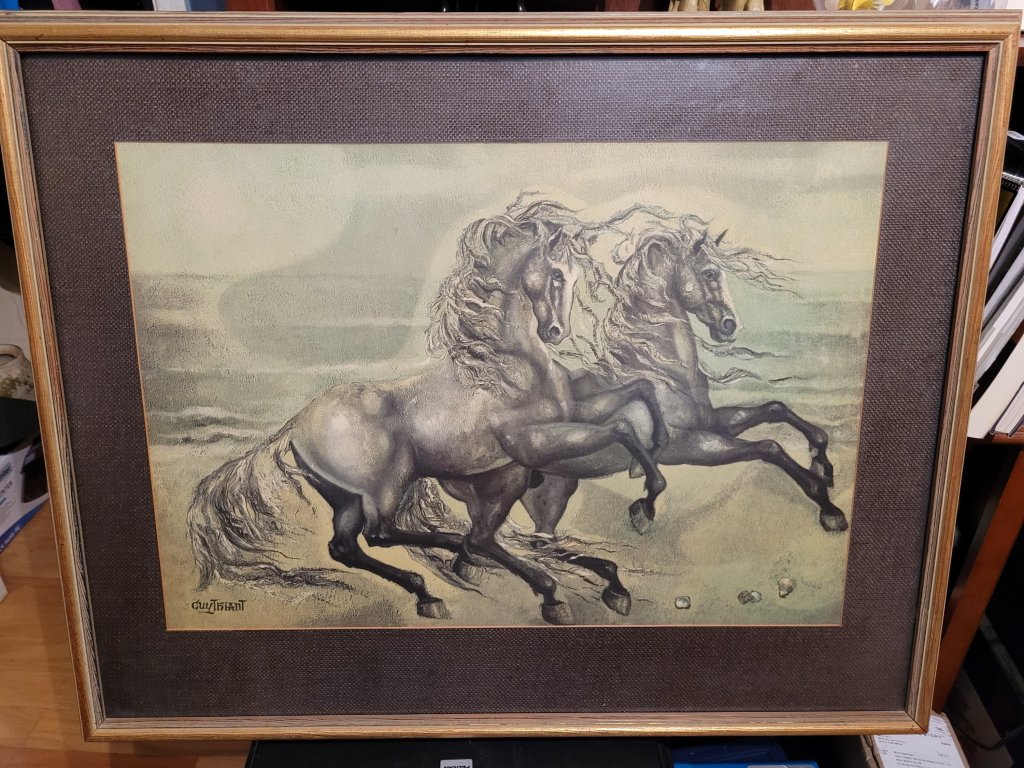
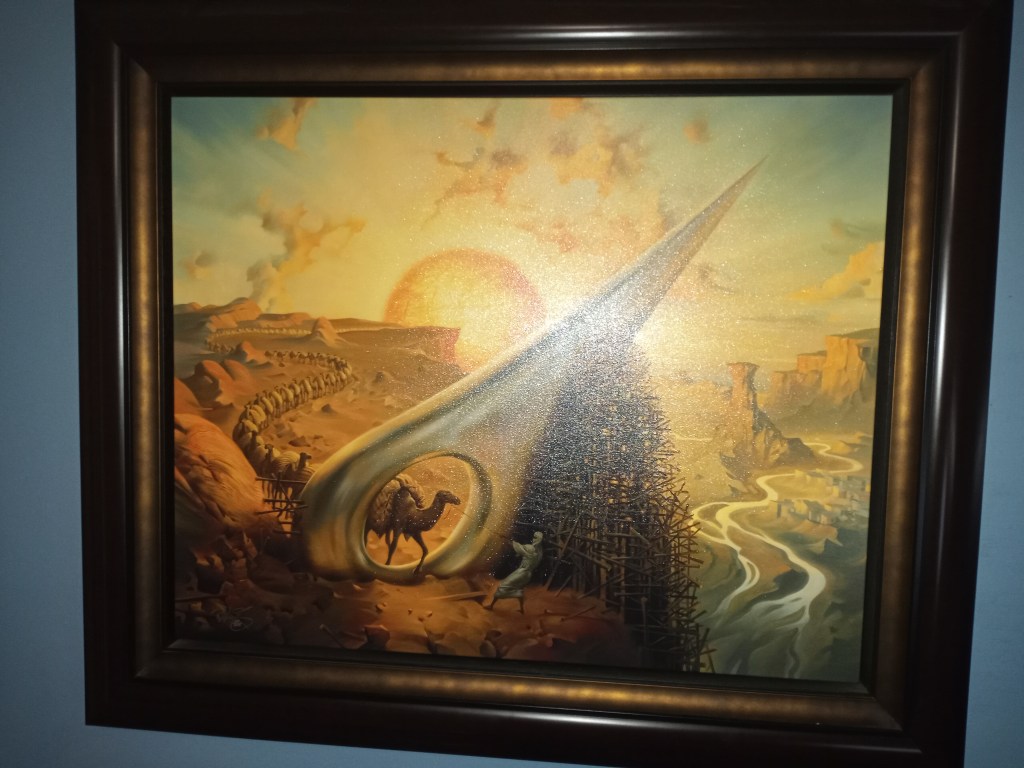

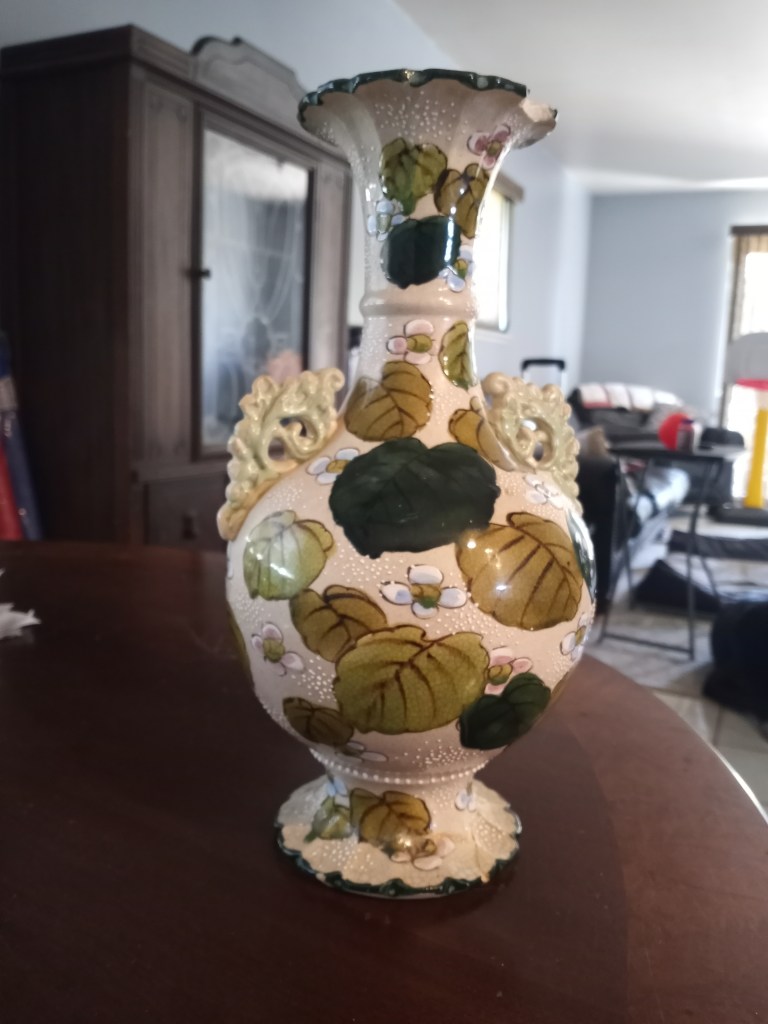
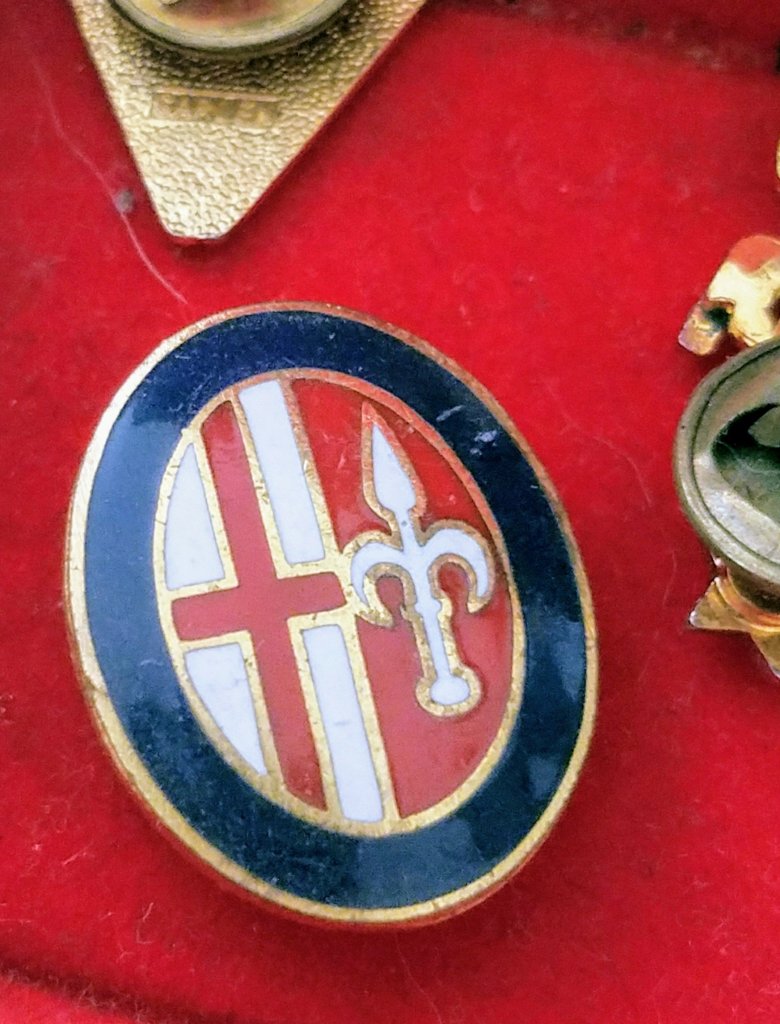

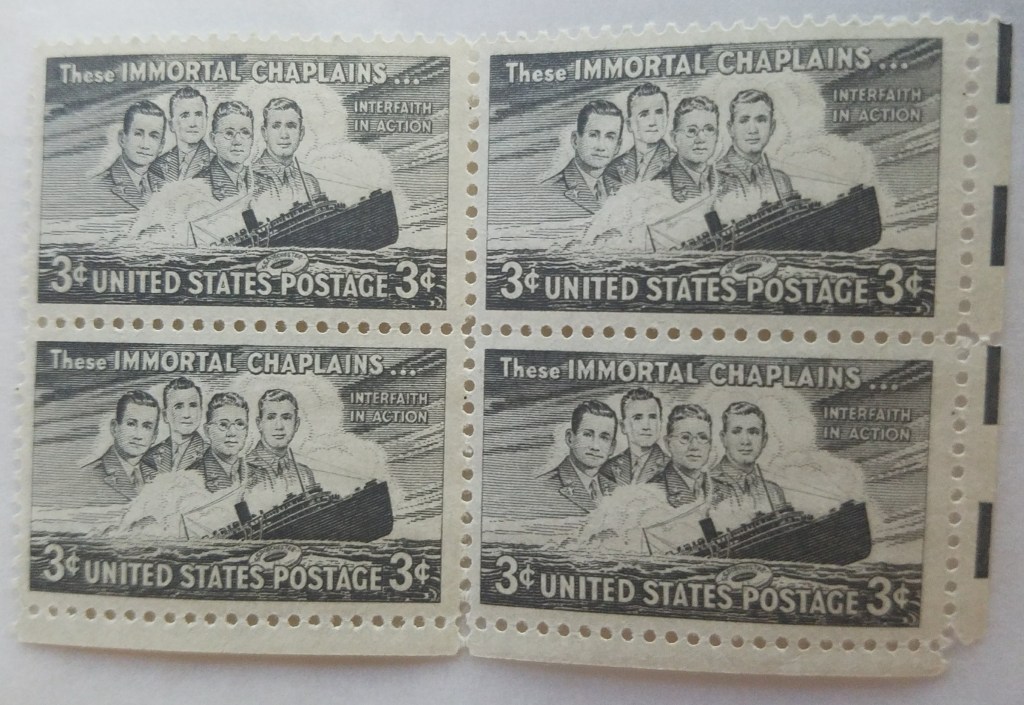
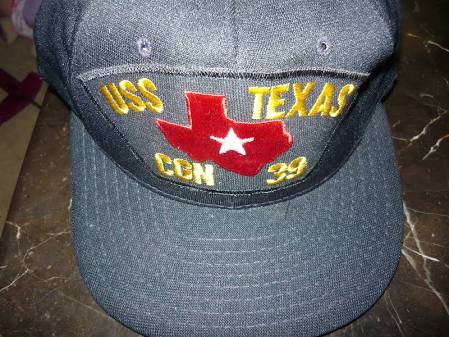

- A painting my late mother had hanging in our home for fifty years is signed by a Parisian artist
- A lithograph signed by (living) artist my wife and I visited on a date to Laguna Beach – we do not go on more dates to his studio as a result
- An early Twentieth Century Bentwood rocker from the New England studio home (it had briefly been my childhood home) of a Nineteeth Century muralist
- A vase that belonged to my maternal grandmother’s grandmother has been carefully stored for forty years
- A button from a Naples maritime officer I chatted with during a port visit 30 years ago
- Bulgarian currency from our visit on the Black Sea- a first US vessel to visit since before the Cold War
- uncirculated postage stamps representing the chaplains who sacrificed themselves for others to survive during WWII
- original Navy ballcap issued to me in 1991. My first ship, I deployed to Central, South America and Canada. it was decommissioned two years later
- A Russian nesting doll from the Soviet era
 Truths, Half-truths, and Sea Stories