Vice Adm. (ret) Starling began his last assignment as commander of Navy Cyber Forces at its establishment on Jan. 26, 2010. There he was responsible for organizing and prioritizing manpower, training, modernization and maintenance requirements for networks and cryptologic, space, intelligence and information operations capabilities. He concurrently served as commander Naval Network Warfare Command, where he oversaw the conduct […]
Whatever became of the U.S. Navy undersea lab experiments of the 1960’s and ’70s?
CAPT George Bond, USN, lead the research effort for the Navy that lead to something all recreational SCUBA divers rely on today. (No, scuba was invented by a partnership between Frenchmen Jacques Cousteau and E Gagnon (1)). Dive Decompression Tables.
SeaLab I, II, and III were the result of experiments on divers working at depth where avoiding decompression sickness, “the bends”, meant long periods of decompression to recover from only minutes exposure. Underwater, at depth, breathing surface air, as in the scuba cylinders or through a hose-diving helmet, would result in gasses building up in the diver’s bloodstream. Without stages of ascent and wait time, the gas would form bubbles in the person’s tissues causing pain, injury and even death.
Research investigated long-duration exposure underwater, living and working in habitats at different depths (up to 600 feet) whether there were negative effects and finding that a single decompression regimen at the conclusion of the experiment were sufficient to prevent injury. Studies during this time on nitrogen narcosis have provided recreational and commercial divers today with reliable timetables for recovering or decompressing, and the effects on the body. Other developments from the SeaLab program was the development of neoprene which everyone from divers to surfers now use in prolonging exposure to cold seawater.
One notable research participant for the Navy was both a pioneering astronaut as well as an aquanaut. Scott Carpenter, was the second American in space, in the Gemini program, and was an “inner space” pioneer. He spent a then -record 30 days in SeaLab Ii offshore La Jolla, 200 feet beneath the surface. Later, in SeaLab III, an experiment in underwater welding resulted in an accident where one researcher died due to asphyxiation. This was a factor in terminating the experiments in SeaLab III. But the research into saturation diving by the U.S. Navy continues today. In point of fact, it was this continuing research that has lead to special operations involving saturation diving and part of the training for submarine rescue operations. The Office of Naval Research (ONR) Undersea Medicine program is the descendent of these undersea experiments.
It is a stressful time to be a General Officer in the United States Armed Forces. An Army Major General, Ryan Gonsalves, was on the short list to get his third star, or promotion to Brigadier General, when he abruptly inserted combat boot in mouth. An article asserts he made some colorfully blunt and condescending assessment of a Congressional delegation and particularly offended a female staffer. He should not have been so colorful. Perhaps he could have watched “A Few Good Men” for insight in how not to be condescending.
One gentlemen I know summed it up well. For millennia, men have used power to obtain sex; however, in the same time, women have used sex to obtain power. At the extremes we have seen abuses. Effective warriors in history, such as Alexander, Charlemagne, Ulysses S. Grant and Omar Bradley were effective leading people and changing the course of history. However, I would think that a general in the second decade of the Second Millennium would have some acumen. For the last two hundred years, the United States military has had civilians making policy, authorizing budgets, and setting priorities for national defense. Many times this has been contrary to the advise of the seasoned warriors who know that adversaries and potential adversaries respect the threat or the actual implementation of force.
Yet a parent’s advice to a child aggrieved about many things should still be a fundamental truth. Apparently, the wisdom of picking one’s battles carefully was not heeded by this general. Perhaps he reflects the current Commander-In-Chief in that regard. And unfortunately it seems, this general officer has learned that indeed, the “pen (to strike his name from consideration) IS mightier than the sword”.
Many people, myself included, refused for a couple decades to acknowledge that people could really affect the weather. My religious beliefs hold that God is in control of all things, yet God did put Adam as steward of the planet. Whatever your belief, in my lifetime, I have witnessed barely breathable polluted air over Southern California, rainy years, drought years, colder and milder winters, hotter and milder summers. Hurricanes. Tornados. Floods. Climate change is the topic that every schoolboy in the industrialized countries of the world has had stamped into their consciences in recent decades. Everyone from politicians in California to European “Green” parties demand humanity stop using resources that are “proven” to destabilize our climate and pollute the planet. For the last twenty years, politicians debate and people divide into camps. But does anyone really know a solution?
“something must be done”
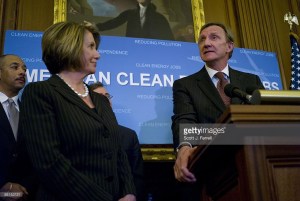
There have, as yet, been no realistic nor popular solutions proposed nor any process enacted. One nation refuses to hinder their industrialization by employing technologies they cannot yet afford to mitigate pollution. Other nations have no solid infrastructure to enact regulation. In the First World, taxation is the first response to climate change, but hinders any real discussion or experiments at solutions that are not “lobbyist”-championed projects. (Several of these have all-but-embezzled millions of tax dollars.) For those of us who work many miles from our homes, lack of public transportation to get there is at odds with the government actions to dissuade personal vehicle use. (Population in most cities outside California is many factors more dense so personal vehicles are less efficient than mass transit.)
climate impacts humans
Geologically, human existence has been a blip on the clock. It is still unclear whether volcanism, sun spot activity, and tectonic forces are responsible for the oscillations in weather over millions of years. Weather changes created Ice Ages and in-between glacial periods caused sea level change. Drought, lasting decades and even centuries, put pressure on feeding ancient populations and caused ancient civilizations to decline.
Two in the Americas, Hohokam and Anasazi civilizations were very advanced, yet may have faded – centuries before European visitors – due to extended periods of drought.
A volcanic eruption of Santorini in the Mediterranean was a primary factor the successful Minoan civilization faded around 1500 BCE. From the Bible and other texts, years of record crops followed by drought and famine in the Middle East occurred. Yet history teaches us that human beings in sufficient numbers can alter the environment as well. The millennia that Middle Eastern, Egyptian, Roman and Greek people cut the “cedars of Lebanon” for ship timbers and structures has all but eliminated them. .
In northern Michigan 7000 years ago ancient ancient people mined copper; tailings and debris left behind tell the stories before 19th Century mining began there. But the growth of the world population and the demand for resources have caused more debilitating changes in many aspects on the planet. In more recent times, denser populations along the coasts – the heavy industrialization using coal, oil and natural gas for energy first in the Americas and Europe, then Asia and Africa have had unrestrained and inefficient (heavily polluting) consequences. After several decades, each region in turn developed a conscience about limiting “acid rain” and early deaths from lung diseases and cancers. Before government management in the Americas, clear-cutting forests and mining were damaging what we later preserved through government intervention. This is still rampant in Brazil and the Amazon Basin.
Amazon deforestation
Strip mining that ruins the land and the chemicals used to extract metal poison groundwater in many developing economies. Of course, the topic that give California Jerry Brown the largest headache, is burning hydrocarbon fuels for energy,- releasing billions of tons of chemicals that were deposited over millions of years within the last century or two.
it’s elemental
Fire
Less than two months ago, the Sonoma region of California became an inferno.
Ventura, Los Angeles county, December 2017
This week, another tragic environmental calamity is occurring not only a couple of hours north of me in northern Los Angeles but forty miles north of my home, the Lilac fire, in the hills at the edge of San Diego County. Wind-propelled wildfires have consumed the lives, property, and dreams of hundreds of residents, displaced thousands more. and killed dozens of stabled horses in the last days. Ten years ago, my third of the county was being turned to charcoal by wildfire. Coordinated effort of thousands of firefighters, military and civilians have managed to keep human casualties few while battling the environment.
Perhaps the Government and the governed can put down their acrimony long enough to work through “defensible space” in residential areas. Tangible efforts such as clearing wider swaths of highways near open country might prevent vehicle-caused brush fires. Remove diseased and non-native species of trees and plants, many of which are very flammable, by dedicated planned cutting and clearing. Allow natural clearing through regular controlled burning.
Earth
Mexico 2017
Living at the tectonic boundaries of continents, Asia-Pacific and western North, Central and Latin American residents, earthquakes, and the infrequent volcanic eruption destroy property, kill people living in un-reinforced structures, and wreak havoc. The residents of central Asia suffer a major quake every dozen years of so. A decade or more ago, a major earthquake severely damaged eastern Japan, and one previously induced tsunamis from Thailand to India. Volcanic eruptions occur over a geologic timescale, so it is often ignored by people from Indonesia, to Naples, Italy, to some Caribbean island residents who live on their slopes.
For those who live at tectonic boundaries, nations can provide technical expertise with construction, but it will be up to the affected nations to employ these methods and materials. While many nations do not have infrastructure, others have corrupt or ineffective leadership in their economies.
Water
aftermath of Maria, Puerto Rico
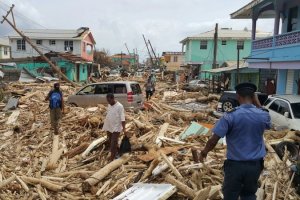
Hurricanes or cyclones or typhoons, and tornadoes are either more damaging now – or are more reported in the twenty-four hour news cycle. El Nino or La Nina cyclic ocean heating or cooling contribute to heavy growth of fuel for fires in wet years in the western US, then in dry years contribute to tinder-dry fire conditions; hot winds blowing toward the Caribbean from western Africa mix to become tropical depressions and then storms that churn into the Caribbean, the Gulf of Mexico or Eastern seaboard. For this hemisphere, it is a roulette wheel every June through September where storms will make landfall. Hurricanes in 2017 have ruined large swaths of the Caribbean, and flooded southeastern Texas. For other hemispheres, cyclones or typhoons have often killed many and displaced thousands in the Philippines, and coastal Indian Ocean countries.
Nature has a way of mitigating hurricanes through dense miles of mangrove swamps; humans building in flood-prone regions, building over land that would absorb or deflect flooding has had devastating effects. Home owners who have properties along the beaches where hurricanes have come ashore frequently make a choice to live there, yet the debris that piles up and down the coastline is environmentally damaging and take a long time to remove. With storms such as that which struck New York in winter, or Houston, or Puerto Rico and the eastern Caribbean this year, there may be more frequent and stronger storms in future years. Sea walls, restored wetland, stronger levees, stockpiled supplies and more durable materials are some of the things that people can demand.
Wind
Texas, (courtesy CNN)
From westerly ” Santa Ana” winds out of the deserts of California that dry out vegetation in the forests and hills every Fall (and sometimes Spring through Fall), to the tornadoes that develop in the Central and Eastern United States when cold air masses clash with the warm moist air from the Gulf of Mexico, to hurricanes, wind is a major force to be reckoned with. As part of the whole climate debate, people want to use wind to generate power yet curse it when it accelerates fires, lift roofs off schools, blow down trees or sink ships at sea. As a natural force, wind is not going to be stopped by human will. However, more intelligent design for buildings may mitigate storm damage.
I am so exhausted listening to everyone blame climate change for the problems in the world. It is not the weather “why” I care about. It’s how the world population – as a whole – intends to alter in meaningful ways the slide to more unstable and unpredicable future. As long as there is President Obama-style unilateral initiatives or Congressional “legislation” or California bureaucratic fiats without real adoption in the new industrializing regions of the world – there is no leadership. However social media page “Likes”, group-think, hysteria and the resulting inaction is a poor gift for future generations.
Usain Bolt and Harry Belafonte grew up in my parish – tour bus driver & guide
On a zip-line and rafting tour in Jamaica, the limes, bananas, coconuts, and sugar cane compete with mangroves, towering Hindu bamboo and brightly colored flowering plants for my attention. While zooming through trees up to 40 mph (there are big cushions at the downhill station if the brake and guide fail to stop me) fed my adrenaline-junkie, the afternoon spent on the river was a great way to take in the people and history of Jamaica. The rafting guide explained how various plants have health and medicinal properties – and though Americans sterotypically associated ‘ganja’ with Jamaica, nothing Reginald listed in the average diet included weed.
Patois is the native Jamaican dialect, and after a brief intro, we were all “ai’-ree” (doing well) and affirming questions with “ya, man”. Jamaicans have a deep pride in their country, and while it is very evident that the poorest Americans are richer than most of the population, I think even the “CJs” -Crazy Jamaicans, (self-named) locals who walk in front of moving trucks and buses – would find much of my complaining young countrymen more than foolish. Though this is my first trip in the Caribbean as a civilian, and a first ever to Jamaica, I can see why people return again and again. For me, the food, grog and Cuban cigars are pleasant but bouncing up and down a rocky and muddy road with a group of laughing fellow travelers and guides on the way to rafting is a lasting adventure.
“Put da lime in de coconut, stir it all up” -Jamaican health tip for lowering blood pressure
The supreme art of war is to subdue the enemy without fighting.
– Sun Tzu (brainyquote.com)
It is quoted that Vladimir Putin, former KGB director and President (for life) of the Russian federation, said that his career with the KGB grew from his patriotism and romantic notions born of spy novels. I wonder if any of these were about James Bond and FROM RUSSIA, WITH LOVE. Given the revelations of “Russian meddling” in our elections, which to those in the business of national security understand that most nations engage in, with each other to some degree, this is still surprising to a lot of Americans.
Sounds like a movie plot: Machiavellian Government infiltrates another country with sleepers, distributes false stories to create chaos, invests in institutions and the young with the intent to neuter competition – intellectually, economically, politically and internationally. Patiently observes the breakdown of their target(s) racial, gender, religious, and social unity; calculates the right time to fund in ‘resistance movements”. Knows the emotional and psychological triggers from decades of espionage and ‘gulag’ research to manipulate populations.
And of course, their targets ignorantly participate as pawns of someone else’s chess game. It’s been happening in human societies since the hunter-gatherers banded together into communities. Except they did not have oil and gas monopolies, stock markets, biological agents, nuclear weapons and Facebook.
Lord help us.
All men can see these tactics whereby I conquer, but what none can see is the strategy out of which victory is evolved.
On the occasion of a visit to the Veterans Administration Compensation and Pension Claims Office in San Diego today, I was given to wonder if obtaining care from our Commander in Chief ( the bureaucracy, to be exact) was always an issue. The Federal Government since the early Nineteenth Century officially provided for the wartime disabled veteran, yet even in the most recent years, since I first wore a uniform, there have been struggles to link illnesses with wartime service.
In the following letter to President Washington from an unidentified soldier of the Revolutionary War, he had been waiting seven years for a promised reward for the suffering, putting his life, family and livelihood on the line for the new nation. And apparently, it seems some who did the promising, profited, and to those who were promised, were left to scrape by.
I’ve highlighted interesting parts of the letter which seem relevant today. The following is from the Archives :
From “An Old Soldier”
Commonwealth of Massachusetts—Decr 25th 1789
Great Sr
I hope it is a moment of leasure if this luckely should fall into your hands—urgent necessity induces me thus humbly to approach your Excellancy—I will not Sr long divert your attention from your arduous employment—but beg leave to observe—that on the first alarm of war I entered the Service of my Country being a minute Man in the then Massachusetts State—and having a fervant zeal to see the Conclusion I engaged from term to term till the first time of Inlisting for the War—which I unfortunately complyed with and had not the advantage of large Bounties as others afterwards had—and being a miner my Master had my wages till the last engagement—when the money began to depreciate—& our nec[e]ssaties so urgent that it procured but scanty release—hoping and expecting every Campaign to be the last—and not ambitious for office obtaind none took my tour as sentinal at all times and on all occations—cold & hot—wet & Dry—and being with the infantry was almost continually on the loins of the Enemy—I always loved—and had the love of my officers—obey’d every order punctually and considered your Excellencies as sacred—The promises of my officers—the incoragments in Genl orders—and the Resolves of the State and Congress induced me to hope and depend on an aduquate reward for my long toyl—hazard—& sufferings—when peace should be restored to our country again; but—alass! how aghast was I when with all my prudance—and many times suffering pinching need to preserve and save my earnings—& 250 Dollars in final settlements was my only Subsidy.
And when I reflect on the many—many dark & dangerous Nights I walked my Post all attentive—the much fatigue nakedness—and hunger I have indured—the many hazards I have run for my country—first on Bunkers-hill—at Perls Point—at white plains—the fatigueing but glorious action at Trenton & Princeton—the malancoly retreat from Ty—the Victory at Bemises-heights—the Battle at Monmouth & the Concluding seage of Yorktown—and that Eight Years of my prime was gon—had lost my trade—was unacquainted with husbandry—had formd the Connection of matremony in a very respectable family—had Two babes by a most agreable companion—her father impatent for my return to releave him of the long burden of my Wife & children—and I—unfortunate Man had no where to put them nor any provisions made for them—where said I is my dear General whome I ever hoped would have it in his power to see us righted—my officers have forsaken me—Congress dont pay me—my country dont thank nor pitty me! I offered my Securities for sail they would fetch only 2s./10d. on the pound—and I resolved if they was ever made good I would have the benefit of them if I worked my fingers to the bone for bread—but too close application soon redused my health—and to keep from goal for the doctors bill my securities are redused to Two hundred Dollars—Seven Long Years have elapsed and no releaf till my patiance is nearly gon with my constitution by unremited strugles at day labour to pay Taxes and bearly support my family which now is Eight in number—six childrenuntaught through poverty—and by a rearage of rent my landlord thretens the remainder of my securities @ 5s./2d. on the £ unless a spedy prospect of the Interest being paid saves them to me—Is there or is there not, my dearest of Generals any ground of hope—I ketch at every incouragement—and recolect in the Generals last and farewell orders to the Armies of the United States he observed that “the officers & soldiers may expect considerable assistance in recommencing their civil occupations, from the sums due to them from the public which must and will most inevitably be paid”1—also in the Genls presenting his thanks to the several classes of the Army he says—“And to the non commissioned officers and Soldiers for their extreordinary patience in suffering, as well as their invincible fortitude in action; to the various branches of the Army the General takes this last and solemn opertunity of profesing his inviolable attachment and friendship”—then observes “he wishes more then bare profession were in his power, that he was really able to be useful to them in future life.”
Now I trust heaven has put it in his power—And when the new Constitution took place (which was pro⟨illegible⟩ of in the above Quoted genl orders) my heart leaped with Joy—but not more than when I was advertized of the great-good Man put at the head of it—and felt confidant of releaf—but how was I affected when I found the old creaditer was neglected and the revenew whittled up among the multiplicity of officers and offices of the new government—may they not with propriety wate for a part of their inormus Sallerys as well as the poor Soldier for his seven Years Interest on his heard earnd pettance—one Years neglect more and all my expectations are blasted—my Securities must go to keep me out of goal and my family from Starving—what oppression! what crualty! such a severe Strugle to save my country—and their promised rewards arested from me—through their neglect and my necessity for almost nothing—and I exposed in some future day to pay my proportion of the whole sum to the menopalizer—Dear sr help for all other help but that of Heaven faileth—The demand by Taxes—by my Landlord—by my Family and my infermities bares me down my courage is nearly exosted and I reduced to invy those who—not only bled with me but died in their Countries service and are now mouldring in the dust.
But most worthy Sr—fully confidant of the rectitud of your mind—and your sincere wish to releave all in destress, and especially the deserving—And to distribute Justice to all men; and in perticular to the injuerd—I earnestly implore Heaven to Send all needed aid to the all attentive Preasidents exertians to contribute to all equally the rewards of their Country, according to their deserving—then may I depend on the small pittance due to your Excellancies most devoted & obedeant humbe Servt
An Old Soldier
Echoing this old Soldier more than two hundred years ago, I would like to see the priorities in this country change to care for the veteran particularly for those who are suffering as a result of combat service.
There were three sucker punches the United States of America suffered – within her borders – in history. August 24, 1814, when the British burned the White House during the War of 1812. The attack on Pearl Harbor, Hawaii on December 7, 1941. And within the lifetime of most Americans now living, New York’s World Trade Center, the Pentagon and the thwarted attack, probably destined for the White House, on September 11, 2001.
America will never be destroyed from the outside. If we falter and lose our freedoms, it will be because we destroyed ourselves. Abraham Lincoln
brainyquote.com
Out of World War II, one-time enemies became friends and Allies. From the early Nineteenth Century, the world entered the Modern Era, mostly due to the inventiveness and creativity of people coming to these United States. From turbines and cotton gins, to aircraft and space exploration, ideas germinated here or were improved on and flourished, the gift of immigrants who were united in pride for this nation.
Blood has been shed defending a free people. Ideas that flourished here have gone out into the rest of the world. From medicine to Microsoft, a melting -pot in America fostered new ideas and directions in the world. Freedoms that had not been prevalent to societies in the Old World worked here.
But in the late 1940s and continuing through today, three forces have gathered in opposition to Americanism. Socialism, atheism, and equivocation. A failed idea of mid-19th century European intellectuals that the Industrial Revolution created oppression was embraced first by Russia, China, and imposed or embraced by nations in Europe, Asia, and some Latin American states. It resulted in a mediocre existence, little pride in workmanship, and ironically, a small elite oppressing a majority. It continues today due to control of information, education, and government services by an elite over a majority. Atheism, fostered by the same socialist elites, highlights the weaknesses of mankind as being the result of and not a remedy through the Christian faith. All the other religious orders are unopposed, generally, by the elites – for whom, power is religion- to confound and isolate people into manageable groups.
And from dictionary. com,
equivocation: “the use of ambiguous language to conceal the truth or to avoid committing oneself; prevarication.”
Leaders formerly stood upon principles, Washington, Jefferson, Lincoln; Martin Luther King, Winston Churchill and Nelson Mandela. Today, masses follow sound bites, imagery, and shed blood based on half-truths, lies and backroom deals. And in the U.S., most politicians have only one purpose – to gain and remain in power.
On this 16th anniversary of the murder of 3,000 people, at the hands of fanatics -propelled by a religion where the very mention of their prophet’s name can instigate murder – I pray for everyone here to embrace unity, discourse, freedom, and respect for law and for the Constitution.
In pre-war (WWII) Northern Ireland, the businesses that my grandfather inherited and ran made a sufficient income to have a generally comfortable middle class living; in the post-war economy, those businesses collapsed and they were forced to emigrate, with little option but to start over. My grandfather found work selling insurance and wanted his daughters to work as bookkeepers or in such work. Mom applied, was accepted, and ultimately graduated at the top of her nursing class at Mount Sinai Hospital.
My father, son of a Polish immigrant, was born and grew up in the Bronx; he excelled in school and ultimately pursued aerospace and mechanical engineering at college. His, too, was an act of desperation. My grandfather was a shipfitter at the Brooklyn Navy Yard during WWII. He and my grandmother ran a small bakery for a time. When my grandmother passed away relatively young – my grandfather was a restaurant -equipment repairman. My dad had to excel in a profession to make his way.
Life was always complicated in America. It went through successive struggles of growth, industrial expansion, war, and immigration open to the world. Through the centuries, Dutch, English, German, Irish, Italian, and eastern Europeans (Slavs) arrived from the East. Japanese, Chinese, Filipino, and all over came via the West. They came as Protestant, Catholic, Jew. The came as indentured servants, slaves and refugees. African-Americans after the Civil War spread out from the South to the urban Mid-West and Northeast. Before the influx of immigrants from the Middle East, Latin America, and Asia, life was quite complicated, and particularly so after a World War. The Cold War, Viet Nam and the wars in Iraq and Afghanistan have colored the last 75 years of the American psyche.
It was no less complicated since the 1960s. In my lifetime, I have personally practiced in elementary school for impending nuclear attack. I heard the unusual reports of someone in high school bringing a firearm. Metal detectors and drug-sniffing dogs in schools and public places. School mass-shootings. A President in office while an Islamist revolution held American diplomats hostage for more than a year. The first World Trade Center bombing. September 11, 2001, in which a mentor and friend was murdered by terrorists using a commercial aircraft as a weapon.
The late Woodie Guthrie, folk singer, wrote a song that we sang as schoolchildren in California in the 1960s.
Every time I see a car with a bumper sticker “COEXIST”, I am given to wonder why these probably well-intentioned, folks are so ignorant of history and many are so rabidly determined to shut out any comment, observation, or objection. The world is a dangerous place, and the people who see aggressors as victims and victims as aggressors are generally unable, unwilling, or unprepared to find real solutions -other than bumper stickers and molotov cocktails. Here’s a refresher from 2006. Via the Chinese and the Iranians, the terror group Hezbollah continues to be weaponized….
Watching the movie, Dunkirk, on Saturday was not a traditional rendering of the epic war-story. The rescue of hundreds of thousands of British and French troops on the beach in May, 1940 was told in intersecting story lines.
But what I got out of it as a military veteran, was both the unspoken fear of many young soldiers who were looking at the empty sea for rescue, strafing, bombing and the ships they were able to find and board, being sunk. It had little dialogue- the courage of those who were defending the retreating soldiers, pilots and the naval personnel who were trying to protect these troops made the film even more desperate. At one point, one of the characters makes the observation that England was not mobilizing a lot of their navy in order to preserve it for the expected invasion from Hitler. But they were mobilizing a civilian fleet to sail for Dunkirk. That early war period, when the Germans were rolling across Europe seemed hopeless. There was courage, particularly in those who sailed across the English Channel in thousands of boats to rescue the men.
My mother grew up near Belfast in now Northern Ireland. I never heard stories about living during the war and only learned how difficult it was from history and publications I obtained when we visited there. Perhaps as she was quite young early in the war, but it might well have been that spirit the British exhibited. You see, the Germans during the Battle of Britain, especially in 1940 -41, were bombing the shipyards, factories and sinking merchant fleets to isolate Britain. The heroism of the troops that eventually defeated Hitler’s armies was not the stuff of epic war movies, but courage expressed in action of ordinary people doing the extraordinary. The scene in Dunkirk I appreciated was the young soldier riding in the train once back in Britain about Winston Churchill’s stirring words to rally the Britons. And the people far from being negative about their rescued troops, were rallying and supportive and welcoming.
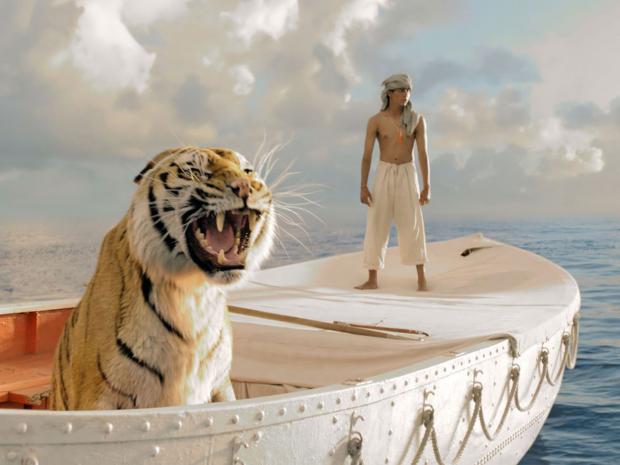
While I admit to watching only parts of the movie, Life of Pi, is a survival adventure novel of a young Indian man lost at sea sharing a lifeboat with a tiger. Can you think of a better anti-piracy agent? Yet, perhaps land animals at sea is not entirely an uncommon phenomenon?As reported by several news sources *, the Sri Lankan Navy a couple days ago rescued an elephant at sea — in a great demonstration of compassion. Leave no elephant behind! This elephant was crossing a shallow channel and was swept out to sea where it eventually was rescued — nine or ten miles out in the ocean! Continue reading →

 There have, as yet, been no realistic nor popular solutions proposed nor any process enacted. One nation refuses to hinder their industrialization by employing technologies they cannot yet afford to mitigate pollution. Other nations have no solid infrastructure to enact regulation. In the First World, taxation is the first response to climate change, but hinders any real discussion or experiments at solutions that are not “lobbyist”-championed projects. (Several of these have all-but-embezzled millions of tax dollars.) For those of us who work many miles from our homes, lack of public transportation to get there is at odds with the government actions to dissuade personal vehicle use. (Population in most cities outside California is many factors more dense so personal vehicles are less efficient than mass transit.)
 Two in the Americas,
  .
.




 As reported by several news sources *, the Sri Lankan Navy a couple days ago rescued an elephant at sea — in a great demonstration of compassion. Leave no elephant behind! This elephant was crossing a shallow channel and was swept out to sea where it eventually was rescued — nine or ten miles out in the ocean!
  Truths, Half-truths, and Sea Stories