Born in the USA

On the 241st anniversary of the signing of the Declaration of Independence in Philadelphia, Pennsylvania, Americans are set to commemorate the day with barbecues, parades,  pool parties, and  family gatherings.  And fireworks.  (And hopefully, neither the Emergency Rooms nor the firefighters and paramedics across the nation will be overtaxed today by injured or sunstroke-suffering revelers.)

When I began writing, I wanted to comment on the state of America’s unique history to unite diverse people into an economic power that changed the world in the last half of the Twentieth Century.   Continue reading

the cradle of uncivil-ization

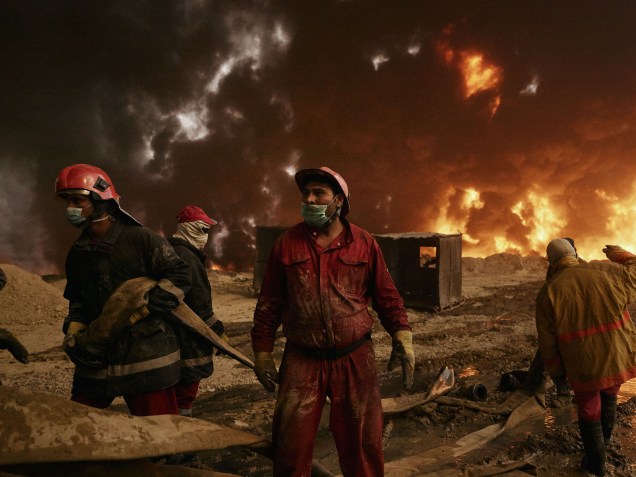
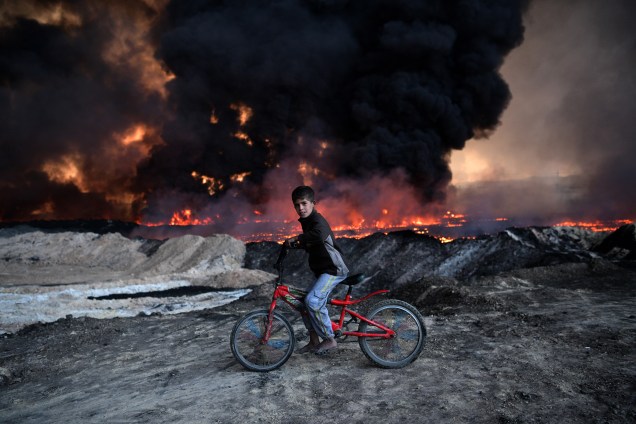
Opening this week’s edition of TIME magazine (June 26, 2017), my eye caught a pictorial article on the environmental battle that was waged last year in Iraq when ISIS set fire to oil fields to hinder the advance of the Iraqi and coalition force pushing them out from the territory they terrorized for years.

Joint Forces Battle To Retake Iraqi City Of Mosul From ISISIt is quite instructive that the world has become well-versed in the environmental  and human toll of oil spills and fires.  In that region, decades of poisoned water, poisoned wildlife,  and landscapes as a result of months of exposure to deliberate acts of evil men,   toxic fumes, oil -laden smoke and chemicals have been largely overlooked by the European and American “globalists”.   Twenty-five years ago,  while one American political party blamed another party,  the apolitical Government bureaucracy was ignoring the toll on forces of the first Gulf War;  I remember the “Gulf War Syndrome”  where U.S. veterans had to fight through the courts to obtain needed care and Government acknowledgement of responsibility for their ailments.

qayarrah_iraq_joey_l_photographer_11_resizingThe TIME article and other sources make the point that the Iraqi firefighting forces – petroleum engineers specialized in fighting these – have been doing so for years.   With ongoing battles against terrorists’  IEDs, bullets at the same time as fires hot enough to incinerate men and equipment,  Iraqi forces extinguished the fires the terrorists set along their retreat.   The Iraqi people who lived through a “scorched -earth” mandate from Saddam Hussein to his forces in 1991, are the same people who suffered again from an extremist army who once again set fires, IEDs, and booby-traps;  from the oil fires damage caused in the aftermath of the Gulf War,  those exposed suffer from cancer, skin diseases, birth defects,  mental issues and myriad other life-shortening illness.  And that terrorists set their world ablaze again, the effects will continue to plague people.   It is no wonder that the poor have risked dying in the attempt to flee to other countries.

While we wonder whether carbon dioxide in the air over the U.S. is a harmful pollutant,  perhaps the same “climate change” advocates can travel to Iraq to advise them that ending America’s reliance on hydrocarbons will end their suffering.

Further reading:

Sailors of fortune

Before the advent of  Cyber warfare,  when a ruler wanted to extend his (or her) sovereignty beyond the geographic boundaries of mountains or the sea, sailors were called upon.   Three thousand years BCE,  from their largest settlements on Crete, the Minoans had extensive trade with Egypt and the Syrian people of eastern shores of the Mediterranean.  They were wiped out from the sea– literally.   But the Philistines, whom Ramses III battled (his monuments bear witness to his Philistine captives) were likely either Minoan or proto- Roman Etruscan immigrants.  So once again sailors were prominent in history.

The Homeric tales of Greek mythology reflected actual battles of the Mycenaeans (Greeks) with the Trojans about 1100 years BCE in present-day Turkey.  Scholars think these wars were probably for access to the Black Sea through the Dardanelles.  Sailors as soldiers of fortune again made history.  Troy, whether or not fooled by a wooden horse at the time,  was laid waste, and likely sailors had some role.   About 500 years BCE,  the Mycenaeans battled and eventually repulsed invasion of the Persian Xerxes empire (attacking from the sea).   And as Greek seapower grew, sailors extended their reach and culture all through the eastern Mediterranean.

Alexander the Great, the Macedonian, about 300 BCE, created a Greek empire from Europe east to India and south into Egypt.  And the Romans about that time started to extend their reach by land and the sea.  For hundreds of years,  sailors extended the Roman influence from Britain to Egypt and North Africa.

Since the age of Christ,  European sailors have extended empires and trade to and from all corners of the globe. While squabbles between armies and navies are now over football games,  I think each is beholden to the other.   Sailors may have a tradition of rowdiness in ports around the world, but also gained a reputation for “girl in every port”.  FB_IMG_1491759647178From sailors, over the thousands of years of our known history,  we all potentially have some  DNA of people they encountered:  Assyrians, India,  Egyptians, Carthaginians,  Mongols, Polynesians, Chinese or aboriginal (native american or australian).  If not for Sailors of Fortune,  the dust of time would perhaps cover us.

On the anniversary of D-Day

bravery and sacrifice

Seventy three years ago on June 6th, 1944  several hundred thousand men dared to assault the beaches and countryside of Normandy, France.   Not very many are still living from those days to remind the world of the valor, honor, and determination of people to defeat an enemy that threatened the entire world.  And those born since the end of the Vietnam war are particularly ignorant of the history that determined the world they inherited.

family tradition

My paternal grandfather came to the United States through Poland in the 1920s.  Any Jewish family that remained behind in Europe were likely murdered by the Nazis;   only a few extended family who emigrated before the invasion of Poland in 1939 are known to my elderly relations.   My grandfather worked in the Brooklyn Shipyard during the war, and my father was an aerospace engineering student during Korea and worked on developing  submarine missiles during the 1950s and 1960s.   My maternal grandmother’s American cousin served in the Merchant Marine and was decorated for heroism during the Battle for Malta.   My maternal cousin served in the Marines in the Iraq War.  My son serves in the Army today.

if the meaning gets lost

The anniversary of D-Day, Operation Overlord, has meaning for that generation now averaging 90 years old as the beginning of the end for a bloodthirsty ideology that began, for Americans, with a surprise attack on Pearl Harbor.    Without the resolve of these young men (and women who served in the factories and supporting industries to keep the military moving), very likely America and Europe would be a different place.  The Nazis would have eliminated diversity.  There would be no Jew, no black, no homosexual, no physically or mentally challenged people.  Death by starvation, street-corner execution, or work-camps would have been the norm.  College protests?  Executions would prevent those.  Black Lives Matter –  there would be none due to Nazi genocide.   The No boundaries/ no borders/no illegal-immigrant lobbyists?   The Nazi control of borders and transportation would stop that.   Question the government?  Surveillance, arrest, imprisonment, and torture.    And short of genocide, many of these same controls were in place in the Soviet bloc for decades.

history doesn’t have to be kind, only truthful

As with any culture in the historical past,  there are any number of evils perpetrated on one group by another.  No county is without failings, suppression of civil liberties and freedoms, and some reprehensible behavior in its past.  But in light of all the current death and suffering perpetrated almost daily in the Middle East and now occurring nearly as frequently in Europe,  many of my countrymen today ignore responsibility, integrity,  work ethic and the blessings that becoming “an American” represented in the years after WWII.  They only see a shameful past that must be rectified with ‘fairness” and “coexistence”.    As a student of history, as one who served his country with honor,  and as a disciple of Jesus,  I do not take freedom and the blessings that living in America has afforded me lightly.  Freedom of religion affords me practice of my faith; opponents still seek to diminish it in the American culture.  They have done so in many parts of Europe.   Perhaps these opponents do not see Islam as a religion?   How many failings of men are attributed to christianity as a whole in the culture compared with the barbarism that seems widespread in the Islamic world, yet constantly referenced by state agents as the violence of a few extremists?

Do not use freedom to deny it to others

We should strive to hold each individual accountable for their deeds or misdeeds.  We can have respect for people and cultures around the world.  But the freedoms that were gained by those who sacrificed and served in the Armed Forces in our nation’s conflicts  are now used by members of the latest generations to abuse others in the name of “freedom”.

May memories

A lot changes in forty years. In  May, 1977,  prior to my departure for Boot Camp at Naval Training Center, San Diego in October,  I was graduating high school.   Jimmy Carter was President, a fact that I thought, being a former naval submariner officer, would make him an excellent leader.   People didn’t want Gerald Ford as he had pardoned ‘criminal’ Richard Nixon, but I remember him for sending in Marines to retrieve the Mayaguez, which had been seized by the Khmer Rouge a month after the last battle involving U.S. troops of the Vietnam War.

In those last two years of the Seventies,  the Zumwalt-era of loosened grooming standards – longer hair, mustaches and beards worn by Sailors were okay.  Dungarees (bell-bottom style) and dixie cups, were the working uniform.   Pot was a problem on military bases including San Diego.   A community that now is marked by the upwardly-mobile, well-heeled beach crowd, Ocean Beach, was then a place where druggies and ex-military,  tattoo parlors and bars were less restrictive than up the coast near the UCSD campus.

A visit over the Coronado Bridge to the Naval Station Coronado, where carriers were berthed was my first view of a ship – the USS Recruit was a wood and metal reproduction on the Recruit Training Command, to introduce us to naming convention, etc – so did not count.  The ‘aroma’ of the interior of the USS Kitty Hawk was the first ‘knock out’ that I will never forget.  Jet fuel, grease, human sweat, urinals and generally,  the stink of at times, 3500 men (no women then) wafted fresh new sailors who had more recently been accustomed to PINE SOL clean scent.

At the time, I was a student learning to work on complex electronics and mechanical maintenance of teletypes.  Where I now cannot see without at least one or two orders of magnitude, I was able then to discern two from three centimeters adjustments.  The instructor was quite ADAMANT about that ability before graduation.   We had Iranian military students – this was prior to the Iranian Revolution – and when they were recalled by their government,  we were relieved.   Suffice it to say that American and Iranian hygiene were on different tracks.

In May of 1982,  with several of my fellow Russian Language students and the professor – I was able to travel  to Russia – prior to the end of the USSR (1989) – visiting cities – St Petersburg, Moscow, Kiev and Tbilisi.  If only for all but one – a socialist-  the trip was very informative and probably saved them and their future families from the ‘snowflake’ sensibilities, the mantra of “coexistence” and “socialism’s great”.  The people may have been interesting and interested, but the economy was a shambles. Ambition was reserved for the underground economy — some of whom are today’s Russian millionaires and billionaires.

In May of 1984,  I had been out of the Navy four years, attending the university in Tucson, Arizona.  Four three of those four years I had been actively involved in the Veteran students organization on campus,  and while peers were pursuing commissioning programs,  I was looking toward a government job after graduation.  Strangely,  in my second year after graduation,  when my graduate school plans went unfunded – I re-enlisted in the Navy -Reserve – that is.  The entreaties of one of my friends finally had me join his unit, only to see him quit!

After petitioning to resume an Active Duty career in 1987,  the next major May milestone I recall was May of 1997 when I was transferred from Norfolk, Virginia to San Diego, California.    1970 Dodge Chargers, if you could find one in decent shape were then ten thousand dollars or more,  homes which had been an unheard of, eighty thousand dollars – for an ocean view, were nearly eight hundred thousand,  and NTC was closed but for a few administrative medical functions.

And in the twenty years since that time,  friends and mentors went to war in Afghanistan and Iraq,  the Soviets became Russian trade partners, the Chinese became the world’s second-most powerful economy, the Islamic world tried to separate the economic need for the non-Islamic world – from the ideology that wants to reduce infidels to ashes,  and we are again at some form of odds over military preparedness against the adversaries that were no longer adversaries?


Red Sky in the morning….

There’s an ancient mariner’s rhyme that says, “Red sky at night, Sailors’ delight; red sky at morning, Sailors take warning”.  From Wikipedia,

It is based on the reddish glow of the morning or evening sky, caused by haze or clouds related to storms in the region.[2][3][5] If the morning skies are red, it is because clear skies over the horizon to the east permit the sun to light the undersides of moisture-bearing clouds. The saying assumes that more such clouds are coming in from the west. Conversely, in order to see red clouds in the evening, sunlight must have a clear path from the west, so therefore the prevailing westerly wind must be bringing clear skies.

Talking with a elder friend and mentor this morning,  Jack related a story how, as a Navy man fifty or more years ago, he had been a Tin Can Sailor ( alternately known as a destroyerman)  on a World War II-era ship.  He had been a yeoman and the Captain’s bridge talker.   Jack relished telling me how he had been selected for that job by the CO as he could translate the southern drawl of the Engineering crew muddled by ship’s intercom system.  And he loved to share with me the story of his ship taking 40 to 50 degree rolls in a Pacific storm they rode out for a week.

1944_12_17_unk_dd_700x
A ship of Task Force 38

I too, was blessed with a strong constitution, riding out a few violent Atlantic storms in the destroyer PETERSON, ( launched in the 1970s) where most personnel not on the binnacle list,  were at their positions with barf bags at the ready.   I do recall the one or two times I foolishly ventured on the upper deck by our workspace – the “Oh- three”  (03) Level, to witness the power of the wind and the waves.  Metal bent or was torn away by the power of the sea.   Fortunately with modern navigation, we did not ride through the center of these storms where the waves were reportedly fifty feet high from trough to crest.

typhoon20cobra
Typhoon Cobra

I started to think what the Sailors of WWII dealt with – battling the Japanese in the Western Pacific and typhoons.   On a website this morning,  I discovered that an error underestimating the weather put a heavily armed Task Force, with some top-heavy ships directly through a violent typhoon – Typhoon Cobra –  with fatal results.   Ships were heavily damaged, some capsized and sank with hundreds of men lost,  and generally raised more havoc than the enemy they were to battle.


a sentry’s recollections

In the Navy I stood a lot of watches.  For those not familiar with our terminology,  “watchstanding” is an assignment for a specified number of hours, to monitor area security, equipment performance, duties according to one’s training and seniority,  or other duties “as assigned”.

As a young Sailor (I capitalize the “S” following a Navy custom),  my first watches were patrols of the recruit barracks I was assigned from the first days in the Navy forty years ago.  We patrolled for safety mostly, but it was also to train us to be light sleepers, and accustomed to getting up within moments to carry out duties.

Later assignments, once I had been in uniform for a year or so, was assignment to the base gatehouses, sometimes the Main Gate but more often the mostly deserted back gate.  Watches – as a student during that time – were mostly starting at midnight, “balls to four” or 4 AM, because I had a class schedule that ran two sessions until early evening.   One night, I was assigned to be a floor watch,  sitting at a desk in a quiet corner of one of the middle floors – decks, we called them – and with the lack of air, humidity, and heat -in a Florida summer,  I dozed off.  A thump in the back of the head and a shout in my ear – the Base Duty Officer that evening was an old Senior Chief – and I was wide awake.  Never dozed off again – ever – while on watch.

Ten years later ( I had left and then gone back into the service) , on my first shipboard ‘tour’,  I was a Petty Officer of the Watch, in port.  Every Navy ship, while moored has a security station, at the brow -entry gangway- to provide protection, announce visitors, note the commanding officer’s arrival and departure, and check for authorized ship’s company to depart or return.   As a Third Class Petty Officer, I was limited in the scope of my assignments, but once I earned my next rank, Second Class Petty Officer,  I sought to train and qualified as the Officer of the Deck (in port).  The OOD is responsible to that day’s Command Duty Officer (CDO) who monitors compliance to the commander’s orders while in port.  On a subsequent ship, I again performed that OOD role until as a Chief Petty Officer, I had oversight of the shore enlisted personnel in my capacity as the unit’s Senior Enlisted Leader.

I was fortunate that during my tenure aboard the various ships I served to have few altercations but for a couple inebriated Sailors.  My watchstanding duties which normally required me to be armed, including at various times carbines or shotguns as well as a 45-caliber semi-automatic pistol, were mostly routine.  But failure of security cannot be allowed. A case, where failure of security personnel at the Norfolk Naval Base a few years ago, allowed a deranged civilian truck driver onto the base and onto a pier, ultimately resulted in the death of a Sailor – and the assailant.   That Sailor gave his life defending his shipmate, a POOW who was attacked and disarmed. Another Sailor performed his duty to eliminate the threat.  Particularly in the post-September 11th world,  there are more random dangers, criminals, mentally unstable people, and web-enabled terrorists on friendly shores.  Being wary of the threats in foreign ports,  assignments for the 18- to 38 year old Sailors ( and Marines, Soldiers and Airmen) who stand watch at their posts are now a matter of serious professionalism.

As a result of being in that environment, witnessing a lot and fortunately only hearing some of the stories,  I have a lot of respect for law enforcement officers today.  The job of securing your assigned watch can be routine, dull, aggravating and demanding.  And there aren’t a lot of second-chances to get it right when dealing with a dangerous world.  To protect us they stand the watch.

night at the museum

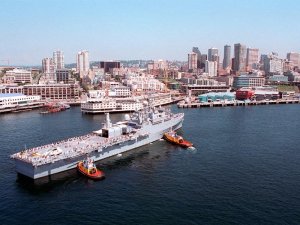
USS_Coronado_04AUG1999
USS CORONADO, AGF-11

Looking at old mementos this evening,  of my days in the Navy makes me feel, well “Well-seasoned”.  As I look back,  the ships where I was a crewmember are all now dismantled,  and sunk to the depths of the ocean.

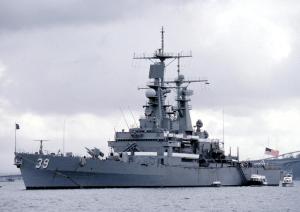
CGN-39
USS TEXAS, CGN-39

The USS TEXAS, a nuclear -powered missile cruiser was several firsts for me: first year at sea; designation as an Enlisted Surface Warfare Specialist (in 1991);  and Shellback.   I did enjoy living near Seattle for nearly a year – the ship was in drydock – before I was transferred at its decommissioning.  It was decommissioned,  dismantled and scrapped at the Puget Sound Naval Shipyard in the late 1990s.

I first fell in love with Canada – Esquimalt,  B.C,  and Vancouver aboard the TEXAS.  I visited, Ecuador,  Panama and cruised through the Panama Canal on that ship.

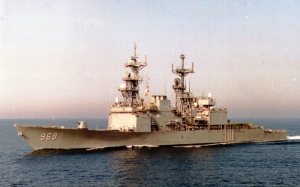
The  USS PETERSON, a Spruance-class Guided Missile Destroyer,  where I made friendships still strong twenty five years later, was decommissioned and sunk in the Atlantic.  But that’s the ship where I got the opportunity to visit Europe – Spain, France, Italy, Greece,  and Turkey, Bulgaria, Israel, Egypt, and island nations of Crete and Cyprus.  On the USS PETERSON,  I visited Panama and Ecuador a second time – was based out of the East Coast. (That has to be a first two-coast, two ship and back-to-back visits for any Sailor since that time!)    On another PETERSON deployment, we visited Nova Scotia.   Halifax has a friendliness towards seafarers of all sorts.

And from San Diego, the USS CORONADO, a special projects testbed, and command ship for the U.S. THIRD FLEET, took me to Japan, Korea and Alaska ( and Honolulu a number of times)  was decommissioned and sunk in the western Pacific.

DD969
USS PETERSON, DD-969

Equipment I used to maintain I found in a museum a decade ago.   Uniforms I wore when I first enlisted and then subsequently through 3 uniform changes have been sent to resale and thrift stores.  Occasionally,  I see a homeless person with one of the old pattern utilities and foul weather gear.

Memories are now appearing regularly on EBAY and other second-hand online stores.  But I have a few things that are still worth keeping.   shopping One of the last USS TEXAS calendars, postcards issued by the USS PETERSON, and pictures and challenge coins given to me by CINCPACFLT for earning Sailor of the Year for THIRD FLEET in 1998.  And my retirement shadow box lists installations that have either disappeared or been revamped, remodeled, and redesignated.

So in some future yard sale, should you, dear reader, happen upon a bunch of trinkets from an old Sailor’s box of mementos, enjoy them.  We can now Pinterest and Twitter and Facebook around the whole world.  But, trinkets, salt air and ocean waves are still analog.

Knossos, but no bull

kingminospalaceknossoscrete4

4000 years ago, the Minoan civilization, on what is now the island of Crete, was a thriving,  sea-going people.   The Classic Greek legend of the Minotaur, a half-man, half bull-like beast which is still being taught in universities today, was a story set in the Palace of King Minos at Knossos on Crete.  In the 19th Century,  archaeologists began excavating this site;  some of the buildings were partially reconstructed to show the amazing art and technology that they developed.   in 1994, I had the opportunity to see this site with fellow crew members of the USS PETERSON during a port visit.  One of the highlights for me was the world’s first flushing toilet, in the queen’s chambers.

I still laugh at one of the comments made by a young sailor on that trip. ‘What a bunch of crap, everything is in pieces”,  he said.

“Well, this entire site was buried in the ground for FOUR THOUSAND years”. someone responded.  “I wouldn’t expect it to be all standing at all.”

“Oh,  wow.”

Who knows what history would have recorded about the Minoans had not a little environmental disaster overtaken them.   Four thousand years ago,  in one of the largest volcanic eruptions ever,  the island of Thera, about a hundred miles to the north of Crete, vaporized.  The resulting tidal wave obliterated the Minoans.  According to history, the Bible, and other records,  elsewhere around the Mediterranean,   the Etruscans – who were the forerunners of Romans, the Egyptians, Israelite tribes all were impacted by the Minoans.

Sailors get around.   And that ain’t no bulls…”

a Scout is prepared

letters to my future self

Continuing to go through my mother’s papers, I have a number of letters that stir old memories of my days in the Navy.  You, my readers and someday my adult children will get additional understanding how little things can chart the course of your life in ways you cannot fathom.

Whenever I read or see a reference to the Boy Scouts of America, I recall a chance meeting and conversation that had a bearing on me.  (Forgive my nautical puns.) On a Greyhound bus ride in 1974, an old ( I was 14- everyone over the age of 30 was older) gentleman,  and I started chatting.   With the discovery today of his letter to my mother and me,  I know him as J. Harold Williams.  At the time, I had been in scouting for four years, starting when we lived in the San Francisco Bay Area and continuing when Mom and family moved to Cape Cod, Massachusetts.

20170429_123112
Scouting, Cape Cod, 1974 (me at l.)

In his correspondence he asked how my last advancement to Scout First Class had gone – I had been selected since our bus ride.   From a Google search today,  I realize how interesting that encounter had  been.  “Chief” Williams, at that time, was national Boy Scout Executive Emeritus, and the founder of scouting in Rhode Island during the 1920’s and 1930’s.  (We discussed scouting and stamp collecting among other things).  I might still have an book on Scouting he gave me that day.

Guest speaker will be J. Harold Williams, U.S. Scout executive emeritus, who will “tell the story of the Scouting trail” from 1910 to 1965. Described as an “eye-witness to history” In the Scouting movement. Mr. Williams will relate personal experiences including the movement’s birth, and it” progress over the last 55 years. Started at Age 12 Mr. Williams has been active in Boy Scouting in Rhode, Island where he first began Scouting as a boy at the age of 12, and was the first Scout in the United States to come up through the ranks to become a professional Scout leader. He was Scout executive of the Narragansett council in Providence, R. 1., for 45 years, after which he was elected to the position of Scout Executive Emeritus and now spends his time speaking throughout the country on the Boy Scout movement. He has been honored by universities, newspapers, civic organizations and veteran groups and holds honorary degrees of Doctor of Education from Rhode Island college. Master of Arts from Brown university and the Achievement award from the University of Rhode Island. —  the Bridgeport Post, March 23, 1965 (edited for clarity)

And I recall, he was the one who started me in stamp collecting.  My Aunt June worked at the United Nations, and had been sending postcards to me from all over the globe.  Till Chief Williams, I did little with these stamped postcards except dream of traveling.   Untouched for thirty years,  I still have albums of stamps stuck away.

On my honor I will do my best to do my duty to God and my country and to obey the Scout Law; to help other people at all times; to keep myself physically strong, mentally awake, and morally straight.

You Cannot Feel a Pumice Stone via SnapChat

After 57 years,  I have collected a lot of random stuff,  Over the years it has been easier not to go through the storage bins  in the garage.  My wife and I make Spring Cleaning “dates” when the settled dust is thick on lids.

It is probably easier to catalog my collection:

Childhood

  • program from my elementary school musical singing days
  • picture  – collared shirt, bowl haircut
  • blue “participation” ribbons (california!)
  • clay rabbit I made at  4 years old
  • a letter from my Grampa (“man”) to me before he died in 1966

High School

  • transcript copies:   two years in Cape Cod, MA ;  two years in Tucson, AZ
  • picture of me in a Revolutionary War uniform  (We got to carry and shoot black powder muskets!)
  • A few polished stones and pumice (rock collection)
  • Stamp collection of USA and foreign stamps
  • pocket knives

Navy (first time)

  • bootcamp yearbook
  • pictures of friends from the technical school at Great Lakes and Pensacola

1980s

  • college pictures with two groups of friends
  • sample of toilet paper, sugar, and wrapping paper from a college Soviet Union trip
  • ticket stub  from the Los Angeles PINK FLOYD concert (the Wall)
  • A scuba mask from scuba diving days

Navy (second time)

  • pictures in my cracker jacks re-enlisting at the new Navy Memorial (Plankowner)
  • certificates, several framed of ceremonies (Shellback, Golden Shellback, Panama Canal)
  • trinkets, cigarette lighters, jewelry and perfume bottles from Egypt, Japan, Greece, France and every point in between

Married life and family (2001 -)

  • youngest son’s baseball items from Little League All-Star selection
  • more random, but expensive,  trinkets – “ART”
  • travel mementos , mugs, coins, crafts