scrapbook letters

Sailors have more fun

Reading some of my old letters my late mother kept in her scrapbook, I appreciate jogging memories of my initial service in the Navy forty years ago. At the time, I was stuck in limbo, waiting on orders, waiting on a medical evaluation, and bored. I had spent eighteen months training for a career as an electronics technician in San Diego, in Illinois, in Florida and again in San Diego. When I had received an opportunity to attend the Naval Academy, a medical evaluation accompanying the selection board was possibly going to prevent that. In the meantime, I was assigned to support a correctional unit on Naval Training Center San Diego, to guard and escort sailors confined and others pending transfer to the Naval Brig.

“January 13 1978

I was paid this morning and I have finally got some money in my pocket after being in the depths of poverty for the last week. I’ve been keeping a budget book to account for every penny. Setting aside a $120 to send to you to save for me, I spent most of my last paycheck on a stereo receiver and headphones. I got a great deal as the stereo store said it was a trade-in and not brand-new.

I have been chugging away at BE & E. My Learning Supervisor is better at getting the material across to me than reading the book. And I am frustrated at the computer based training – that I am taking remedial tests every time.

Next weekend I am thinking of the YMCA’s military special to Disneyland – everything including bus ride and ticket, for $14.75…. “

When I read these letters I recall that my focus was split between very difficult technical training, spending money slower than earning it, having a good time, and the things a sailor thinks about: cars, girls, staying out of trouble, and so on. And taking care of my mom.

“February 18, 1978

…it’s been a week since I was home for that short visit…. I’m expecting to finish BE and E School (Basic Electricity and Electronics) in seven working days and then ice and snow! (I was scheduled to transfer for further training at the Great Lakes NTC north of Chicago) I have been trying to spend money and save it at the same time….

I bought two books ” How to Buy Stocks” and “How to Build a Fortune Investing in Land””

“July 3 1978

Class 7825C, ET/A school Bldg 520, Great Lakes Training Center: Thunder and lightning this weekend. Thank you for the ever-increasing moral support. It helps this “screw-up” when I seem to be trying and trying over these multiple -choice tests and I miss the question because I don’t put down my first choice but over think them! Why can’t I learn! Some solace in that I got my PO3 raise today. A whole $10.

Congratulations on your new friend and you both seem to be on the same “astral plane”. And my little sister has a boyfriend! She is growing up fast. I ran into a friend who is very close to a bachelors degree having taking a lot of courses through the CLEP tests. He’s looking at Officer Candidate School and making some career-connections with several officers involved in the program. He’s shared with me several of the courses and tests to take should the Annapolis thing not get accepted. Studying electronics harder will give me a mental breakdown. I need some thing different.

I looked at that Naval Academy application. I think they want someone who is a cross between O.J. Simpson and Albert Einstein, not me!”

In the year between my initial training in San Diego, and returning back to San Diego, I had been undergoing technical training and screening for a government security clearance. Between the training, standing watches, and liberty in Chicago and Milwaukee, I was also trying to figure out if I could afford a TransAm like one in the movie Smokey and the Bandit. It was nearly eleven thousand dollars. I couldn’t. I did learn a lot about weather. Playing pool in the barracks. Guys who were playing some role-playing fantasy called Dungeons and Dragons. A summer music festival at the Navy Pier in Chicago. And working on cars. Being in the best physical shape of my life while in Pensacola, Florida. Running several miles a few times a week that started from a dare between roommates in the barracks while attending CT – school. A circuit of the base, inside the fence was about four miles. We would run it twice a night.

“Letter dated August 2 – 5, and 8, 1979

Dear Mother,

It’s the second day of August, and in one day following the most insane twenty-four hours I have yet spent at TPU (ed: Transient Personnel Unit), I think I shall be ready for the funny farm very soon. 

Let me tell you some of the the goings-on at our “Hotel California”.  Yesterday, we got a new boatload of lunies (sic) plus one who is trying to put one over on us that he’s nuts, and he is getting my goat.

Another case is my boss Chief Heller.  His retiring soon and he continues to drop in on Bldg 23 if only to holler and cuss everyone.  It is just as if he’s giving out a daily dose of castor oil. 

Still another example was last night’s supposed-to-work-flawlessly relief of the day watch. A PO1(Petty Officer First Class) who knew he had duty never showed up, and despite all my efforts couldn’t be found anywhere on-base.  No one knew who I was looking for- even though he was supposedly assigned to the same working area!  So, as a result, an overworked PO2, a good friend of mine, was forced to stay all night as well as his morning workday.

In addition, I was forced to work late (a 13-hour day) which it turns out shall be my regular working hours.  It was either that or work 10 hours plus have an extra watch in TPU every three days.

August 3rd

Today was continued insanity when, in the early afternoon, one of our “mental” cases went berserk and smashed a wood-covered (barricaded) window with a chair. He demanded to go to the brig or he would do more damage! It’s a good thing I don’t sleep there- I don’t know if some night I might get my throat cut by one of these scumbags. 

Tonight I went to the PO Club with two friends, George, who works in the NTC Police/Decal Office, and June who also works there.  We all had a good time.  But what occurred later is interesting. Well, June got very drunk, I was sober and George nearly so. June had to be talked into being escorted to her barracks. George (who went with her) in her car and I followed behind in mine.  June wandered all over the road at speed and I sped up to catch her.  And out of the dark an NTC (Naval Training Center) police vehicle pulled ME over.  Luckily, he was a friend but since I was “rocketing along” at 20 or 30 MPH, he wouldn’t let me drive back to TPU. A quarter-mile walk later I was sober; June was the one all over the road – I’m sure the cop saw her.  That will be the last of my “good Samaritan” gestures.

August 5, 1979

Yesterday I finally bought the 10-speed bicycle I was [going to get you] shopping two weeks.   I’m sure you will love it, as a matter of fact I wanted to buy one for myself from the same people.  Now I have only one detail to work out and that is how to get it home.   Two possibilities are open to me, but I don’t know how much it will cost me to ship it, so if you don’t mind I am going to wait till I hand-deliver it.

 In other news I have been heartened by a lot of mail, especially yours and from Nana, but I’m going through a lot of ups and downs.  I’m almost at the end of my rope as far as this Restriction/ CC (Correctional Custody) “babysitter” job goes.  Today I got yelled at for these a@#$@#$ goofing off even as I have been trying to imitate Attila the Hun with them .

August 8th

I’m starting another entry in the ‘journal’ after putting the pen down for two days. I am just putting down thoughts as they come to mind. My mind is awfully screwed being run ragged.  I think I will drop this topic in favor of other topics to ramble on about.

Tomorrow I’ll begin packing a few things for the trip to San Francisco and I’m going to hopefully make a weekend out of it.  What is your reaction to the earthquake this week? It think it is about time for the city to fall into the sea?

It’s all a bit tedious.  I’ll hopefully be home sooner or later. “

Jerry Reed, Chicago Navy Pier; BEE barracks; Sears Tower, Chicago; New Orleans French Quarter; Gulf beach near Panama City, FL

These letters bring back some of the missing names – and the memory -recalling the faces of those Chiefs at TPU. These memories seem as fresh as having occurred yesterday. The more I recall of those months in school, in training, and time at the transient barracks, I am amused by the complaining, angst, self-righteousness, stubbornness, and shock of having to work long hours. In this particular letter, the reference to “Hotel California” my mother probably would have missed – her musical taste was stuck in the early 1960s and she never heard of the Eagles. But I was fortunate that my mother, who pursued a second career as a college English teacher around that time, and worked a full-time nursing job, never pointed out my ‘overworked’ complaints. As I look back after forty years of military and civilian jobs – on my youngest co-workers and their peers – their complaints about fairness, working conditions, and emotional safe-spaces are more their age than something “we” never did.

Rise and shine

28 And we know that all things work together for good to those who love God, to those (A)who are the called according to His purpose.  –Romans 8:28  (NKJV)

army authority drill instructor group
Photo by Pixabay on Pexels.com

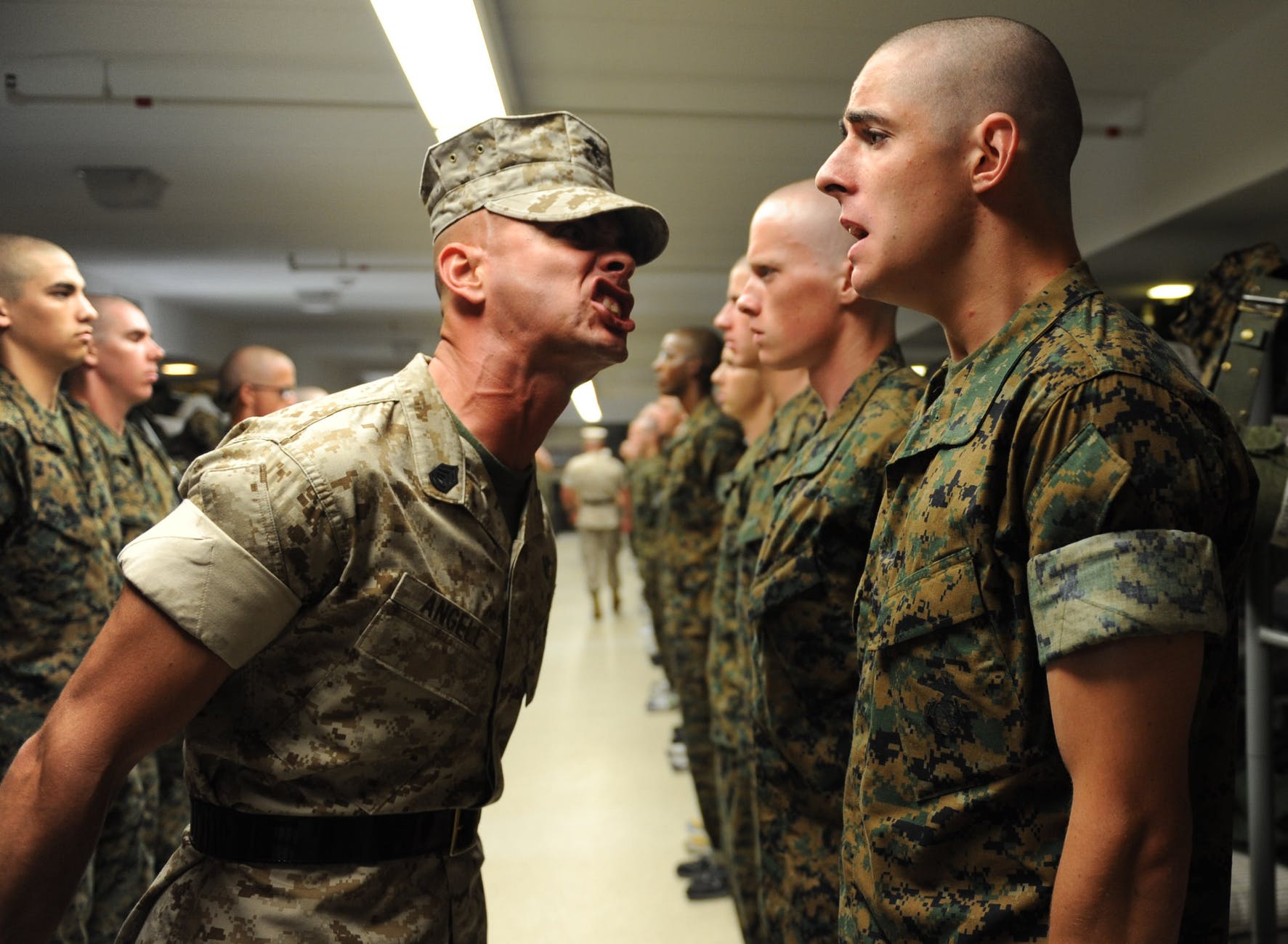
No Company Commander, nor Drill Sergeant ever whispered a gentle wake-up to new recruits in basic training or boot camp during my time in the service.   The whole point of basic training for recruits is to completely change mindsets and hearts to hear and obey, instantly, the calling.   It isn’t the Lord’s voice that one responds to the best of their ability,  but to His representative on Earth during that time: the Drill Sergeant or Company Commander.    The “encouragement” that a recruit, fresh off the farm, the beach, or the street  receives during the first several weeks of military service, instills instinctive responses, physical prowess, self-discipline, and a basic knowledge of the traditions, responsibilities and expectations of each member of a team.  At a certain point,  each military member makes the decision to embrace that way of  life,  engage fully, remain devoted, and give one’s best efforts to the team.   Or they part company, either expeditiously before the end of recruit training, or after three, four or more years.

 11 Light shines[a] on the righteous
    and joy on the upright in heart.
12 Rejoice in the Lord, you who are righteous,
    and praise his holy name.   –Psalm 97: 11 -12

For those who have been through the maturation process of military training,  and thrived,  the recognition of authority, wielding it,  and being instilled with a single-focused purpose of a spiritual life, is more natural.   I think that is why a lot of the imagery in the Bible, Old Testament and New, involves soldiers.  As a disciple of Jesus,  in my own life experience I understand rigorous training, discipline, and obedience to authority.  We have the tools, the teamwork, and the mission to execute.  But I am grateful that my christian missteps do not result in “marching parties”,  “demerits”,  or being found in the receiving end of some  “fan-room counseling”.

Thank God that Jesus speaks Truth in Love.  If we all respond to that,  the hurled trash can “attention-getter” in the barracks hall might not be a wake-up tool anymore.

When in little Moscow

American sailors on liberty in Pusan, South Korea before 1999 used to talk about going to Texas Street. Dive bars and cheap eats.

When I visited Pusan in 1999 while aboard USS CORONADO, I remember a Russian carrier in port. Russian bar girls. To avoid uncomfortable conversations, my shipmate and I had a line popularized by Steven Segal: “I’m just a cook!” Didn’t see any Russian sailors. But I picked up a few words in Russian.

красивая девушка

I don’t know what it’s like today, but I left there thinking the bar district had become “Russia Street”.

Learned a little bit about being stationed in South Korea. I learned how to order a Starbucks in Korean. “Grande Mocha”.

IMG_5618And I know not to enter any Asian establishment with a “barber pole” out front. Was told they were “massage” parlors. Wonder if they also do haircuts?

Foreign travel sure is educational.

Haze gray memories

All of us have in our veins the exact same percentage of salt in our blood that exists in the ocean, and, therefore, we have salt in our blood, in our sweat, in our tears. We are tied to the ocean. And when we go back to the sea whether it is to sail or to watch it we are going back from whence we came.
~John F. Kennedy , Newport dinner speech before America’s Cup Races, Sept. 1962

I have never learned to sail a wind-driven vessel, nor do I recall the difference between a sloop and a ketch. That said, it does not mean I have no familiarity with ships, storms, life aboard ship, or the special bond that seafaring men (or women) have as a crew at sea.  For eight years out of a twenty-six year Navy career, I was a member of ships company, on a Virginia-class cruiser, a Spruance -class destroyer, and a converted amphibious transport dock-turned-command ship (for the U.S. THIRD Fleet).  I have spent months at sea repetitively in the Pacific and the Atlantic oceans, Mediterranean,  and Caribbean Seas.  Perhaps the readers of this blog, merchantmen and military navymen (and women) have also looked upon Naples, Italy with Mount Vesuvius as a backdrop in the early morning.  As a Petty Officer on a ship that was one of the very first Navy visitors after forty years of the Cold War,  made port in Varna, Bulgaria. On deployment to enforce blockade of Saddam Hussein’s illicit oil trade after the Gulf War, transited the Suez Canal and made circles in the Red Sea. Like the apostles of Jesus two millennia ago, I walked the streets of old Jerusalem, visited Cyprus and Crete, Turkey and Greece.  Gazed upon the ruins of ancient seafaring civilizations four thousand years old.   I’ve ridden trains on a day’s liberty time as a Pacific Fleet sailor between Yokosuka and Tokyo, Japan,  and as an Atlantic Fleet one from Marseilles to Paris, France.

I must go down to the seas again, to the lonely sea and the sky, And all I ask is a tall ship and a star to steer her by, And the wheel’s kick and the wind’s song and the white sail’s shaking, And a gray mist on the sea’s face, and a gray dawn breaking.
~John Masefield

A man I have known casually for years at a place I have written about many times, Liberty Tobacco, a cigar lounge in San Diego, California, is another Old Salt.  We both have long careers in the electronics industry and worked at some of the same places in San Diego.   But tonight we learned that we have been to the same places underway on ships,  and to shore stations around the country.  Twenty-five or thirty years ago is a long time in an age where, in a social media-world, memories last minutes or perhaps hours till another attention-seeker replaces them.

We shared memories of the school buildings for our respective Navy trades being across from one another on the shore of Lake Michigan.  We were assigned to electronics schools ( perhaps five years apart) at the Great Lakes Naval Training Center north of Chicago.  And we both have been through the fire-fighting trainer in Norfolk, Virginia. This is a large complex of buildings built to resemble shipboard compartments where fuel-oil fires are set ablaze.  Into the heat,  dense smoke, and real danger, crews are trained to combat them,  and to become familiar with all the tools and roles needed to fight and preserve a ship.  At sea, there is only your shipmates to keep your vessel afloat.

Other memories of putting to sea on your first ship get dusted off and refreshed while talking.   The times standing watch on the ship’s Quarterdeck in the middle of the night alongside the pier in Italy, you can chuckle about the garbage barge alongside – with something moving (not human) in the shadows.  Or noting wharf rats the size of cats rooting around a dumpster in the dark at the head of the pier. And realizing what “rat guards” on your mooring lines are designed to block.

Memories of winter rain in Panama that will soak you to the skin in minutes.  One of the wettest places on Earth,  the year-round rain recharges the waters in the Canal Zone powering the locks on each end of the Isthmus.  Swapping stories of liberty visits in ports ten time zones away from home that are extended to a month when a casualty occurs.   For one it was the ship’s screw (the propeller, in civilian-speak).  Without a shipyard and drydock, this enormous thing had to be replaced underwater by specially-trained teams.  For the other,  when a gas-turbine engine has to be flown from the USA and replaced in the Netherlands Antilles.  Due to a prior transit in a freshwater river in the Northeast USA, killing the built-up marine growth – and then immediate transit to the Caribbean resulted in the cooling inlets for that turbine being choked by dead organisms and engine destroyed by overheating.

The sea speaks a language polite people never repeat. It is a colossal scavenger slang and has no respect.
~Carl Sandburg

While some of my friends have experienced sea-sickness on a harbor ferry in San Diego bay, and worn the medical patches when first putting to sea on cruise ships and small frigates,  these aids may become unneeded when accustomed to life at sea for months at a time.   With merchantmen and Navymen, the camaraderie of sharing shipboard stories,  having weathered hurricanes and strong gales in the mid-Atlantic and off the western coast of Mexico transiting from the Panama Canal, the memories seem only days old instead of a quarter-century.   My shipmates and I have marveled at the  different colors of ocean water, the patterns of currents, bright sunshine and placid seas turn gray-black and stormy within hours.  I’ve been concerned for brightly color birds alighting on our ship as we leave port and then been still there twenty miles to sea.  Crossing the Equator and the International Date Line,  as a Navyman I have been both Pollywog and seasoned Shellback during the traditional ceremonies of the “Shellback Initiation”.

And some of the other ‘initiations’ like standing a first watch on the bridge – learning to always check your binoculars handed to you,  especially at night.  Some salty Bosun’ mate (Boatswains mate) may have first smeared a little shoe polish in the eyecups.   Or being especially vigilant while  manning instruments and reporting conditions during underway replenishment.  Any sailor will acknowledge the gait at sea is unique, an adaptation to simply performing your duties while the ship rolls in heavy seas.   Huge waves breaking over the bow of your ship become commonplace.  Watching a smaller vessel in your group seeming to disappear in the trough of the waves and then pop up as the waves crash by.  While performing maintenance on deck, looking out and seeing a small sailboat, manned by an individual sailor, pass alongside hundreds of miles from shore.

The sea, once it casts its spell, holds one in its net of wonder forever. Jacques Yves Cousteau (brainyquote.com)

For the many who are serving or have served honorably in uniform, we have a bond that few understand.  For those who have spent several months, several years, or a working life,  at sea, we have another strong bond that years and decades later we recall clearly.   Perhaps it is indeed the stirring of the salt in our blood,  the sea spray on our skin,  and the experience of working together in times of routine,  in danger and in emergencies when we all realize just how we are and will always be, Sailors.

[quotes, except where noted, via writebyte.net ]

How Millennials Killed Mayonnaise – Philadelphia Magazine

In my email today I saw this story from my feed Pocket posted from the Philadelphia Magazine.  And perhaps it is my age, my nostalgia, or something about potato salad or tuna with mayo – real mayo that is,  but mayonnaise stories resonate with me.  Alas, in truth I also have succumbed to post -20th Century condiments.  The mayo that I do buy – is avocado-based!

via How Millennials Killed Mayonnaise – Philadelphia Magazine

deep waters

Anyone who has gone to sea for any length of time – and with a wink to my Coast Guard brothers and sisters I mean out past “ankle deep” (out of sight of the land) – knows the sea is vast.   And it really does not matter whether the vessel taking the mariner out is a sloop, a ketch,  a six-hundred foot Navy cruiser,  a thousand-foot aircraft carrier or nine thousand-passenger and -crew  cruise liner.  At some point, everyone realizes that we are but dots in the ocean.

For poets, scholars, kings, farm boys and  fishermen, the ocean casts a spell beckoning us to it,  and yet the depths and potential hazards have been a metaphor, even among land-lubbers, for danger and despair.  Who today has not heard or used the phrases “in over your head”, “you’re in too deep”, “the deep end”,  or being “out of your depth” to describe discomfort.

I sink in the miry depths,
    where there is no foothold.
I have come into the deep waters;
    the floods engulf me.   Proverbs 69:2 (NIV)

But getting in over my head was never a reason for me to avoid doing something.  I did  venture to sea, most of the eight years I was crew on 3 Navy ships.   Perhaps it was due to my early introduction to water.   I think I was learning to swim almost at the same time I was learning to walk.  My mother used to tell me how, as a toddler, I would venture off the step in the shallows of the community pool –  and her lightning-quick mother’s arm would shoot out to rein me in as my head went under.  I was a budding Jacques Cousteau.   As a young teen,  I took a class in Lifesaving, in order to become a lifeguard, and the instructor- as I recall it- tried to drown me simulating a panicked swimmer.  I punched him.  Later, in the Navy class on treading water, I never understood how some of my peers had never learned to swim.  I never feared putting my head underwater.  And in my twenties I obtained a SCUBA certification and spent some years going diving.

Still, I have a healthy respect for water whether it is gathered in rivers, large lakes, or the ocean. Perhaps it is due to my experience with lakes that appear deceptively shallow, or water that was particularly frigid on a very warm New England May day.  Or with currents in rivers, in saltwater marshes with an ebbing tide where I tried to navigate a little rowboat across.  And I’ve lost my footing in a shallow beach tidal outflow and been sucked out to the bay.

There is a magical quality to looking out at the sea,  and witnessing the deepening blue hue of the deep ocean, turn gray-blackish and whipped into white foam caps.  When a calm sea could become a violent storm in a matter of hours, there were some, myself included, who offered prayers of thanksgiving to Providence for never having been seasick . On a bright sunny day,  as the weather turns into a full-force gale.

The fishermen know that the sea is dangerous and the storm terrible, but they have never found these dangers sufficient reason for remaining ashore. Vincent Van Gogh  / brainyquote.com

In my childhood,  I was fascinated by nautical museums, sea captain’s two hundred year-old homes, touring lighthouses and old ships, steamers, and ferry boats.   And today I am blogging about such things now and again.   At my keyboard now  I remember the first work of fiction I wrote for a college literature class being a blend of all these memories.   And I quite clearly pictured Burgess Meredith as the crusty old Salt protagonist.

Dwellers by the sea are generally superstitious; sailors always are. There is something in the illimitable expanse of sky and water that dilates the imagination. Thomas Bailey Aldrich

Strangely, I never bought a boat after my assignments at sea ended.   While I have been on several since my career in the Navy ended,  I have never wanted to scrape barnacles, chip paint, or clean the salt-corrosion ever again.   But I still know port from starboard, and even on the maritime museum, the MIDWAY at the pier in downtown San Diego, I will still request permission to come aboard.  And I can wish for others a fond  time  getting  “haze gray and underway”.

CPO Sharkey


In 1977, I got off the bus from the airport at 0430 at Recruit Training Command, Naval Training Center, San Diego.  And my life has never been the same since.

Regardless of service, I believe all military members recall their bootcamp NCO. I certainly remember my Company Commander vividly.   Robert W Walsh,  ABE1, from north Florida.  Don Rickles might have modeled CPO Sharkey after him.  It is funny now to think how I was “Polack” to the CC,  and every other time some training command or support CPO would call out, ” Ssss—–” I knew they were refering to me.    ” it’s SA-RET-Skiii, sir!”

In bootcamp we were taught to call everyone “Sir” and if it moved, salute it.    But after we graduated and became, Seaman Apprentice, or Fireman or Airman, you would rather be stuck dumb and blind than call a Chief, “sir”.    There was always a colorful epithet attached to his retort (his, this was 1977)

“MY PARENTS were married, @#$@!”

“I WORK for a living,  @#$@! !”

“DO YOU SEE BARS on my collar?  @#$@!!”

And heaven help me,  with my nearsightedness,  if I saw two khaki-clad men approaching,  I was supposed to discern which, if either, had the insignia of a commissioned officer – on their cap or collar.   And that had to occur by a certain range as I was expected to salute.

I only screwed up in my first few weeks. With a Master Chief and a Lieutenant Commander.   The Master Chief’s response was far more “interesting”.  But with the officer, it was because I had NOT saluted.   He got over it.

The stride and bearing of a Chief, then as now, easily identifies my Mess Brothers and Sisters from an Officer at any distance.  And CPO Sharkey?  From this first episode, it brings back the memories of my formative days in the Navy.  He finds it ridiculous that sailors get bunks, mattresses and curtains.  And there is a part in this show when Sharkey is in disbelief that women might soon serve on ships.  In reality, about that time women had just entered the Naval Academy.   Then, in the 1980s, auxiliary support ships, tenders and others were integrated (genders).  And warships?   when female crew were first assigned to the USS PETERSON in the early 1990s,  I talked with a few of the Snipes about the prospect.  Once I proposed the idea in relation to more generously balancing each rating’s sea -shore rotation assignments,  my shipmates became all for the idea!

As for bunks and curtains?  I sure sounded like Sharkey when I heard about the redesigned berthing compartments, larger mattresses, lighting and space on our newest ships.   Has the Navy gone soft?!

Too funny.

VADM H. Denby Starling, II — honor365

Vice Adm. (ret) Starling began his last assignment as commander of Navy Cyber Forces at its establishment on Jan. 26, 2010. There he was responsible for organizing and prioritizing manpower, training, modernization and maintenance requirements for networks and cryptologic, space, intelligence and information operations capabilities. He concurrently served as commander Naval Network Warfare Command, where he oversaw the conduct […]

via VADM H. Denby Starling, II — honor365

Takes one to know one

The last time I boarded a vessel the size of the Allure of the Seas, it was gray and I was an enlisted volunteer(ed) carrying equipment. While an aircraft carrier does not deploy lounge chairs nor launch aircraft, on this voyage, my wife and I saw divers launch into a pool several decks above the waterline. This was all part of an entertaining acrobatic and sychronized diving show.

However, the most entertaining part of this trip has been having brief conversations with passengers who are fellow veterans. You see, I wore my “Retired Navy” ballcap boarding in Florida and disembarking on our first port of call. From the first greeting in the line with a retired Bo’sun while getting registered at the embarkation terminal, to the Air Force vet my wife and I sat with at a dinner, to the Navy Vietnam Nam-era airdale, there have been a lot of quick greetings and instant recognition.

” I can recognize veterans”, one Navy wife said.  I think she actually said, she could “smell ’em a mile away”, but I knew what she meant. I think people who served have an instant kinship. One of my fellow passengers, a man and his wife about half my age went snorkeling with my buddy, me and four others at our stop in Haiti. He smiled knowingly, when I remarked how cool it was to be zooming away toward our dive spot in a RHIB. Most Navy people recognize this acronym as Rigid Hull Inflatable Boat. Yet I think he or possibly his wife, was Dutch or German.

Yeah. The folks who are frequent cruise vacationing people also seem to have that camraderie. Many start around our age. I think cruise veterans and particularly Navy veterans get the best new sea stories to swap with one another from trips like this. It does “take one to know one”.

(Image) The last time I was off the coast of Haiti (USS PETERSON)

“when it’s time for leavin’ “

Lord, I was born a ramblin’ man,
Tryin’ to make a livin’ and doin’ the best I can.  – Ramblin’ Man, 1973)

American music lost another icon.   Tonight I read that Gregg Allman, a founder of the Allman Brothers Band,  died today at age 69.   By the time my musical taste broadened from the British Invasion,  Beatles Rolling Stones,  Elton John, the Who to Southern Rock, I was 18 and enlisted a year in the Navy.   My barracks room -mate, Ferdinand W,   was another enlisted Navy technician, a few years my senior at the training command, Great Lakes.  In the early morning hours, he would be returning from liberty (we had a rotating duty schedule and class) and usually wasted (very drunk).  He wrecked his sportscar, on base, on one of those binges.  But I remember him mostly for the southern Rock he listened to, and the squeeze box (concertina) he would play along.  A broken ankle from the car accident kept his partying subdued- and the while the Navy was investigating the incident.   download

When I was given orders to the cryptologic maintenance school at Fort Gordon, Georgia in 1978,  I had gained a little exposure to Southern rock- music of Lynrd Skynrd,  the Allman Brothers, Molly Hatchet, and Marshall Tucker Band.   About the time that the Navy students in my class were earning top marks, which gave us some early liberty ( we attended an evening schedule of classes) several of us found a small club in nearby Athens, Georgia that must have been named for the Allman Brothers’ song,  the Whippin’ Post.    Many live bands played there.  I remember one Saturday night,  whether a cover band – or the actual Lynrd Skynrd (I don’t recall) played there.  One guy kept screaming “FREE BIRD!!” In forty years, I forgot about those times when you could sit in a club twenty feet from bands that defined a rock era, and then next weekend do it all again.   But history dims with time.  I read a report from 2013 that the long-closed club was torn down.

May memories

A lot changes in forty years. In  May, 1977,  prior to my departure for Boot Camp at Naval Training Center, San Diego in October,  I was graduating high school.   Jimmy Carter was President, a fact that I thought, being a former naval submariner officer, would make him an excellent leader.   People didn’t want Gerald Ford as he had pardoned ‘criminal’ Richard Nixon, but I remember him for sending in Marines to retrieve the Mayaguez, which had been seized by the Khmer Rouge a month after the last battle involving U.S. troops of the Vietnam War.

In those last two years of the Seventies,  the Zumwalt-era of loosened grooming standards – longer hair, mustaches and beards worn by Sailors were okay.  Dungarees (bell-bottom style) and dixie cups, were the working uniform.   Pot was a problem on military bases including San Diego.   A community that now is marked by the upwardly-mobile, well-heeled beach crowd, Ocean Beach, was then a place where druggies and ex-military,  tattoo parlors and bars were less restrictive than up the coast near the UCSD campus.

A visit over the Coronado Bridge to the Naval Station Coronado, where carriers were berthed was my first view of a ship – the USS Recruit was a wood and metal reproduction on the Recruit Training Command, to introduce us to naming convention, etc – so did not count.  The ‘aroma’ of the interior of the USS Kitty Hawk was the first ‘knock out’ that I will never forget.  Jet fuel, grease, human sweat, urinals and generally,  the stink of at times, 3500 men (no women then) wafted fresh new sailors who had more recently been accustomed to PINE SOL clean scent.

At the time, I was a student learning to work on complex electronics and mechanical maintenance of teletypes.  Where I now cannot see without at least one or two orders of magnitude, I was able then to discern two from three centimeters adjustments.  The instructor was quite ADAMANT about that ability before graduation.   We had Iranian military students – this was prior to the Iranian Revolution – and when they were recalled by their government,  we were relieved.   Suffice it to say that American and Iranian hygiene were on different tracks.

In May of 1982,  with several of my fellow Russian Language students and the professor – I was able to travel  to Russia – prior to the end of the USSR (1989) – visiting cities – St Petersburg, Moscow, Kiev and Tbilisi.  If only for all but one – a socialist-  the trip was very informative and probably saved them and their future families from the ‘snowflake’ sensibilities, the mantra of “coexistence” and “socialism’s great”.  The people may have been interesting and interested, but the economy was a shambles. Ambition was reserved for the underground economy — some of whom are today’s Russian millionaires and billionaires.

In May of 1984,  I had been out of the Navy four years, attending the university in Tucson, Arizona.  Four three of those four years I had been actively involved in the Veteran students organization on campus,  and while peers were pursuing commissioning programs,  I was looking toward a government job after graduation.  Strangely,  in my second year after graduation,  when my graduate school plans went unfunded – I re-enlisted in the Navy -Reserve – that is.  The entreaties of one of my friends finally had me join his unit, only to see him quit!

After petitioning to resume an Active Duty career in 1987,  the next major May milestone I recall was May of 1997 when I was transferred from Norfolk, Virginia to San Diego, California.    1970 Dodge Chargers, if you could find one in decent shape were then ten thousand dollars or more,  homes which had been an unheard of, eighty thousand dollars – for an ocean view, were nearly eight hundred thousand,  and NTC was closed but for a few administrative medical functions.

And in the twenty years since that time,  friends and mentors went to war in Afghanistan and Iraq,  the Soviets became Russian trade partners, the Chinese became the world’s second-most powerful economy, the Islamic world tried to separate the economic need for the non-Islamic world – from the ideology that wants to reduce infidels to ashes,  and we are again at some form of odds over military preparedness against the adversaries that were no longer adversaries?


Red Sky in the morning….

There’s an ancient mariner’s rhyme that says, “Red sky at night, Sailors’ delight; red sky at morning, Sailors take warning”.  From Wikipedia,

It is based on the reddish glow of the morning or evening sky, caused by haze or clouds related to storms in the region.[2][3][5] If the morning skies are red, it is because clear skies over the horizon to the east permit the sun to light the undersides of moisture-bearing clouds. The saying assumes that more such clouds are coming in from the west. Conversely, in order to see red clouds in the evening, sunlight must have a clear path from the west, so therefore the prevailing westerly wind must be bringing clear skies.

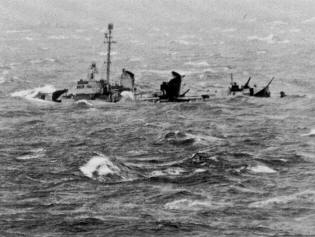
Talking with a elder friend and mentor this morning,  Jack related a story how, as a Navy man fifty or more years ago, he had been a Tin Can Sailor ( alternately known as a destroyerman)  on a World War II-era ship.  He had been a yeoman and the Captain’s bridge talker.   Jack relished telling me how he had been selected for that job by the CO as he could translate the southern drawl of the Engineering crew muddled by ship’s intercom system.  And he loved to share with me the story of his ship taking 40 to 50 degree rolls in a Pacific storm they rode out for a week.

1944_12_17_unk_dd_700x
A ship of Task Force 38

I too, was blessed with a strong constitution, riding out a few violent Atlantic storms in the destroyer PETERSON, ( launched in the 1970s) where most personnel not on the binnacle list,  were at their positions with barf bags at the ready.   I do recall the one or two times I foolishly ventured on the upper deck by our workspace – the “Oh- three”  (03) Level, to witness the power of the wind and the waves.  Metal bent or was torn away by the power of the sea.   Fortunately with modern navigation, we did not ride through the center of these storms where the waves were reportedly fifty feet high from trough to crest.

typhoon20cobra
Typhoon Cobra

I started to think what the Sailors of WWII dealt with – battling the Japanese in the Western Pacific and typhoons.   On a website this morning,  I discovered that an error underestimating the weather put a heavily armed Task Force, with some top-heavy ships directly through a violent typhoon – Typhoon Cobra –  with fatal results.   Ships were heavily damaged, some capsized and sank with hundreds of men lost,  and generally raised more havoc than the enemy they were to battle.