Treasure Hunting: Memories Behind Every Item

One of our family’s traditions every January (besides my spouse searching for, and acquiring outdoor Christmas decorations at a discount) is taking several boxes of used clothing, housewares, exercise equipment, and knickknacks to Goodwill or other donation center. The only things I do not part with are contained in 3 black and yellow tubs stacked in the garage. Some of these I acquired during several moves around the country as a child and then later, during 30 years of a Navy career.

Everyone has a sea story to tell

Often, I bring back interesting stories when talking with volunteers at the donation center. This week, I chatted with a guy who had been ‘mentored’ by Frank Zappa in his youth while a musician in a recording studio. “It is so amazing that records (we called them LPs) have outlasted cassettes and CDs. I still have several thousand albums in my collection.” Working at the Goodwill, the option to find unusual items related to his history is probably a perk.

Reading a story online about the making of the second “Top Gun” movie, it remarked about the original movie’s technical advisor Pete “Viper” Pettigrew, an original Top Gun instructor. I was fortunate to meet him several years ago aboard the Midway museum in San Diego. “You should consider being a docent here, Chief”, he told me. ” You can tell (the same) sea stories to visitors every day.” While my wife has heard or lived many of my stories, I have yet to tell them to our adult children and grandchildren. Still, when our eldest son spent four years in the Army, he would call home to talk Army jargon to his mom; she would hand the phone to me and we would converse using the “army-navy jargon” translator all veterans know instinctively.

As I go through my collected mementos, decades-old memories come back vividly. And it is for this reason, I have a difficult time parting with even ticket stubs. (I still have, somewhere, ticket stubs from the 1980 Los Angeles Pink Floyd “Wall” concert.)

One man’s trash is another’s treasure

Every January, as I toss out old appliances, irrelevant papers and tools from work my wife and I no longer have need, and things neither of us remember buying, I take some time to look through my “memorabilia”. When I rotate through the bric-a-brac, displayed in a cabinet by my writing desk, I remember the places and people I met when I acquired them. Unfortunately, some break into pieces while using them over the years (mugs and glassware from my travels); some have gotten lost (letters I wrote my late mother during various deployments), and the rest I rediscover in random corners around the house. Other items I know to be fragile antiques, but “heirloom” is a far-fetched label for a fragile Bentwood rocking chair, old monogrammed silverware, military badges, Egyptian papyrus, or Irish wool blankets.
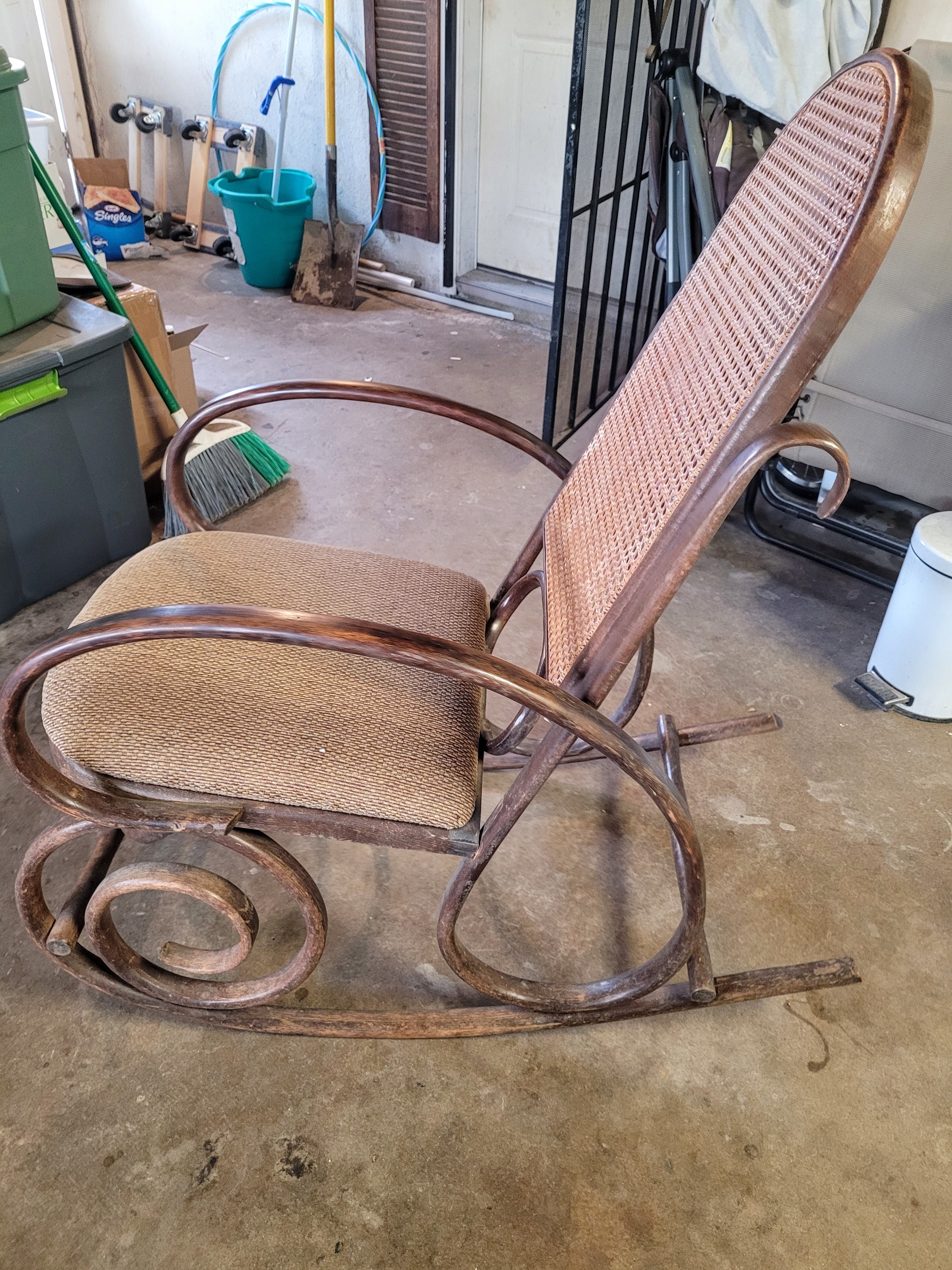
The Bentwood rocker, a butter churn, iron tools, glass medicinal bottles and scraps of a charcoal drawing have come to me after my mother passed. Some fifty years ago, when my parents divorced, I was moved from California to Cape Cod, Massachusetts. The home my mother bought together was originally built in 1745, and later became the studio for a famous muralist of the late 19th Century, Edwin H Blashfield. Predating Indiana Jones by ten years, I became an amateur archaeologist, uncovering odd items buried in the soil under a centuries-old barn. When we moved yet again, after my Sophomore year of high school, to Arizona, I convinced my mother to moved a 1930’s era Zenith radio with us. While it worked for a time on the Cape, finding vacuum tubes became difficult. I did not know then how to repair electronics or rewind coils. That was one of the influences that lead me to a Navy career in electronics after high school. Unfortunately, long before my mother passed, the radio innards and the cabinet disappeared.

image of a similar model to what I once had

Heirlooms only have value if there are interesting stories attached to them. At the moment, our grandchildren are more focused building things with magnetic tiles, splattering paint on bits of cardboard, and enjoying snacks at Pop-pop’s house.

After a year sabbatical, I am committing this year to putting memories online, so my children and grandchildren can look at images and stories and if interested, keep a few items out of the January trips to the Goodwill store – or the trashcan. If you have not given up on an old Chief, I hope the readers of this blog will stay with me.

help, Mr. Peabody!

In many television shows and movies during my childhood, the idea of using a time machine to travel backward was a solution to many problems and answered many questions. The cartoon “Peabody’s Improbable History” featured the adventures of a genius, Mr. Peabody, and his boy, Sherman. They travelled back in history to visit various people who, but for Mr. Peabody, might not have been immortalized for developing inventions or theories. Did Mr. Peabody visit Pythagoras? A true story about translating a Babylonian clay tablet, discovered a hundred years ago, indicates the “Pythagorean Theorem” and trigonometry were used fifteen hundred years earlier than the Greek we credit.

A movie and several television episodes of Star Trek featured time travel, but one (All Our Yesterdays), has Captain Kirk and crew investigate a planet whose population has vanished ahead of their star about to go nova. In the episode, a timekeeper sent everyone backward in time to live out their lives and avoid obliteration. In our history, myths of ancient civilizations like Atlantis or Homeric tales that proved later to be true, indicates history repeats itself. With nations today always on the verge of destroying one another, nuclear war is more real than our Sun going nova- at least for the next 4 billion years. However, we have just reached the milestone sending human-made inventions beyond our solar system’s limits (Voyager 1 and 2). An achievement a half-million years in the making.

Paleontology and genetic research suggest that modern homo sapiens might have out-competed homo Neanderthalis to inherit the world. In recent years, the discovered remnants of presupposed modern construction techniques nearly a half-million years old suggest we may repeat history over and over again. Discoveries of enormous cities reclaimed by the Amazonian jungles, Bronze Age religious sites drowned by the sea, and Roman roads and aqueducts demonstrate a modern knowledge of science (astronomy) and construction techniques. Perhaps, like the conquering Spanish conquistadors in the Americas, or the Near East Babylonians, Assyrians, Persians, Greeks and Ottomans, might humans repeatedly destroy libraries that housed knowledge it then takes millennia to relearn?

Mr. Peabody, we need you.

On the road

My wife insists that a road trip I am currently enjoying would make an entertaining video. She was intimating that she should have put a camera in the vehicle, so our friends back home could enjoy colorful jabs we were bound to make during the ride. We have made these at each other’s expense for decades. When I first suggested riding along with Russ, I protested to him and my spouse at game night, “It is not that I want to go so much, as I want to make sure Russ crosses the state line and keeps going.”

“Your wife will enjoy a peaceful week without you around. I’m the giver here,” He retorted.

He and I, two retired Navy Chief Petty Officers, drove fifteen hundred miles together from San Diego to Norman, Oklahoma in April. This would be both my first time RV’ing and first time making a road trip with Russ. I had asked to accompany him back in February, and he had quickly agreed. Together with our wives, we had been close friends for two decades, serving together in our community church, enjoying shows, concerts and other events together. From our earliest days, he would greet me Sundays, “Hey Old Man” and I would retort, “Respect your elders!”. We were exactly six days apart in age. “But you are, and will always be older”, he would say.

That I retired as a Senior Chief Petty Officer, which in the military paygrade was E-8, and he a Chief, or E-7, was always a running source of amusement. “That is exactly what I would expect from an Even Number.” I would generally follow up with something about him being odd. For the last several years, we would only pause our characteristic jabs during church or our small bible group meeting each week. After his wife passed, his neighbors, my wife and I spent Friday evenings playing Mexican Train. (It also could have been an excuse to drink margaritas but we never made excuses.)

Fast forward to this year. With his house sold and a new one under construction in Oklahoma, we were on the road moving him back to his Oklahoma roots, daughter and grandchildren.  Our first stop was to visit his friend during a stopover in Las Vegas. Where many would think casinos, we instead visited the Pin Ball Museum together.

The pinball museum has hundreds of operational machines – and many that need repair. This was sort of a pleasant memory for Russ as he had repaired many of those 1960 -1980s era machines before his Navy career. Playing several games, Russ casually reminded me that I might be dropped off somewhere in Nevada, if I continued to win as handily.

In Las Vegas, it always takes an edge to get into exclusive places. Any good Navy Chief knows how to get things done, in uniform or in retirement. And so we had an “in” to get a table for a great dinner at Top of the World Restaurant at the Strat. (Of course, now that my wife knows, I will have to go the traditional route to make reservations for our next anniversary,) We also had tickets to the Cirque de Soleil Michael Jackson tribute show, One. And now, that my wife also knows this, I will have to scramble to get two tickets for this phenomenal show as well.

The next day we got out of Las Vegas a little later than planned. I had to walk our other passenger on this road trip first. Our other passenger, Karma, is Russ’ dog, the sweetest roly-poly pittie dogs any . Oh, and we had a little electrical problem that needed attention. Though we had made an art of good-natured ribbing each other at every opportunity, we barely traded a barb, “You doddering old man. Can I get your walker?”

Instead, the twenty-something hours of driving across three states was spent with the fictional adventures of Mike Rabb, a former CIA special operator, as he tracked down megalomaniacs and world-destabilizing villains. These audio books kept us focused while we drove through Arizona, New Mexico, Texas and then into the Sooner state.

We arrived in Norman in time to catch a little nap, meet Russ’s family and catch a rare celestial event over this specific part of the country, a total solar eclipse across the central U.S.

So this week is a vacation and perhaps an opportunity to invest in some property. And catch up with a little sarcastic bombasts.

for amusement only

Any discussion today about the future of society, in peace or in wartime, or the future of art and entertainment, or scientific discoveries seem to include Artificial Intelligence or AI. Yet just as the ancient Greek story of Prometheus, punished for eternity by giving the secret of fire to mortals, we mortals are hell-bent on discovering and distributing ever-more sophisticated means to curb our curiosity, intellect, creativity, and human interaction.

I read online that AI can now deliver various sorts of creative solutions, including drawings and even blog posts. I decided to make a simple test. These drawings were produced by a web application in response to test queries I made using Microsoft Copilot. For the first drawing, I gave Copilot a few parameters such as the blog name on a scroll and sea-god Poseidon. After being a bit more structured in my defining parameters, Copilot returned the latter drawing.

I do not think I will be amused if Copilot starts to independently publish posts on this blog based on my Internet history.

Remembrance

Twenty-two years ago, we watched in horror when terrorists killed thousands, using airliners as weapons. I lost a former shipmate and mentor, CDR Dan Shanower, at the Pentagon that morning. As a Navy Reservist, several of my unit members were recalled to Active Duty that first month, beginning a campaign involving thousands of servicemembers -the Global War On Terror – that concluded twenty years later. What veterans look upon as “moral injury”, that the bloodshed over decades conclude in a wasted effort of politics and trillions of dollars spent, we must reassure ourselves. As veterans we did our duty honorably. Our fellow veterans -Americans, Allies, Afghan and Iraqi partners, Kurds, and others helped squash terrorism globally. All of us suffered loss. The lesson we all should learn is that conflict between differing politics, cultures and ideologies has always and will continue, to fester. Only unity creates a strong defense against hatred and tyranny.

Yesterday, September 10th, was national Suicide Awareness Day, and I volunteered to help the organizers of a Remembrance Walk in San Diego. Hundreds of people who have lost loved ones, colleagues, or friends come together annually to support one another, and to help spread awareness so that others will have tools and resources to help those contemplating suicide. There were groups and agencies present, informing us that aid is available to the suffering. As many know, the horrors of war, horrific accidents, murder, physical and mental abuse, addiction and apathy are conditions for veterans, family members, school children and First Responders to contemplate suicide. As many have learned, painfully, those who seem to be strongest under such conditions, are themselves suffering and in need of support. Only an engaged, educated and empathetic community creates a strong defense against self-harm.

Ed. A future post will publish various San Diego, as well as national, resources for veterans and others to obtain emotional and physical help, help prevent suicide, and to build community.

sea stories and the Costco connection

For a veteran’s spouse, a trip to get groceries may take a little longer than planned. It has become de rigueur for me on casual outings to wear one of my Navy veteran ballcap collection or t-shirts that recall a 25-year career. Several of my friends today are veterans; however, among millions of San Diego residents there are only a few with whom I share a specific place, time and mutual acquaintances where we served.

I added another last week.

During a shopping trip at Costco, when I excused myself passing a “Shipmate” wearing an “AD-19 Yosemite” ballcap, it started us swapping sea stories. He served at sea on that destroyer tender. I recalled a Machinery Repairman at the Transient barracks who was waiting on orders for that tender. Then we talked about bootcamp. A few years my senior, he was a Recruit Training Company Commander in San Diego at the time I went to Boot Camp here in 1977 and knew my “CC”. As we talked, I was reminded of several others I last talked with decades ago from those early years in my career. But this was the first time in more than forty years, I talked with someone from that period of my life, who knew the first Sailor who shaped my Navy career, Company 941Company Commander, ABE1 Robert Walsh.

Lessons from Manzanar, part 2

Human Rights and the public good

At the visitor center at Manzanar National Monument, my wife and I spoke with a docent about a book of images available at their store There were images that Ansel Adams, the famous photographer of landscapes, had taken of internees over the years. Apparently, another famous portraitist, Dorothea Lange, also had taken a series of images that captured the human pain more succinctly (only such images that reflected positively were published; the others, subsequently, were not released publicly by the Government). Forty years later, after incremental policy reversals and President Ronald Reagan publicly apologizing to survivors and descendants, these sites were turned into monuments to make future Americans remember.  However, racism finds other targets.

 “After the attacks of 9/11, when people angrily singled out people wearing Muslim headscarf”, she said, “it was the Nisei – the children of those who had been in the relocation camps, who defended Americans of Mid-eastern decent.” They did not want the painful lessons of the past to be repeated.  She identified a child’s photograph on display there in the center, from the Manzanar camp, as one who defended a Muslim woman after September 11th. Like the refugees of the last few years who fled civil wars in Libya, from ISIS in Syria, crossing the Mediterranean and interdicted in Greece and Italy, Ukrainian women and children fled the Russian invasion there. With these emigrants joining those who have been resettled in several countries including the United States, the competition for services only gets more competitive. However, these recent immigrants are learning valuable skills to support themselves, notably in healthcare, which after the global COVID pandemic have seen a large need but few new workers among the native born. In the fifty years since Vietnam, Americans of Vietnamese ancestry hold public office. Americans of Philippine ancestry serve in the military and in public services. Americans of Middle Eastern ancestry hold public office. Americans have elected and reelected a black President, Vice President, congressmen and mayors. However, the public is still being persuaded through government institutions and media conglomerates that racism is the single most prevalent problem in America.

Lessons from Manzanar

For what they “might do”

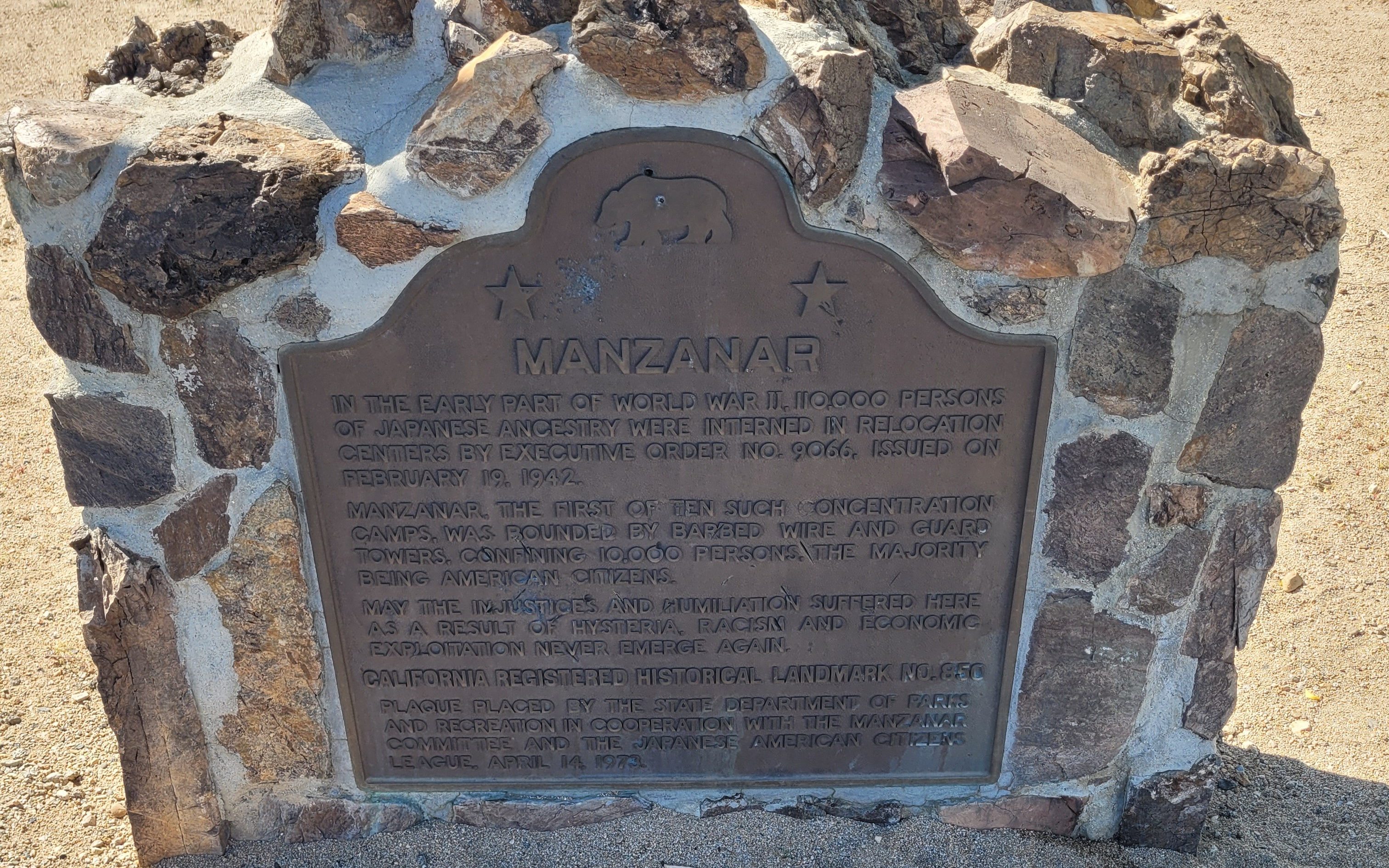
A road trip north of Los Angeles on Highway 395 went past a monument to one of the ugly chapters in Twentieth Century history: the Manzanar War Relocation Camp where eleven thousand Americans were imprisoned during World War II for what they ‘might do’. It was one of ten such concentration camps in the American West incarcerating 110,000 men, women and children. Here, in the Owens Valley of California, the Eastern Sierra Nevada mountains present a stark contrast of geologic beauty and human shamefulness. The United States Government, abetted by local politicians and the media, unconstitutionally deprived Americans of their rights without due process. With racist laws in western states, particularly in California, people of Asian ancestry were prohibited from owning real estate or businesses.  While incarcerated in these camps, these men, women and children were publicly humiliated, lost property (through unpaid leases and property taxes), and forced to live in dusty, cheaply constructed conditions.  During the war, these people were subjected to “loyalty interviews” and eligible men were expected to accept being enlisted in the military to prove themselves. Once FDR realized that the Supreme Court was going to hear a case that would publicly shame him and the policy of internment, the Government initiated a plan to release the internees, comprising $25 payment and a bus ticket to another inner part of the country.

To be continued

Port o’ Call: Cape Canaveral, Florida

Performing a maintenance routine for equipment topside on the USS PETERSON as it arrived in port on a sunny Spring morning thirty years ago was actually fortunate timing. We were just tying up at the naval pier not far from the launch site where NASA’s missions to the moon had flown. But that morning was an unexpected treat. At nearly the same time as we moored, a Space Shuttle roared off the launch pad.

I had been a fan of space flight ever since I the middle Sixties when I had watched the Gemini and Apollo launches on a television wheeled into our elementary school classroom. In the 1980s, I had been with a group of college students touring the Johnson Spaceflight Center near Houston during a national convention of the Theta Tau engineering fraternity. Living in Tucson, Arizona in the early Eighties, I also saw an early Shuttle (the Enterprise(?)) being flown piggyback on its modified 747 airline as it routed through Davis-Monthan AFB on the way back to the Cape. And in four years prior to my assignment aboard the PETERSON, I was stationed in the Washington DC area, where one of the tasks our department performed was to install a mobile van with equipment to communicate with the Shuttle as it orbited the Earth during a particular mission. Being in the Capitol region also gave me opportunities to visit the Air and Space Museum where visitors could walk into a mockup of the first orbiting space station, SkyLab, and to see many exhibits, including items returned from the Apollo Moon missions.

With my grandchildren not yet old enough to appreciate the excitement I felt watching spacecraft launching toward the Moon, I am glad that the first ARTEMIS mission to the Moon is still a few years away. Perhaps when they are my age, they will not have thirty- or fifty-year old memories to recall when we reached for space.

Ask the Chief: an entrepreneur never ceases learning new things

Becoming self-employed is not as difficult as keeping your enterprise healthy (and hopefully profitable) a few years later. A few decades ago, my venture into self-employment did not account for the market changing, making my side gig unprofitable almost at the start (consumer electronics and small appliances became cheaper to replace than repair). Fortunately, during the ’90s my Active Navy service provided a decent living for a single man. In 2001, I married shortly after I became a Reservist. That Navy Reserve income plus my civilian job kept a roof over our head, children fed and contributed to our retirement savings. However, when I turned sixty, my wife and I decided to start a business. It was a niche opportunity that she and I both were suited to fill. Before “burning our boats” and committing to self-employment fully, my wife continued to hold a jobs for several months.

keys to a successful enterprise

The first advice we had learned years before, was to not stop working for someone else until we had continuing income from our new project. Additionally, receiving a small pension from the Navy beginning that year allowed us to keep the dream going. With most of our income servicing businesses in a segment of the healthcare industry, And then, the global pandemic caused businesses to falter and many to fail. But the fact that nursing care and supplying new nursing workers was “essential”, kept our business services fully engaged. And now, after four years as an entrepreneur, the small business my wife and I started has regional and national clients.

a business mentor

While together we had years of expertise in various aspects of our services, developing a business plan, obtaining financing, organizing, then streamlining the infrastructure, cutting costs and determining how to be more efficient in operation took shape over a few years. While experience is a great teacher, and failure often breeds a “never quit” in those whom are destined to be successful, it is easier for entrepreneurs follow other successful entrepreneurs, including having a mentor or coach who is trusted to give constructive criticism as well as advice. We took advantage of resources available to get our business started by getting needed guidance from the Small Business Administration (SBA). The SBA funds advisers to help entrepreneurs, at no cost (the local offices are funded by the government) in many communities throughout the US. Other resources exist including a national organization of business professionals who volunteer through SCORE, conducting seminars and mentoring small businesses. And businesses can find assistance through networking in local Chambers of Commerce and Rotary Club.

formal and Non-Traditional Education

Formal education may be an option though challenging for the self-employed. Several sailors when I was on Active Duty, attended classes which were paid for by Tuition Assistance. Reservists and veterans used the GI Bill, and veterans with certain VA disability ratings were able to complete baccalaureates or post-graduate programs tuition-free. For most who intend to be self-employed, it comes down to what is required by a particular industry, and what the market dictates is required to be successful. In a technology sector, a self-employed engineer often must have a certain education level and industry-recognized certification to be a contractor. A welder who demonstrates the requisite skills, may be fully employed without a college degree. Continual education, through reading, attending seminars, participating in industry conferences and sitting on corporate boards, never ends for a business leader, or those who are working toward self-employment. Many universities offer continuing education programs, for executives, managers, and entrepreneurs, online, off-campus, and in evening and weekend formats. (Peers at my former employer gained various Program Management Institute credentials through such training and passing a certification exam.)

Informally, I know several who became successful through intensive preparation by reading textbooks, trade publications, study guides, and practicing in home workshops and computer labs. They passed certification exams easily, found employment, and with additional skills, became employed at higher levels of responsibility until becoming entrepreneurs.

education for the self-motivated at low or no-cost

For the last twenty years, a cooperative project between universities and the government has made thousands of college course available online tuition-free. Recently, I accessed MIT’s Open CourseWare (OCW) for a graduate course, Managing and Volunteering in the Nonprofit Sector. These have lecture notes, assignments and readings. With a little research, articles and books which are in the reading list, can be found through libraries, read online or purchased used from online retailers. (A personal favorite has become alibris.com).

reading is fun-damental

I have purchased books on several different topics, from language, biblical resources, gardening, and business from several sources:

  • alibris.com
  • thriftbooks.com
  • amazon.com
  • Goodwill
  • libraries

Having completed the first book I obtained in the above mentioned course, Managing the Non-Profit Organization, by Peter Drucker (1990), I am becoming acquainted with the principles and practices that not only apply to my for-profit company, but also with a non-profit organization, a church, I wish to aid. Other books in the university course focus on leadership, vision, communication, marketing, and employee (volunteer) performance. Access to books in any number of subjects is available in libraries, through stores selling used books, and through Internet access which is generally available throughout the world. Books can overcome the is one of the oldest avenues to learning that does not require large investment, nor computer access. For those who have computer and access to the Internet, a course syllabus from a free course (OCW) is easy to find.

As someone once said, “if you aren’t learning, you’re dying” (William S. Burroughs, paraphrased). There is always someone who takes advantage of tools and materials to advance his or her goals. If you still want to wing it, remember a young man in Sierra Leone, in Africa who taught himself engineering and is helping change his world.

Port o’ call : Cyprus

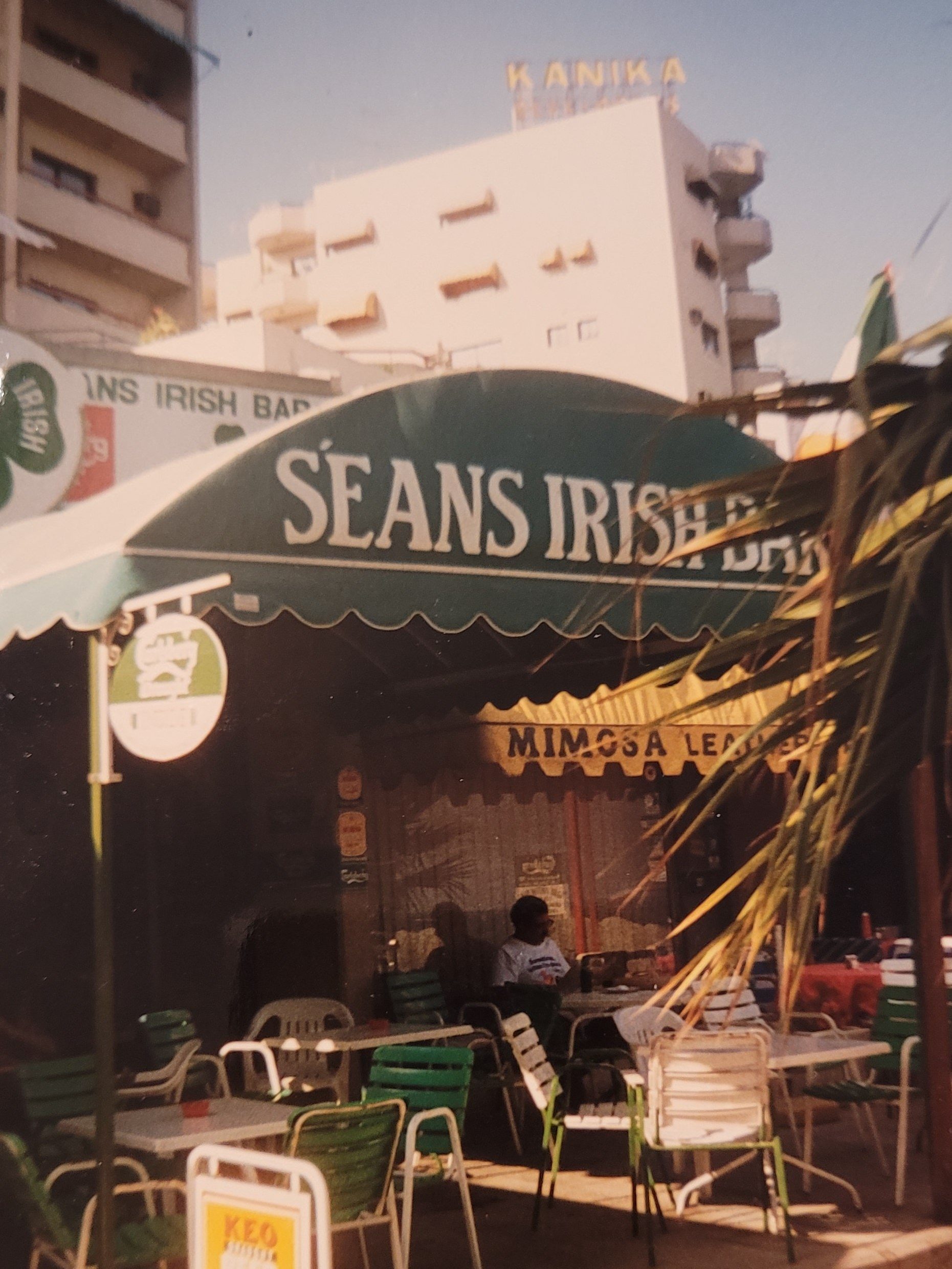
On a Mediterranean deployment aboard USS PETERSON (DD-969) thirty years ago, I visited an Irish pub in Limassol, Cyprus. While a tourist destination for many British and Irish citizens, the island has had its share of trouble and even war, with the northern part of the island dominated by Turkish Cypriots and in the south, Greek Cypriots. For decades, the United Nations has maintained a truce between the two halves of the disputed island as a result. Though I got to see firsthand the uneasy relations between the two NATO countries (while conducting naval exercises with one country’s navy, we were overflown by jets of the other!), the port city of Limassol catered to tourists as well as the UN troops on liberty. Although my 2 shipmates and I were as versed as any about the political situation (given we were cryptologists), we followed command direction to blend in with other tourists (ballcaps, collared shirts, and short hair) to not stand out as Americans and to avoid any discussion of politics or our missions. We were just looking for a few beers and to explore the beach after several weeks at sea since our last port.

Sean’s Irish Pub was run by an Irishman and his daughter, serving both British and Irish beers and liquor. Talk about soccer teams was as peaceably divisive as with any sports fans in the USA. One of the patrons we chatted with was a Dublin businessman who amiably offered that Muammar Ghaddafi was a pleasant fellow he had business dealings (this was 1994, eight years after the US retaliated against him for sponsoring terrorism). It was best to let that slide. Being of Polish descent (dad) but Irish on my mother’s side (I neglected to mention they were Protestants), Sean made a couple of toasts over good Irish whiskey. We met and had a couple of drinks with one of the UN troops there – I forget whether he was Irish or British. The thing I do remember is that this pub catered to both the Irish and the Brits, but they came by at different hours. And the pub would either have a more “independent Ireland” or “welcome British” atmosphere (both Irish and UK flags displayed, ) depending on the clientele hosted.

Port o’ call: memories of Cartagena Spain

“JOIN THE NAVY AND SEE THE WORLD”

Navy recruiting slogan in the mid- 20th Century

Several years of High School Spanish, as well as years living in southern Arizona near the Mexican border, made travel in Latin America easier. Traveling to Spain, on the other hand, was a little more of a challenge. Though I had a Freshman year of castellano, Madrid-dialect Spanish, I soon found that they do not necessarily speak “Spanglish” or the Sonoran (Mexico) dialect there.

My second Mediterranean deployment on the USS PETERSON, a SPRUANCE-class guided-missile destroyer, began in October, 1994. One of the first ports we visited was Cartagena, Spain. Located in the state of Murcia, it is a port city that has seen sailors on its streets for a few thousand years. Having lived in or visited modern cities, from San Francisco to New York City, seeing a Roman-era coliseum and medieval architecture – much of it incorporated into modern structures- made some of the oldest American buildings practically new.

I ventured out on liberty alone, trusting that my Spanish would help me get around. Being adventurous and with an affinity for foreign languages, Europeans were more open and chatty to me (Except for a Northern Italian shopkeeper who must have assumed I was an arrogant German -but that’s for another story). A family-run cafe, Restaurante Casa Pepe, (a small lighter I kept all these years in trinket box, reminds me of that port visit), welcomed me. I learned that eggs and bacon are served a little differently there. Chatting with the family, the son who was about my age, offered to show me around his city. He enjoyed correcting my pronunciation, teasing my accent. I teased him that he didn’t speak Spanish either. Murcia has a distinct dialect from Castilian or other Latin dialects, where “c”s often are spoken pallatized (a “th” sound), e.g., “Mur’th’ia ” . One of the buildings in the older part of the city near the waterfront was elevated to display a site that I recall pre-dated the Roman times. It may have been Phoenician. I should plan to visit the places I saw while in the Navy. Now that I am thirty years older, I imagine my acquaintances have long forgotten one Spanish-speaking American sailor, but I still long to revisit these ports of call with my wife. Though I think I will upgrade our mode of travel to a cruise ship. With no intentional disrespect to the Navy, anything will be more luxurious than a destroyer.

Cartagena, Spain, a bit more modern after thirty years (image via web)

Ed: this revised post was originally published here in August, 2021