a sentry’s recollections

In the Navy I stood a lot of watches.  For those not familiar with our terminology,  “watchstanding” is an assignment for a specified number of hours, to monitor area security, equipment performance, duties according to one’s training and seniority,  or other duties “as assigned”.

As a young Sailor (I capitalize the “S” following a Navy custom),  my first watches were patrols of the recruit barracks I was assigned from the first days in the Navy forty years ago.  We patrolled for safety mostly, but it was also to train us to be light sleepers, and accustomed to getting up within moments to carry out duties.

Later assignments, once I had been in uniform for a year or so, was assignment to the base gatehouses, sometimes the Main Gate but more often the mostly deserted back gate.  Watches – as a student during that time – were mostly starting at midnight, “balls to four” or 4 AM, because I had a class schedule that ran two sessions until early evening.   One night, I was assigned to be a floor watch,  sitting at a desk in a quiet corner of one of the middle floors – decks, we called them – and with the lack of air, humidity, and heat -in a Florida summer,  I dozed off.  A thump in the back of the head and a shout in my ear – the Base Duty Officer that evening was an old Senior Chief – and I was wide awake.  Never dozed off again – ever – while on watch.

Ten years later ( I had left and then gone back into the service) , on my first shipboard ‘tour’,  I was a Petty Officer of the Watch, in port.  Every Navy ship, while moored has a security station, at the brow -entry gangway- to provide protection, announce visitors, note the commanding officer’s arrival and departure, and check for authorized ship’s company to depart or return.   As a Third Class Petty Officer, I was limited in the scope of my assignments, but once I earned my next rank, Second Class Petty Officer,  I sought to train and qualified as the Officer of the Deck (in port).  The OOD is responsible to that day’s Command Duty Officer (CDO) who monitors compliance to the commander’s orders while in port.  On a subsequent ship, I again performed that OOD role until as a Chief Petty Officer, I had oversight of the shore enlisted personnel in my capacity as the unit’s Senior Enlisted Leader.

I was fortunate that during my tenure aboard the various ships I served to have few altercations but for a couple inebriated Sailors.  My watchstanding duties which normally required me to be armed, including at various times carbines or shotguns as well as a 45-caliber semi-automatic pistol, were mostly routine.  But failure of security cannot be allowed. A case, where failure of security personnel at the Norfolk Naval Base a few years ago, allowed a deranged civilian truck driver onto the base and onto a pier, ultimately resulted in the death of a Sailor – and the assailant.   That Sailor gave his life defending his shipmate, a POOW who was attacked and disarmed. Another Sailor performed his duty to eliminate the threat.  Particularly in the post-September 11th world,  there are more random dangers, criminals, mentally unstable people, and web-enabled terrorists on friendly shores.  Being wary of the threats in foreign ports,  assignments for the 18- to 38 year old Sailors ( and Marines, Soldiers and Airmen) who stand watch at their posts are now a matter of serious professionalism.

As a result of being in that environment, witnessing a lot and fortunately only hearing some of the stories,  I have a lot of respect for law enforcement officers today.  The job of securing your assigned watch can be routine, dull, aggravating and demanding.  And there aren’t a lot of second-chances to get it right when dealing with a dangerous world.  To protect us they stand the watch.
Never quit on yourself

“I’ve missed more than 9000 shots in my career. I’ve lost almost 300 games. Twenty-six times I’ve been trusted to take the game winning shot and missed. I’ve failed over and over and over again in my life. And that is why I succeed.” – Michael Jordan,

I read this quote tonight, while browsing a blog post with 20 inspirational quotes and accompanying pictures, in themselves, very moving.  A family member in the service is weighing the possibility that he may be discharged for not maintaining the demanding physical standards of that service. (Even athletes get runners knee and shin splints.)

It is news that I know all too well.   As a younger man than he is now,  I also faced the same exhausting bureaucracy of my service branch,  weighing whether or not I would be medically discharged a couple years into my enlistment.  “Hurry up and wait”,  is the operational tempo of everything non-combat-related in the military.  But a determined mind, sharpened by knowledge of your adversary, bureaucracy, and equipped to respectfully and yet, unyieldingly, play ball is honored whether it leads to a win or loss.

Michael Jordan is a legend in the sports world for work ethic and results.  To win a lot, you risk a lot and lose a lot.  But every failure is a lesson in NEVER QUIT.  An opportunity to learn and improve.    I am glad that my wife and kids never quit  under adversity.  When I was young I was tempted several times.   Bouts of self-pity a few times.  Illegitimi Non Carborundum was my dad’s advice to me.    I finished my race by completing a career and retiring as a Navy Senior Chief.   So my son,  whether you serve 20 years or 6 more months,  I will not be prouder of you for never saying “I quit”.  You will always be ARMY STRONG to me.

if Jonah had a Spanish accent

15 Then they took Jonah and threw him overboard, and the raging sea grew calm. – Jonah 1:15 (NIV)

At sea,  even on a Navy warship, when the storm is raging, you feel very small and vulnerable.  In eight years, on three different ships,  I have been through squalls, gales, and hurricanes.  It is truly awe-inspiring – and foolhardy – to venture out on the upper weatherdeck when a destroyer is rolling 30 – 35 degrees port and starboard.   The churning, foamy grey and black sea is so different from the steel blue calm water of several hours earlier.   The power of the sea to bash in metal plates is also that same ocean that can leave sailboats without a breath of wind to move them.   In either condition,  I never want to be at the mercy of the ocean.

If one is to be stranded at sea, there are some more preferable spots than others.   Shipping lanes are well-traveled and charted,  like marked highways around the globe.   And then there are those when outside those lanes, who if they become stranded, rely on the grace of God,  or Neptune,  or  whales, dolphins or whatnot will send help their way.   The ocean, out of sight of land is a very lonely place, even in a part of the ocean that is well-traveled.

I was aboard the TEXAS, one of the last great nuclear-powered cruisers  about eight hours southwest of the Panama Canal  on a bright, sunny day.   I was performing some routine maintenance near the forecastle ( pronounced foc’sill”) when an announcement over the ship’s 1MC,  its intercom, that we were rendering aid to a small boat off our starboard bow.

“Boat” was an approximation as I recall.  It was more like a dugout, with two Panamanian men, and a couple of chickens – roosters, actually, in small cages in between the two men.  In the first minutes,   I was the only person on the deck who spoke Spanish and the deck officer asked me to translate some questions and directions for them to be brought aboard.    Apparently,  they were traveling from one of the islands off Panama to another – the birds were to be in a contest – and the motor started to have problems.   In starting to work on it – the motor clamp dislodged and motor and all fell into the depths.  They had been drifting with the currents for a day.

We were fortunate to be at that place and time to rescue the men and return them  to Panama with only a delay in our schedule.   Oh,  as for schedules,  sometimes they can be a pain in the neck with military precision.   At the moment we had the small boat along side,  and were preparing to bring them aboard, they happened to be under a bilge valve.  Yes.  Engineering began pumping waste overboard at that exact moment.  Furious calls over the radio,  straining on ropes and a few dozen choice expletives succeeded in halting the pumps, getting the men – and roosters, and their boat on board.

I wonder if those men recall the day the “americanos” rescued them.  And do they tell their children, when you are going to a cock-fight, be sure to bring a lot of rope for lashing,  maybe have all your shots updated, and most importantly, get a bigger boat.

night at the museum

USS_Coronado_04AUG1999
USS CORONADO, AGF-11

Looking at old mementos this evening,  of my days in the Navy makes me feel, well “Well-seasoned”.  As I look back,  the ships where I was a crewmember are all now dismantled,  and sunk to the depths of the ocean.

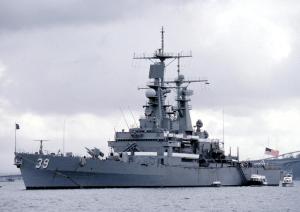
CGN-39
USS TEXAS, CGN-39

The USS TEXAS, a nuclear -powered missile cruiser was several firsts for me: first year at sea; designation as an Enlisted Surface Warfare Specialist (in 1991);  and Shellback.   I did enjoy living near Seattle for nearly a year – the ship was in drydock – before I was transferred at its decommissioning.  It was decommissioned,  dismantled and scrapped at the Puget Sound Naval Shipyard in the late 1990s.

I first fell in love with Canada – Esquimalt,  B.C,  and Vancouver aboard the TEXAS.  I visited, Ecuador,  Panama and cruised through the Panama Canal on that ship.

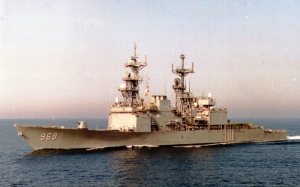
The  USS PETERSON, a Spruance-class Guided Missile Destroyer,  where I made friendships still strong twenty five years later, was decommissioned and sunk in the Atlantic.  But that’s the ship where I got the opportunity to visit Europe – Spain, France, Italy, Greece,  and Turkey, Bulgaria, Israel, Egypt, and island nations of Crete and Cyprus.  On the USS PETERSON,  I visited Panama and Ecuador a second time – was based out of the East Coast. (That has to be a first two-coast, two ship and back-to-back visits for any Sailor since that time!)    On another PETERSON deployment, we visited Nova Scotia.   Halifax has a friendliness towards seafarers of all sorts.

And from San Diego, the USS CORONADO, a special projects testbed, and command ship for the U.S. THIRD FLEET, took me to Japan, Korea and Alaska ( and Honolulu a number of times)  was decommissioned and sunk in the western Pacific.

DD969
USS PETERSON, DD-969

Equipment I used to maintain I found in a museum a decade ago.   Uniforms I wore when I first enlisted and then subsequently through 3 uniform changes have been sent to resale and thrift stores.  Occasionally,  I see a homeless person with one of the old pattern utilities and foul weather gear.

Memories are now appearing regularly on EBAY and other second-hand online stores.  But I have a few things that are still worth keeping.   shopping One of the last USS TEXAS calendars, postcards issued by the USS PETERSON, and pictures and challenge coins given to me by CINCPACFLT for earning Sailor of the Year for THIRD FLEET in 1998.  And my retirement shadow box lists installations that have either disappeared or been revamped, remodeled, and redesignated.

So in some future yard sale, should you, dear reader, happen upon a bunch of trinkets from an old Sailor’s box of mementos, enjoy them.  We can now Pinterest and Twitter and Facebook around the whole world.  But, trinkets, salt air and ocean waves are still analog.

Treading water

dont-tread-300
Gadsden flag, 1775


As I get older,  I wonder what has become of my military-physique – the early one, not the rounder one of my last year – and what became of the ‘forego the mission, clean the position!” fanatical routine with cleanliness.   Not that I don’t love the smell of PINESOL in the morning,  but leaving the house all day with two big hair-shedding dogs results in a truce between the advance of dirt and actual boot-camp standards of clean.

Attitudes that once were socially and fiscally conservative,  I generally vote in every election, hold ‘personal responsibility’ in high esteem — welfare is for the most-desperate and least able to work,  and believe military service is beneficial to everyone between 18 and 50 years old.    Now, I hold fast to my church family, my spouse, and keep my personal values fairly close to the chest — outside the street I live on.  Fortunately, I have neighbors who were also military or police, and are now retired.  A neighbor on a street where I walk the dogs has a “DON’T TREAD ON ME” flag above his door.  Another proudly has a TRUMP sign.   Both have pickup trucks with Marine and Army stickers on the former.   Then again,  I wear “VFW Life Member” and Navy Chief t-shirts to work.   But I am mellowed with aging.

I have YOSEMITE, bicycling, and Grand Canyon hiking stickers on my car, a VFW license frame and a Nature Conservancy brochure on my car seat – I contribute to purchasing wildland around San Diego to preserve it.   What happened to the guy who owned firearms, enjoyed target plinking,  and was a fan of talk radio?  Gone.

I need to get out of California.  I’m starting to love it here.


http://www.gadsden.info/history.html

Burial at sea


One of the privileges that a Navy man can request,  when the end time comes, is to be buried at sea. While I was on board the USS PETERSON in the mid-1990’s,  I was on the honor detail when we performed the last rites for (ashes of) a veteran of World War II. The ceremony was a solemn, set on the fantail of the destroyer.  Taps was rendered.  The Navy Hymn was played ( we had a boom box with a recording).  An officer, selected by the duty roster, read some words about the veteran and the tradition.  And everything was recorded on videotape for the deceased’s relatives. This was 1994 or 1995, so there was nothing like today’s live streaming technology.   When the time came to commit our Shipmate into the deep,  the wind shifted.   Our brother went partly into the briny — and also across the fantail.  A little splicing that evening in the Media center edited the re-shot final images of the burial at sea.   No need to stress the family with the ‘Sweepers’ call that was mustered up.

A burial — and a rebirth at sea, was exactly what occurred for me personally when I spent eight years on sea duty assignments with three different ships.   As I continue to read letters written in my first two years in the Navy, and from time when I went back into the Navy seven years later, I see a person that I no longer recognize.  I had tackled one of the most-rigorous technical skills the Navy offered,  but it took trial, error, failure, and opportunity that unexpectedly resulted in a review that medically discharged me.   At that time  I was an introverted teenager trying to escape Arizona and a negative self-image by joining the Navy;  in the Eighties, as a twenty-something stuck in a rut, with a challenging relationship, and poor job outlook,  I was able to re-enter the Navy, but only in that same field that had so challenged me previously.   The grass, or rather the salt air was beckoning me and I chose selfishly.   As my letters from this period show, I markedly changed as I matured.  When my personal life fell apart- my then wife took up with someone else,  I became more callous, even cynical at times, and a workaholic.    The go-to guy if something needed to be done.

However , San Diego changed all that.   I, metaphorically, died again, and was reborn –while I was still on active duty and assigned sea duty.   My new spiritual chain of command started with God and Jesus.  You listen when your ISIC (Immediate Superior in Command)  wears actual stars on his uniform. As stuck as  I had been in my past lives and self-interests,  I enjoy now a real freedom with my wife, family and church.  My skills, passions, and commitment is focused positively.   For almost twenty years, I have found that a burial at sea, and resurrection into a new life is truly freeing.  Thank God.

Knossos, but no bull

kingminospalaceknossoscrete4

4000 years ago, the Minoan civilization, on what is now the island of Crete, was a thriving,  sea-going people.   The Classic Greek legend of the Minotaur, a half-man, half bull-like beast which is still being taught in universities today, was a story set in the Palace of King Minos at Knossos on Crete.  In the 19th Century,  archaeologists began excavating this site;  some of the buildings were partially reconstructed to show the amazing art and technology that they developed.   in 1994, I had the opportunity to see this site with fellow crew members of the USS PETERSON during a port visit.  One of the highlights for me was the world’s first flushing toilet, in the queen’s chambers.

I still laugh at one of the comments made by a young sailor on that trip. ‘What a bunch of crap, everything is in pieces”,  he said.

“Well, this entire site was buried in the ground for FOUR THOUSAND years”. someone responded.  “I wouldn’t expect it to be all standing at all.”

“Oh,  wow.”

Who knows what history would have recorded about the Minoans had not a little environmental disaster overtaken them.   Four thousand years ago,  in one of the largest volcanic eruptions ever,  the island of Thera, about a hundred miles to the north of Crete, vaporized.  The resulting tidal wave obliterated the Minoans.  According to history, the Bible, and other records,  elsewhere around the Mediterranean,   the Etruscans – who were the forerunners of Romans, the Egyptians, Israelite tribes all were impacted by the Minoans.

Sailors get around.   And that ain’t no bulls…”

No, I did not sail with Noah

“Memories which someday will become all beautiful when the last annoyance that encumbers them shall have faded out of our minds.”
Mark Twain, The Innocents Abroad

I am reading my letters written in boot camp forty years ago. As an eighteen year old enlisted sailor,  I entered the training gate by military bus at four in the morning of 3 October, 1977.  This was my first real separation from family.  I wanted to share my adventures.  It is not gripping prose. 

27 October, 1977

Dear Mom,

Payday!  I went to cash my paycheck. After deductions for the ditty bag ( personal items, toiletries and shave kit, $65) and taxes, I have $173 for two weeks.  I am sending you $163 in a money order.  Use it for bills or put it in the bank for me.

We got big news today which made our Company Commander very happy: we earned a 4.0 mark on our barracks inspection which means the inspectors found nothing to report.  And we began a competition between companies which will mean a lot in the coming weeks.  After the barracks inspection, we had a personal inspection – uniforms, gear, shave and such.  In our third week, we took a test that I had been worried about.  It was very easy and I nearly aced it.

At our classification interview – to select which career I would follow, I went for the CRYPTOLOGIC TECHNICIAN, MAINTENANCE ……..  It seems I have been preliminary accepted into this field – part of the Advanced Electronics Field I signed up for.  But it means a COMPLETE security check as I would be dealing with ….. equipment.  I will be sending home a document to for you to completely fill out and return to me as soon as possible. I hope I can get into this “hush, hush” rating.  I sure hope that the investigators will not dig up anything to disqualify me.  …. the Navy will spend five months investigating me.  They will uncover everything and find and talk to everyone I was in contact with.   And five months of schooling.   According to the classification brief, school will pack two weeks of high school electronics training into a single 8-hour day!  If I should fail school I will be screwing up a six-year commitment and become a barnacle-scrubber!

Please thank Nana and Robin for their letters. They help a lot.  I will write again, probably on 4- 4 day next week when we cross the bridge into advanced training.  Movies, recreation room, and a Baskin-Robbins and hamburger joint available to us on our liberty time.  The hitch is that the Company Commander decides whether we earn a pass to visit these things.  Tell Senorita I miss her and not to bug Buttercup too much.

P.S.  Please send postage stamps as it is hard to obtain them here in RTC and I like to keep up a running commentary.    After all the physical training, you will see a definite change when you come here for my graduation.

I miss you a lot. Tons of love,


a Scout is prepared

letters to my future self

Continuing to go through my mother’s papers, I have a number of letters that stir old memories of my days in the Navy.  You, my readers and someday my adult children will get additional understanding how little things can chart the course of your life in ways you cannot fathom.

Whenever I read or see a reference to the Boy Scouts of America, I recall a chance meeting and conversation that had a bearing on me.  (Forgive my nautical puns.) On a Greyhound bus ride in 1974, an old ( I was 14- everyone over the age of 30 was older) gentleman,  and I started chatting.   With the discovery today of his letter to my mother and me,  I know him as J. Harold Williams.  At the time, I had been in scouting for four years, starting when we lived in the San Francisco Bay Area and continuing when Mom and family moved to Cape Cod, Massachusetts.

20170429_123112
Scouting, Cape Cod, 1974 (me at l.)

In his correspondence he asked how my last advancement to Scout First Class had gone – I had been selected since our bus ride.   From a Google search today,  I realize how interesting that encounter had  been.  “Chief” Williams, at that time, was national Boy Scout Executive Emeritus, and the founder of scouting in Rhode Island during the 1920’s and 1930’s.  (We discussed scouting and stamp collecting among other things).  I might still have an book on Scouting he gave me that day.

Guest speaker will be J. Harold Williams, U.S. Scout executive emeritus, who will “tell the story of the Scouting trail” from 1910 to 1965. Described as an “eye-witness to history” In the Scouting movement. Mr. Williams will relate personal experiences including the movement’s birth, and it” progress over the last 55 years. Started at Age 12 Mr. Williams has been active in Boy Scouting in Rhode, Island where he first began Scouting as a boy at the age of 12, and was the first Scout in the United States to come up through the ranks to become a professional Scout leader. He was Scout executive of the Narragansett council in Providence, R. 1., for 45 years, after which he was elected to the position of Scout Executive Emeritus and now spends his time speaking throughout the country on the Boy Scout movement. He has been honored by universities, newspapers, civic organizations and veteran groups and holds honorary degrees of Doctor of Education from Rhode Island college. Master of Arts from Brown university and the Achievement award from the University of Rhode Island. —  the Bridgeport Post, March 23, 1965 (edited for clarity)

And I recall, he was the one who started me in stamp collecting.  My Aunt June worked at the United Nations, and had been sending postcards to me from all over the globe.  Till Chief Williams, I did little with these stamped postcards except dream of traveling.   Untouched for thirty years,  I still have albums of stamps stuck away.

On my honor I will do my best to do my duty to God and my country and to obey the Scout Law; to help other people at all times; to keep myself physically strong, mentally awake, and morally straight.

Remembering where I came from

Looking through old photo albums, when they were actually processed and printed on

paper,  I spent part of Saturday rewinding about 90 years of my family’s history through some dusty albums that were in my garage storage bins for several years.

my dad

Old photos encourage me.  Even seeing my father looking so athletic and proud with his young son dispels memories  of the many years he was crippled by illness.  My dad was a brilliant, funny and an athletic man.  I spent many years of my youth thinking of many negatives: when dad read something in the Wall Street Journal that said that glow-in-the-dark balls were unsafe, I was marched back to the toy store to get my change back.  When we went on road trips I was drilled on my multiplication tables.  Later when my mom and he were divorced,  and dad took me out on his weekend visit, we would go to nice restaurants,  but he always ordered the cheap meals and we filled up on the free rolls and butter.

Only later as an adult, I remembered that he would drive across the country from his job to attend my middle school and high school graduations.   He took a teaching job near our home so he could spend time with me.  At that time he was still trying to get half his body to respond after a stroke – and dealing with people who would equate debilitation with stupidity.   Far from it  – even in that condition.  He graduated near the top of his class in high school and in college as an aerospace engineer but also played sports.   He probably was motivated to excel as my grandfather’s occupations seemed to change as jobs came and went.   Instead, he worked in missile propulsion and development in the early years.  (Which likely helped me to get the jobs I held that involved trust.)  My father died 28 years ago while I was in the service.  I did not find out for two years.

mom

My mother was a good-looking woman;  as sharp mentally as attractive outwardly.  And it must have been quite the catch for my father.   When my maternal grandparents emigrated from Ireland at the end of WWII, she had to contend with Seniors in high school making fun of her accent.  In New Jersey they did not have much else to poke fun at.   She had graduated at the top of her nursing class at Mount Sinai Hospital, and as an R.N. worked with infants, intensive care, emergency treatment, and supervision.  Looking back at my teen years, it no longer seems odd that she pursued a dream to become an english literature scholar and college teacher in middle age.  She became a nurse for the career opportunity that would always be useful and financially secure.  But her passion was elsewhere. 20170423_150516

Mom’s aged photos showed several beaus – a soldier who looks like he only just lost out to my dad;  and some guys who might have been doctors, attorneys or business people.   Among her circle of friends included a Nobel laureate.  But the family photos bear witness to the changes that time, health, and fortunes – waxing and waning produced.

After deciding to marry again, she later learned that her second husband was attracted to children.  That divorce sealed her future as a bitter woman, more inclined to spend her savings on old horses, rescue dogs, cats and a burro.   You see, I have a sister, an adoptee, whom I have rarely spoken with in forty years.  Robin never forgave her mother for divorcing my father and subjecting her to abuse.   We went separate ways after I initially joined the Navy – and she was the one who suffered at the hands of my mother’s second husband.  After thirty years, we last spent any time together in the few months after my mother’s passing six years ago.

son

I chose to go into the Navy as much for the adventure,  the training – which has become the means I earn a living,  and for several veterans’ benefits, as I did to make a clean break from the family.   That’s actually the ironic part,  as I returned after my first enlistment to the same city, Tucson,  to attend the University of Arizona.  My father, still living at the time, moved to Tucson, and I spent time with him and with my mother – still my most ardent cheerleaders for my success.

I can only speak for myself, but I realized around the age of 39, that all of life’s successes mean less than how you handle failure.  Raised with a concept of the spiritual, but never seeing God,  I was continually trying not to be the sum of my upbringing and family.   But after twenty years of a changed life,  I recognize suffering allowed me to treasure the family I have now.   I realize that there is a God that cares for us, but does not force us to engage with him;  most of the world is suffering at the hands of people. For the goodness and love to have any impact, overcoming self-centered attitudes,  misgivings about our childhood,  misgivings about our marriages or children or jobs or finances or health have to be overcome.  Some people blame God for being on the sidelines. Others have no room for God.  Still others have god in their schedules but not in their driver’s seat.

And that is why I can look at these photo albums of people and places that shaped my life with contentment.  I appreciate family history but I am not bound by the people my parents became nor am I limited by my own shortcomings. I trust in my heavenly Father and Lord.   And the future does not hold any fear for me.

You Cannot Feel a Pumice Stone via SnapChat

After 57 years,  I have collected a lot of random stuff,  Over the years it has been easier not to go through the storage bins  in the garage.  My wife and I make Spring Cleaning “dates” when the settled dust is thick on lids.

It is probably easier to catalog my collection:

Childhood

  • program from my elementary school musical singing days
  • picture  – collared shirt, bowl haircut
  • blue “participation” ribbons (california!)
  • clay rabbit I made at  4 years old
  • a letter from my Grampa (“man”) to me before he died in 1966

High School

  • transcript copies:   two years in Cape Cod, MA ;  two years in Tucson, AZ
  • picture of me in a Revolutionary War uniform  (We got to carry and shoot black powder muskets!)
  • A few polished stones and pumice (rock collection)
  • Stamp collection of USA and foreign stamps
  • pocket knives

Navy (first time)

  • bootcamp yearbook
  • pictures of friends from the technical school at Great Lakes and Pensacola

1980s

  • college pictures with two groups of friends
  • sample of toilet paper, sugar, and wrapping paper from a college Soviet Union trip
  • ticket stub  from the Los Angeles PINK FLOYD concert (the Wall)
  • A scuba mask from scuba diving days

Navy (second time)

  • pictures in my cracker jacks re-enlisting at the new Navy Memorial (Plankowner)
  • certificates, several framed of ceremonies (Shellback, Golden Shellback, Panama Canal)
  • trinkets, cigarette lighters, jewelry and perfume bottles from Egypt, Japan, Greece, France and every point in between

Married life and family (2001 -)

  • youngest son’s baseball items from Little League All-Star selection
  • more random, but expensive,  trinkets – “ART”
  • travel mementos , mugs, coins, crafts

"Fair Winds and Following Seas"

I retired from the Naval Service yesterday. After 26 years of service, though 23 were separated from the previous three by seven years.  Very humbling as I was honored to have family, shipmates and friends in attendance and participating.  Several notable facts: my co-retiree and the senior officer in the official party, an Admiral-select – in itself singularly remarkable – were both former enlisted men who had become Chief Petty Officers before Officer selection. Also,  this was the first, or most likely first, instance of retirement awards bestowed by the brand-new Commander, TENTH Fleet, and third, the first instance I am aware of a dual, simultaneous flag ceremony. Flawlessly performed.