Many of my military peers may recognise that many things were part of a system of barter during our tours. For my Navy shipmates, we found cigarettes, Froot Loops and some items in “care” packages could be used to trade for watchstanding in certain ports of call. At other times, it might be a needed safety audit, such as that I could perform to use a boom box in a kitchen (galley). I was a ship certified electrical safety petty officer.
The Supply division received the stores. And strangely, Froot Loops were always missing from the single serving selection of breakfast cereal.
But onboard a cruise ship, these precious currencies are devalued. Just placed out in the cases at breakfast for everyone to enjoy.
When I was a kid, maybe younger than 8 years old, I went on my first passenger ships, the Cunard Lines SYLVANIA and QUEEN MARY. Traveling with my mom one summer from New York to England and then returning to New York City. I generally recall 3 memories of that time. Two were shipboard: being entertained with other kids by the staff while our parents were so seasick they were in their cabins, receiving a die cast model of the ship(s), and a random memory of being fascinated by men working on a pipe in the middle of the lane in front of my grandmother’s home in the Isle of Man. But the point of this all is that I don’t get seasick.
Rowboats, canoes, kayaks, harbor ferries and water taxis of various sizes and conditions, and three U.S. Navy warships have been how I went to sea in the intervening fifty years. Until this week, so many years ashore dulled my senses and passion for travel and the sea. The dining, getting to know some people, the excursions in our ports, and the shows we took in have been the highlight of cruising. The rocking even as slight as the large liner does pleasantly lulls us to restful sleep. For me it has again stirred my memory of the wind and wave.
This ship, however, is too big. Too many people. And although I am not, well, insensitive, I really do not want to travel with large groups of some tourists. I’ve been irritated by their cultural norm of pushing through around and over, mobbing really, at the brow coming on and off, (like at our travel stop in Cozumel). I imagine if you come from a place that has 2 billion residents you push to avoid being run over. Yet this ship has travelers and staff from all parts of the world. After several days, a vessel with six thousand passengers is too much like vacationing on Southern California highways during rush hour.
Give me a smaller, more personable ship and I’ll take the adventure anywhere. Nevertheless, I know my wife and I will make new friends, see some amazing sights, and enjoy more cruises in the future.
Usain Bolt and Harry Belafonte grew up in my parish – tour bus driver & guide
On a zip-line and rafting tour in Jamaica, the limes, bananas, coconuts, and sugar cane compete with mangroves, towering Hindu bamboo and brightly colored flowering plants for my attention. While zooming through trees up to 40 mph (there are big cushions at the downhill station if the brake and guide fail to stop me) fed my adrenaline-junkie, the afternoon spent on the river was a great way to take in the people and history of Jamaica. The rafting guide explained how various plants have health and medicinal properties – and though Americans sterotypically associated ‘ganja’ with Jamaica, nothing Reginald listed in the average diet included weed.
Patois is the native Jamaican dialect, and after a brief intro, we were all “ai’-ree” (doing well) and affirming questions with “ya, man”. Jamaicans have a deep pride in their country, and while it is very evident that the poorest Americans are richer than most of the population, I think even the “CJs” -Crazy Jamaicans, (self-named) locals who walk in front of moving trucks and buses – would find much of my complaining young countrymen more than foolish. Though this is my first trip in the Caribbean as a civilian, and a first ever to Jamaica, I can see why people return again and again. For me, the food, grog and Cuban cigars are pleasant but bouncing up and down a rocky and muddy road with a group of laughing fellow travelers and guides on the way to rafting is a lasting adventure.
“Put da lime in de coconut, stir it all up” -Jamaican health tip for lowering blood pressure
This week I received a phone call from the Veterans Administration, to ask me to submit a copy of my most recent DD-214, the document that all veterans recognize as our Certificate of Release or Discharge from military service, which also provides the veteran with a validation for several federal and state benefits.
Since I am given to understand that the United States Government’s Executive Branch oversees the Veterans Administration and Department of Defense (DOD), and the DOD oversees the Department of the Navy, I am unsure how transmission of my Active Duty service record – and DD-214 for my second period of service (ending 17 years ago) – or at minimum, the DD-214, failed to be transmitted to the records the Veterans Administration maintains (veterans are its customers). Were it only a paper record, I could understand that millions of archival pages might be confusing for one file clerk with band aids on her thumbs and a dry sponge-pad (to moisten fingers) searching through file cabinets. But for thirty years, documents have been scanned into computer records.
In the most recent twenty years, and particularly in the last ten years, there have been lobbying groups protesting the illegal monitoring/ harvesting of data purportedly on American citizens – and our “undocumented guests” in the country. College students, particularly at Ivy League universities, college professors, Congressional investigations, anarchists camping out in the streets, and huge exposes by media – CNN, Politico, New York Times, and groups like the ACLU and so on, condemn BIG GOVERNMENT for purportedly nefarious purposes.
Given my experience with Government, including data losses, long delays between completing forms and receiving confirmation of receipt, and even longer delays when requesting information, specific to the very thing the Government agency is responsible, I have some reservation about how nefarious or how “omnipresent” Big Brother really is in our daily lives. I am much more concerned with BIG CORPORATION (##).
Google, Facebook, other social media, Microsoft, and so forth collect TRILLIONS of bytes of data daily on our finances, credit use, personal interests, sexual preferences, and other habits. Anyone who has looked at a website on your computer or phone at work or at home should notice how quickly all your other devices start to send you “tailored” advertising. And knowing that criminals, foreign governments, and non-state bad actors are often way more proficient with data mining than our own GOVERNMENT, I would not be surprised to hear my Progressive, aka Liberal, friends be embarrassed one day in the future to learn that buying the Birkenstock and Hillary Clinton’s autobiography from the web, will also come with a free sample of Russian borscht or Chinese travel vouchers.
(##) since I served and presently work where my privacy is understood to NOT be a sacred thing – the Government has maintained records on me since I was 18 years old – I am not willing, nor able to drop off “the Grid” anytime soon
While assigned to a naval ship, from the early 1990s till the late in the decade, one of my additional duties was as a watchstander . I was part of the Quarterdeck watch which controls movement of personnel and material on and off ship while in port. The Quarterdeck watch is made up of an Officer of the Deck (OOD), a Petty Officer of the Watch (POOW), and a Messenger of the Watch (MOOW), under the general supervision of a Duty Section Leader and a Command Duty Officer. We all are charged with maintaining the safety and security of the ship – or station (Installations also maintain the same structure) while the vessel is in port.
To be qualified to stand a watch on the Quarterdeck, each person has to complete training requirements including firearms training. This is normally managed by a Petty Officer from the Armory, a Gunners Mate or Master-At-Arms. On this particular day, were at sea, and in calm weather. It was a time to renew my qualifications at a “range” set up on the fantail of the ship. We would shoot at targets in the direction of the open sea.
image courtesy US NAVY EUCOM, 7 JUL 2011
This was a time for refresher lessons on firearms safety. Handling of pistol, rifle or shotgun, hot weapons, jammed rounds and so forth. Occasionally we received instruction in prayer. Prayer? On one memorable occasion, a young Sailor, we thereafter called “Barney Fife”, was on the line with four of us, and the Range Master standing behind and to the left of our group. At the command to “Commence Firing”, after the first or second trigger pull, there was a “Zing!”, followed by an immediate “CEASE FIRING!!!” and “UNLOAD!” or something to that effect. One of our group had somehow discharged his weapon such that a slug ricocheted off the deck dangerously close to the Range Master.
Billy. This was the same young Sailor that one of the deck seaman with sound-powered phone ( for internal ship communications) had fooled into waiting for a shore-to -ship phone call while they both were on a sea detail. He was a good-hearted but slow-witted guy.
Thereafter, Seaman Jones (not his real name) was permitted to stand the Quarterdeck watch only as Messenger – and was not allowed to touch a weapon. We were assigned to the same duty rotation, and as I was generally the OOD watchstander, I would allow him only to stand downrange of me. While the Gunners Mate may have pronounced a saltier blessing in our young Sailor’s direction, I think we all were generally very thankful to the Almighty that day!
“I can imagine no more rewarding a career. And any man who may be asked in this century what he did to make his life worthwhile, I think can respond with a good deal of pride and satisfaction: ‘I served in the United States Navy.” _John Fitzgerald Kennedy, PT-109 Commander, WWII; President of the United States
In the pre-dawn hours of Oct 3, 1977 I arrived at the Recruit Depot of Naval Training Center, San Diego, California. I had signed my life away the previous afternoon at the Military Entrance Processing Station (MEPS), Phoenix, Arizona. And despite the very attractive female Marine Sergeant at the MEPS, I did not on-the-spot decide to opt for the Marine Corps.
Marched as a gaggle – that would be rectified very shortly – to get haircuts, none of us really knew what was happening. Then lined up for clothing issue, and medical checks and barracks assignment. Nothing was fast enough, efficient enough nor military enough for the Recruiting Company Commanders that day. After a full day, we were assigned our bunks. And at O-dark Thirty, 0330 or 3:30AM, the loudest bang from a metal trash can thrown down the center of the barracks woke everybody. Welcome to Boot Camp, ladies.
Forty years later, I have been retired seven and a half years. I can look back on the best and most challenging times of my life: two periods on Active Duty from 1977 through 1980, and 1987 through 2000, and two periods in the Reserve, 1987 till I opted for Active Duty again; and from 2000 through 2010 when I retired. Eight years assigned to sea duty – most of which spent going to sea. Pacific, Atlantic, Mediterranean , Red Sea, and Caribbean deployments. Panama and Suez canal, Equator and Date Line crossings.
Thirty years ago, I read several of Norman Mailer’s work. It was a time of controversy during the maturing of society in the post-Vietnam era. The Death Penalty, scandals in Government, Presidents and Senators losing their positions. Foreign revolutions. Domestic terrorism. Sex. Religious charlatans. While my thoughts today run to the passing of an old letch, Hugh Hefner, yesterday, the impact of Hefner’s life’s work cannot be left unmentioned. Playboy followed the American culture in the last half of the Twentieth Century, and over fifty years the culture, unfortunately for Hefner, matured past him. But military lockers, battlefields, firehouses, and little boy’s attic cubbyholes in the 1960s and 1970s were adorned with centerfold images. Some stolen from their dad’s collection. With the sexual revolution of the Flower Children which became the hedonistic ’80s, the age of AIDS, and then the gay culture, everything about the onetime bedroom subject can now be taught in grade school. Talk about a real life satire.
I was in the 1980’s a fan of satire, particularly on the military. M.A.S.H was still popular on television, Joseph Heller’s Catch-22, the war movie Kelly’s Heroes was often on television. In the mid-1980s, I had several friends ( some I regularly talk with today) who served in Vietnam. I was mentored by World War II and Korean War vets. I spent twenty-six years over a thirty-two year span in a Navy uniform. I saw a lot of things about bureaucracy, opportunists, and the occasional subject satirized in these stories happening through the experiences of my friends and from my personal observation.
Hefner’s Playboy – and then its competitors, and with new technology, brought sex out into the mainstream, made it a commodity, and cheapened it, from a wonderful bonding relationship between two under God’s blessing, to a mainstream yardstick for judging maturity. As America matured, women and men very often were colleagues or competed in the same profession, and just as the race identity was removed by the military, the gender barrier also came down. This is not to say that it was a smooth transition. Change takes a generation or two to fully be accepted. And perhaps, the nation is on the verge or putting it back into the bedroom. When “taboo” becomes the mainstream, a new counter-culture icon may find a new audience. Hefner is dead. The Playboy Mansion, already sold, has lost its previous occupant. And now, with a few truckloads of Lysol, scrub brushes, and an army of health control professionals can sanitize fifty years of the “cosmopolitan” stains away. Wonder if Helen Gurly Brown or Hilary Clinton might shed a tear. There’s one less Neanderthal in the world.
Among my peers in the world of Navy cryptologic operations, we enjoyed a sense of humor that few civilians might understand. To this very day, when friends or family ask me about my work, I will likely smile, then say, “I could tell you, but then I’d have to kill you.” I do not get asked very much about my work.
Today, when recalcitrant equipment that I either test or provide customer with needed support and repair, I always have a smart-aleck response as my double-secret probation/ inside-voice, final debug plan. Put it in a barrel and light off some Thermite. But then, I am hired to fix it; it is up to my bosses to determine when the expense outweighs the continued troubleshooting.
Very early in the 1990’s, particularly as some hotspots in the world – where intelligence-gathering was not collected from 60,000 feet or a hundred miles in altitude as it may be today, but on the ground – my unit held a demonstration of classified material emergency disposal. This was the chemical destruction capability of THERMITE. Given a few minutes to dispose of the contents of a large safe, personnel might not have time to shred documents; some equipment that shouldn’t fall into the wrong hands could not be physically destroyed by physical effort. Ergo, a thermite grenade could be ignited, placed in or on it, and the object would be reduced to ash and molten slag.
However, history taught me that this material might have been more for show than practical use. When the U.S. Embassy in Tehran was seized in 1979, if some stories are to be believed, shredded documents were reassembled by people working furiously over months. When the Iranians again seized our personnel during the Obama Presidency, was there Thermite to obliterate our crypto gear on board? was it destroyed? If jettisoned overboard, was it recovered?
And in the digital world of identity theft, credit reporting thefts, and hacking, there’s nothing to render data irretrievable but for military-grade encryption. And yet it often depends on human beings to practice security. Of course my mind runs to a different form of “thermite”, but if we cannot find the provocateurs, cannot render them sanitized.
I’m having trouble sleeping a few nights in recent weeks. My go-to on those nights was a night-cap of a little bourbon, or perhaps a beer, or a nip of scotch. But too much of a good thing can affect the waistline – and have the opposite effect on me: keeping me awake and wanting to write late at night. I was going to a Bible study tonight, so I neither feel like a nightcap afterward nor do I want to toss and turn again tonight thinking about Work. It was so much easier twenty (or more) years ago when I could sleep in rotating snatches of a few hours, work or train for several, then snooze a few hours again, and then back at my Navy duties.
Heading to my church group this evening, I stopped at the pharmacy for some sleep-aid liquid – the drowsy cough medicine without the medicine. Just then I recognize the manner and buzz haircut of an elder military vet walking ahead of me into the store. Marine. Pretty solid shape still for I presume his late sixties. He resembled my old family doc – a Vietnam Vet who sported the same “look”. (Poor Doc. He’d been diagnosed with cancer and one day wandered off by himself – with a pistol – into the mountains.)
I’m fairly certain that both this Marine and my old Doc would guffaw seeing me there to get Zquil. I imagine either one providing me with the Corps’ helpful remedy for insomnia. A hundred -twenty push-ups, and then a little double-time marching not walking – the dogs. Perhaps include a mile swim ( the base and the local gym have a pool) to tucker out a young guy like me.
Exiting the store with my purple medication, I see a white minivan parked in the one space, next to, but not in, the handicap spot between me and my car. I instantly know its owner. A little faded, somewhat banged up, dependable-looking, with a weathered U.S. Marine Corps emblem, meticulously centered, on the driver’s door.
Just like the elder Devil Dog I saw inside. I straighten up. Suck my gut in a little.
Only in America would circumstances bring a first generation Polish-American Jew and a Scot-Irish Protestant together, fall in love and marry. My parents met in New York City; I was born in San Jose, California. What little I knew of my father’s family, particularly my grandfather’s story, began with his fondness for fisherman style caps, and a Russian phrase I later learned was a soldier’s response to orders given. Only from clues from my aunt and searching the internet, was I able to tie a few of them together.
Since my Polish grandfather and his betrothed came to the United States through Canada in the early 1920s, I can only imagine he learned the Russian if conscripted by the Bolshevik Army after the Revolution. They occupied part of Poland in those days. He obviously escaped and made it to New York City becoming a U.S. citizen and finding work as a shipfitter at the Brooklyn Navy Yard. I am particularly grateful, as I might have been Italian-American and an Army veteran, as my mother was previously very smitten with an Italian-American soldier, given several pages of photographs and a few old letters I found after her death. Then how would I have ever obtained the wife I have and become a retired crusty Senior Chief? Like my eldest son today, I am not great at marching nor am I particularly suited to running miles in combat boots.
My mother’s ancestors in Northern Ireland were mainly merchants and businessmen in the flax or finished linen industry. In Scotland, some were town leaders (burgesses), maintained order, were metal workers, or were in the ministry. However, in almost every generation going back to the early Sixteenth Century an ancestor served in the military, was involved in combat or insurrection, or had some colorful story that was almost lost to history. One fought the British Army in a late-Eighteenth Century uprising in Ireland. Some forebears served in the British Army, some died in Colonial America, and some went to Australia. While the British Empire exiled folks there centuries ago, it probably was due to military service or to seek one’s fortune. And some others went to sea. There is a story of James Blaw, a ship’s surgeon, who was shipwrecked in the South Pacific and subsequently rescued, whom I identified from accounts digitized and made available online.
While my mother’s family line spent three hundred years in Ireland, they came from Culross and Dunfermline, Scotland. It was only due to the second son emigrating to Ulster in the 1600s (and changing the spelling of his surname) since it was his elder brother who inherited property. But James Blow, as Scottish printer’s apprentice and then in Belfast, partner, who was to make the greater mark in family history. It was his firm that printed one of the very first English Bibles in Ireland.
But our family is not without its scoundrels – or spies. While descendents of the Ulster Blow family pursued careers in the military, or life at sea, or emigrated to other lands of the British Empire, a Scottish curmudgeon, the printer’s elder brother, John Blaw, was a courier and spy for Bonnie Prince Charlie, who at that time was exiled in France.
After that attempt to mount a return of the Jacobites failed, it seems Blaw, who never was the businessman his brother was, ended his days as a mean drunk. After a bar fight -he was in his sixties at the time – he was imprisoned and tried for murder of another pub patron. He apparently was also a horrible provider for his family. After his conviction and execution, his widow sold much of the family possessions. And his granddaughter and her husband – a descendent of the trial prosecutor – sold the family estate.
Another ancestor of my mother, sent out to live with a relative, settled in the early Nineteenth Century South, eventually founding banks and railroads. Even after the Civil War and ReConstruction, he died a millionaire. However, his Scotch-Irish relations from Ulster swooped in and “appropriated” investments. News clippings detailed scandal, the deceased’s questionable marriage, and a missing will. In hindsight some of my forebears were indeed scoundrels. But others served honorably. There is one commemorated on a wall in the Belfast City Hall, to those who died in combat. Flanders, Belgium during World War I.
Other family branches came to America. Two from different families served with distinction during the Second World War. One’s service was shrouded in secrecy- probably in Army Intelligence – he is buried in Arlington National Cemetery. Another relation, serving in the Merchant Marine, was awarded for gallantry during a fierce battle of Malta. I never met him in person, but he wrote me a recommendation to attend the U.S. Naval Academy. He is commemorated at the U.S. Merchant Marine Academy in New York.
My father was never in uniform, but he was a defense contract engineer on integral projects for the U.S. Air Force, Navy and Department of Defense. He helped design the C-5A Galaxy aircraft in the 1960s and submarine-launched ballistic missiles. I may have found it easier to enter the Navy field that subsequently has given me a lifelong career due to a long family history of service.
There is nothing more enticing, disenchanting, and enslaving than the life at sea. Joseph Conrad
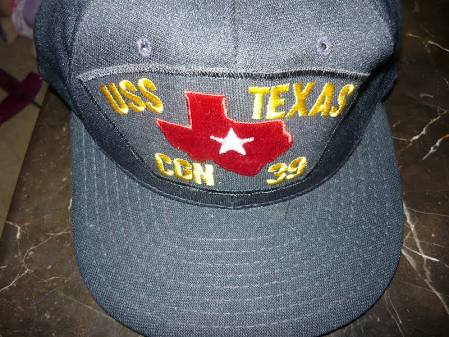
In February 1992, at age 32, my personal life in shambles ( an estranged wife with mental illness, and crushing debt were the big issues), I received orders to the USS TEXAS (CGN-39), a nuclear powered guided missile cruiser homeported in Alameda, California – across the bay from San Francisco. I drove out from Florida by myself. Arriving at the bottom of the brow, I was ready and excited to begin my first period of “sea duty”. I was reporting as one of three technicians, supporting the communications and RF surveillance systems – which I had just spent half a year learning. Looking back today, the electronics and the computer control – running octal code! – were less complex than the average electronic toy today. But in 1992, few people owned a personal computer, and maybe the well-heeled might have a “car phone” — bulky device, with bag, battery and a cigarette lighter socket charger.
The duties I was assigned – as the newbie out of school – were general. I was already being called “grandpa” since I was nearly six or seven years older than the senior tech in our workcenter. As the new guy, I was put in a harness to go aloft. (The harness came with a “ball-buster”, so-called because of the mechanical brake used as a safety line for ascending and descending the mast — if you disconnected without thinking, a few pounds of metal would swing away and crash into your groin! )
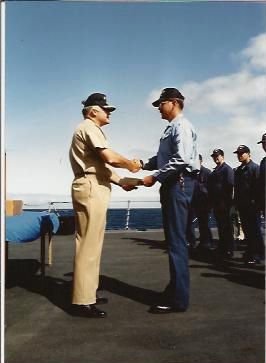
Capt Neal Brennan commends me
For a guy that wasn’t all that fond of heights – I had been rappelling mountains in Virginia to end that timidity climbing a hundred feet up above the water pierside was my “welcome”. Of course, the lamp at the top of the mast, attached to our TACINTEL antenna had no need to be changed. But the gentle sway was calming, and height never troubled me after that. I spent a lot of time over the course of several years greasing fittings, cleaning away salt buildup, sanding and painting equipment. Since each communications shop : the CT and EW (electronic warfare or ELINT guys) were in my division; the Radiomen and the Combat Systems groups also had things to maintain aloft. The primary time to do these chores were in port for extended periods as we would have the rotating and radiating (radars especially) for our ship and neighboring ships “tagged out”. Nobody wanted to be sterilized or cooked (think of a microwave oven) from RF energy.
Between performance tests, maintenance, cleaning, and cross-training as an operator in our own center, we had training in security force ( rapid reaction team), firefighting, damage control and other collateral jobs. Because of the nature of the job, most of the crew knew us only as “spooks”, and Maintenance (CTMs) were not above getting strange looks from the hot and sweaty Engineering (Snipes) crew. You see, in a couple of our workspaces, the air conditioning (chilled water) system were overly efficient. Large, heat-generating equipment had been replaced with newer systems that were much less power consuming. The now much colder workcenter made it necessary for the techs to wear our winter coats or “foul weather jackets”; we might forget to remove them when we went to the Mess Deck to get some coffee. Some sweaty, greasy shipmates were a little irritated at some “topsiders” easy living.
Working behind the “Green Door” with its OZ Division sign (“Oh-Zee” meant we were part of the Operations Department) required special access and security protocols. We would get asked from time to time what we were doing. We would come up with all sorts of stories. “Actually, I could tell you, but then I would have to kill you” was our running joke. In the days when email and Internet were toddlers, when the AFRTS broadcast was still received and rebroadcast in the evening through the ship’s entertainment system, we might get sports scores or news before the rest of the ship.
While the underway schedule was tedious and I would sometimes spend up to eighteen hours working, cleaning, training or on watch, it was peaceful. All the noise at sea – equipment, machinery, buffers, alarms, announcing systems were less unnerving than the sudden “silence” – an equipment casualty occurring at that moment – followed by an alarm and a all-ship announcement through our 1MC intercom. I really felt at home on the TEXAS. Compared with the stress of the home I had left back in Florida, I was in a long-term relationship. That ship and crew were my family. I set out to learn everything I could about the ship as part of the Enlisted Surface Warfare qualification and earn my silver Surface Warfare pin.
It was a shame that the ship’s schedule was a few months deployment s, before it was to go into the shipyard for a couple of years in order to replace the nuclear fuel and receive upgraded systems. My first underway period occurred in the late Spring of that year, and it was not long afterward that I was able to add Panama and Ecuador to foreign places I had visited. Transiting the Panama Canal was one of the highlights of my Navy career. And becoming a member of the honored Shellbacks – first, as pollywogs, we had to be properly indoctrinated in a raucous smelly, greasy, traditional welcome. And being hosed down with salt water in the pre-dawn of the equatorial waters near the Galapagos Islands, is a memory I cherish. My years of spanish from school, living in southern Arizona, traveling in Mexico, paid huge dividends in Central and South America. Where some Panamanians or Ecuadorians were bemused or put off by American Sailors, I was able to share jokes, catch deals on local crafts, negotiate fantastic deals on a hotel room for shipmates and even trade wits with a streetwise New York-born kid visiting relatives.
On our return to Alameda, a segment of the crew was able to take change of station, house-hunting leave for our pending move to Bremerton, Washington. In June, I was soon after to realize, that the weather was perfect though temporary. For the remaining 11 months until the following June, it was cloudy, misty, rainy, snowy or sleeting. Prior to going into dry dock, the TEXAS made a trip across the Puget Sound for Esquimalt , British Columbia, Canada. Killer whales in a pod accompanied us for part of the trip. Between maintenance assignments and duty rotation, I was briefly able to take in the view outside the skin of the ship. The view of the Olympic Range (the Olympic peninsula is the large portion of the state west of Seattle) to the south is amazing – when the fog or mist lifts long enough to see the snowy mountains. The Canadian naval base is next to Victoria, a city that looks every bit as if it was lifted out of England and deposited there. For the couple of days that we were visiting, I had my first experience with craft beer. My present infatuation with micro-breweries, got started there.
I still think about going back to hike in British Columbia, visit the tea shops and markets, and maybe enjoy scones and english marmalade.
In the coming year, the ship, now in dry dock, was cut open, all the decks were covered with plywood, giant tarps hung over the side of the ship while sandblasting away the paint, barnacles, and growth of many years at sea.
With my equipment shutdown or removed for maintenance, I was left to clean, to document maintenance – I worked fairly closely with the Maintenance Material Management System or (3M) Coordinator by that time. For a couple of months I was assigned off the ship to help coordinate the maintenance of the Bachelor Officers Quarters which at the time was being transitioned to a civilian who had been running large hotels. Officers had it pretty cushy. Enlisted sailors in base quarters in Bremerton didn’t have it too rough either. At the time the Navy made its decision to halt the refueling and scrap the TEXAS, I had moved off base to renting a home not far from the shoreline. Seattle was visible across the bay.
I was enjoying the little town of Manchester. Then my estranged wife showed up, long enough to take most of my valued possessions and several firearms. And leave with her boyfriend. I was ready to transfer to my next ship, a destroyer in Norfolk, Virginia, the USS PETERSON (DD-969).
Ships are known to the men who go to sea in them as “she”. Temperamental, attractive, frustrating, consuming, difficult, requiring a lot of commitment and hard work. And romantic. All at the same time. But like a woman you are with, you can be successfully only in one relationship at a time — and a ship is jealous for your time.
I’ve had many occasions, at work, driving cross-country, at various public events to meet people who are veterans or on Active Duty with one or another branch of the military. Driving around San Diego, I am saddened by the number of homeless on the streets. As a veteran, I know that there is a substantial percentage of these men and women – or imply through the hand-lettered signs that they are down-on-their-luck veterans. Many unfortunately are, but may also be in an untenable position due to alcohol or drug-addiction. Yet I admit, I am more drawn into conversations when encountering squids, jarheads, ground pounders or zoomies working in shops, service industries, Costco, or government offices mutually recognizing a military connection. And whether it is initiated by a ballcap, t-shirt or window sticker, we can converse about shared life experience.
There is something instantly bonding about men ( and women) who share the common experience of military service. Yesterday, I was enjoying a little rest on my homeward commute at my little bastion of like-minded libertarians, and got interested in a conversation one of the guys was having about an exchange with a cop. Turned out this cop was practiced – but not in a good way – of embellishing some prior Navy experience. As it happened, my acquaintance, like most of those who have had some years in the military was correcting this cop’s recounting of his service by providing some firsthand expertise in the details (occupation codes known as NECs or MOS in other services, training specifics, locations) that this storyteller had fudged– as would have I in the same exchange.
There is nothing more disingenuous than a person misrepresenting military service. “Stolen Valor” is the term many may be familiar. Most of the perpetrators are playing on the sympathies of the public, trying to obtain benefits not owed, or wooing the gullible. While there have been several court cases deciding that ’embellishment for the purposes of misleading public opinion’ – politicians, editors, bureaucrats, teachers have not been worthy of punishment, there have been equally social media shaming of these con artists who were bringing discredit to those who serve or served honorably.
Yet it was the exchange of sea stories with my shipmate which brought back great memories for us both. Both of us entered the Navy a year apart in the 1970s. He was a fellow technician, working with computer systems aboard ship before the Navy combined the ratings, Many times, the Navy consolidated skills that had their own individual occupations with others, as was the case with my own rating after my retirement. Regardless of the fool trying to boast about details of service that other “salty” Sailors – ones with years of sea duty and military experience – could immediately call his bluff, my conversation yesterday was refreshing in bringing the memories back to the surface.
In those days, there were traditions and customs, regulations and deckplate leadership. When some Sailors who were otherwise experts in their trade, had a little too much to drink on the prior night’s liberty, their shipmate including the supervisor would look ot for them. As Mess Deck Master at Arms, a temporary assignment aboard ship, the ability to encourage the crew, curry favor, or even to mentor and train some junior sailor were all part of my experience. There is nothing that someone with sea duty, can really describe to a civilian about life at sea – noise, drinking water with a little trace jet fuel (JP5) in the lines, the drills, the boredom, and port visits that another military member doesn’t instantly know what you are talking about.






 to the south is amazing – when the fog or mist lifts long enough to see the snowy mountains. The Canadian naval base is next to Victoria, a city that looks every bit as if it was lifted out of England and deposited there. For the couple of days that we were visiting, I had my first experience with craft beer. My present infatuation with micro-breweries, got started there.
 There is something instantly bonding about men ( and women) who share the common experience of military service. Yesterday, I was enjoying a little rest on my homeward commute at my little bastion of like-minded libertarians, and got interested in a conversation one of the guys was having about an exchange with a cop. Turned out this cop was practiced – but not in a good way – of embellishing some prior Navy experience. As it happened, my acquaintance, like most of those who have had some years in the military was correcting this cop’s recounting of his service by providing some firsthand expertise in the details (occupation codes known as NECs or MOS in other services, training specifics, locations) that this storyteller had fudged– as would have I in the same exchange.
 In those days, there were traditions and customs, regulations and deckplate leadership. When some Sailors who were otherwise experts in their trade, had a little too much to drink on the prior night’s liberty, their shipmate including the supervisor would look ot for them. As Mess Deck Master at Arms, a temporary assignment aboard ship, the ability to encourage the crew, curry favor, or even to mentor and train some junior sailor were all part of my experience. There is nothing that someone with sea duty, can really describe to a civilian about life at sea – noise, drinking water with a little trace jet fuel (JP5) in the lines, the drills, the boredom, and port visits that another military member doesn’t instantly know what you are talking about.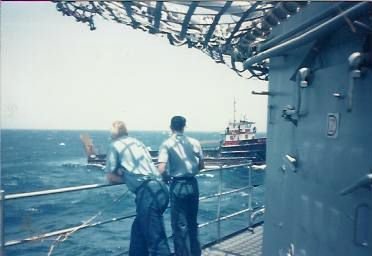
 Truths, Half-truths, and Sea Stories