super food

Extreme remedies are very appropriate for extreme diseases. Hippocrates

Today is a second in a series of posts about the health benefits of certain ingredients in natural “superfood” potions and health shakes.  Specialty stores dedicated to various natural remedies and organic meats and produce were around more than  years ago but they have become large concerns in the last fifteen years.

Research

One of the “superfood” products that contain the ingredients reviewed in this series of posts, is a protein powder marketed by BeachBody, the health and fitness business that distributes through independent “coaches” or agents.    Bilberry, Camu-camu, and Goji berry (also known as Lycium) are all ingredients in the Shakeology supplement.  The National Institute of Health (NIH) reports that bilberry, Vaccinium myrtillus‘s,  high antioxidant content helps the liver process fats, lowers inflammation, and has cancer -fighting agents.  In studies, mostly in mammals, they indicate positive cellular results.  This is in addition to the other reported improvement in vision.  Camu-camuMyrciaria dubia, is a well-research anti-oxidant that counters systemic inflammatory diseases – such as Crohn’s disease, microbial infections, collagen-induced arthritis, and the inflammatory  component of Alzheimer’s Disease.   It (inflammation) is a factor in cardiovascular disease that Camu-camu antioxidants can reduce.   Goji or Chinese Wolfberry, has been used in traditional medicines and general consumption documented for more than two thousand years.  This berry has had positive effects on liver and kidney function as well as eye health.  While scientific research is on-going, Chinese authorities have conducted research for decades to augment the ancient studies.


What are other reasons “superfood” is the new go-to for health-conscious adults?   Poor diet of most in industrialized nations is one reason. The ingredients – including vegetables, fruits and grains, as well as livestock feed are less nutritious than decades ago.    Our food is less nutritious because soil was depleted of natural minerals and ingredients through more than a century of heavy use. Fertilizers and chemical additives were created to grow faster and increase yields per cultivated acre, but this has not substantially increased the nutrition value.    In an article in Scientific American magazine,  this is substantiated.

Anyone who has eaten a non-hybridized home-grown tomato in recent times can identify it over general retail produce by taste and texture.

Available in protein shakes and other retail products,  “superfood” additives are not well understood by the public.  With the pharmaceutical industry constantly advertising a drug for any particular health condition but with side-effects that often include “death” as one potential outcome, there is public interest in other remedies.  Which conditions  may be controlled by diet, exercise, and some natural remedies?

Case study: Self

After age fifty-five,  I became a regular shopper at a local organic market, first for better quality fruit and vegetables, and later for organic (additive and pesticide-free) produce, fresh fish and chemical -free chicken. Using some herbal ingredients and remedies for Men’s health-related complaints,  I would advocate readers and bloggers do research, as experience has taught me that Big Pharma and the agri-industry does not hold all the answers.   My own research began after suffering years of a periodic allergic reaction that caused angioedema in my intestine and soft tissues.  It frequently required hospitalization.  Yet the triggering cause was not found by medical professionals but was self-diagnosed.

In the year leading up to my diagnosis,  I had taken medication prescribed to mitigate the then-unknown cause by suppressing the inflammatory effects.  Daily use of this medication caused chronic acid reflux that persisted almost a year after ceasing use.    This turned me to studying food and making different choices.

Some pharmaceutical medications are based on ingredients used for very long time by rural populations around the globe.  One such remedy, glucosamine,  was generally known to farming and ranching folk in the 20th Century, to relieve early symptoms of arthritis, yet medical professionals were quick to dismiss it without seeing extensive research.   When glucosamine could be obtained in capsule form for pennies, many did not know about it.  And yet within twenty years it became a wonder ingredient on every over-the-counter  drugstore and grocer’s shelves.  At ten times the original price.

Many of these ingredients in superfood have documented research to show their health benefits.   And with the expense of medical care today, an extract of an herb, root, or berry might be an effective alternative or supplement to a Big Pharma product.



don’t smoke that mushroom

Eat it.

Compared to the years I served in the United States Navy, robust health and nutrition of sailors in the Nineteenth Century – the “iron men and wooden ships” of lore- was less a factor of the sea air than good fortune.  Logs of ships’ surgeons from that era contain reports of men lost overboard in storms at sea, accidents, cholera, dysentery,  over- consumption of alcohol leading to death, infections, sexually-transmitted diseases, run -ins with native populations )in the then- relatively isolated foreign ports), and poor diet.

In the years just after Desert Storm,  fresh dairy products, fruit, and vegetables became available fairly regularly at sea due to underway replenishment.   Even in the early 1990s,  it was not uncommon to have powdered eggs, and ultra-pasteurized milk ( the sort the US Army Veterinary Service certified as safe for consumption) in place of fresh more than a week out of port.

It leads me to wonder aloud,  whether the new health-consciousness of many activists for varied range-fed beef and compassionately-raised chicken,  organic vegetables and gluten-free choices, have filtered down to our armed forces.

Most of my peers who retired around 2009 -2010, know that the military began a renewed campaign to fight obesity – discharging members who failed to maintain a standard that – even with body-builders  – was difficult to achieve.   But we also know that society has gotten farther and farther away from healthy diets and regular exercise.

But there are choices.   Although,  I do not expect my local Pizza Port to alter the menus just yet.   And with virtually every town having small breweries popping up,  I do not believe “lite” beer is going to be on the minds of the young men and women today.   However, for those fewer of us, where the excesses of youth are around our waistlines, in our zeal to stay off medicines and out of hospitals,  may yet find ways to exercise moderately and eat tasty, and healthy, food.

When I heard about this Portobello mushroom pizza, I was skeptical.  It is remarkably tasty!

But this also has cancer-fighting properties as well as staying off my waistline.   And I surprised my doctor last Wednesday with my complete turnaround in health.   Thirty-five pounds lighter,  blood -chemistry all in the normal range,  and much happier.   He didn’t ask me how,  but when others may,  I’ll tell them, “Pizza, fish, Chinese food, fresh vegetables.  Yogurt.  And more cooking with garlic, turmeric, mushrooms, and herbal ingredients.”

That gives me the ability to enjoy a nice craft beer.   Guilt-free.    I’m still a Sailor, after-all.

Better living through Nature

After a quarter-century of military service, and now somewhere in late middle-age,  I am like many of my peers, working off “sudden” obesity.   I want to enjoy my upcoming retirement and not help fund my health practitioner’s yacht fund.   I am not the stereotypical military retiree: I want to be much more energetic in my next, hopefully several, decades of life.
23467227_10214700064361881_7515546182225330890_oThe stereotypical military member in film and television for decades were depicted as hard-drinking, hard-living, and either “bullet-proof” loners or stressed-out figures off the battlefield.  Many of our popular movies today feature technology or medical science improving people to “superhuman” capabilities.  But reality is more sobering.  In our Twenty-First Century America, the focus on exercise, outdoor activity, and a balanced diet went away in the late 1960s.   Fast-food convenience like McDonalds, Kentucky Fried Chicken,  microwave lunches and Starbucks hyper-sweet coffee drinks and delivery pizza are turning people obese in grade school.
But you do not have to be a retiree or a military member to notice the country has a serious problem.    After decades eating processed food, junk food, sugar additives, and artificial flavors, anyone can look in the mirror and to many around us and see health problems or in the making. We don’t have to live like this. We can minimize or reverse 1527438516044the effects through smarter choices and exercise. 

One of the reasons to practice eating better and  live healthier is a practical one.  Health care in the United States, or for that matter, in the industrialized world is expensive, tied up in bureaucracy, or when available, can be a long series of procedures, painful, and difficult to maintain a “normal” life while being treated.   Cancer, bad hips, bad knees, respiratory diseases, diabetes, and obesity may be more widespread because we hear about them now in daily conversation or may be a result of our eating habits and stressful lives.
I decided to become better informed and to change my eating and exercise habits.  One of these is to drink a lot of water now – half my body weight in fluid ounces daily.  And not flavored water which often have sugar or sugar-imitating chemicals.    I take long walks before the day starts,  during a lunch break and after work.  (I commute long distances to an engineering job).   With training I am receiving as a part of an online community,  I am using the skills I am learning.   
One of the foods I have been consuming in smoothies for a couple weeks now contains various plants that I realize I know little about.  So  I will share my findings in a series of posts, “Therapeutic Uses of Plants”. Much of this is corroborated by the National Institute of Health (NIH):
 
ROSE HIPS. Contain anti-oxidants. Used as a medicinal ingredient in many cultures. Being studied for its properties in fighting skin diseases, renal (kidney) issues, diarrhea, arthritis, diabetes, and obesity.
 
CHAGA MUSHROOM. Used in folk medicine for its ant-cancer properties. At the NIH, the anti-cancer properties are being studied using mice. Early research indicates the compounds in these mushrooms inhibit certain cancers.
___
Results vary.  But guys like me have dropped a lot of weight, and resolved a lot of obesity-related health issues.  And with the weight-loss, improved energy, and better attitude, the result in the bedroom are pretty fantastic too.  If you would like to know more, I invite you to visit my website:
And connect with me on Facebook or Twitter.

Now hear this!

23467227_10214700064361881_7515546182225330890_o
November 2017

What would it be like not to fear eating?  Being able to choose restaurant food you like without counting the calories because you already know how to eat?   Or to not shop for larger sized clothes and belts?   Or to no longer hate having your picture taken?   What would you like to accomplish, if health issues from overeating were not the overriding “But”  ?    Travel?  Wear a bathing suit at the beach this summer?    Go to a restaurant without a complex plan of what you can and cannot eat, or how much you need to exercise to compensate for eating?

Or if you are in optimum health and weight, but have to always screen what is vegan, or kosher, or follow other diet-restrictive choices.   From illness, hospitalization, and very restrictive diet, I have lost weight.  But the weight is creeping back.  I need to re-train my attitude about food.

20180511_171940.jpg
May 2018

That’s what fascinated me.     Over the coming days, weeks and months, I’m going to live and breathe a new relationship with food.  There’s a new self-paced learning program that sounds great and has a lot of university- and medical- science research to back it up.    I invite you to check it out.    The program is the BeachBody 2B Mindset.   Check it out here.

Unlocking success


pexels-photo-103123.jpeg

Ten Keys to work and life success:

  1.  Measure your success not in terms of monetary gain, power, influence, or education: there are always people who have more than you;  the opposite holds true as well, in that there are always people with less that are more content, peaceful, and healthier with less.
  2. Always give your best effort in your work, whether in employment or in your craft.  There are plenty of others who stop at “mediocre” and complain about “fairness” when others work smarter, harder, and seek to do more.  Make “Invaluable” is an adjective others would use to describe you as an employee.
  3. Treasure an inquiring mind.  If one stops learning, lifegrows dull and colorless.
  4. Be considerate of others.  Your impact may generate positive changes for individuals and communities.
  5. Social media is often argumentative or belittling.  Seek understanding, not to be understood.  When encountering confrontational people who will not accept differing opinions from their own, turn away, tune out, and go play with your family, friends or dogs.
  6.  If you borrow,  treat others’ belongings, tools or work with respect or courtesy.  If you lend, do so prudently and with understanding that it may not return.
  7. If an employer, treat your employees with courtesy, integrity, and compensate them fairly.   If an employee, treat your employer respectfully.
  8. In social settings or with co-workers, do not participate in gossip, slander, or bullying.  The one who offends today may be the subject of other’s offense tomorrow.
  9. In personal relationships, treat one another with kindness, respect and mutual affection.  Be quick to apologize, and treat the other person as you would want to be treated.
  10. Be open to accepting a spiritual component for your life.  Balancing life and work successfully is as much, or even more, a spiritual attuning as human effort.


pexels-photo-1034803.jpeg

getting back in the game

Finishing races is important, but racing is more important. Dale Earnhardt
https://www.brainyquote.com

In the sports world,  professional athletes sometimes get injured or sick.  For some, surgery for torn ligaments, broken bones or other issues requires an extended absence.  In the MLB, baseball players can be put on the DL (Disabled List).  In the NFL, football players have injury categories including the Injured Reserve (IR) list.   For the guy or gal whose career does not have millions of adoring fans, bright lights and cameras or sponsor endorsements,  she can be hospitalized at the worst time where work or family are concerned.  For compulsive, “Type A” people – and I am a recovering compulsive worker –  time away from the office is being away from my team and from the battle. I certainly felt that way when I had to retire from the Navy eight years ago.   It took years to lose that compulsion to be involved  and to simply enjoy being “retired”.

the home stretch

Many know in the game of baseball,  between the “top” and “bottom” of the seventh inning, is a time for the fans to “stretch”.  And then the game resumes.  For a month of recovery from abdominal surgery,  my work life feels it has had that “stretch”.   While I did not plan to be away so long, after a few weeks at home,  the light housework, cooking, and a few other chores seem preferable to the whole regular job thing.

What am I thinking!

Of course, I have been working almost forty years,  so this is as close to “retirement” as I’ve gotten.  My youngest adult son still questions my work ethic, “are you STILL off work? When are you going back?”, he says.   I remind myself he’s only held a real job for two years.  Forty more to go (unless he eventually learns to save a dollar or two).   As a  Baby Boomer I know taking time off only leaves a bigger headache to return to.  What is time off worth to you?

To get a week at home, a few might trade work for a hospital bed.  Fewer still might trade,  for two weeks away,  surgery, staples, hospital food and daily changing bandages.   Maybe for three weeks, one or two might volunteer for a hospital stay, including an operation; a persistent cough that racked your body with pain each time;  use or not use painkillers which alleviate pain but slow down healing; bedrest,  antibiotics, itching  and requiring help to pack medicated strips into the surgical incisions twice daily to properly heal.

sporting legs, backs, sight, and wind

The last leg.  On the back nine. The finish line is in sight.  A second wind has kicked in.  Athletes want to be in the race.  With apologies to Dale Earnhardt, the sooner restarted the sooner I reach my finish line.

After four weeks,   going back to the “job” is preferable.  A discussion I had with a blogger concluded that suffering is needed for great art, drama, and writing.  Is my blogging getting BORING?  I am not suffering!  Where do I get inspired?  Suffering at work.  I am not used to working like this!

With my return to work,  there’s going to be an adjustment. Others are going to suffer.  Dogs won’t have my company during the day.  Barbecuing and making dinner for my wife coming from work are going to be a weekend-only thing.  Coming off the DL is an adjustment.  Work is going to expect that I will return to my suffering program and knock a homer out of the park.  Perhaps my dogs will be inspired to blog.


Humble is not a pie sold at Costco

On the way home from lunch with friends today,  we stopped at COSTCO to pick up a few things.  While I enjoy our Sunday routine,  it is often at odds with how I spend the first part of my day.    As you may know, if you have followed either of my blogs for any length of time,  my wife and I are active members of our church.  For the last decade at least, one  or both of us serve as ushers for our worship service.   For the last five years,  I have been leading the ushers every Sunday for four to six months every year.  And that has helped me to overlook in others the shortcomings we all share.  In biblical parlance – sin.   Greed. Pride. Lust.  Et cetera.  On display at Costco.

“True humility is not thinking less of yourself; it is thinking of yourself less.”
― Rick WarrenThe Purpose Driven Life: What on Earth Am I Here for?

Not that I am immune to “human weakness” by any means.   It’s why I go to church, why I pray and why I depend on the divine to help me when I’m weak.    See if my observations sound like anything you have seen:

  1. The bored clerk helping at checkout who seems genuinely irritated that a customer wants a box to carry out their purchases.
  2. The seven customers waiting in the parking lot behind the man waiting for a particular spot though there are two people pulling out a hundred feet away.
  3. The line of customers congregating around one of the sample stations – sausage, I think – blocking all but the most determined customers from going down the aisle.
  4. A wife berating a husband because he wants to buy some pickles  while she has a month-supply of chocolate in the cart.
  5. Several customers who found a deal – and are buying several bottles of Margarita (premixed) each – though the checkout clerk chuckled to me that Cinco de Mayo is still a month or more off.
  6. The woman who blatantly, if smugly sly, gets in front of me – two inches behind the man in line in front of her – and then motions her gal-pal to pull their nearly empty cart in front of us – three bottles of margarita, two of wine and cheese puffs or whatnot.

These are not representative of all, but a sample of people I’ve encountered.   For myself,  I have to hustle past the stadium-sized televisions positioned at the front of the store,  the random trinkets, and past the alcohol, to the steak and roasts.   I love to barbecue, and could easily spend my week with the smoker or barbecue going daily.

I would love to stuff my face with beef jerky, baked goods or those Salted Caramel chocolates, but that’s what I am declaring war on these days. On my new lifestyle- cutting out carbohydrates – I’m 22 pounds less than I weighed at the beginning of January.  And I intend to be twenty-five pounds lighter by the end of the summer.

Please God, help me love people.  Give me humility.  Help me say “no” to the gallon jug of BBQ Sauce to go with the steaks.   And help me with my own weaknesses!

Early to rise

With all due respect to Benjamin Franklin,  I have to say rising early for the past forty years has not been due to my body-clock eager to start the day.  It was a habit that I developed before age 18 as I had responsibilities ( I worked before school at a ranch which required me to start there at 5 AM).    I am healthier now due to good eating habits,  wealthier due to a skill that is specialized and in demand -but more likely that I am much less given to the wild living of youth – and possibly wiser because I read a lot  – starting with scripture.  Work stimulates a lot of brain activity because something I build and test at work rarely just functions as designed. And I need to determine why – or correct it.  Participating in discussions with friends, peers, educators, and fellow bloggers across the world stimulates curiosity.

To say that this writer’s mind is a cauldron of seething ideas is not entirely accurate at 5 AM on a Saturday.  By sitting on an idea till it hatches, more fully formed, requires patience, time to actually write, a critical editing process, a lot of coffee,  and   Voila!

And then the dogs realize I am up.  Ideas sometimes come during a dog walk, but more often I am focused on them not peeing on mailboxes, a neighbor’s roses or my not stumbling.

Ja-merican

Usain Bolt and Harry Belafonte grew up in my parish – tour bus driver & guide

On a zip-line and rafting tour in Jamaica, the limes, bananas, coconuts, and sugar cane compete with mangroves, towering Hindu bamboo and brightly colored flowering plants for my attention. While zooming through trees up to 40 mph (there are big cushions at the downhill station if the brake and guide fail to stop me) fed my adrenaline-junkie, the afternoon spent on the river was a great way to take in the people and history of Jamaica. The rafting guide explained how various plants have health and medicinal properties – and though Americans sterotypically associated ‘ganja’ with Jamaica, nothing Reginald listed in the average diet included weed.

2017-11-08 15.54.13

Patois is the native Jamaican dialect, and after a brief intro, we were all “ai’-ree” (doing well) and affirming questions with “ya, man”. Jamaicans have a deep pride in their country, and while it is very evident that the poorest Americans are richer than most of the population, I think even the “CJs” -Crazy Jamaicans, (self-named) locals who walk in front of moving trucks and buses – would find much of my complaining young countrymen more than foolish. Though this is my first trip in the Caribbean as a civilian, and a first ever to Jamaica, I can see why people return again and again. For me, the food, grog and Cuban cigars are pleasant but bouncing up and down a rocky and muddy road with a group of laughing fellow travelers and guides on the way to rafting is a lasting adventure.

“Put da lime in de coconut, stir it all up” -Jamaican health tip for lowering blood pressure

working party

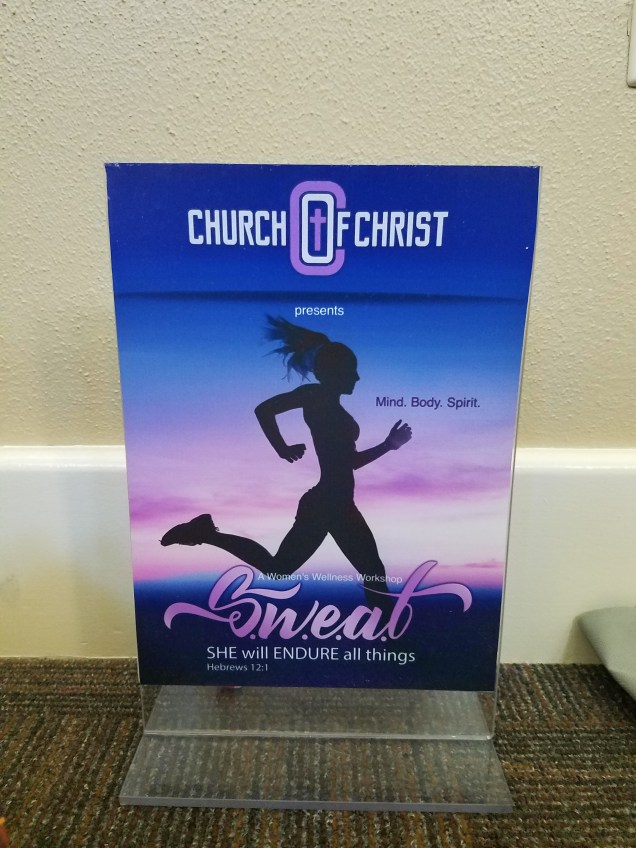
My church sponsored a Women’s workshop this weekend at the former Naval Training Center in San Diego.  It’s now the Liberty Station community.  Asked to help set up, I found myself reminiscing about my recruit and technical training that occurred here 40 years ago.

As the former Senior Chief, I expected to carry a few boxes, direct a couple younger volunteers, and drink a little coffee.  Instead found volunteerism meant an ushering, security and cleanup crewmember for the minister.

20171021_120054But military training never leaves you behind.  Planning, process improvement, kicking “lovingly” a few peers (civilians) in the behind who spent the day “lollygagging” , was all in a day’s work.
20171021_130504


binnacle list

I am an old seadog these days.  In my youth I would rarely miss work, school or a duty day for something as irritating as a cold or flu.  For centuries, if a Sailor went to Sick Call and was placed on the “binnacle list”,  the leading Seaman or later, the Chief Petty Officer would let it be known that Sailor had better be suffering Scarlet Fever or a severed artery.   Shirkers normally found themselves on duty rosters during port calls.   These days I have accepted that I no longer can bicycle fifteen miles to my duty station and immediately run ( and pass) the PRT fitness test –  I was then still under 30 years old;   I probably would not be able to hoist a sixty or seventy Damage Control bag over my shoulder while wearing an OBA * and hustle up or down the ladder during one of the shipboard training sessions – the General Quarters Drill ( I was not quite 36 then).    My older body has stopped writing the checks my ego really can’t cash.  (For those who may never have seen a check, this idiom was once a popular expression.)

There once was a time in America when self-reliance, mental and physical toughness were characteristics of mature males – college educated or working class.  So when an acquaintance talked about his Army veteran dad only recently talking with a Veterans Administration representative about  medical issues he has had for the last thirty years, and getting a disability rating as a result, I listened.

More than twenty years ago,  I was  hospitalized after weeks-long exposure to toxic fumes;  However,  the service and my young invincibility complex made little of it.  In hindsight, a ruptured appendix that year and 20 years of  hospital visits for gastric issues might be connected.   And for good measure, Gulf War inoculations, and radiation might be worth a good look.   Even if the Government declines,  I will gain experience that I can pass on to my son in the Army.  He’s definitely got physical issues that were aggravated by his service.  But he too, is a tough, self-reliant type.  I don’t want him to wait 20 years.

the cradle of uncivil-ization

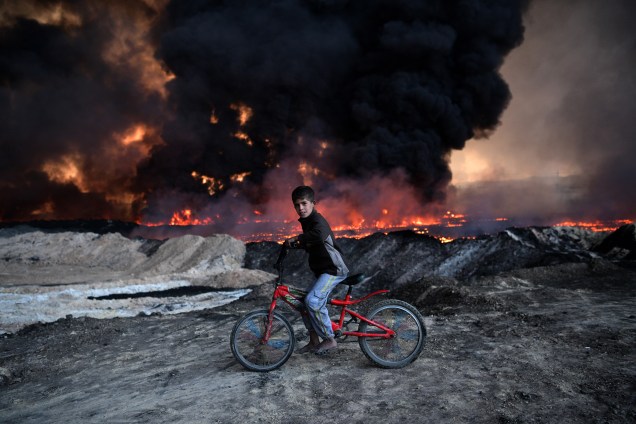
Opening this week’s edition of TIME magazine (June 26, 2017), my eye caught a pictorial article on the environmental battle that was waged last year in Iraq when ISIS set fire to oil fields to hinder the advance of the Iraqi and coalition force pushing them out from the territory they terrorized for years.

Joint Forces Battle To Retake Iraqi City Of Mosul From ISISIt is quite instructive that the world has become well-versed in the environmental  and human toll of oil spills and fires.  In that region, decades of poisoned water, poisoned wildlife,  and landscapes as a result of months of exposure to deliberate acts of evil men,   toxic fumes, oil -laden smoke and chemicals have been largely overlooked by the European and American “globalists”.   Twenty-five years ago,  while one American political party blamed another party,  the apolitical Government bureaucracy was ignoring the toll on forces of the first Gulf War;  I remember the “Gulf War Syndrome”  where U.S. veterans had to fight through the courts to obtain needed care and Government acknowledgement of responsibility for their ailments.
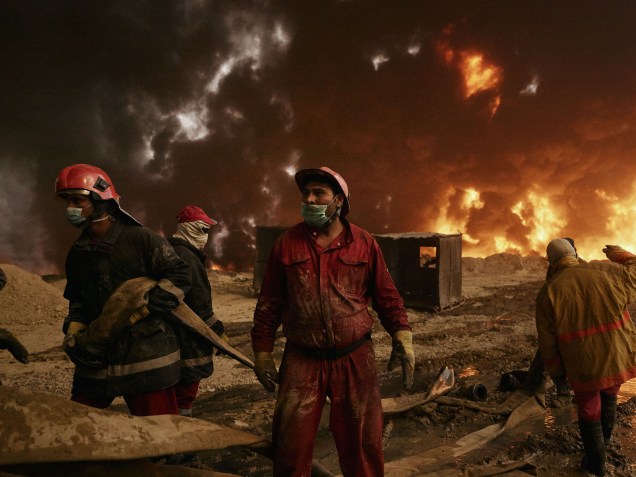
qayarrah_iraq_joey_l_photographer_11_resizingThe TIME article and other sources make the point that the Iraqi firefighting forces – petroleum engineers specialized in fighting these – have been doing so for years.   With ongoing battles against terrorists’  IEDs, bullets at the same time as fires hot enough to incinerate men and equipment,  Iraqi forces extinguished the fires the terrorists set along their retreat.   The Iraqi people who lived through a “scorched -earth” mandate from Saddam Hussein to his forces in 1991, are the same people who suffered again from an extremist army who once again set fires, IEDs, and booby-traps;  from the oil fires damage caused in the aftermath of the Gulf War,  those exposed suffer from cancer, skin diseases, birth defects,  mental issues and myriad other life-shortening illness.  And that terrorists set their world ablaze again, the effects will continue to plague people.   It is no wonder that the poor have risked dying in the attempt to flee to other countries.

While we wonder whether carbon dioxide in the air over the U.S. is a harmful pollutant,  perhaps the same “climate change” advocates can travel to Iraq to advise them that ending America’s reliance on hydrocarbons will end their suffering.

Further reading: