where are the peacemakers?

Photo by Pixabay on Pexels.com

Warriors throughout world history were sent off to war with trumpets, drums, celebrations or religious ceremonies. And over those thousands of years, young men and women were victors or the vanquished. Celebrated as heroes, or corpses left behind in distant lands. Where there are records, including Chinese and Aztec tombs, ancient Akkadian tablets, Homeric Greek dramas, Roman histories, and Biblical scrolls, men and women went into battle blessed by the gods of one side or the other.

“The victims of PTSD often feel morally tainted by their experiences, unable to recover confidence in their own goodness, trapped in a sort of spiritual solitary confinement, looking back at the rest of the world from beyond the barrier of what happened. They find themselves unable to communicate their condition to those who remained at home, resenting civilians for their blind innocence. David Brooks

The Moral Injury, New York Times. Feb 17, 2015″ , via goodreads.com

Photo by Pixabay on Pexels.com

War has always been brutal. Long before “civilized” conduct of war, if there is such a thing, treatment of enemy prisoners, women and children was often slavery or death. Even in the Twenty-First Century, we learn of kidnapping, abuse, and sexual slavery still being committed throughout the world. How many victims were emotionally scarred? How many returning warriors over the millennia were affected by such brutality?

While histories do not record the struggles of the victims of war, and we cannot help the long ago dead, we know that, in America alone, some 22 veterans a day commit suicide. Alcohol and substance abuse, reckless behaviors, and firearms, all contribute to someone with Post Traumatic Stress Disorder killing themselves.

War demands sacrifice of the people. It gives only suffering in return. – Frederic Clemson Howe

https://sayingimages.com/war-quotes/

Where does the isolation begin? People do not know their neighbors, and do not develop real, vulnerable, honest friendships with one another. Governments which send young people to war, have only overwhelmed or emotionally-detached bureaucrats who quickly “treat” veterans and then move to the next sufferer. Communities develop a NIMBY (Not In My Backyard) reflex to homelessness and addiction, and many expect veterans to simply ‘get over it’. Societies do not have a “moral” center anymore. Mass media incessantly blare stories of anger, outrage, frustration, violence, and political blame-gaming. Media sensationalizes suffering; bickering within communities has created more isolation. in such a state, people do not recognize a potential suicide victim’s quiet withdrawal – even within their own household.

Photo by Pixabay on Pexels.com

While everyone seems to have an opinion about the easy access to firearms in America, the easy access to prescription drugs, as well as methamphetamine, heroin, and the most misused though legal drug, alcohol, is no less a societal problem. When liquor store owners knowingly provide booze to alcoholics, on credit, because they know their customer receives State aid and will be paid – they knowingly contribute to that person’s death – or some innocent’s death or injury along the way. That is a problem society should address with equal outrage as to those with firearms.

A first step? Let us as people stop dividing ourselves into “us” and “them”. With that first step, we can then work on empathy. Personal responsibility. And action.

Never think that war, no matter how necessary, nor how justified, is not a crime. – Ernest Hemingway

https://sayingimages.com/war-quotes/
bureaucracy

Any seasoned veteran of the U.S. military who has served overseas, dealt with foreign military allies, patrolled in a war zone, had liberty in many regions where English was not well-understood, or stationed at a U.S. military installation in a foreign country, understands many of the benefits and shortcomings of “Home” better than most.

The reason many 16- to 29- year olds in the United States today embrace “socialism” is due to their ignorance. Without long personal experience of the more mundane aspects of Government bureaucracy, they have only what they were taught and limited exposure. These might be obtaining a driver’s license at the Department of Motor Vehicles, and perhaps a simplified annual income tax filing. Young military members (especially those who marry early in their careers) are exposed to misfiled paperwork, outdated computer systems, confusing terms, differing support for ‘sponsors’ and ‘dependents’, procedures, and the overwhelmed administrative staff inherent in large bureaucracies. Utopians talk of modeling Swedish-style and European Union socialism – without really understanding the development, successes, drawbacks, and requirements. Ignorantly, many promote Government as the best delivery of human needs and wants when they haven’t yet experienced much of what is already under Government administration.

Big Government inefficiency is evident in every aspect of Government-provided services: obtaining vehicle registration and drivers’ licensing; real property titles and building permits; and in family trusts, wills and probate court filings. The limited experience of many, influence the mis-characterized belief that Government harass racially-targeted innocents (police maintain order and enforce laws), disenfranchise non-citizens and “formerly incarcerated” persons (per local, State, or Federal statutes), or limit the living standards achievable to low- or unskilled labor due to “unregulated” employers’ wages and benefit plans.

For others, Government should be reformed to accommodate cultural and social practices of the day, from gender, sex, race, citizenship, language, culture and criminal or civil conviction and incarceration. Policies are very slow to change, requiring many years to make minor improvements. Away from politics and media ballyhoo, Bureaucracy is what the governed are directly affected by and not politicians. Five ordinary examples of Government bureaucracy as it exists today should give some pause to embrace further Government control:

  • Probate: an old woman dies without a “valid” Will. With negligible assets and few bills, selling a home should be a simple affair. But Probate is not simple and not inexpensive. The State Court system is a labyrinth of procedures and calendar entries; an inexperienced layman is doomed to failure.
  • A stolen vehicle is recovered, and one seized for a traffic or criminal violation, are towed away. The towing company applies towing charges, and daily storage fees payable by the registered owner, but requires owner identification and registration validation before releasing the vehicle. When the vehicle owner has lost cash, debit and credit cards, or misplaced a state-issued identification, it becomes a Catch-22 where the vehicle cannot be released to the owner until valid ID is presented and payment made. Until such time as ID can be presented, storage fees continue to accrue. Sometimes, the value of the impounded vehicle when sought is less than the accrued fees.
  • A person with an employer health plan, pays biweekly insurance premiums. In an “emergency”, he visits an in-network hospital Emergency Room for a major health issue. Though the State mandates many “guest” workers, the unemployed, and under-26 year old adults have healthcare, paid by a legal resident taxpayer, the suffering taxpayer waits in line with all the rest who still primarily use ER services (they cannot be turned away legally).
  • A sixty-year old home requires upkeep. A forty-year old, improperly built “retaining” wall collapsed. The solution? Start excavation and proper reinforcement of a new wall in the same location. A homeowner’s decision to follow county regulations: permit, payment of fees, submission of plans and wait for inspections were far more onerous than expected. After project completion an added bonus: An unexpected (higher) property re-valuation and corresponding property tax increase issued by the County.
  • Transportation infrastructure: the Government is authorized by its citizens to maintain and upgrade. While citizens continue to pay higher fuel taxes, fees, and other taxes and fees to pay for maintenance, the Government executes over four to five years, a 25-year old improvement plan which then fails to meet the needs of the community. Bureaucrats and politicians redirect new transportation funds into special projects that overrun budgets by billions. Many of these pet projects are public transit measures that lobbyists favor but 2 percent will ever actually use.

the reason the Soviet newspapers, Izvestia and Pravda, were always sold out was not due to the news content. Toilet paper was chronically limited throughout the country.

interview with a resident of the former Soviet Union (1983)

But the merits of employment, housing, public transit, and basic health care in a so-called Socialist system do not justify an even more complex and inefficient bureaucracy than that which presently exists. Limiting the choices available for services to that provided by State-approved operators only, resulting delays, greatly simplified care, and regulation will disappoint everyone.

laughing matters

“It’s good to be here. I’m just trying to go through life without looking stupid. It’s not working out too well. ”
Brian Regan

https://www.goodreads.com/author/quotes/98398.Brian_Regan

Laughing at oneself is a skill only a few can make into a successful career. And doing so, consistently and without throwing in “F-bombs”, sexual humor, or biting political satire in the mix is more rare. Brian Regan is one such successful “clean” comedian. After years of working in mentally-challenging careers, me, with rapidly-changing priorities, technical challenges to resolve, and demanding schedules, and my spouse performing management and ‘crisis’ counseling of staff, students, and the bureaucracy of an educational institution, we are exhausted. With family drama in one spouse’s family, or the other, or our own for more than a decade, we have relied on laughter to help one another. Laughter is really the best medicine. Next to exercise and improving our diet.

hook ups

Photo by Craig Adderley on Pexels.com

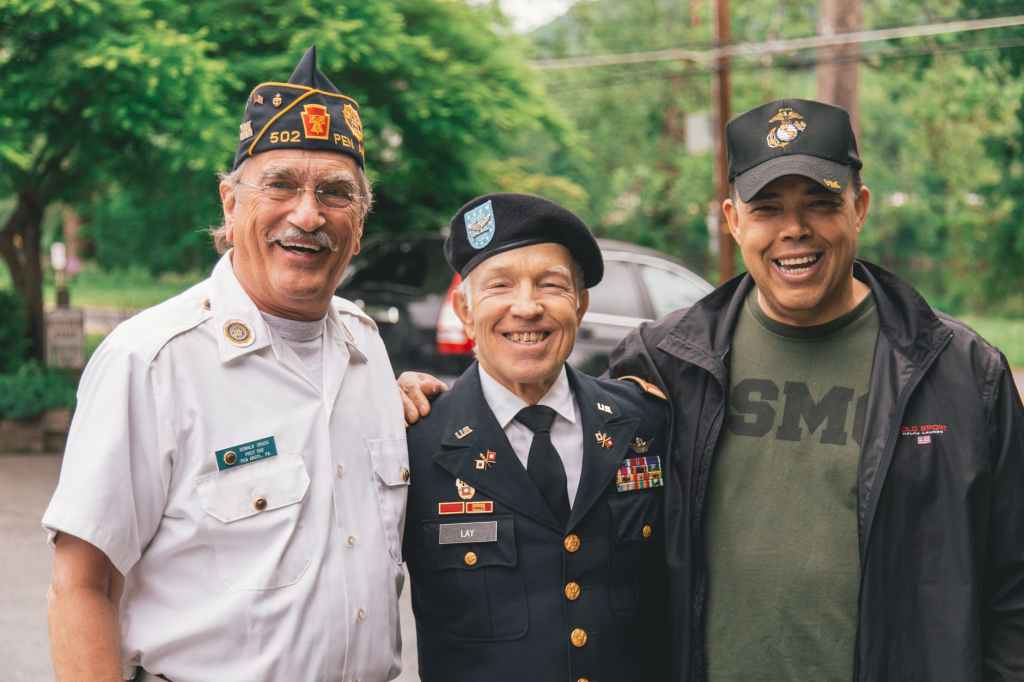
For anyone who has served honorably in the military, the experience, and camaraderie among enlisted men and women (and undoubtedly among commissioned officers, too) indelibly stamps one’s character. We tend to recognize each other, long after having served, from our demeanor, appearance, and way of speaking. Sometimes, we can approach each other with a particular attitude or sense of humor which can be off-putting for any but another military veteran. It’s a veteran sort of thing.

Over the years, as I have gotten my car serviced, purchased materials at a home improvement store, or had work done at home, a veteran is often one of those doing the work. What branch of service or unit were you in? Where did you serve? What was your occupation? Small-talk that builds acquaintance. At the DMV, and the County Recorder office, when I use my retired military ID card, I have encountered veterans, and family members or spouse of a Brother or Sister veteran. And despite age differences, or service during different conflicts, those who can, generally will hook a “brother” up.

Photo by rawpixel.com on Pexels.com

In context, “hook ups” to a military member or veteran, means assistance, discount, bypassing bureaucratic “red tape”, exerting additional effort, and such, to meet the need of another vet or service member. As it happened today, I had requested a junk-removal service to come haul off several items that were bulky and difficult for me to be rid of.

Photo by Craig Adderley on Pexels.com

One of the men who came was a Marine, “not currently serving” (whom civilians might regard as a “former” Marine, but a Marine should tell you that is a misnomer). He saw my “retired” Navy flag and asked me what I did in the service. We chatted a few moments as he and his partner hauled everything into their truck. And I received a little discount – probably 10 – 15 percent. Anytime you get a little help, particularly when it helps your wallet, it can be a nice “hook up”.

family bonds

Forty-two years ago, a kid from a dysfunctional family got off a bus from the airport at the entrance to the U.S. Navy Recruit Training Command, San Diego. The following eleven weeks for me and my fellow recruits physically, mentally, and spiritually reshaped us into a military unit and family. Through shared sufferings, goals, and mindset, we changed from unruly civilians into Sailors.

The bond that links your true family is not one of blood, but of respect and joy in each other’s life. Rarely do members of one family grow up under the same roof. – Richard Bach, novelist

http://www.wiseoldsayings.com/family-drama-quotes/

After a few years in the military and several more as a civilian, the Navy again became my “family”. Abandoned by an unhappy wife (she later was diagnosed with mental illness), my military family was preferable and predictable. During the years that relatives would not talk with one another – or with me, one divorced parent lay dying in hospice and the other was living purposely alone in the Sonoran desert. I rarely spoke with one of my mother’s siblings, never with the other or her daughters, and only after my mother’s passing have I deliberately and earnestly sought conversations and visits with my father’s relatives.

Here’s a news flash: No soldier gives his life. That’s not the way it works. Most soldiers who make a conscious decision to place themselves in harm’s way do it to protect their buddies. They do it because of the bonds of friendship – and it goes so much deeper than friendship. Eric Massa

https://www.brainyquote.com/quotes/eric_massa_481858

Over twenty-six years in the military, twenty years of fellowship in my church, eighteen and a half in marriage, and in fourteen years with a company where I just retired, did I develop a trust, a bond, mutual respect and joy with people I was related to only by common experience. My marriage is a gift of trust and joy shared not through shared DNA; it was her children accepting me and them accepted as “our kids” – proving that DNA does not define family.

35 By this everyone will know that you are my disciples, if you love one another.”

John 13: 35 (NIV)

So when you see two or more veterans gathered together, laughing, crying, and swapping stories, they likely are not related, nor may they even be from the same service, or of the same generation, but all have common experience. They are family.

Exit, stage left

In the 1960s, Saturday morning cartoons were a favored diversion as I had my bowl of Fruit Loops (or oatmeal, when my mother intervened in my breakfast). The cartoon lion, Snagglepuss, had a trademark saying whenever he faced a challenging situation. ” Exit, stage right” or “Exit stage left, even!” However, I was never one to flee from demanding tasks. I think of Snagglepuss now as a classy way to exit this career and explore some new roads.

I am old enough to remember a simpler time, for kids anyway, when the American work ethic was the envy of the world. Parents, neighbors, and teachers taught me values and work ethic. I already had figured out about hard work, respecting others, and making your own way in the world, since I earned money from before and after-school jobs since I was 14. After a few years in the service, and then four years in college, I went back into the service in 1987 and remained in uniform until 2010. The unit held a great ceremony, gave me a nice party, and a wonderful shadow box of my military memories. I was already working at Viasat, so I had my second career already figured out.

I retired from my second longest career today. Well, technically, my last day is tomorrow, but our division threw me, and a co-worker also retiring in August, a retirement party. This latest career was the closest I have come to the camaraderie I felt in the Navy. And now, what does a two-career veteran do at age sixty?

Start my own business, or more accurately, support my spouse who started a business. I am sure the Senior Chief or the Engineering technician can tackle just about any business issue.

“Gray Area” to Blue retirement

My previous post talked about the not-so-smooth process that members of the Retired Navy Reserve (“Gray-Area” reservists”) who are turning sixty in 2019 are facing. For my shipmates and their families, I need to pass on what I have encountered to help you with the process.

First things first

The first step is to submit the member’s application for retirement pay to PERS-912. While the Navy’s website instructs the member to apply within six months of her 60th birthday, it would be more prudent to apply nine months to a year beforehand. An article in the Navy Times from August 2018, describes that the Navy was not prepared for the number of applications the last of the Baby Boomer Navy retirees submitted. And the current website advises the department is processing applications received eight months ago.

One unusual detail, which seems to justify an experience I had with the Veterans Administration evaluating me for disability (things that occurred during my last period of Regular Navy (DD-214-issued) service), is the Navy Retirement branch not possessing complete military records for the period after the member transfers from Active Duty service to the Navy Reserve. I remarried while I was Reservist, and though that information was entered into my Reserve record, into DEERS, and I received pay accordingly while activated, PERS-912 – four months after my January submission – asked me to provide a marriage certificate.

Blue ID card after 60

After the member submits an application (forms DD-108 and DD-2656) found on the PERS-912 website, the Navy clerk should contact the member acknowledging receipt within a week. A letter from PERS-912 usually follows in the snail mail. In subsequent months, the member turns sixty, and requires a new ID card, before eligibility for medical benefits and other access privileges are “turned on”. While I am unfamiliar whether “Gray Area” reservists who had enrolled in TriCare ( the medical insurance system for military members and their families) prior to turning sixty have the same issue, the TriCare enrollment site does not allow a member to enroll from the expiration date of one’s ID card until it is renewed. However, there is no information provided on the website clearly describing why the links are unworkable. Thus this tidbit is instructive.

On the website to request an appointment for a new ID card, there may be a statement about a window from sixty to ninety days prior to card expiration to renew, but that is NOT APPLICABLE to Reserve Retirees turning 60. The member can only renew on or after his sixtieth birthday.

Patience is rewarded eventually

Should efforts to contact PERS-912, the clerk that contacted the retiree about processing one’s record, may prove unsuccessful, there are additional contact numbers though not intuitively obvious. After the first of the month, when the member might expect to receive retirement pay (via Direct Deposit) comes and goes without payment, the obvious step is to contact first DFAS, the Defense Finance and Accounting Service. MyPay, which is the same one used during the member’s service period may have an ambiguous non-statement. Contacting a representative requires a telephone and a lot of patience. Waiting on hold may take an hour or more to speak to someone. For Reservist retirees, use this number:

1-866-827-5672, Option 1

Be prepared for phone disconnection, the computer system to be “down”, and the like. If DFAS does not have your retirement pay being processed, the member is directed back to PERS-912. To avoid more confusion, but not the “on hold” of an hour or more, call

1-833-330-6622

At least, from every indication that one may find via social media from fellow Reservist retirees, payment does come through, and backpay is provided to the date of eligibility. It is not clear whether those members who first apply for retirement pay AFTER turning sixty will receive retroactively.

the check is in the mail

and other misadventures of Navy Reserve retirement

Ten years ago, in August, I began my last months of work for the United States Navy as a uniformed member of the Navy Reserve. The following April I officially retired from the Navy Reserve. While many of my fellow Sailors retired at 38, 40, or 45, I was then 50 years old. For many Reservists who do not elect discharge, they are placed in a status the Navy calls “Gray-Area Reservist” for the next fifteen or twenty years. Like me, when eligible to draw retirement pay at age 60, we would receive retirement pay calculated from the Active Duty rates in effect at that time.

I turned sixty a little over a week ago. I expected a couple of enrollments, phone calls, and some waiting to be required. And predictably, it is a Government bureaucracy after all, it has not been a smooth process. For anyone familiar with the Affordable Care Act and the complexity of the online process of a Government-run website, the application for military retiree- healthcare (TriCare) was somewhat nebulous.

As it turned out, when I and my spouse got our expired ID cards replaced ( needed because I changed status at my birthday) , the healthcare site I had visited several times last month then became user-friendly-ish. Apparently, it only worked for the brief time I, prudently, enrolled my spouse (first) in a healthcare plan. Telephone numbers resulted in long wait times or directed me to the same website where I had issues. For the next week, that website obstinately would not let me complete my own enrollment! Finally, I got online but it asked me to pick between two confusing status changes I had not seen before. I picked the more unintelligible of the two, and successfully completed enrollment.

As for processing my retirement pay, a different bureaucracy altogether. It was a redesign of the website I had years ago monitored for my Navy Reserve pay, but the messages this year only told me it had nothing to tell me. No updates. And for anyone who has tried to use a telephone – a last option – it requires more patience than most can muster. After three hours on hold (I was disconnected once), then reaching a person only to be told their computers were offline, I ultimately learned that my records were still at the Navy Department. And from the Navy Department – a telephone number I only discovered by reading some commentary and related military-news websites – my record was still in the queue. Apparently a document the Navy should have had for the prior nine years I had been in uniform, that I then re-sent them – held up processing. I decided to give them an additional month before trying again.

While many of my peers, my children and their peers – Generation X, Millennials, and Generation Z, all believe in the Government as the best delivery system for Free Healthcare, Free Education, Free Housing, and Happiness, they had better stock up on anxiety medication now. I have patiently waited for ten years to receive the promised pension for Navy service between 1977 and 2010. I can wait a little longer because I put aside a fund over the last twenty years to live on one day. Until the Government decides to manage THAT – and we are stuck in a jam of red tape and offline computer systems – I will not be in a bread line.

the fog of war, and other business problems

One of the most basic issues in business that causes inefficiency or worse, confusion, is miscommunication. And as things get more technology-dependent, communication stubbornly remains an obstacle to be overcome. Communication difficulties between people or now, also between machines, can be more than an irritant. With various militaries, it contributes to lacking situational awareness and can wreak havoc in wartime.

How does this relate to your or my business venture? Everyone has, at least once, experienced a presentation to prospective clients, current clients and co-workers “hang” for a sound issue, a wireless network password mismatch, or in certain situations, restricted or “secure” computer channels failing to connect due to out-dated “digital certificates”. Being able to handle the various unexpected situations that involve either the work site, the clients, problems with technology, or bureaucracy, is part of a successful entrepreneur’s skills.

Information technology and business are becoming inextricably interwoven. I don’t think anybody can talk meaningfully about one without the talking about the other. Bill Gates

https://www.brainyquote.com

Anyone over age forty has at least heard of, if not actually used a fax machine. We use ‘analog” transmission (if you have ever misdialed a telephone number and heard a long series of tones or chirps- that’s fax) to transmit and receive client tests/reports. So it was that my business submits examinations via a fax to an nationally-recognized agency that scores and reports back in short order whether a prospective healthcare worker has passed or failed the exam.

What can possibly go wrong with that? Well, either with the human, the machine, or the medium being used! With experience, our management team recognizes when the scoring or report cover sheet is missing data “bubbles”. Or someone misses the instructions about using a pencil – and a specific one. at that. (We carry dozens to meet a need.) Anyone who has taken a multiple choice exam filled in with a No. 2 lead pencil might remember that “stray marks”, multiple “bubbles”, or incompletely-darkened ovals can be misinterpreted. Or in certain specific situations, a device with an internal battery was not charged prior to being needed. Or the communication system may be plagued with “poor line conditions” generally at the distant end we all agree , or equipment power issues. Sometimes, in an age of Voice Over Internet Protocol (VOIP), that is, phone running within the Internet, we have experienced a lack of connectivity before the “fax” transmits or receives.

fax machines
not a musical instrument nor a museum piece

In these situations, a successful business person should try to mitigate the embarrassment and irritation we all might feel. Take a moment to relax. Breathe deeply. Remain calm. And then, to quote a recent client, and entrepreneur who is a retired military man, in this situation, one only needs to “adapt and overcome”.

before Lightyear there was another Buzz

Buzz Aldrin stepping onto the Moon, 1969

The second person to set foot on the Moon, “Buzz” Aldrin, is a living icon. The late Neil Armstrong and the Command Module pilot, Michael Collins are the other two legends of Apollo 11, whose feat of landing on and returning safely from, the Moon are celebrated today. Had it not been for a clear challenge, originating between two competing ideologies, the “West” and the Soviet Union – which first successfully put a man into space, the technology we take for granted would have come around a lot later. Generation X, Millennials, and Generation Z have cell phones, cable television, and solar panels today, due, in part, to the science that sent mankind into Space, filtered down to the rest of us. The motivation for Governments may have been political, but undeniably, people are dreamers, builders and adventurers, too. Mankind advanced from stone tools to building the first flying machines in 100,000 years. From barely leaving the ground to launching orbiting satellites: less than sixty years. And from orbiting rudimentary satellites to putting people on the surface of another world and returning them, safely, in less than ten. And in the last half-century? We should be. in Star Trek parlance, “beam me up. Scotty!” by now.

When a human being first set foot on the Moon fifty years ago today, I was five days short of ten years old. When I ask my children today what they scientific achievements remember from the time when they were ten, space flight is not among their first memories. Movies and television, created with the technology inspired by the science and engineering of the Space Program, they recall.

Star Trek, Star Wars, and a host of other fascinating stories involving travel to other stars have filled the human imagination with possibilities. But the first grainy images on a television set of Neil Armstrong and “Buzz” Aldrin setting foot on the Moon, was the reality that people working together, around the globe, could achieve impossible dreams. We are starting to finally see private enterprise invest in next-step ventures. We have man-made objects moving through interstellar space. In the last half-century the amazing feat of people living and working in orbit, the probes that visit distant asteroids or Pluto or travel in interstellar space have garnered less attention than someone’s latest inappropriate Tweet.

We need a challenge to unite millions to travel into a new Frontier. It is time to send adventurers, dreamers, and builders out again. In the rallying cry of that Disney character, Buzz Lightyear, in the Toy Story movies,

“To infinity and beyond!!”

Home, a quarter-million miles away