Ch-ch-ch-ch-Changes
(Turn and face the strange)
Ch-ch-Changes
Don’t want to be a richer man
Ch-ch-ch-ch-Changes
(Turn and face the strange)
Ch-ch-Changes
Just gonna have to be a different man
Time may change me
But I can’t trace time – David Bowie Changes
David Bowie was a genius when it came to his music and his showmanship. He could repackage himself over the years and always be fresh and draw attention. I think it is time to make some changes to this blog. I need to have a fresh approach and better content. When I started this blog, I was recalling memories of lessons learned, places visited and people who impacted my life over twenty-five years in the Navy, and lately, remarking on current events that were Navy or military-themed. But what about writing fiction? A comic strip? Possibilities.
Recently the company I work for changed its brand identity, and introduced a new logo. They hired a public relations firm. I have more than fifty subscribers. I need your help. I am looking for feedback on this fresh look for Truths, Half-Truths and Sea Stories. Like it? Hate it? Don’t particularly care? Let me know.
In the sports world, professional athletes sometimes get injured or sick. For some, surgery for torn ligaments, broken bones or other issues requires an extended absence. In the MLB, baseball players can be put on the DL (Disabled List). In the NFL, football players have injury categories including the Injured Reserve (IR) list. For the guy or gal whose career does not have millions of adoring fans, bright lights and cameras or sponsor endorsements, she can be hospitalized at the worst time where work or family are concerned. For compulsive, “Type A” people – and I am a recovering compulsive worker – time away from the office is being away from my team and from the battle. I certainly felt that way when I had to retire from the Navy eight years ago. It took years to lose that compulsion to be involved and to simply enjoy being “retired”.
the home stretch
Many know in the game of baseball, between the “top” and “bottom” of the seventh inning, is a time for the fans to “stretch”. And then the game resumes. For a month of recovery from abdominal surgery, my work life feels it has had that “stretch”. While I did not plan to be away so long, after a few weeks at home, the light housework, cooking, and a few other chores seem preferable to the whole regular job thing.
“What am I thinking!”
Of course, I have been working almost forty years, so this is as close to “retirement” as I’ve gotten. My youngest adult son still questions my work ethic, “are you STILL off work? When are you going back?”, he says. I remind myself he’s only held a real job for two years. Forty more to go (unless he eventually learns to save a dollar or two). As a Baby Boomer I know taking time off only leaves a bigger headache to return to. What is time off worth to you?
To get a week at home, a few might trade work for a hospital bed. Fewer still might trade, for two weeks away, surgery, staples, hospital food and daily changing bandages. Maybe for three weeks, one or two might volunteer for a hospital stay, including an operation; a persistent cough that racked your body with pain each time; use or not use painkillers which alleviate pain but slow down healing; bedrest, antibiotics, itching and requiring help to pack medicated strips into the surgical incisions twice daily to properly heal.
sporting legs, backs, sight, and wind
The last leg. On the back nine. The finish line is in sight. A second wind has kicked in. Athletes want to be in the race. With apologies to Dale Earnhardt, the sooner restarted the sooner I reach my finish line.
After four weeks, going back to the “job” is preferable. A discussion I had with a blogger concluded that suffering is needed for great art, drama, and writing. Is my blogging getting BORING? I am not suffering! Where do I get inspired? Suffering at work. I am not used to working like this!
With my return to work, there’s going to be an adjustment. Others are going to suffer. Dogs won’t have my company during the day. Barbecuing and making dinner for my wife coming from work are going to be a weekend-only thing. Coming off the DL is an adjustment. Work is going to expect that I will return to my suffering program and knock a homer out of the park. Perhaps my dogs will be inspired to blog.
Four American Special Operations soldiers who died in an ambush in Niger were reported to have died as a consequence of improper planning, training, and taking unnecessary risks – a “culture of complacency”. Summarizing details in a classified Pentagon report, military officials found “low-level commanders, eager to make their mark against local militants in Niger, “took liberties to get operations approved through the chain of command,” ” according to the Wall Street Journal article today.
In the collisions between U.S. Navy warships and civilian freighters in 2017, the Navy found the same consequences of complacency, not following procedures, and overconfidence. In recent articles describing mishaps in Air Force and Marine Corps aviation, both cite decisions regarding decreased training hours for pilots, as well as decreased material support and funding resulted in increased mechanical failures and pilot error, particularly in the last several years.
For years, much of the attention paid to combat-action, training or mission-related casualties has focused on politics, funding (budget), and defense contractors, but less has been paid to warfighter training and culture. In the last twenty years both the warfighters themselves and the military services have “adapted” by the social norms of the day. Competitiveness, rigorous thinking, physical prowess, and unity of singular national identity ( e.g. American, not hyphen American, or French, not Algerian-French) has been debased internationally in favor of equality, fairness, tolerance, and individualism. Regardless of sexual orientation, gender, or spiritual concerns, a warrior culture has to be obsessive and unyielding about unity, training, respect for and obedience to authority, to mission and to nation. A warrior commander has to be pragmatic about readiness, mission planning, and risk. While there is always some acceptance of risk in any effort, there is no room for overconfidence, personal ambition, or politics in military operations.
However, with human beings comes human weakness. From the American ambassador during the Barbary Wars (at the beginning of the Nineteenth Century) who diverted support from the U.S. naval commanders interdicting pirates because he was not consulted, to the battlefront commanders who did not receive accurate enemy strength numbers when advancing on Tora Bora during the initial Afghanistan campaigns (with some fault from communication issues), character, training and planning shortcomings have resulted in unintended casualties. While it is true that military forces, particularly among the NATO alliance, have become better trained, better equipped and more unified, particularly in communications (Blue on Blue, or “friendly fire” incidents declined), veterans, families of currently-serving members, and the public need to press our civilian leaders to make the necessary changes from the ground up. Better leaders make better institutions. Better institutions makes better people. Better people make better warriors. Better warriors make better decisions.
Looking over all the random stuff I have collected in my travels years ago in the Navy, I am recalling how much I learned about marketing since those days. For the longest time, I was quite the buyer. Fresh out of bootcamp, I was “accosted” by a photography film and developing service. I think they were out of business before the contract expired.
“you are going to see the world, kid. You need something to take pictures and to develop them. Sign right here…”
It took a while to learn to bargain proficiently – which is how most of the world operates between vendors and customers. I love hunting for bargains today. I am always asking for any discounts, and chatting with anyone and everyone. But many, even today, will not admit they may subscribe to the old saying, “a fool and his money are soon parted”.
Thinking back to my childhood, two of my favorite characters from television or movies who were amazing at marketing (trading goods), was Pat Buttram’s Mr. Haney in the 1960s television comedy, Green Acres, and Don Rickles character, Crapgame, from the movie, Kelly’s Heroes.
Whether knowing the “talk” of a salesman with just about anything you wanted – or didn’t want, and helping me to avoid “being sold” to a guy who could trade up to get what he needed, I know that my experiences in the Navy were invaluable in my later years. If it was a more-comfortable chair for my boss in the Pentagon, I could get one through “appropriation”. Or if some repair work was needed sooner than the bureaucracy allowed, I could barter favors for moving the work order to the top of the “day’s worklist” stack.
But in the early years, particularly when traveling around the world, I was a tenderfoot with a pocketful of cash, so there were life lessons to learn in salesmanship and becoming a prudent shopper. How many of us, Sailor, Soldier, Airman, Marine, or merchantman have walked past a street hawker without looking or at least listening, to the pitch for gold, jewelry, or girlfriend – swag?
“My friend, my friend, I give you good deal!”
There was always a little marketing going on, from trading shipboard things like embroidered military unit patches, engraved Zippo lighters, military ballcaps. Before widely marketed, Levi’s jeans, Nike shoes, and other “Americana” might make good currency. Sometimes, barter involved Marlboro cigarettes, American whiskey, or music CDs. Yes, kids, there was a whole economy going on, before Paypal. Before Amazon. Before the Internet. A long time ago.
I recently found and then misplaced a picture of me and my shipmates sitting in a beachfront cabana somewhere in South America, decked out in Panama hats. Must have been Ecuador. We had encountered a pretty streetwise kid- a New York City kid visiting his uncle there – who was helping Sailors with the local menu and beer prices. I think he made a kickback but we weren’t complaining. Does any American twenty-something really understand the foreign currency conversion to the dollar? After blowing through your money on the first visit, wisdom then seems to show.
Bulgarian currency circa 1995
And then there are unique buying opportunities. Ecuadorian vendors in Manta presented me with “genuine” Inca figurines. They were clearly cheap copies but the women selling them from a blanket made me feel I had to buy something. At a beach cabana a kid sold me (yes, I bought one) a fishnet hammock.
In Toulon, France, others offered ladies handbags far more reasonable than the Cannes Louis Vuitton storefront (of course cheaper meant a knockoff). I told my shipmate he could have saved $400 and his spouse wouldn’t have known the difference. Yet he bought the real thing. There were replica French (a nicer word than counterfeit) perfumes in Egypt. One sailor was buying these and fancy stopper bottles from other vendors, to resell at home.
Elsewhere there were Turkish carpets, former-Soviet Army medallions and belt buckles, and amber jewelry (in Bulgaria). Leather goods and inlaid gold and metal items in Spain. Jewelry using ancient Greek and Roman coins in Greece. Tailored suits in Sicily. How many visiting sailors bought panini sandwiches from buxom women in waterfront kiosks in Toulon, France? (These women were Italians!). Anyone visiting Toulon at the time knew “smash” sandwiches.
With the Internet, I imagine these same vendors now have Point-Of-Sale shops, Apple Pay, PayPal and international shipping. Perhaps I too, shall open a little shop. “I give you good deal!”
Getting gas this afternoon for my wife’s 2016 Kia Sorento, a couple guys were chatting it up at the 7-Eleven gas pump. I took them for car-guys. Both men were Forty-ish, one looked a professional (that is, car-guy Neiman-Marcus Sunday casual), and the other guy – who probably HAD money – looked like a grease monkey mechanic. Both drove Datsun Z cars, the former, a jet-black early ’70s 240Z, and the other, an orange (“burnt sienna”?) 260Z.
“That’s a 240Z, isn’t it” I stated. It’s always important for a car-guy to have other guys recognize your car – particularly a 45-year old sports classic. The “grease monkey winked, ” no. it’s a 350″. But to anyone who was driving before DATSUN became Nissan, a 240Z or a 260Z were the cars that parents of the Millennium “Fast N’ Furious” movie franchise fans might have driven on Friday night or weekend road rallies. I road in a 240Z twice in forty years. I was in the Navy in 1979, when my buddy Ron owned one. We drove around San Diego in that car for a year before he had the money to get the car modified to be a street-legal (barely) racing car. A weekend after getting the car back, he had to park the car off the Naval Training Center grounds until he got all the proper papers to get it registered. And sometime around midnight, a drunk Marine careening out the base Main Gate slammed into it totalling the car.
The last time I road in a Datsun 240Z was six years later. I road with a co-worker between Tucson and Phoenix at a 100MPH (160 Km) when our employer sent us to do a job up there.
But I had always wanted a fast car. In 1978, I had been looking at sports cars, but being young, single and in the military, I had money but not much sense. I found out when I tried to sit in the sports cars, that I was like Cinderella’s stepsisters – I would have to cut a body part off to fit. To get into a sports car, whether a Triumph TR6, or MG, or other two-seater, I needed my legs cut off at mid-calf to shoehorn in. So I focused, daydreamed, even obsessed over American steel. In the 1970s, San Diego was a smorgasbord of muscle cars – Firebirds, Camaros, Pontiac GTOs, Mustangs, Dodge Chargers and Plymouth Barracudas among them.
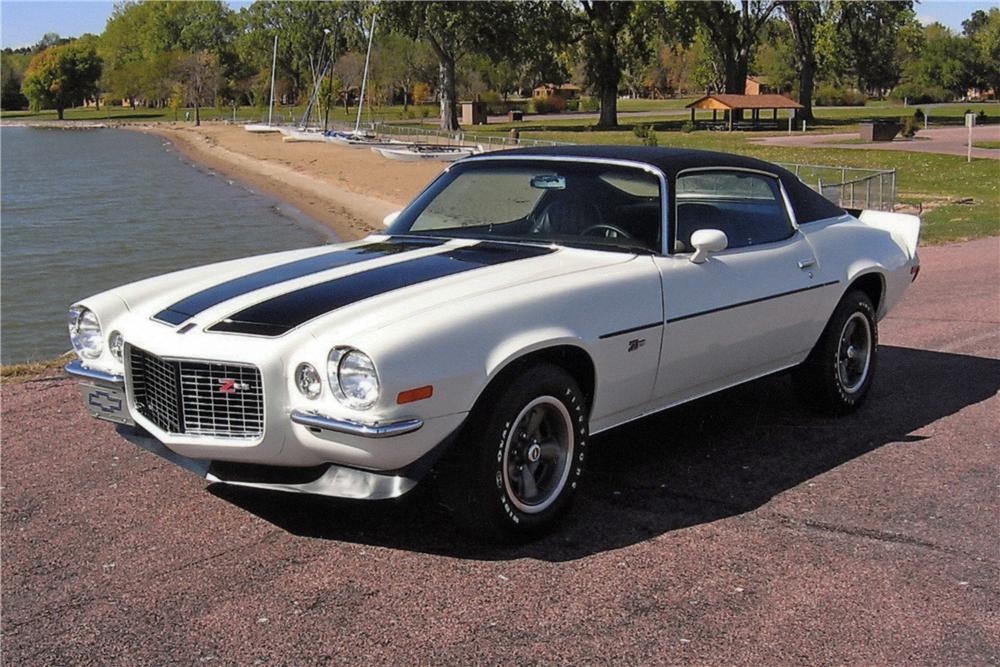
I transferred to Pensacola, Florida in 1978. Where gasoline was 67 cents a gallon, the South was almost equal to Southern California for the muscle car selection. I thought I would buy a Camaro. I was almost ready to part with cash, burning a hole in my pocket, until one of my friends noticed something a little unusual with the 1973 Camaro (like the one pictured). Bondo in a quarter panel. Bondo in the trunk. Rust! Rust meant that this car had spent considerable time in the winter snows of the north and Eastern seaboard. So I found and bought my second choice which was a 1973 Chevrolet Nova like the one pictured. It had a six-cylinder engine, and though I had started to work a deal to swap in a Corvette motor a local guy had for sale, the deal never went through. Pity. I could have driven 140 MPH on weekends from Pensacola to New Orleans. Or more likely been a guest of Roscoe P. Coltrane (Dukes of Hazzard) real-life southern sheriff counterpart somewhere between Florabama, Alabama and Gulfport, Mississippi.
There probably was a fairy godmother looking out for me. In 1980, I drove a friend’s 1970 Chevelle SS around 130 MPH along the I-5 one very early Saturday morning between Anaheim and San Diego, I didn’t have another chance to go fast until my drive in a 1972 Corvette Stingray in Tucson. And my buddy only allowed me the one test drive. Not that I was a reckless driver. If I kept driving fast cars, I was a little too much of a lead foot to make it out of my Twenties. That Chevy Nova may have been just the pumpkin I needed to have my life today.
Serving honorably in the U.S. military, a veteran who was deported to Mexico, Hector Barajas, gets well-deserved news: U.S. citizenship. ( https://www.nbcsandiego.com/on-air/as-seen-on/Deported-Army-Vet-Granted-U_S_-Citizenship_San-Diego-478353393.html ) And he did not just while away his time in Mexico, but served fellow deported U.S. military veterans – opening a Tijuana VA Clinic. With all the nonsense about non-citizens demanding rights and privileges of citizens, as well as their supportive legislators and lobbyists who brazenly chastise this country and citizens, it seems that justice is finally at hand for someone who put skin in the game. Barajas -Verela had been brought to the US when he was seven. In 1995, he enlisted in the Army and served in the 82nd Airborne. He had an incident with a firearm in 2002, resulting a year in prison and was deported. After Afghanistan and Iraq wars, the United States has seen more veterans with substance abuse, civil and criminal issues. A deportation should not have been punishment for an honorably discharged veteran. After California Governor Brown, pardoned him last year, it enabled Barajas to obtain citizenship.
150 year history: citizenship for service
In 1862, a law granted expedited naturalization to foreigners serving in the U.S. military. If you were willing to die for America, you should be able to become a citizen was the rationale. Unfortunately, between 1875 and 1917, racism clothed in a quota system hindered the Asian-born from the same privileges. But the Spanish-American War brought change to that thinking. For most of the 20th Century, ending in 1992 with the end of an American military presence in the Philippines, Filipinos could enlist in the military. They would gain skills, have a successful career and earn a retirement. It was a path to citizenship due to a government immigration policy that serving during a conflict could enable naturalization. In 1990, an Executive Order by President H.W. Bush declared that any military member, Active Duty, Guardsman or Reservist could apply for citizenship without a residency requirement. And since July 3, 2002, President George Bush signed an Executive Order that all non-citizens serving since September 11, 2001 could immediately apply for citizenship. Its provisions included veterans of past wars and conflicts. But apparently, in 2009, the U.S. again amended the policy of enlistment and subsequent naturalization to only those who were in legal possession of a Green Card at the time of enlistment.
It is a fairly complex issue when a state government refuses to follow Constitutionally-granted federal laws on immigration. Worse, for Deferred Action for Childhood Arrivals (DACA) legislation continued support or calls for repeal, persons affected are not just students at prestigious universities using scholarships, taxpayer support, and university grants, but also honorably-serving military member (s). Many of these foreign-born enlistees have skills, particularly in certain language dialects, and received entry by virtue of the Military Accessions Vital to National Interest (MAVNI) program.
President Obama’s Administration is praised for DACA, under him began restricting the enlistment of those subject to the legislation. By introducing more-stringent vetting, the Executive Branch wanted to identify potential security risks, those with a history of criminal behavior, and those with ongoing foreign allegiances. The issue now is under review by President Trump, but ending the DACA program and potentially deporting the now-adult children will harm those who want to – or are now serving in the military. Politics may again ‘trump’ the President. While President Trump may truly want to treat “Dreamers” with respect and fairness, there are Congressmen who may force the issue. =
It is perhaps up to those of us who have served honorably in uniform, to let our elected officials -most of whom have not served in uniform – know that grandstanding about DACA, is not just about rebellious state officials, lobbyists with agendas, and one group of students using resources that are denied to legally-entitled students; this also affects our brothers and sisters in uniform. With all the televised nonsense about foreign flag-waving, non-citizen students, laborers, and tenured professors demanding rights and privileges, I will gladly support a foreign-born sailor, soldier, airman or marine who want to serve the nation he resides in, becoming a citizen before any of them.
12 Moreover, no one knows when their hour will come:
As fish are caught in a cruel net, or birds are taken in a snare, so people are trapped by evil times that fall unexpectedly upon them. Ecclesiastes 9: 12
A passenger on Southwest Airlines Flight 1380 died in a freak accident yesterday. One of the engines on the Boeing 737 had a mid-air explosion and shrapnel entered the passenger compartment causing depressurization. Seven others were injured. According to the British tabloid The Sun yesterday, she was Jennifer Riordan, an Albuquerque banker with Wells Fargo. Seems like such a brief statement, to be identified by a person’s occupation. Whose lives did she change. Whom was encouraged or loved or cared for. Yet, a husband has lost his wife, and their children have lost their mother. Let the community rally around the living and that the airline company moves quickly to do everything possible to care for them, the injured, the other passengers and crew.
Honor the Pilot’s Skill
The flying public, myself included, take for granted, after sixty or more years of travel that nothing will disrupt our cocktail and peanuts, the in-flight Wi-Fi or movie. But silently we depend on the professionalism and skill of the pilot and crew. Hundreds of lives at 35,000 feet depend on a machine and an operator. The pilot of the aircraft, Tammy Jo Shults, has been a pilot in commercial aviation for decades. Prior to that, according to news reports, she was one of the first female naval aviators and of a smaller, more exclusive group of skilled aviators – pilot of an F/A-18. The skill of our commercial and military pilots is without a doubt exceptional. More than a hundred passengers and crew owe their lives today to the skill of the crew in landing at Philadelphia. That no other lives were lost is a credit to cool professionalism. Yet I hope she is comforted as well as lauded for handling that emergency so well. Military training or long years in commercial aviation: no one wants to lose someone on their watch.
An instant changes everything
Every day, a split-second can be the difference between life, death, or serious injury. The decisions we make affect us. Yet we are not always in control. Nobody can predict what the day will bring. In a complex machine that is a commercial airliner, a bolt that passed inspection may have sheared causing mayhem. A tree limb weakened by a harsh drought may crack and fall on a sleeping camper. A wrong turn or an earlier than normal start to a work commute may result in an accident with someone distracted on the way home. A routine medical procedure that saved a hundred lives that week, may result in a rare complication where someone died.
Twenty-five years ago, a Sailor I served with on a Navy destroyer, was driving a Navy van on a pier during a snowstorm. The van skidded and drove off into the harbor and that sailor died. His body was not discovered till months later. And last year, another Sailor, in a horrible collision at sea, tried to get everyone out of a berthing compartment. To save his shipmates, he told others to seal the hatch and sacrificed himself for others.
Life of Faith, or Fear
Life is unpredictable. As a follower of Jesus Christ, a retired Navy Senior Chief, and a devoted husband and friend, I hope I may respond as my faith and training enable me.
Word of the day, in Turkish: hamur işi (ha’ -moor i-shi). Pastry.
A modern view of Izmir, Turkey
How many times have you thought about places and people you have not seen in twenty-five years? As we get older, do you, like me, reminisce about the adventures of your youth. Or has the worries of life crowded out the faces, names and places? Perhaps it is due to long-dormant memories that are triggered by seeing one of the random bits I have collected an carried with me over the decades. Or, in not thinking every single day about work, a calmer mind has time to reflect.
As Sailors, most of us looked forward to foreign ports of call. (I say “most of us” as I knew some shipmates who wanted nothing to do with anywhere that was not the the USA.) But I was interested and excited to get off the ship. I have always been a people person. Probably why I was so interested in learning foreign languages. A conversation might only take using (badly) the six or so words. Some might even have a couple phrases learned prior to visiting Egypt or Turkey. With a “hello” or “how do you do”, in Arabic -I purchased a cassette tape introductory lesson before leaving the American base – it was a good thing that most spoke some English.
I am thinking about that first visit to Hurghada, Egypt, when I had a conversation with a young Egyptian dock worker while I was waiting for my ship to come in. I had just flown seventeen hours from the U.S. to board the ship that was in mid-deployment. I still have the papyrus bookmark and a photograph in my random collected “stuff”. Or talking with the merchant while we drank tea, who hoped one day to get to America so his young daughter might get needed surgery. Or riding with my buddies in a cab, at night, while the cabbie raced along, no headlights (to preserve the battery, he said) honking and dodging people and animals in the street. Completely unperturbed (the cabbie, not us).
Once when I traveled to New York City, and hailed a cab, the driver was “middle eastern”? Then as now, I think about the gentleman near the Grand Bazaar in Istanbul wanting me to buy some gold jewelry. “How did you learn to speak English so well?”, I kidded.
“I was a cab driver, New York. Two years.” he replied.
“I think I have ridden in your cab!” I said.
For a brief time ashore in Turkey I was a millionaire. Well, it was when I exchanged my U.S. currency for Turkish Lira, at a time before the currency was revalued by their government to track with other world currencies. With all my new “wealth”, what would be my most prized purchase? a book. A bilingual dictionary. Twenty-five years ago, with no Google and no Amazon to browse and shop, a book – in a stall in an open-air Izmir market – a sözlük (pronounced sooze’ luke) was my Rosetta stone.
With that dictionary, I met Hikmet and his brother during our Izmir port call. They were entrepreneurs in international business of shipping and receiving (they owned and operated a MAILBOX, ETC store). I was their opportunity to practice “american”. Over tea, we “conversed” in their broken English and my crash-course (on the fly) in Turkish.
teacup
In 2018, Sailors do not appear to be deploying to the Middle Eastern waters any less than their predecessors. For thousands of years, armies and navies have been making port calls. Greeks, Romans, Byzantines, Ottomans, Western Europeans, Americans, and now Russians, So I am sure that vendors, street hawkers, and students will know “my friend”, “how much?” and “I’ll give you a good deal!” in everything from ancient Greek to Chinese. But what of the millennial generation? I hope they find an Internet connection for their smartphone translator app. As for me, I still have my bilingual dictionary.
Greater love has no one than this: to lay down one’s life for one’s friends.. John 15: 13
honoring the WWII sacrifice of 4 chaplains (1948)
Valor and sacrifice cannot be identified by a gene, nor can someone learn through force of will. But there are many stories that inspire others. This is one such story from World War II that also inspires people as an act of faith.
On February 2, 1943, the USS Dorchester was transporting 902 servicemen from Newfoundland to Greenland when it was torpedoed by a German U-boat. Many of the men were not wearing their life jackets that made it difficult sleeping, and others because the engineering room made their quarters too hot with all their gear on. With the ship power out, the rapid sinking meant many would drown in the icy water.
Four Army chaplains passed their life jackets to others in line. Lt. George L. Fox, Methodist; Lt. Alexander D. Goode, Jewish; Lt. John P. Washington, Roman Catholic; and Lt. Clark V. Poling, Dutch Reformed perished with 670 of their fellow servicemen. Survivors reported hearing them singing to encourage the wounded and dying as the ship went down. Many were killed in the explosions and fire from the torpedoes, and the others from exposure and drowning. Only 230 survived the sinking.
Starting today, I am going to focus THTASS on funny observations, uplifting naval history and memories that are service-related that I find. As an old fussy Senior Chief, there’s plenty to ramble on outraged about. I’ll leave that to the Marines.
Every ship save on that I have gotten underway on, is rusting at the bottom of the ocean, or perhaps is reused as glow – in – the – dark blades. The one is the Queen Mary, a floating hotel in Long Beach California. And it, too, could use a little more upkeep.
All the electronic equipment I learned to maintain and operate is junked or in a museum. And even the uniforms I wore have been relegated to parades and retirement ceremonies. Of course, I can fit in them again.
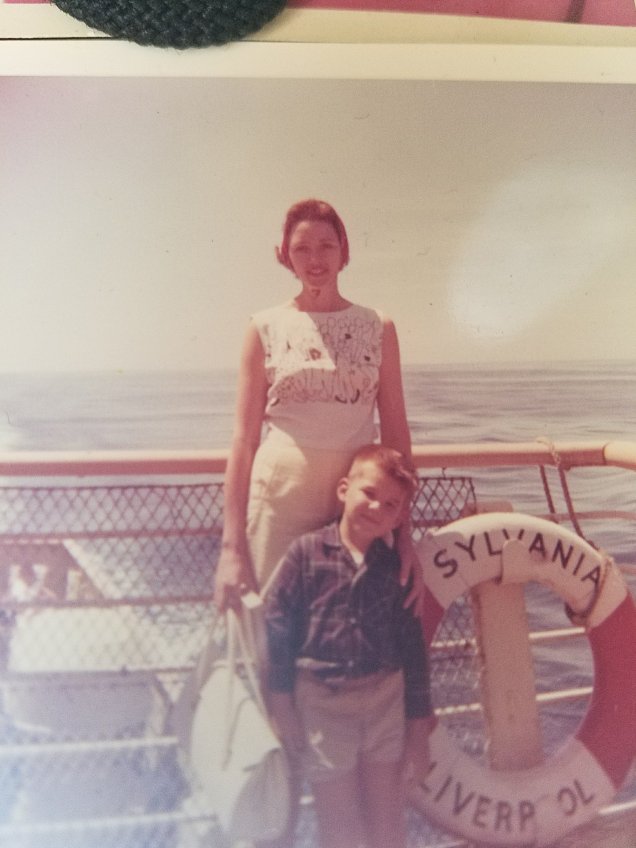
My first voyage, not including the steamboat or submarine at Disneyland, was aboard the Cunard Lines RMS Sylvania in 1965. I was destined for the maritime life. I could swim. I never got seasick, and I could drink (sodas) like a Sailor.
But now I’m a museum piece. My stories about writing letters, 1 MB computer storage, and replacing vacuum tubes find a smaller audience these days. Maybe I can find a new audience for sea stories at the Midway maritime museum?
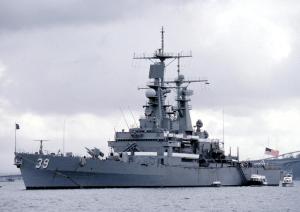
In a politically-correct world that has tempered practical jokes, initiations and rituals, I miss some of them. Twenty-five years ago, I was assigned to a guided missile cruiser, my first time putting to sea that was not a harbor ferry or pleasure cruise. Though my primary assignment was maintenance of the electronic systems in my division workspaces, I volunteered to be a bridge-to-bridge phone talker during the Underway Replenishment, or UNREPs. I knew I was going to enjoy life at sea, as I was initiated by the deck seamen who were the helmsman and lookouts. Practiced in the art of good fun, the deck seaman handed me night-vision binoculars for my first watch. It was nearly pitch black on the bridge. He almost got me. I caught the whiff of black shoe polish applied to the eyecups of the binoculars.
As for me, a new crewman on my first ship, my “salty” (experienced) maintenance supervisor sent me aloft to perform a maintenance check. While this was in port, I was to go about a hundred feet above the waterline, so I paid very close attention to the proper safety procedures. He got me outfitted in climbing gear, lanyards, helmet, bucket of tools and sent me aloft to verify operation of the aircraft warning lamp atop our receiving antenna. Once aloft, white-knuckled, I found there was actually no physical maintenance involved. But the experience cured my fear of heights forever.
Some time later, it was one young seaman being prepared for a most-important mission that was most amusing to me. His mission: Capturing the mail buoy. It was one of the harmless but amusing initiations for a young Seaman’s first time at sea. The build up was important. The crew was expecting mail, letters from home, Care packages, and so on. A plane flew ahead on the course that the ship was following, dropping the mail buoy. It had to be retrieved. In hardhat, foul weather gear, sound-powered headphones, life jacket, lifeline and a gaff, the Seaman was posted to the forecastle and was instructed to keep his eyes peeled for the buoy. Twenty or thirty minutes in the cold breeze and sea spray later, of course, one of the Boatswains Mates, lookout or bridge watch would then cuss him out (over the headphones) for missing it. Of course, both the Deck Officer, the Bridge OIC and the Chief Boats were in on the joke.
Another practical joke was played on new seaman on the Low-Visibility Detail. These are lookouts posted to the forecastle during foggy conditions in busy sea lanes. “Boats”, an experienced junior Petty Officer, requested the new seaman on the detail, to signal to the bridge to report whether the Ship’s Whistle (a truly thunderous horn) was working properly. He straight-faced told the seaman, the bridge watch could not hear it. After protecting his ears with each blast, he turned to wave up to the bridge. “It works”. The fun lasted only a few minutes. The Skipper came onto the bridge, demanded to know what that fellow was doing, and after a brief chuckle, put an end to it. He gave us all sorts of oral navigation quizzes to torture us, since we tortured that poor seaman.
The Sunday paper, actual newsprint, is still read in my house. Peruse is probably a more exact term, but I grabbed onto two stories today that declare what a dangerous world we live in, and how some are fighting back.
No, this is not a tale of evil-doers thwarted by good-guys, but rather the story of how a book can get an entire Government flustered, and a raygun available to police forces. Apparently, the Japanese on Okinawa are irritated that a BIBLE was part of a display honoring Missing In Action and Prisoners Of War in a military hospital. We all should know the terrible things that this particular book stirs up. To one who sees self-improvement, it is Truth, Love, Honor, Selflessness. To them, it is the possibility of overcoming the weaknesses of mankind: Hatred, Fear, Doubt, Hypocrisy, and Betrayal. To believers, it is voluntary primer from a supreme Intelligent Designer. But for some who seek Power over others, there cannot be a still higher power.
And then, a featured story of the drone-killer ray gun catches my eye. This is a tool to prevent danger to the State, and its law enforcement, from the foolish person who flies a drone in the path of aircraft. When drones are sold in 7-Elevens, online, and in department stores, everyone has the freedom and means to be hazardous to others. Law Enforcement has to police another misbehavior of some, to whom words (law or rules) or norms (common sense) have little power.
So which is it? Words have Power, or they do not have power? The State doesn’t seem to know either. If someone reads and practices the Torah, Buddhist texts, Hindi theology, or Book of Mormon, my family and I are not threatened. At least, in the western world, it is all voluntary. The Word of Christ has never hurt another soul. People, alone, are capable of that.








 As for me, a new crewman on my first ship, my “salty” (experienced) maintenance supervisor sent me aloft to perform a maintenance check. While this was in port, I was to go about a hundred feet above the waterline, so I paid very close attention to the proper safety procedures. He got me outfitted in climbing gear, lanyards, helmet, bucket of tools and sent me aloft to verify operation of the aircraft warning lamp atop our receiving antenna. Once aloft, white-knuckled, I found there was actually no physical maintenance involved. But the experience cured my fear of heights forever.
 Some time later, it was one young seaman being prepared for a most-important mission that was most amusing to me. His mission: Capturing the mail buoy. It was one of the harmless but amusing initiations for a young Seaman’s first time at sea. The build up was important. The crew was expecting mail, letters from home, Care packages, and so on. A plane flew ahead on the course that the ship was following, dropping the mail buoy. It had to be retrieved. In hardhat, foul weather gear, sound-powered headphones, life jacket, lifeline and a gaff, the Seaman was posted to the forecastle and was instructed to keep his eyes peeled for the buoy. Twenty or thirty minutes in the cold breeze and sea spray later, of course, one of the Boatswains Mates, lookout or bridge watch would then cuss him out (over the headphones) for missing it. Of course, both the Deck Officer, the Bridge OIC and the Chief Boats were in on the joke.
 Another practical joke was played on new seaman on the Low-Visibility Detail. These are lookouts posted to the forecastle during foggy conditions in busy sea lanes. “Boats”, an experienced junior Petty Officer, requested the new seaman on the detail, to signal to the bridge to report whether the Ship’s Whistle (a truly thunderous horn) was working properly. He straight-faced told the seaman, the bridge watch could not hear it. After protecting his ears with each blast, he turned to wave up to the bridge. “It works”. The fun lasted only a few minutes. The Skipper came onto the bridge, demanded to know what that fellow was doing, and after a brief chuckle, put an end to it. He gave us all sorts of oral navigation quizzes to torture us, since we tortured that poor seaman.
 No, this is not a tale of evil-doers thwarted by good-guys, but rather the story of how a book can get an entire Government flustered, and a raygun available to police forces. Apparently, the Japanese on Okinawa are irritated that a BIBLE was part of a display honoring Missing In Action and Prisoners Of War in a military hospital. We all should know the terrible things that this particular book stirs up. To one who sees self-improvement, it is Truth, Love, Honor, Selflessness. To them, it is the possibility of overcoming the weaknesses of mankind: Hatred, Fear, Doubt, Hypocrisy, and Betrayal. To believers, it is voluntary primer from a supreme Intelligent Designer. But for some who seek Power over others, there cannot be a still higher power.
 And then, a featured story of the drone-killer ray gun catches my eye. This is a tool to prevent danger to the State, and its law enforcement, from the foolish person who flies a drone in the path of aircraft. When drones are sold in 7-Elevens, online, and in department stores, everyone has the freedom and means to be hazardous to others. Law Enforcement has to police another misbehavior of some, to whom words (law or rules) or norms (common sense) have little power.
 Truths, Half-truths, and Sea Stories