NCO Club Memories: Celebrating a Life of Service and Friendship

Our neighborhood “NCO club” has ushered my comrade onto his next and final assignment. I am hoping that Valhalla receives him warmly. Sergeant John Norman, US Army veteran, 72 years old, died in the morning of October 19th at his home in El Cajon, California. He leaves behind his wife of 50 years, daughters and grandchildren, friends, golfing buddies and many members of his union retiree club. Though I neither golfed, nor was a truck driver, and our wives only knew one another generally, John and I could say we were as close as two veterans might be.

Origin of the NCO Club

We were neighbors for almost 24 years, and almost weekly over that time we shared several beers, sometimes good bourbon, and small talk. We would reminisce about our military experiences, family, and the state of the country and world. He enjoyed recalling his late mother-in-law, a female Marine, which always seemed odd in that her daughter, his wife, was quiet and reserved whenever I met him for a drink in his garage – our clubhouse. He could remember names of those he went to basic training while I struggle, though our similar experiences were only separated by five years. One story, he particularly enjoyed retelling, concerned a recruit who had money stolen, and the drill sergeant giving the offender time to place the money at night in an office drawer. Apparently, the guilty party did not return the stolen goods; the company then threw the thief a “blanket party”. Team reunified, justice dispensed, and funds recovered.

He served during the later years of the Vietnam War, in a medical compound next to the Korean Demilitarized Zone (DMZ). The stories he recalled treating soldiers’ indiscretions – drunkenness and for things that penicillin cured, never got old. As a truck driver delivering to military installations in San Diego, he would often tell a story of a delivery when a Navy supply sailor would not receive his shipment because he was playing games on a computer. Returning to the freight company, and behind schedule, a senior officer called John’s company to ask why needed equipment was not delivered. The story apparently did not paint the lazy sailor in a good light. As John told it, that officer subsequently reassigned the individual to the point farthest away from his home in the south of San Diego County, to Camp Pendleton 50 miles away. And one of the stories that I particularly recall had to do with his long-unused medical training. Though John never continued working in healthcare after his Army service, like some former Army medics and Navy Corpsmen I knew, I believe a cabinet installer owes his present use of fingers to John’s quick thinking. Some eight or ten years ago, in a brief lack of focus, the man installing cabinets for John’s kitchen strayed too close to his table saw. John packed the wounds and bundled the amputated fingers in ice, and got him to the ER.

Roses are not only red

We all benefitted from Sergeant Norman’s many talents. His passion was growing roses and he was a dedicated member of the San Diego Rose Society. He would show me many different varieties he tended, recognizing all by name. For several years, he would help me tend to roses I had grown under his mentorship. This continued until I could no longer hide that I was absolutely horrible at keeping them alive. His prowess as a gardener, though compromised years ago by a war with gophers (still ongoing), was unmatched. For 2 decades, the neighbors in our little block were recipients of delicious oranges and grapefruit, squash, tomatoes and peppers, which he distributed over his wife’s protests all year long. When he brought these gifts to my wife, she would generally nod in my direction, and say I should go over to have a beer (or 3 or 4 or 5!) with him. These were the best times for the “NCO Club”. Each Christmas, we traded gifts – my wife’s peanut butter chocolates were exchanged with his homemade cheesecakes. Sometimes these individual cheesecakes, gifts to neighbors, family and friends, might include an additional gift as an incentive for a little NCO Club time – a Bloody Mary he concocted for my wife. (I am allergic to spicy peppers but that’s another story.) Though we had conflicting New Years Day festivities, he would always subsequently invite us to enjoy a lavish spread for a Superbowl party at his home.

His talent thus extended to more than roses, vegetable gardening, golfing, or consuming Coors Light. Using skills I assume developed in his formative years of the 1960s and 70’s in carpentry, welding, plumbing and auto mechanics, he lent expertise to others. Those were great times to recall during our “NCO Club”. Though we served in different eras, and different branches of the military, we were able to see eye-to-eye on many issues. We routinely talked politics, gardening, social issues and married life. He was never concerned with spiritual things – rejecting me politely but brusquely or lecherously off-putting the infrequent door knocking parishioners of a local church. He knew I practiced my faith and would tease me to have a beer with him before going to my evening church meetings.

Neighborhood watch

In the early 2000’s, John would dutifully text or call to report at 10pm to his newly-married neighbor, “neighborhood watch: your garage door (or car door or trunk) is still open”. He kept an eye on things when my family traveled out of town. Over a quarter-century, we only had a few incidents that gave us reason to lock our doors at night and install security cameras. Before COVID, a lost, drunken sailor crashed into a neighbor’s home. On a street that boasted 3 veterans, a retired federal agent and a retired cop as longtime residents, thieves broke into my car and one night, sawed off the catalytic converter from John’s 1992 Ford F250. But John’s watchful eye kept wanderers out of the area. We often joked of protecting our street with sandbags and a 50 caliber gun emplacement. Instead, we had the watchful John Norman.

He used to encourage me after I retired as Navy reservist, that we would have more time to defend our homes once I retired from the job I commuted to for another eight years. Whether it was someone recently licensed speeding up the street, or learning that the long-parked car beside the overgrown pepper tree at the boundary of his front yard belonged to my middle son, things did not escape him. Through and after COVID, we never needed to defend ourselves from the Zombie Apocalypse but with age came more challenges to health. We all endured small bouts of COVID, and survived. We attributed our longevity to all the exposure we had in the service – everything from malaria pills and flu vaccines to anthrax shots and chemicals we worked around. As other neighbors and I joined him in retirement, while I and others endure age-related heath problems, John was the enigma. He worked in his yard constantly, tending to dozens of roses, vegetables and harvesting fruit from lemon, lime and grapefruit trees. He volunteered every year at the county Fair Rose garden. Every Thursday, he was part of a foursome playing golf all over the county. He liked his beer and Crown Royal. He boasted but for his neck and his waistline and overall health defied doctors expectations. When his wife’s medication no longer let her eat grapefruit, the harvest would be distributed to me. Then I went on the same medication. For the last ten years, John changed his eating habits to cooking mostly vegetarian meals to support his wife’s health. I assume those habits kept him going right until Sunday morning.

I shall miss you my friend. Until we all meet in that next realm, rest easy. We will stand the watch.

Treasure Hunting: Memories Behind Every Item

One of our family’s traditions every January (besides my spouse searching for, and acquiring outdoor Christmas decorations at a discount) is taking several boxes of used clothing, housewares, exercise equipment, and knickknacks to Goodwill or other donation center. The only things I do not part with are contained in 3 black and yellow tubs stacked in the garage. Some of these I acquired during several moves around the country as a child and then later, during 30 years of a Navy career.

Everyone has a sea story to tell

Often, I bring back interesting stories when talking with volunteers at the donation center. This week, I chatted with a guy who had been ‘mentored’ by Frank Zappa in his youth while a musician in a recording studio. “It is so amazing that records (we called them LPs) have outlasted cassettes and CDs. I still have several thousand albums in my collection.” Working at the Goodwill, the option to find unusual items related to his history is probably a perk.

Reading a story online about the making of the second “Top Gun” movie, it remarked about the original movie’s technical advisor Pete “Viper” Pettigrew, an original Top Gun instructor. I was fortunate to meet him several years ago aboard the Midway museum in San Diego. “You should consider being a docent here, Chief”, he told me. ” You can tell (the same) sea stories to visitors every day.” While my wife has heard or lived many of my stories, I have yet to tell them to our adult children and grandchildren. Still, when our eldest son spent four years in the Army, he would call home to talk Army jargon to his mom; she would hand the phone to me and we would converse using the “army-navy jargon” translator all veterans know instinctively.

As I go through my collected mementos, decades-old memories come back vividly. And it is for this reason, I have a difficult time parting with even ticket stubs. (I still have, somewhere, ticket stubs from the 1980 Los Angeles Pink Floyd “Wall” concert.)

One man’s trash is another’s treasure

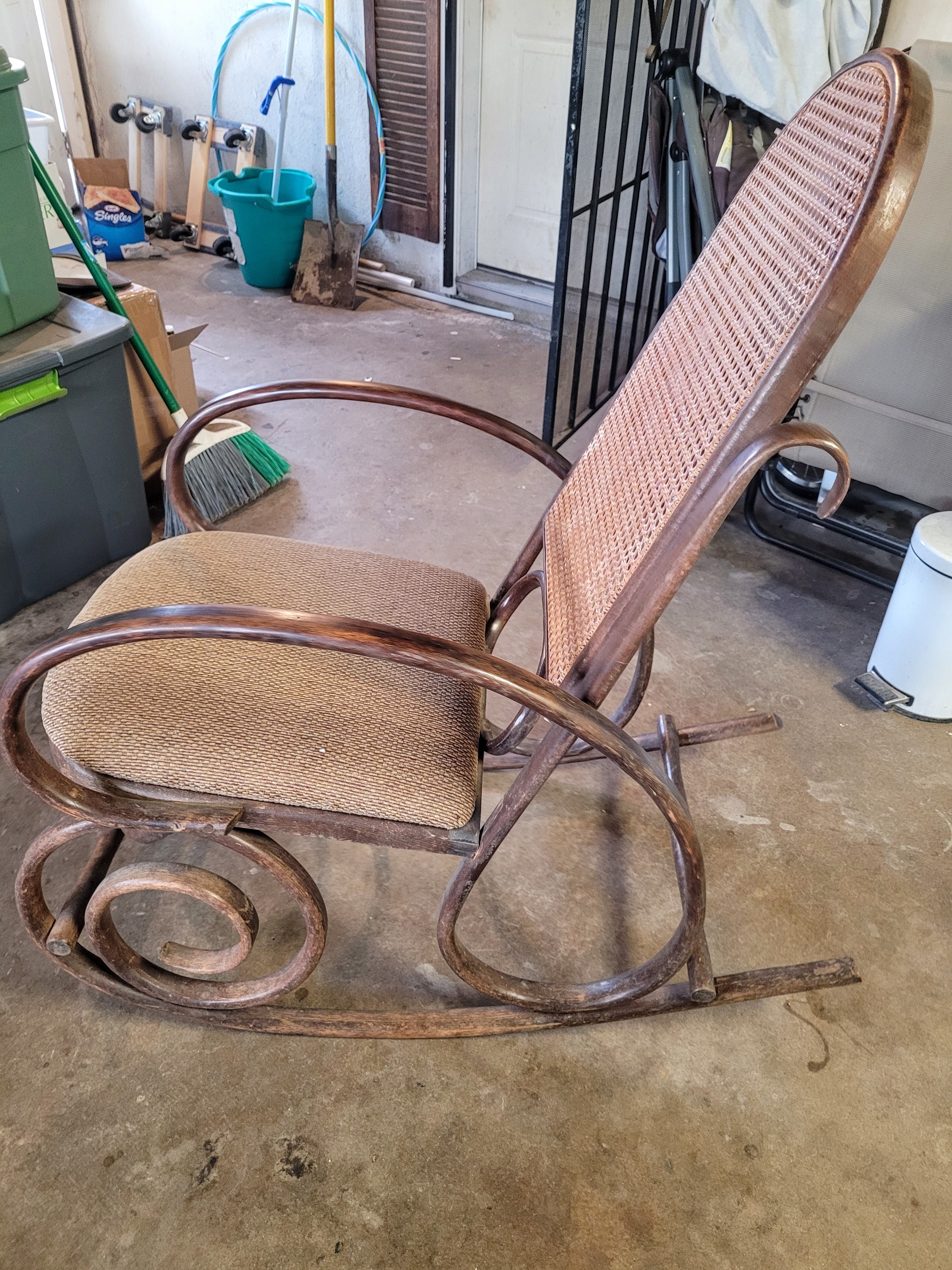
Every January, as I toss out old appliances, irrelevant papers and tools from work my wife and I no longer have need, and things neither of us remember buying, I take some time to look through my “memorabilia”. When I rotate through the bric-a-brac, displayed in a cabinet by my writing desk, I remember the places and people I met when I acquired them. Unfortunately, some break into pieces while using them over the years (mugs and glassware from my travels); some have gotten lost (letters I wrote my late mother during various deployments), and the rest I rediscover in random corners around the house. Other items I know to be fragile antiques, but “heirloom” is a far-fetched label for a fragile Bentwood rocking chair, old monogrammed silverware, military badges, Egyptian papyrus, or Irish wool blankets.

The Bentwood rocker, a butter churn, iron tools, glass medicinal bottles and scraps of a charcoal drawing have come to me after my mother passed. Some fifty years ago, when my parents divorced, I was moved from California to Cape Cod, Massachusetts. The home my mother bought together was originally built in 1745, and later became the studio for a famous muralist of the late 19th Century, Edwin H Blashfield. Predating Indiana Jones by ten years, I became an amateur archaeologist, uncovering odd items buried in the soil under a centuries-old barn. When we moved yet again, after my Sophomore year of high school, to Arizona, I convinced my mother to moved a 1930’s era Zenith radio with us. While it worked for a time on the Cape, finding vacuum tubes became difficult. I did not know then how to repair electronics or rewind coils. That was one of the influences that lead me to a Navy career in electronics after high school. Unfortunately, long before my mother passed, the radio innards and the cabinet disappeared.

image of a similar model to what I once had

Heirlooms only have value if there are interesting stories attached to them. At the moment, our grandchildren are more focused building things with magnetic tiles, splattering paint on bits of cardboard, and enjoying snacks at Pop-pop’s house.

After a year sabbatical, I am committing this year to putting memories online, so my children and grandchildren can look at images and stories and if interested, keep a few items out of the January trips to the Goodwill store – or the trashcan. If you have not given up on an old Chief, I hope the readers of this blog will stay with me.

Port o’ call : Cyprus

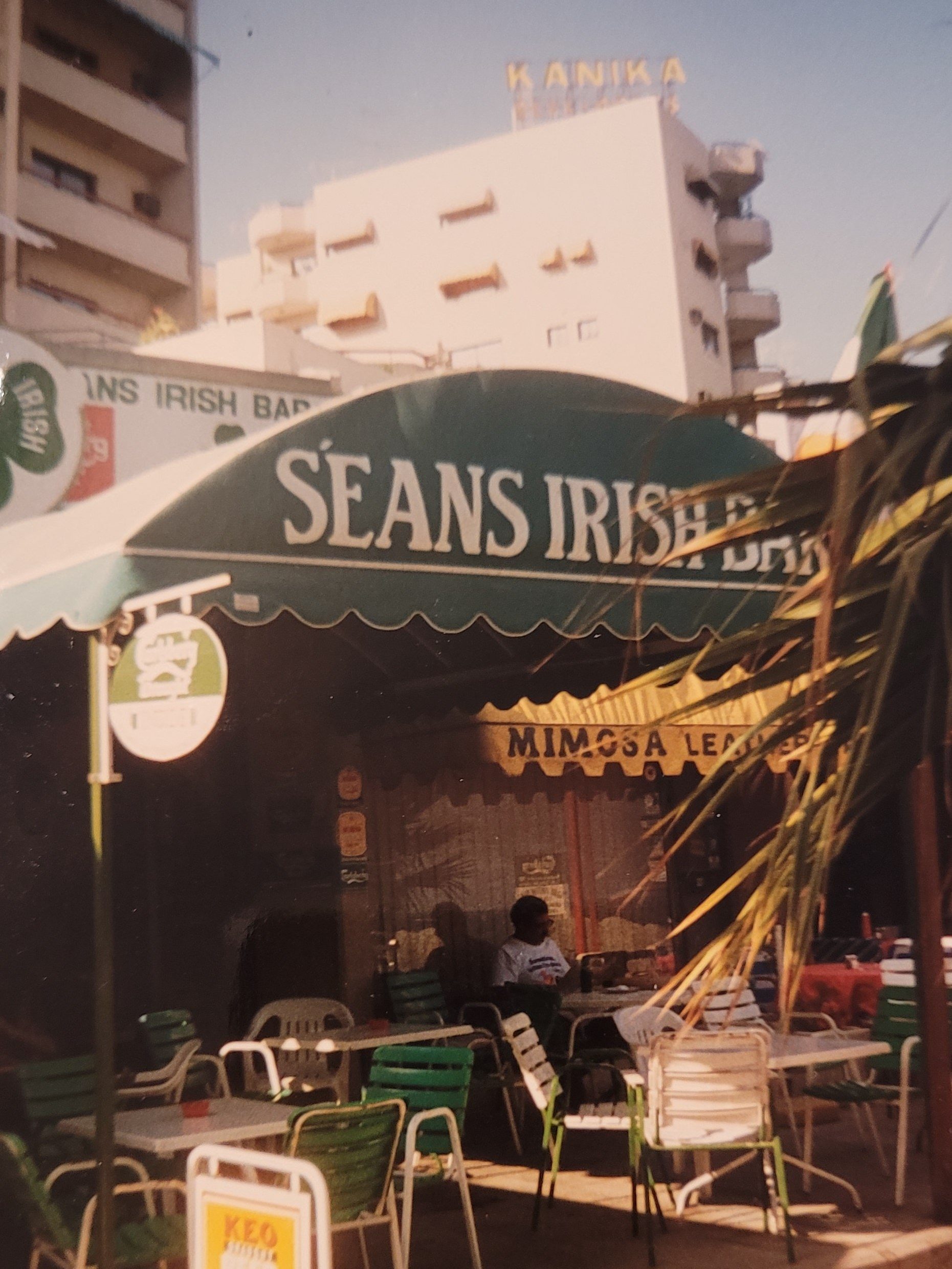
On a Mediterranean deployment aboard USS PETERSON (DD-969) thirty years ago, I visited an Irish pub in Limassol, Cyprus. While a tourist destination for many British and Irish citizens, the island has had its share of trouble and even war, with the northern part of the island dominated by Turkish Cypriots and in the south, Greek Cypriots. For decades, the United Nations has maintained a truce between the two halves of the disputed island as a result. Though I got to see firsthand the uneasy relations between the two NATO countries (while conducting naval exercises with one country’s navy, we were overflown by jets of the other!), the port city of Limassol catered to tourists as well as the UN troops on liberty. Although my 2 shipmates and I were as versed as any about the political situation (given we were cryptologists), we followed command direction to blend in with other tourists (ballcaps, collared shirts, and short hair) to not stand out as Americans and to avoid any discussion of politics or our missions. We were just looking for a few beers and to explore the beach after several weeks at sea since our last port.

Sean’s Irish Pub was run by an Irishman and his daughter, serving both British and Irish beers and liquor. Talk about soccer teams was as peaceably divisive as with any sports fans in the USA. One of the patrons we chatted with was a Dublin businessman who amiably offered that Muammar Ghaddafi was a pleasant fellow he had business dealings (this was 1994, eight years after the US retaliated against him for sponsoring terrorism). It was best to let that slide. Being of Polish descent (dad) but Irish on my mother’s side (I neglected to mention they were Protestants), Sean made a couple of toasts over good Irish whiskey. We met and had a couple of drinks with one of the UN troops there – I forget whether he was Irish or British. The thing I do remember is that this pub catered to both the Irish and the Brits, but they came by at different hours. And the pub would either have a more “independent Ireland” or “welcome British” atmosphere (both Irish and UK flags displayed, ) depending on the clientele hosted.

Port o’ call: memories of Cartagena Spain

“JOIN THE NAVY AND SEE THE WORLD”

Navy recruiting slogan in the mid- 20th Century

Several years of High School Spanish, as well as years living in southern Arizona near the Mexican border, made travel in Latin America easier. Traveling to Spain, on the other hand, was a little more of a challenge. Though I had a Freshman year of castellano, Madrid-dialect Spanish, I soon found that they do not necessarily speak “Spanglish” or the Sonoran (Mexico) dialect there.

My second Mediterranean deployment on the USS PETERSON, a SPRUANCE-class guided-missile destroyer, began in October, 1994. One of the first ports we visited was Cartagena, Spain. Located in the state of Murcia, it is a port city that has seen sailors on its streets for a few thousand years. Having lived in or visited modern cities, from San Francisco to New York City, seeing a Roman-era coliseum and medieval architecture – much of it incorporated into modern structures- made some of the oldest American buildings practically new.

I ventured out on liberty alone, trusting that my Spanish would help me get around. Being adventurous and with an affinity for foreign languages, Europeans were more open and chatty to me (Except for a Northern Italian shopkeeper who must have assumed I was an arrogant German -but that’s for another story). A family-run cafe, Restaurante Casa Pepe, (a small lighter I kept all these years in trinket box, reminds me of that port visit), welcomed me. I learned that eggs and bacon are served a little differently there. Chatting with the family, the son who was about my age, offered to show me around his city. He enjoyed correcting my pronunciation, teasing my accent. I teased him that he didn’t speak Spanish either. Murcia has a distinct dialect from Castilian or other Latin dialects, where “c”s often are spoken pallatized (a “th” sound), e.g., “Mur’th’ia ” . One of the buildings in the older part of the city near the waterfront was elevated to display a site that I recall pre-dated the Roman times. It may have been Phoenician. I should plan to visit the places I saw while in the Navy. Now that I am thirty years older, I imagine my acquaintances have long forgotten one Spanish-speaking American sailor, but I still long to revisit these ports of call with my wife. Though I think I will upgrade our mode of travel to a cruise ship. With no intentional disrespect to the Navy, anything will be more luxurious than a destroyer.

Cartagena, Spain, a bit more modern after thirty years (image via web)

Ed: this revised post was originally published here in August, 2021

Building boats in the desert and the Rillito river fleet

Long before the “sand Navy” was an actual thing – those Navy servicemembers who did a tour in Afghanistan or Iraq during the war- I remember a man who was building a boat in the Arizona desert in the 1980s. While the region is still subject to monsoon flooding (late summer thundershowers that over centuries carved riverbeds flowing west and north from Tucson and elsewhere), I think the builder was overly optimistic. Until I saw what I presume was the same boat launched from the bay in San Diego some twenty years ago. There are other latter-day Noahs still building boats in a parched land. Yet, owning a boat seems to be a short-lived experience for most would-be mariners. While there are many sailing and power boats moored in marina slips all along the San Diego bays, I have seen many hundreds high and dry in storage yards far from the sea. And I live the experience through others. One of my friends, a Navy veteran, invited me out on his boat. Though I enjoyed the experience, I have not had the urge to buy one myself. It would also be another frequent chore to master; between financial and maintenance needs of boats, or cars, or homes, there are rare times to enjoy one. Perhaps, it is why I remember movies where a boat owner was spending an afternoon drinking beer, in his boat while it was stored in his driveway. But having a boat sitting in my driveway in El Cajon most of the year would remind me of one of my running jokes from long ago.

What still causes me to chuckle forty years later is my years spent at the University of Arizona when I would frequently tease a former submariner and fellow student about his participation in the “Rillito River fleet”. The Rillito is, and has been for most of the last several decades, dry but for the previously mentioned “monsoons”. Also, it was the closest non-body of water near both of our homes during that period. That he was a drilling Navy Reservist at the center located on the Davis Monthan Air Force Base at the southern end of Tucson, was amusing to me then. However, the “bubblehead” may have had the last laugh, as I too, became a Reservist there. Within less than I year, I submitted a request to return to Active Duty and subsequently spent the next twenty-three years on ships, and shore sites, from Middle East desert to tropical jungle. From performing observation and interdiction of narco-traffickers in Latin American waters, seizing smuggler’s vessels during a Haitian revolution, supporting Allied efforts in the Serbian – Croatian war, supporting no-fly zones over Kurdish Iraq, I fulfilled my promise to get back out of Arizona and go to sea.

These days I do not make light of any veteran’s membership in the “sand Navy”. They have seen and done some stuff. Whether Reservist or Active Duty Sailor, female or male, if they would have me, I would be willing to crew with them even in the dry washes of southern Arizona.

Ask the Chief: if it didn’t come in your seabag you won’t need it

I still remember a young sailor reporting aboard our ship who had been in the Navy about six months. A member assigned to our division, he was assigned a bunk in our berthing compartment. Aboard any vessel, but particularly a warship, space is at a premium and quarters for the crew are no exception. In the Navy, a crewmember has a very limited amount of space in which to store his or her belongings, and are designed to hold the contents of one’s seabag plus a small amount of toiletries we fit into a “ditty bag”. In this compartment, the three tiered bunks (“racks”) doubled also as lockers for each member’s gear. There were exactly the same ratio of racks to crew in every compartment aboard ship. (Only the Executive Officer, Commanding Officer and any visiting Flag Officer or dignitary had individual quarters.)

It was the second or perhaps, third garment bag he started to unpack, in addition to his seabag’s contents that drew the loudest “WTF!” from his immediate supervisor getting him settled in the berthing, No less than three color-coordinated suits – 1 green, 1 red and 1 yellow, came out of those garment bags. That he assumed that he would store them in adjacent lockers became a training opportunity. Thirty years ago, we were not as progressive in our attitude nor counseling methods as in 2022; in hindsight, we might not today be forgiven for thinking Gary (Indiana) was missing a pimp. He was advised to remove from the ship every item of civilian clothing that did not fit in his own bunk, after having stowed everything prescribed by Navy regulations for shipboard use.

Not that he was the only person to have belongings in excess of places to put them. Officers, Chiefs and blueshirts (junior enlisted sailors) having accumulated a few bulky items (Turkish and Persian rugs) when on liberty overseas, were known to conduct a lot of horsetrading with Supply, Medical, cooks, and Engineering peers to find cubbyholes when returning to the USA from deployment to the Mediterranean and Suez.


From the current Uniform Requirements for Men, in Paygrades E-1 to E-6, the following items are issued as regular uniform items and when precisely folded, will fit within a standard issue seabag. Some of the items are rank and other insignia which are affixed to uniforms in a prescribed manner. :

  • All-Weather Coat, Blue 1
  • Bag, Duffel 1
  • Belt, Web, Black, W/Silver Clip 2
  • Belt, Web, White, W/Silver Clip 1
  • Blousing, Straps 2
  • Boots, 9″ 1
  • Buckle, Silver 2
  • Cap, Ball 2
  • Cap, Garrison 1
  • Cap, Knit 1
  • Cap, 8-Point, with ACE logo 2
  • Cold Weather Parka 1
  • Coveralls (Navy), Blue 1
  • Gloves, Leather, Black 1 pr.
  • Group Rate Mark, Black 1
  • Group Rate Mark, White 1
  • Hat, White 2
  • Insignia, NWU (E4 – E6) 1
  • Insignia, Service Uniform Collar (E2 – E6) 1
  • Jumper, Blue Dress 1
  • Jumper, White Dress 1
  • Liner, Fleece 1
  • Mock “T” Neck 1
  • Neckerchief 1
  • Parka, NWU 1
  • Peacoat 1
  • Shirt, Khaki 2
  • Shirt, NWU 3
  • Shirt, PTU 2
  • Shoes, Athletic 1 pr.
  • Shoes, Dress Black 1 pr.
  • Shorts, PTU 2
  • Socks, Cotton/Nylon, Black 3 pr.
  • Socks, Cushion Sole, Boots 5
  • Towel, Bath1 4
  • Trouser, Broadfall, Blue 1 pr.
  • Trousers, NWU 3 pr.
  • Trousers, Poly/Wool, SU 1 pr.
  • Trousers, White Jumper 1 pr.
  • Undergarments As Needed
  • Undershirts, White 4
  • Undershirts, Brown 4

To my shame, now retired a dozen years, and more than fifteen since I last got underway on a Navy warship, I no longer practice the rigorous methods to stow my belongings. Then, neither do I have to stencil my clothes and underwear with my last name so they will return to the rightful owner from the laundry.

status symbol

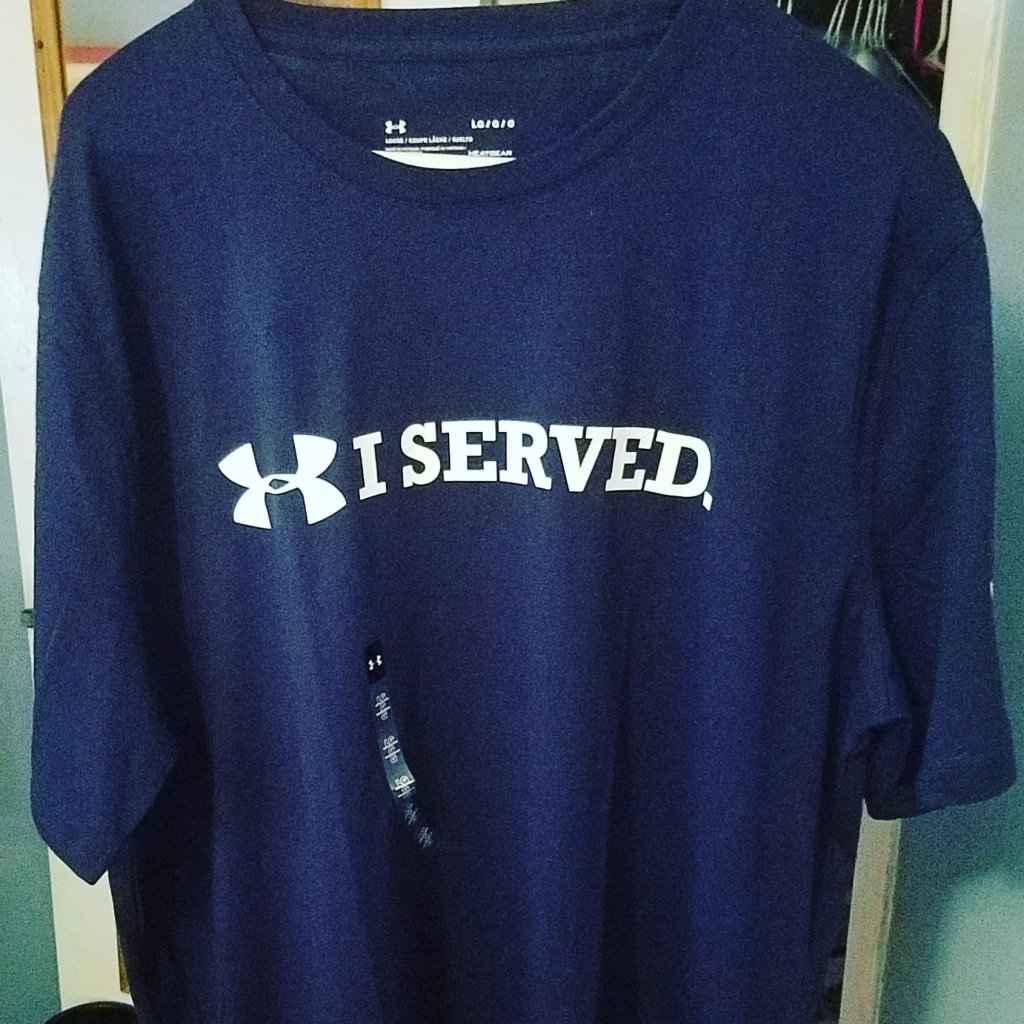
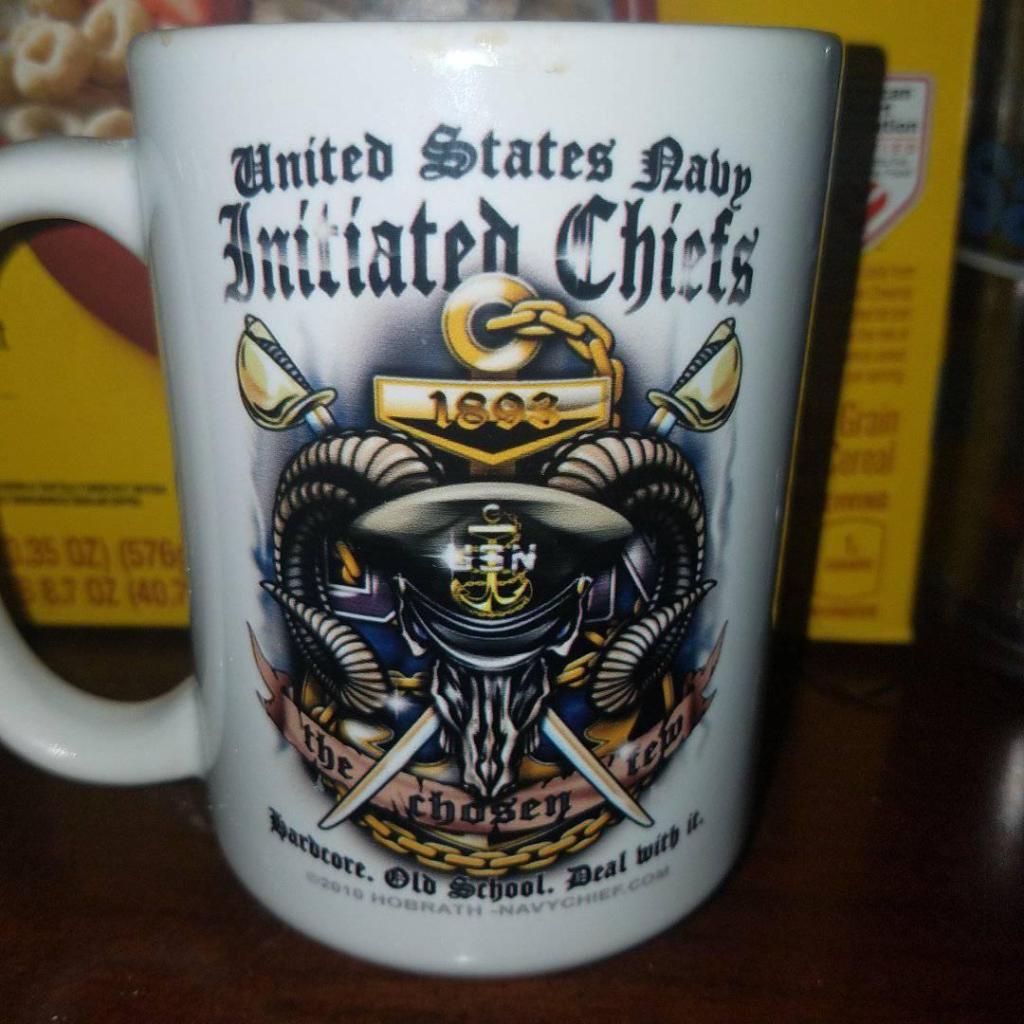
I, like most veterans I know frequently wear at least one article of pride to commemorate our prior military service. Some wear articles that support a veterans’ organization, or something with embroidered patches that convey their affiliation. Some like me wear a t-shirt with a bald eagle and “veteran” statement. Others may display a seal for their particular branch of service and “Retired”, or the service mascot and commentary. A veteran’s favorite may sometimes take a good-natured jab at a rival service. We have bumper stickers, license plate frames, or a coffee mug with something that tells others we were in the military. Most veterans I know rarely go anywhere uncovered, which for the uninitiated means we wear a ballcap (or other head covering) we first adopted in the military as part of the uniform. And at least once a day in my travels around San Diego, I will see and acknowledge another veteran wearing a “Desert Storm” or “Vietnam” or “Afghanistan” service commemorative cap or window sticker on their vehicle.

What is your favorite way to commemorate your service, or for that of a family member?

bear any burden

Let every nation know, whether it wishes us well or ill, that we shall pay any price, bear any burden, meet any hardship, support any friend, oppose any foe to assure the survival and the success of liberty. – John F Kennedy

http://www.brainyquote.com

Today is the eighteenth anniversary of the sneak attack on the United States of America, that resulted in the murder of thousands of men, women, and children. On that day we, as a nation, and the world first learned that a death-cult comprised of fanatical Muslims would use commercial airliners to bring down a symbol of American enterprise, the towers of the World Trade Center, and a kamikaze strike into the Pentagon in Washington, D.C. This was also the first time our enemies would learn that American civilians aboard another flying would-be weapon, would willingly and aggressively fight these fanatics, to bring down the aircraft before reaching its target.

The stories of bravery, from these men and women, from members of the New York Fire Department, Police Officers, and civilians and victims in this tragic series of attacks is well-known. We also remember the hundreds of men and women who have suffered life-threatening illnesses from combing through all that poisonous debris – to find, identify, and bury their fellow citizens murdered on that horrible morning.

What Americans should do on this anniversary is to tell our elected representatives that we will no longer tolerate disrespect for our institutions, the purchase of loyalties from non-citizens at the expense of citizens, or the rewriting of history. Further, we oppose the diminishing of American accomplishments, disobedience to the Constitutional-granted powers and laws, and the blatantly self-seeking and pandering politicians. We should instead honor our dead. Support our veterans who, over eighteen years of conflict have suffered and lost. Be proud of our history and our institutions. And fly our national ensign proudly so the living will never forget.

Exit, stage left

In the 1960s, Saturday morning cartoons were a favored diversion as I had my bowl of Fruit Loops (or oatmeal, when my mother intervened in my breakfast). The cartoon lion, Snagglepuss, had a trademark saying whenever he faced a challenging situation. ” Exit, stage right” or “Exit stage left, even!” However, I was never one to flee from demanding tasks. I think of Snagglepuss now as a classy way to exit this career and explore some new roads.

I am old enough to remember a simpler time, for kids anyway, when the American work ethic was the envy of the world. Parents, neighbors, and teachers taught me values and work ethic. I already had figured out about hard work, respecting others, and making your own way in the world, since I earned money from before and after-school jobs since I was 14. After a few years in the service, and then four years in college, I went back into the service in 1987 and remained in uniform until 2010. The unit held a great ceremony, gave me a nice party, and a wonderful shadow box of my military memories. I was already working at Viasat, so I had my second career already figured out.

I retired from my second longest career today. Well, technically, my last day is tomorrow, but our division threw me, and a co-worker also retiring in August, a retirement party. This latest career was the closest I have come to the camaraderie I felt in the Navy. And now, what does a two-career veteran do at age sixty?

Start my own business, or more accurately, support my spouse who started a business. I am sure the Senior Chief or the Engineering technician can tackle just about any business issue.

nerve agents

In the military services, it might still be a part of recruit basic training to train for chemical attack. In boot camp in the 1970s, I was marched into a gas chamber with sixty other personnel, all wearing our gas masks, and exposed to tear gas. Learning then that my mask had a poor seal, I very quickly ended up with tears and snot streaming inside the mask, hacking and choking when they had us pull it off for “full effect”! And I realized I would have been a casualty. And my poor carcass? filmed for a “here lies stupid” lesson.

That training has never left me. Even on a Thursday evening just before bedtime when my spouse in a fit of cleaning mania, liberally doses the bathroom off our bedroom in chlorine bleach. She happily scrubbed the mold and grime away. I wanted to be a good husband, and though I wanted to go to bed desperately, I offered to help. But the lesson I learned was to stand out of the way. I thought she wanted toothbrush to scrub the sink. In the best tradition of Chief’s wife (I’ve been long retired) she was scrubbing with a toothbrush to get the difficult grit!

No, she wanted a new toothbrush. For herself. At that moment I felt lower than whale excrement. And that’s something I haven’t thought about since it was applied to us in the first days of boot camp forty years ago. It’s okay she says. I can go to bed now. Except that the chlorine gas that she grudgingly opened a window to release – when I mentioned it – is already making me sneeze two rooms away. But it is okay. I probably would have died in boot camp anyway. My dumb#$# should have taken one for the team.

A cause worth dying for

defense.gov

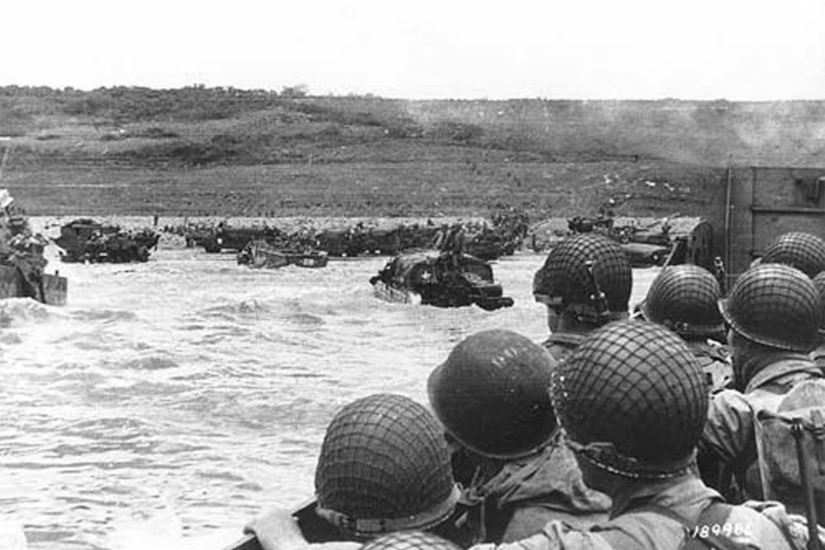
On the sixth of June, 1944, seventy- five years ago, more than a hundred- fifty thousand Allied troops became heroes on D-Day.

My late mother was a 12 year old schoolgirl living on the shores of the Belfast Lough in Northern Ireland. She told me of a foggy early morning probably a few days before the invasion when she saw many ships in the Lough only to disappear a day later. That capped a brief visit days earlier of an American cousin in her mother’s family, a Merchant Marine, who she later learned had been decorated for bravery in the Battle for Malta in 1942.

While some may think that Northern Ireland was far from the Blitz – the campaign the Nazi waged against Britain – German bombers attempting to destroy or disable aircraft manufacturing and the Belfast shipyard from April through May 1941, destroyed a considerable part of the city. A thousand were killed, many were injured and more than 100,000 were left homeless. Once the Nazis started their campaign against the Soviet Union in June 1941, they diverted their bombers.

My mother and family were fortunate in that their home was not bombed but the family retail business was unable to recover from the bombing of the city and the economic conditions which persisted all through the war and the remainder of the decade. And so my mother’s family became emigres to the United States in 1948 (other relatives had been living in the United States since the mid-19th Century).